
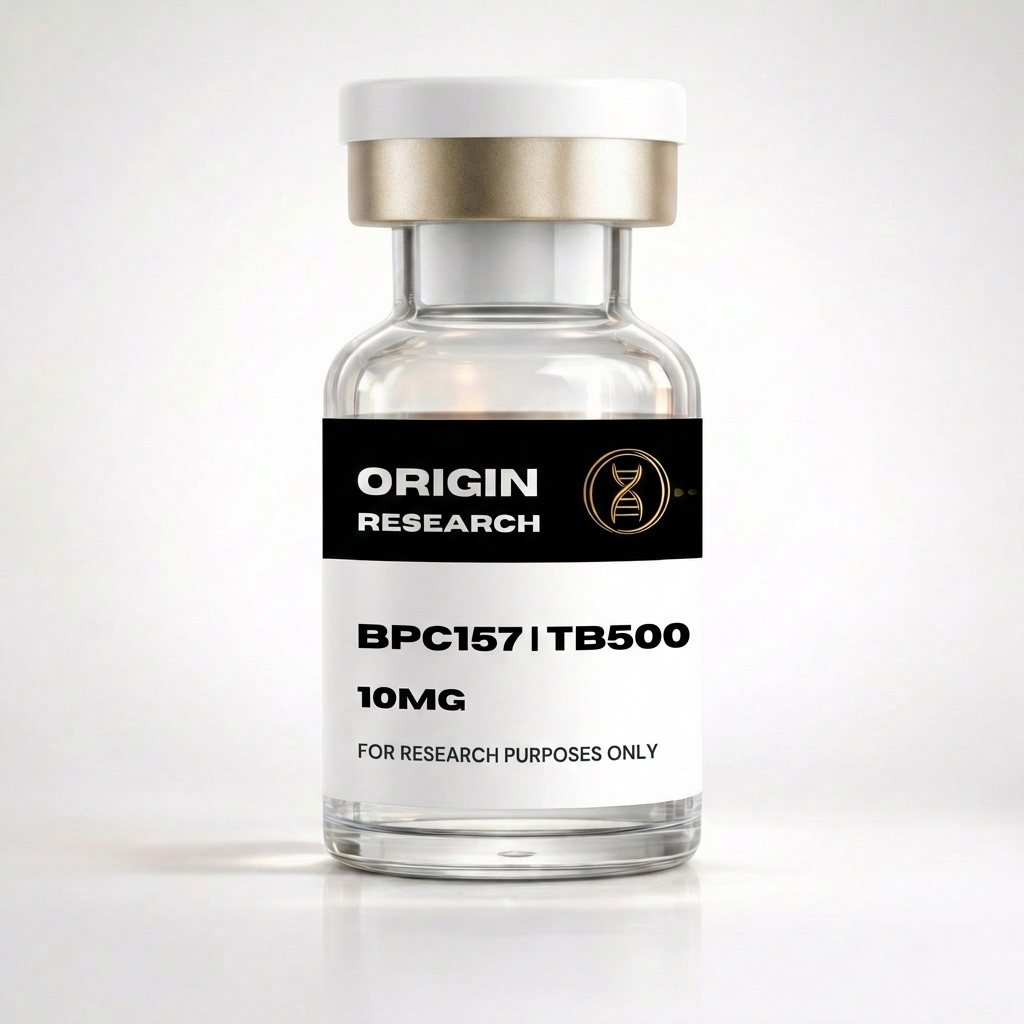
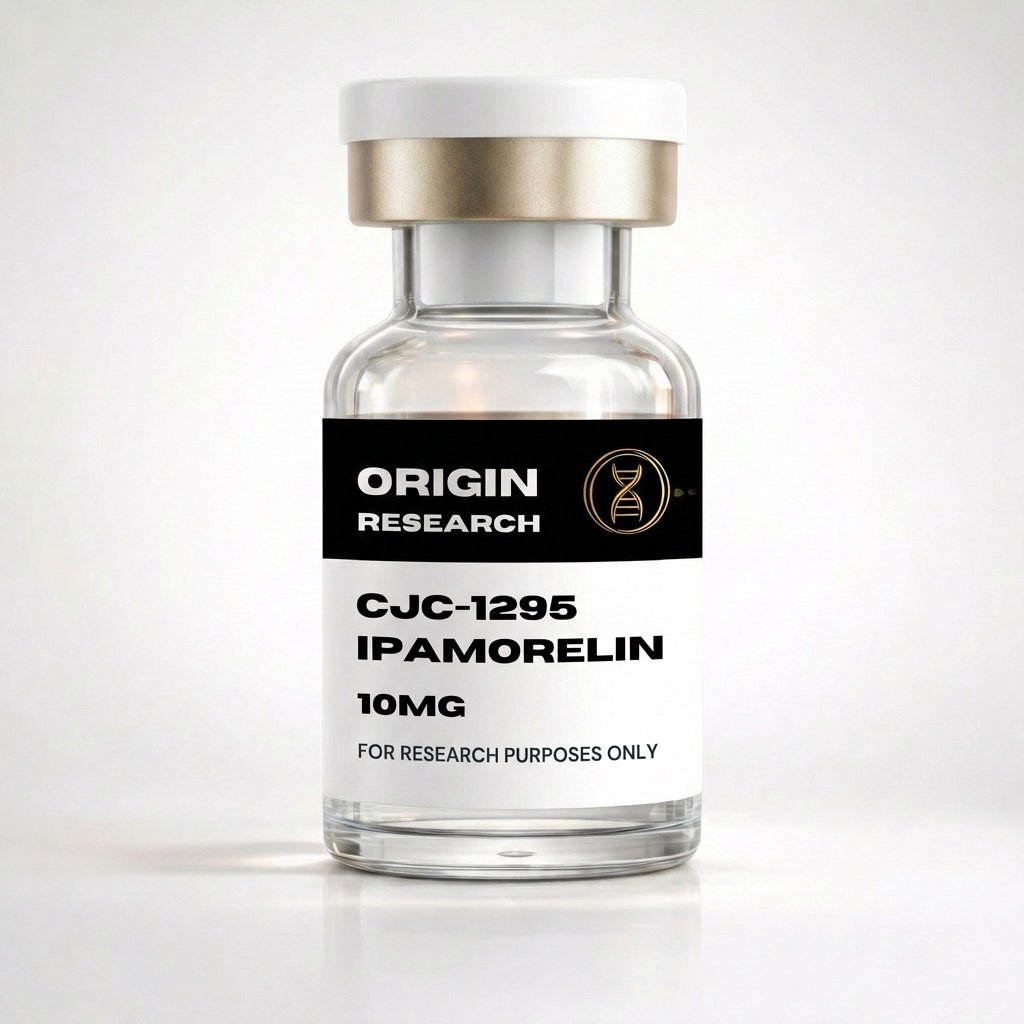
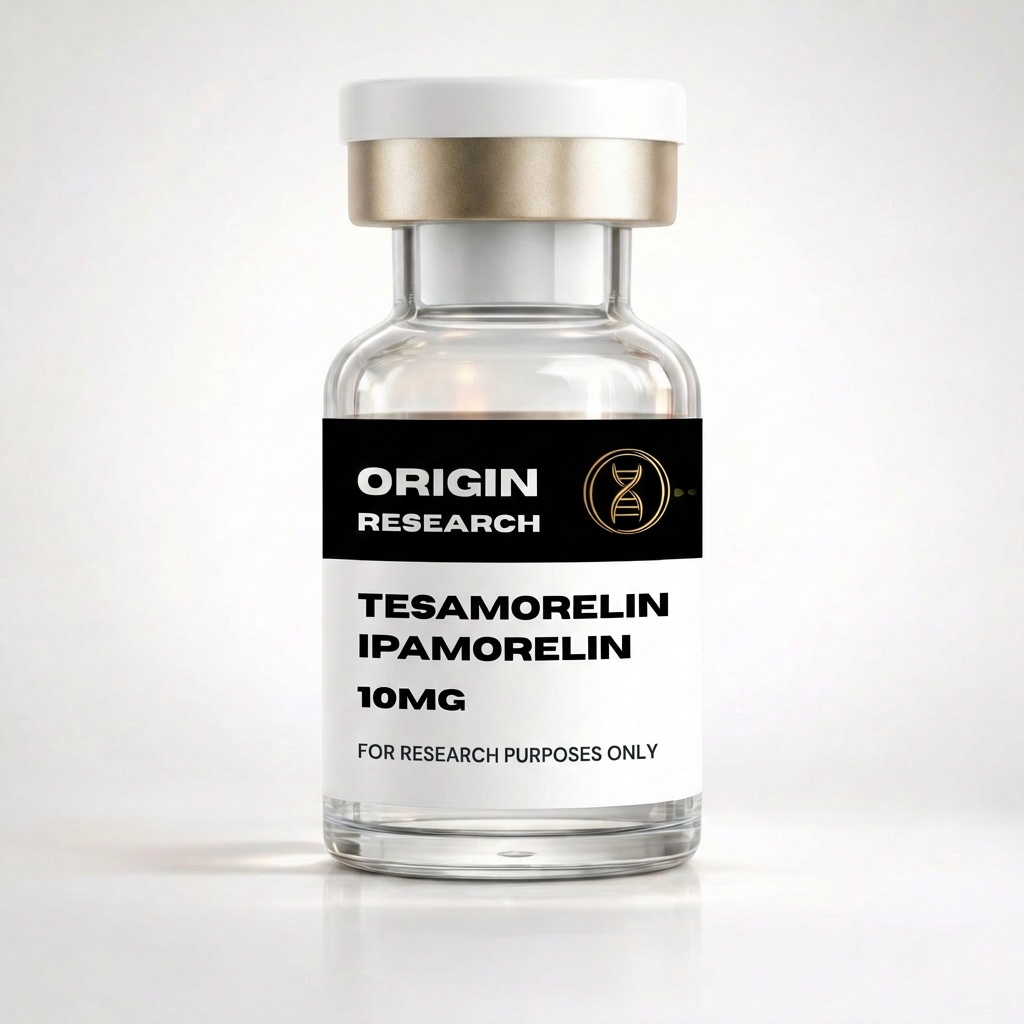
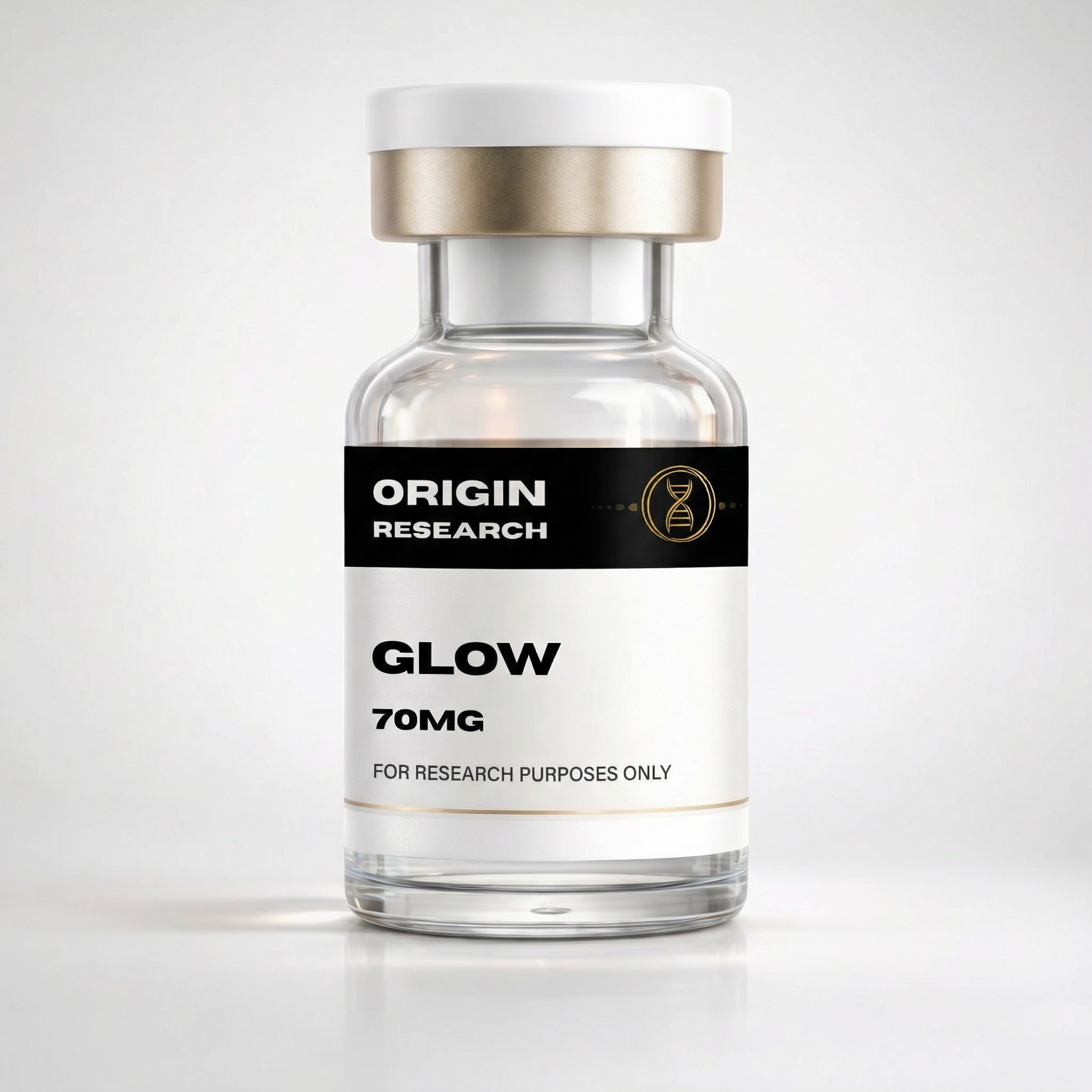
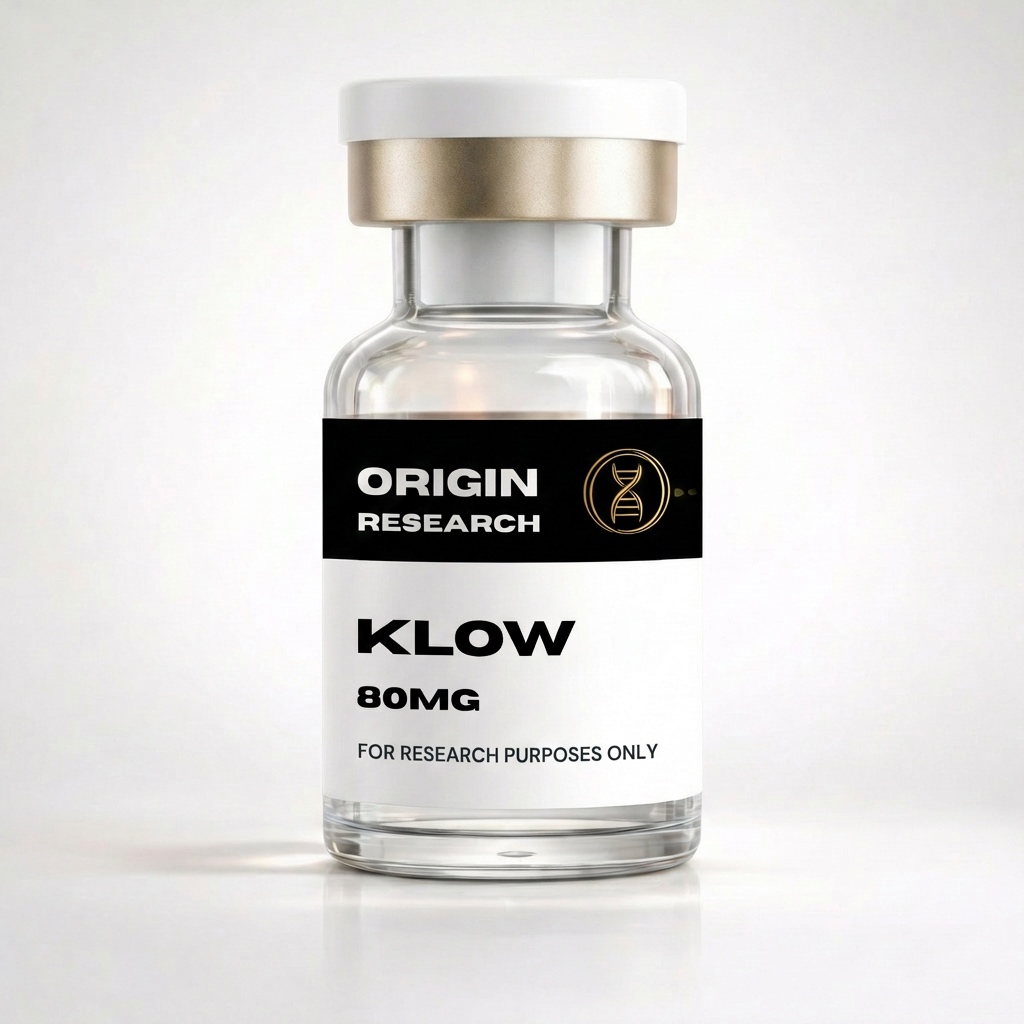
The Stacks and Blends category at Origin Research groups together pre-formulated multi-compound research vials and named stack combinations designed for research models where a fixed ratio between compounds is held constant across the study window. Research groups worldwide order this category most often when a study design calls for a single preparation event, a single research solution and a defined compound ratio that does not require independent dose titration of each component. The category groups together the BPC-157 with TB-500 Blend, frequently referred to in research as the Wolverine pairing, the CJC-1295 with Ipamorelin Blend for combined GHRH and ghrelin receptor pathway research, the Tesamorelin with Ipamorelin Blend for GHRH-Ipamorelin pairing in metabolic and somatotropic axis research, the GLOW Stack combining GHK-Cu, BPC-157 and TB-500 for dermal and recovery research and the KLOW Stack combining KPV with the components of the GLOW Stack. Each stack represents a research design where the combination of mechanisms has been studied as complementary rather than additive in research models, with the fixed ratio offering protocol simplicity and reduced variability across a study window. Research groups globally select within this category when the study question calls for combined-mechanism investigation across recovery, dermal, somatotropic or metabolic pathways in animal models. All products ship from Origin Labs stock with full HPLC and mass-spectrometry COA documentation showing each component peptide and the overall purity profile of the finished blend, supplied strictly for in-vitro and laboratory research use, not for human or veterinary administration.
About this research category
The Wolverine pairing, BPC-157 with TB-500
The BPC-157 with TB-500 Blend is the most frequently studied stack in soft-tissue repair research and is supplied as a fixed-ratio lyophilised vial often referred to in the literature as the Wolverine pairing. The combination pairs two distinct repair mechanisms within a single preparation. BPC-157, the pentadecapeptide derived from a protective protein in gastric juice, has been investigated in nitric oxide pathway modulation, growth hormone receptor expression on tendon fibroblasts and VEGF-driven angiogenesis in research models. TB-500, the synthetic analogue of the active region of Thymosin Beta-4, has been investigated in actin sequestration, endothelial cell migration and post-injury vascularisation in animal models. Published preclinical research has examined the two compounds together in tendon repair models, in ligament damage models and in dermal regeneration research, with the rationale that the localised tissue and vascular signalling of BPC-157 complements the cytoskeletal and migration effects of TB-500. The fixed-ratio blend supplied by Origin Research offers a single preparation event and a single research solution for protocols where the ratio between the two compounds is held constant. Research groups requiring independent dose titration select the separate-vial format. The blend is stable under refrigeration for several weeks once prepared, and COA documentation accompanies every order showing the peptide content of each component and the HPLC purity of the finished blend.
GHRH and ghrelin receptor blends, CJC-1295 with Ipamorelin and Tesamorelin with Ipamorelin
Two pre-blended research products pair a GHRH receptor agonist with the selective ghrelin receptor agonist Ipamorelin in a single lyophilised vial for combined-pathway research in the somatotropic axis in animal models. The CJC-1295 with Ipamorelin Blend pairs extended GHRH receptor agonism through the non-DAC variant of CJC-1295 with the selective ghrelin receptor activation of Ipamorelin. Published synergy research has investigated the combination for amplified pulsatile growth hormone release through convergent pathway stimulation at the pituitary somatotrope. The Tesamorelin with Ipamorelin Blend pairs the lipodystrophy-investigated GHRH analogue Tesamorelin with Ipamorelin and is selected in research designs that examine the GHRH-Ipamorelin synergy specifically in the context of adipose-tissue and metabolic models. Each blend is supplied as a lyophilised vial with the two component peptides at a defined ratio, stable under refrigeration for several weeks once prepared. COA documentation shows the peptide content of each component, HPLC purity of the finished blend and mass-spectrometry confirmation of both peptides. Research groups requiring independent dose titration of each component select the separate-vial format. The synergistic mechanism is documented in published literature as GHRH receptor agonism and ghrelin receptor agonism acting on distinct upstream pathways that converge on amplified GH release in research models.
The GLOW Stack and dermal-recovery combined research
The GLOW Stack is a named research blend combining three compounds with complementary mechanisms in dermal repair, vascular signalling and tissue regeneration in animal models. The stack pairs GHK-Cu, the copper tripeptide investigated for fibroblast proliferation, collagen synthesis and dermal extracellular matrix signalling, with BPC-157, the pentadecapeptide investigated for vascular signalling and tissue protection, and TB-500, the actin-binding peptide investigated for cell migration and post-injury vascularisation. The combination has been investigated in dermal regeneration research, in post-surgical scar models and in skin tissue repair assays where multi-pathway signalling at the dermal site is the research question. The three compounds are supplied in a combined research format with each component peptide at a defined ratio. Research groups selecting the GLOW Stack typically design study protocols for combined dermal and connective tissue investigation in animal models, where the broad mechanism coverage of the three-compound stack provides a single research solution across multiple pathway investigations. COA documentation accompanies every order and shows the peptide content of each component, the HPLC purity of the finished stack and mass-spectrometry confirmation of all three peptides. The stack is supplied as lyophilised powder, stable under refrigeration for several weeks once prepared. The visual blue tint of the GHK-Cu component serves as a visual indicator of intact copper coordination.
The KLOW Stack, KPV plus dermal-recovery research
The KLOW Stack extends the GLOW Stack combination by adding KPV, a tripeptide derived from the C-terminal region of alpha-melanocyte stimulating hormone, investigated for anti-inflammatory signalling and gut and dermal tissue research in animal models. The full stack combines KPV with GHK-Cu, BPC-157 and TB-500 for a four-compound research blend covering dermal signalling, vascular and tissue repair, cytoskeletal and migration effects and anti-inflammatory pathway modulation. KPV has been investigated in published research as a melanocortin-derived peptide with reported anti-inflammatory activity in dermal and gastrointestinal models, with the mechanism studied as independent from the broader melanocortin receptor signalling of the parent alpha-MSH peptide. Research groups selecting the KLOW Stack typically design protocols where inflammatory pathway modulation is added to the dermal repair and recovery focus of the GLOW Stack combination. The four-compound stack is supplied as a lyophilised research blend with each component at a defined ratio, stable under refrigeration for several weeks once prepared. COA documentation shows the peptide content of each component, HPLC purity of the finished blend and mass-spectrometry confirmation of all four peptides. Origin Research holds the GLOW and KLOW Stacks in stock at originlabsresearch.com with worldwide dispatch to research groups globally.
Frequently asked questions
Why select a pre-blended stack instead of separate vials?
Pre-blended stacks offer a single preparation event, a single research solution and a fixed ratio between components, which is preferred in protocols where the compound ratio is held constant across an entire study window. Separate vials allow independent dose titration of each component in research models, which is preferred when the study design requires varying one compound while holding others constant.
What is the difference between the GLOW and KLOW Stacks?
The GLOW Stack combines GHK-Cu, BPC-157 and TB-500 for dermal signalling, vascular repair and cytoskeletal pathway research. The KLOW Stack adds KPV to the same three compounds, extending the combination with anti-inflammatory pathway modulation derived from the melanocortin-derived tripeptide. KLOW is selected when inflammatory pathway research is added to the dermal and recovery focus in animal models.
Which GHRH-Ipamorelin blend should a new research project select?
The CJC-1295 with Ipamorelin Blend is the most heavily studied combination in pulsatile growth hormone release research given the breadth of CJC-1295 literature. The Tesamorelin with Ipamorelin Blend is selected when the study design ties to adipose-tissue or lipodystrophy research context where Tesamorelin literature is most relevant.
Can the Wolverine Blend be prepared into separate solutions?
No. The Wolverine Blend is supplied as a fixed-ratio lyophilised vial with BPC-157 and TB-500 combined in a single powder. Preparation produces a single combined research solution at the defined ratio. Research groups requiring independent preparation and dose titration select the separate-vial format of BPC-157 and TB-500.
Are stack blends supplied with full COA documentation?
Yes. Every stack blend is supplied with a third-party COA showing the peptide content of each component, the HPLC purity of the finished blend and mass-spectrometry confirmation of every component peptide. COAs accompany every dispatch in PDF form and are available for review on request prior to purchase.
How are stack blends prepared for research use?
All stack blends are supplied as lyophilised powder for preparation in receiving laboratories. The preparation volume determines the concentration of each component in solution at the fixed ratio defined in the blend. Prepared solution is stable under refrigeration for several weeks, with the visual blue tint of GHK-Cu in GLOW and KLOW Stacks serving as a visual indicator of intact copper coordination.
Do stack blends ship worldwide?
Yes. The Wolverine Blend, CJC-1295 with Ipamorelin Blend, Tesamorelin with Ipamorelin Blend, GLOW Stack and KLOW Stack all ship from Origin Labs stock to research groups globally through tracked courier services. Lyophilised stacks tolerate standard ambient transit, and certificates of analysis accompany every order from originlabsresearch.com.