
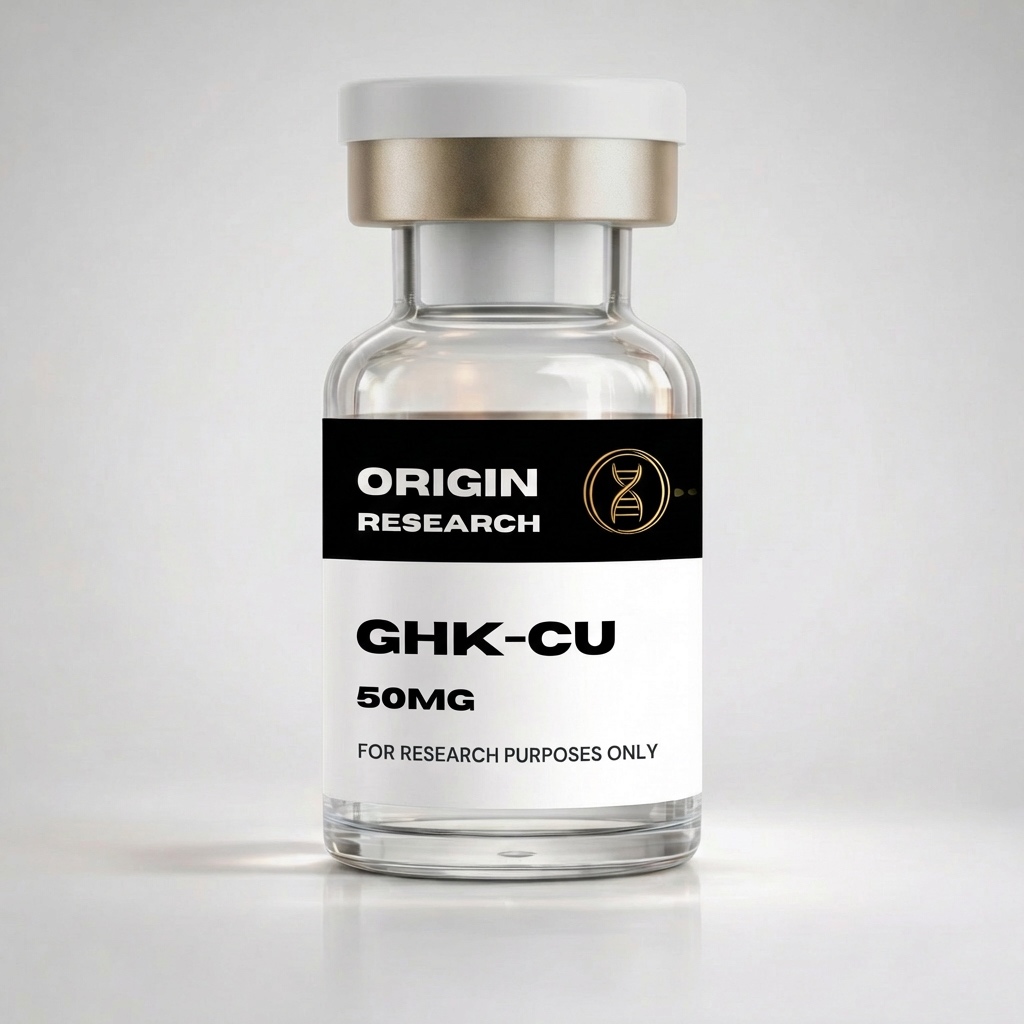
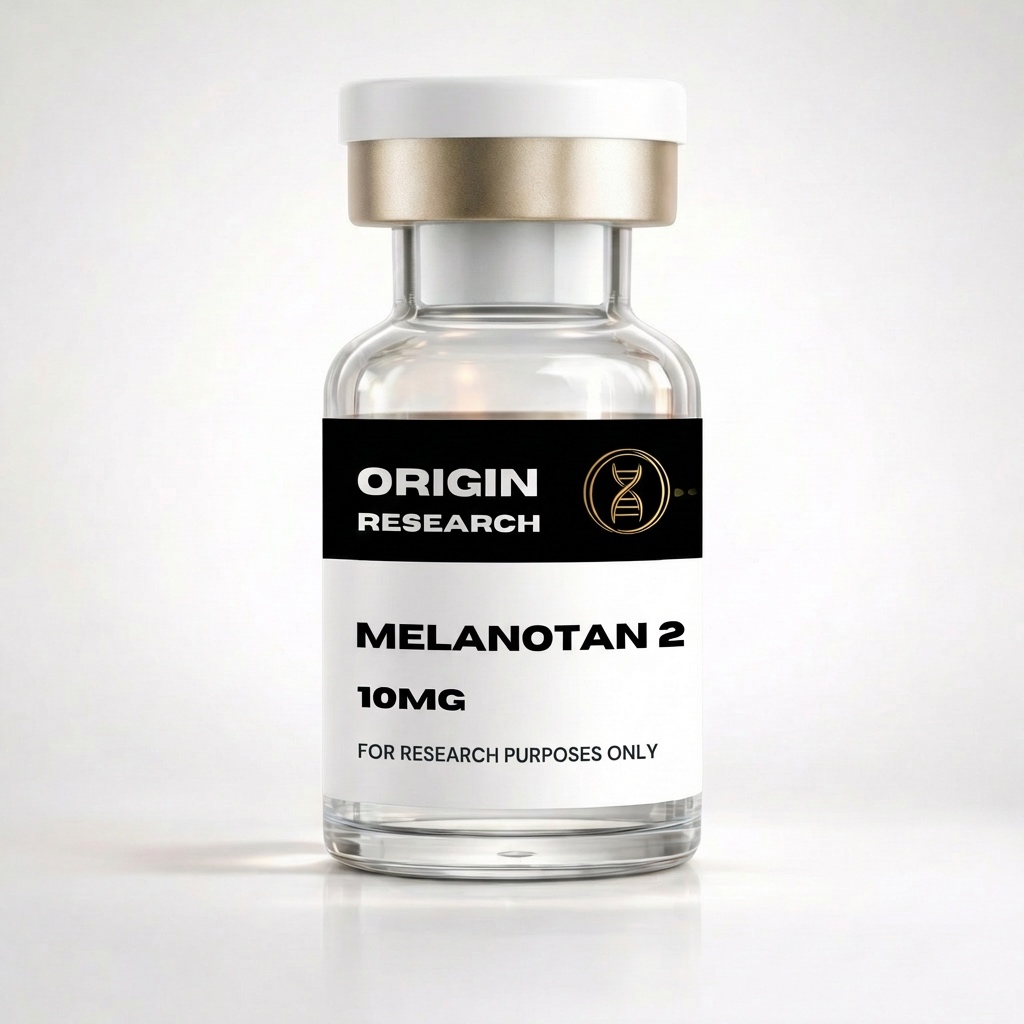
The Skin and Hair category at Origin Research covers research compounds investigated in dermal signalling, melanocortin receptor pharmacology, fibroblast activity, hair-follicle biology and pigmentation pathways. Research groups worldwide order this category most often when studying models of dermal repair, collagen synthesis, follicular regeneration, melanocyte response and ultraviolet protection signalling in research models. The category groups together two compounds with complementary mechanisms in skin biology. GHK-Cu is the copper tripeptide glycyl-histidyl-lysine bound to copper ions, investigated for its signalling activity in fibroblast proliferation, collagen and elastin synthesis, anti-oxidant defence in dermal tissue and hair follicle research. Melanotan II is a synthetic cyclic heptapeptide analogue of alpha-melanocyte stimulating hormone, investigated as a non-selective melanocortin receptor agonist with primary research interest in MC1R-mediated pigmentation pathways and MC4R-mediated central pathways in animal models. The two compounds occupy distinct positions within skin and follicular research, with GHK-Cu studied for direct dermal tissue signalling and Melanotan II studied for systemic melanocortin pathway activation in research models. Research groups globally select within this category for studies on dermal collagen synthesis, hair follicle dermal papilla cell research, ultraviolet protection signalling, melanocyte biology and pigmentation kinetics in vitro and in animal models. Both compounds ship from Origin Labs stock with full HPLC and mass-spectrometry COA documentation, supplied strictly for in-vitro and laboratory research use, not for human or veterinary administration.
About this research category
GHK-Cu and dermal signalling research
GHK-Cu is the copper-bound form of the tripeptide glycyl-histidyl-lysine, a naturally occurring peptide present in human plasma at levels that have been studied to decline with chronological age. Published research has investigated GHK-Cu in fibroblast proliferation assays, in collagen type I and type III synthesis, in elastin synthesis, in glycosaminoglycan synthesis and in dermal extracellular matrix remodelling models. The copper coordination is required for the signalling activity, and the characteristic blue tint of GHK-Cu in solution serves as a visual indicator of intact copper binding. Beyond dermal fibroblast research, GHK-Cu has been investigated in hair follicle dermal papilla cell cultures, in wound-healing models, in oxidative stress and inflammation pathways within skin tissue and in gene-expression studies that have catalogued modulation of hundreds of skin-related genes. The compound has been studied in topical, subcutaneous and intradermal research protocols in animal models depending on the target tissue. Origin Research supplies GHK-Cu as a lyophilised copper-complexed powder for in-vitro and animal research preparation, with the visual blue tint serving as an indicator of intact copper coordination. Stability under refrigeration is several weeks for prepared solution. COA documentation accompanies every order and shows HPLC purity, mass-spectrometry confirmation and peptide content with copper coordination verified.
Melanotan II and melanocortin receptor research
Melanotan II is a synthetic cyclic heptapeptide analogue of alpha-melanocyte stimulating hormone with a lactam bridge that confers resistance to enzymatic degradation and extended in-vivo activity in animal models compared with the native hormone. The compound has been investigated as a non-selective melanocortin receptor agonist with activity across MC1R, MC3R, MC4R and MC5R subtypes in research models. Research interest in Melanotan II spans multiple receptor systems, including MC1R for melanocyte and pigmentation pathway research, MC4R for central pathways related to appetite and sexual response signalling in animal models and MC3R and MC5R for broader melanocortin biology. Published preclinical and early clinical research has examined Melanotan II in pigmentation kinetics, in photoprotection signalling pathways, in central melanocortin pathway research and as a comparator with the more selective MC1R and MC4R agonists developed subsequently. The compound is supplied as a lyophilised vial for in-vitro and animal research protocols. Stability under refrigeration is several weeks for prepared solution. Research groups ordering Melanotan II typically select it for studies on melanogenesis kinetics, on melanocortin receptor pharmacology across subtypes or for comparison work with PT-141, the more selective MC3R and MC4R agonist that derives from related research. COA documentation accompanies every order and shows HPLC purity, mass-spectrometry confirmation and peptide content.
Hair follicle and dermal regeneration research with GHK-Cu
Hair follicle research with GHK-Cu has examined the compound in dermal papilla cell cultures, in hair follicle organ cultures and in mouse models of hair growth cycles. Published research has investigated GHK-Cu effects on dermal papilla cell proliferation, on hair shaft elongation in organ culture and on hair cycle phase transitions in vivo. The mechanism has been studied as a combination of direct fibroblast signalling, modulation of growth factor expression including VEGF and FGF family members and copper-mediated effects on enzymes involved in hair follicle biology. Dermal regeneration research with GHK-Cu has investigated the compound across acute wound models, chronic wound models, surgical scar models and ultraviolet damage repair models in animal research. The compound has been studied in combination with other research peptides including BPC-157 in dermal repair models and with antioxidant compounds in oxidative stress research. Research groups designing follicular or dermal repair studies frequently use topical or intradermal delivery in animal models to localise compound activity at the target tissue. Origin Research supplies GHK-Cu in a format suitable for preparation into either injectable or topical research vehicles depending on the protocol. Bulk reservations for longitudinal follicular research cohorts can be arranged through the contact form, and lot-specific COA documentation is available for review prior to purchase.
Pigmentation kinetics and study design with Melanotan II
Pigmentation research with Melanotan II is typically designed around the kinetics of melanin synthesis in response to MC1R activation in research models. Published research has examined the compound across cell-culture melanocyte models, animal pigmentation models and early human clinical studies. The melanin synthesis pathway has been investigated in tyrosinase activity assays, in eumelanin and pheomelanin ratio studies and in dermal pigment distribution research. Photoprotection signalling has been investigated as a downstream effect of MC1R activation, with research examining ultraviolet response pathways and DNA damage repair signalling in melanocyte models. Study design with Melanotan II in animal research typically uses subcutaneous dosing protocols across two to four week windows to allow pigmentation kinetics to develop through melanin synthesis and distribution. Research groups comparing Melanotan II with more selective MC1R agonists or with the MC3R and MC4R selective agonist PT-141 frequently run parallel-arm designs to isolate receptor-subtype contributions. Origin Research holds Melanotan II in stock at originlabsresearch.com with worldwide dispatch. Lyophilised vials tolerate standard ambient transit conditions, and certificates of analysis accompany every shipment. Research groups requiring lot reservation across a study cohort can request lot-specific COA review prior to purchase.
Frequently asked questions
Why is GHK-Cu blue in solution?
The blue tint of GHK-Cu in solution comes from the copper coordination at the histidine residue and serves as a visual indicator of intact copper binding. The copper coordination is required for the signalling activity of the peptide, and any loss of the blue tint suggests degradation of the copper complex and reduced research activity.
Can Melanotan II and PT-141 be used in the same study?
The two compounds derive from related research and overlap in their melanocortin receptor activity, with PT-141 selective for MC3R and MC4R and Melanotan II non-selective across MC1R through MC5R. Research groups comparing the two typically run parallel-arm designs in research models to isolate receptor-subtype contributions rather than combining them in the same dosing protocol.
Is GHK-Cu used in injectable or topical research protocols?
Both. GHK-Cu has been investigated in subcutaneous and intradermal injectable protocols in animal models for systemic and localised dermal research, and in topical research vehicles for direct dermal application in research models. The lyophilised powder can be prepared into either injectable or topical research formulations depending on the study design.
What is the most common research application for Melanotan II?
Pigmentation kinetics through MC1R activation is the most common research application in animal models, followed by central melanocortin pathway research at MC4R. The compound is also used as a comparator with more selective melanocortin receptor agonists developed in subsequent research.
Can GHK-Cu be combined with other recovery peptides in dermal research?
Yes. GHK-Cu has been studied in combination with BPC-157 in dermal repair models and with antioxidant compounds in oxidative stress research. Each compound is prepared separately to preserve the copper coordination of GHK-Cu, and they are combined only at the point of administration in animal models if a combined-dosing protocol is required.
Are the skin and hair compounds shipped worldwide?
Yes. GHK-Cu and Melanotan II ship from Origin Labs stock to research groups globally through tracked courier services. Lyophilised vials tolerate standard ambient transit, and certificates of analysis accompany every order from originlabsresearch.com.
Does Melanotan II come with a certificate of analysis?
Yes. Every lot of Melanotan II and GHK-Cu is supplied with a third-party COA showing HPLC purity, mass-spectrometry confirmation and peptide content, with copper coordination verified for GHK-Cu. COAs accompany every dispatch and are available for review on request prior to purchase.