
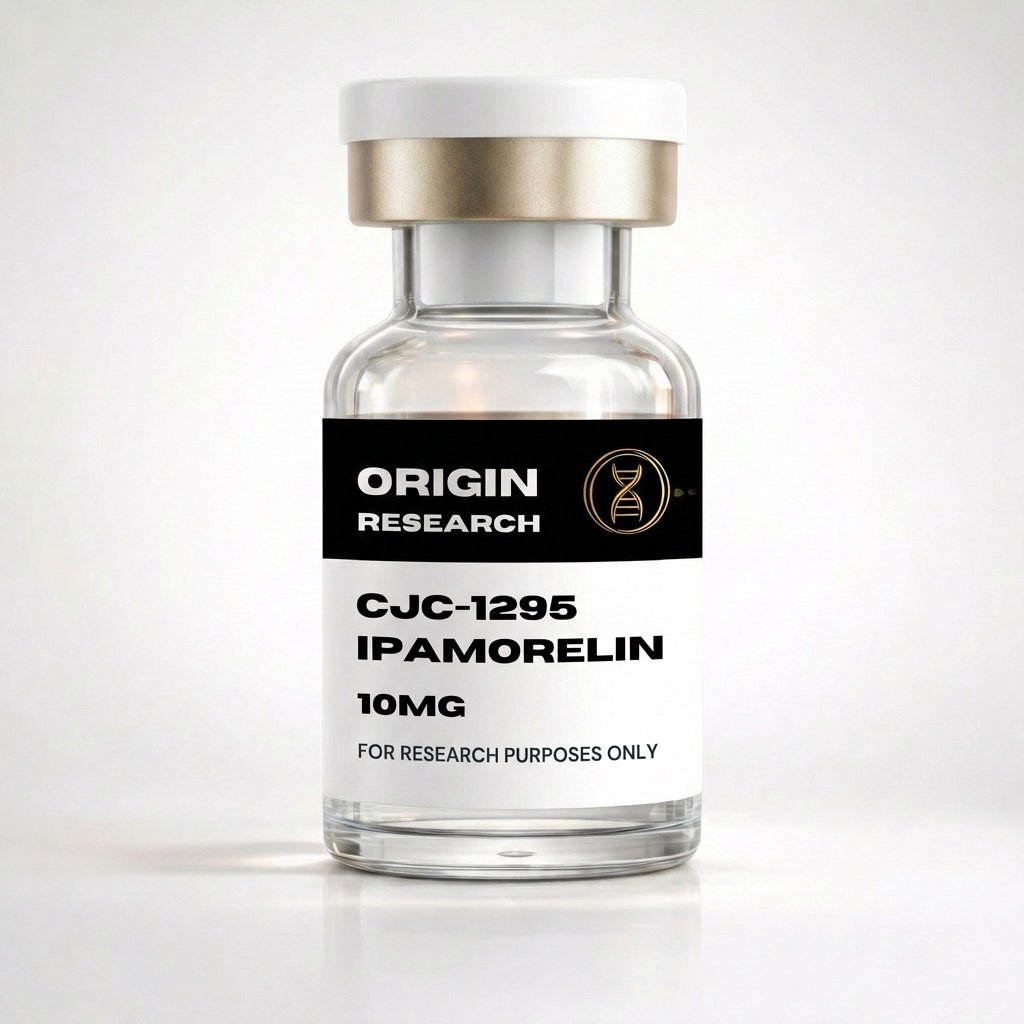
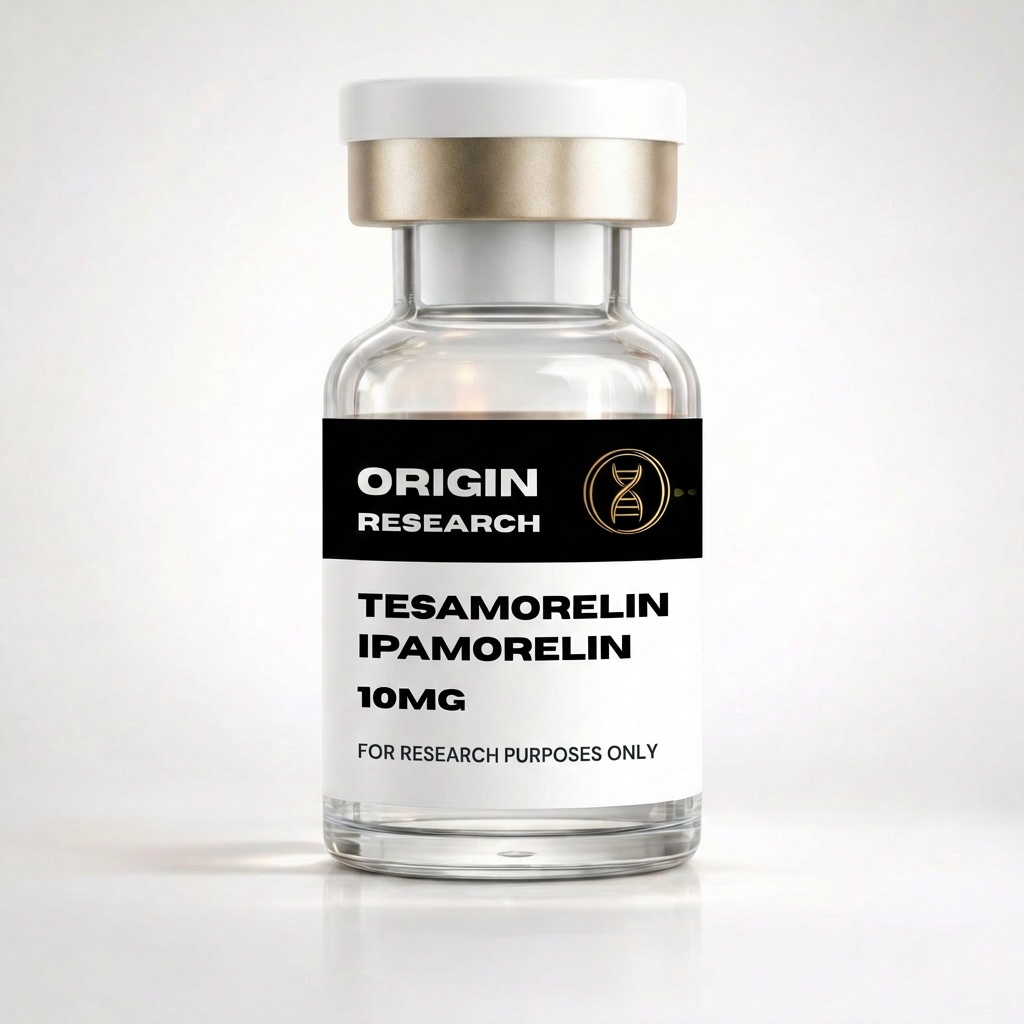
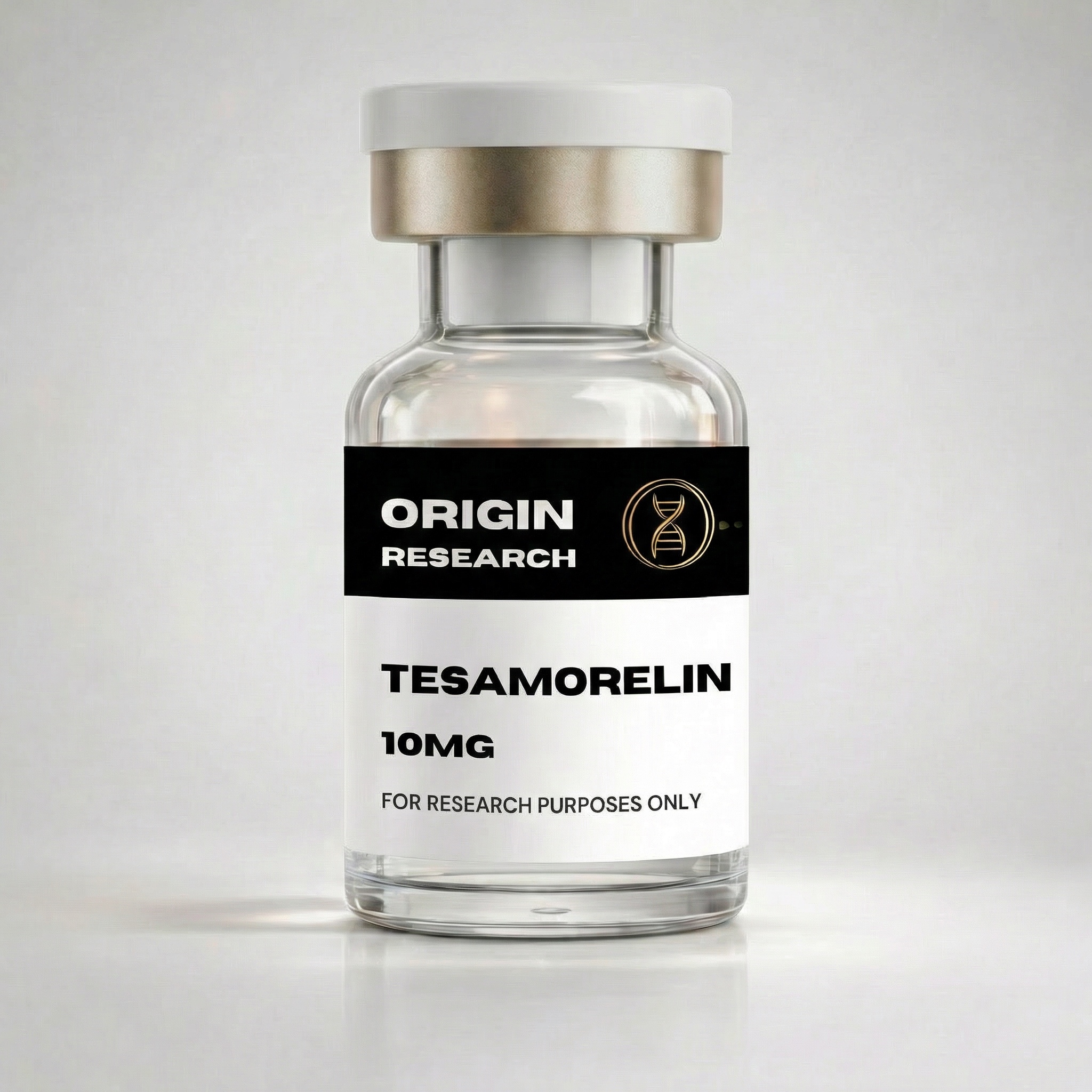
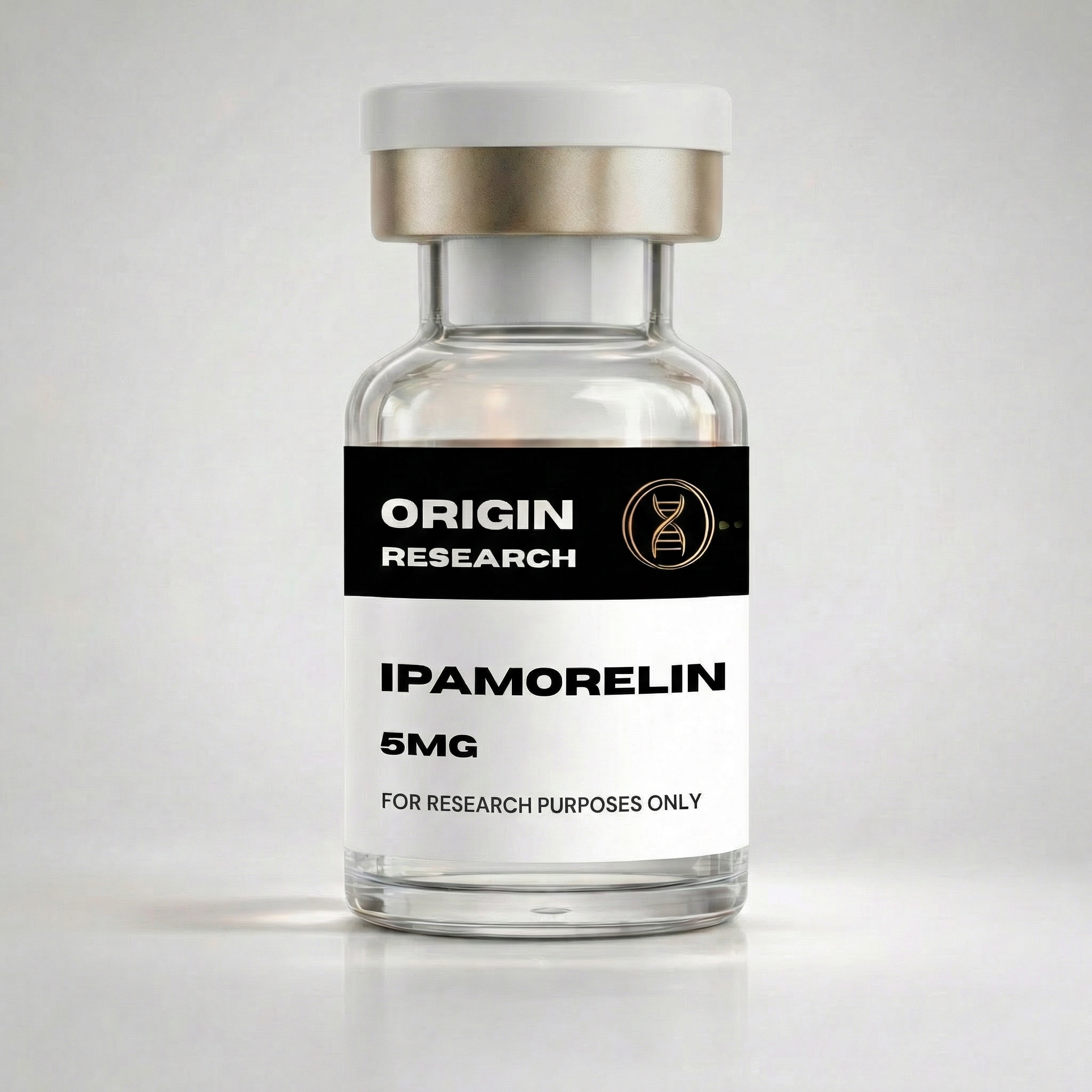
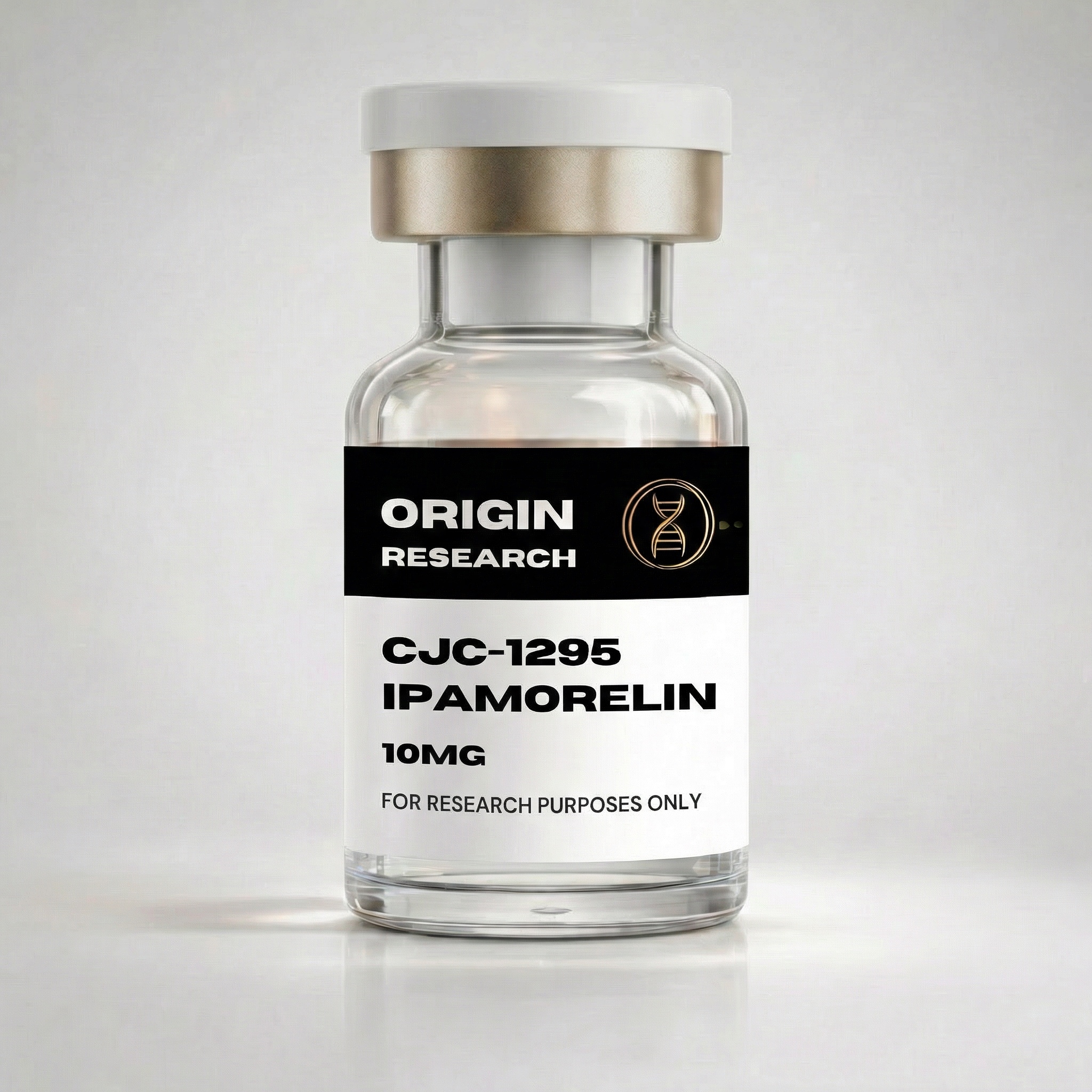
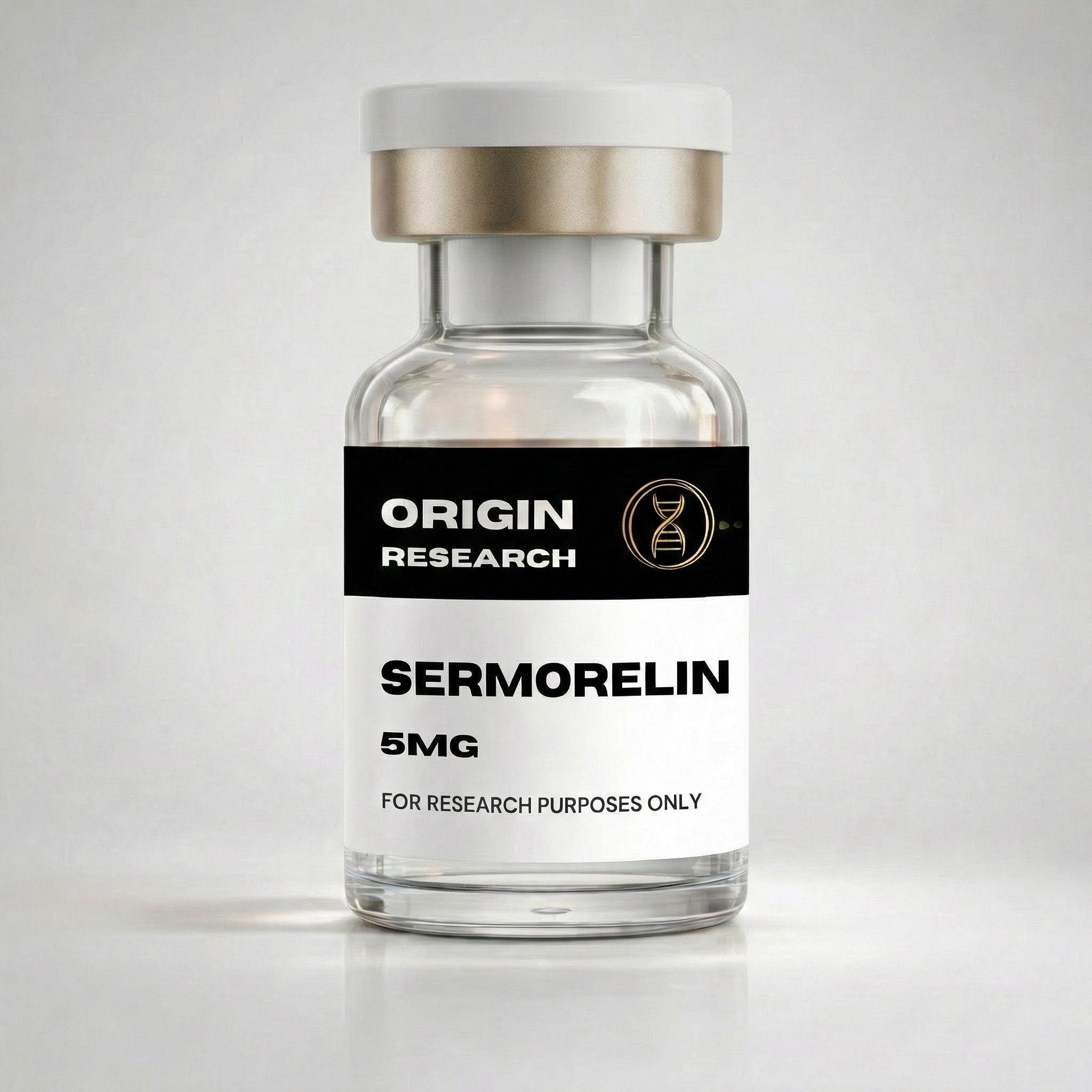
The GH Secretagogues category at Origin Research covers research compounds investigated in the somatotropic axis, specifically the hypothalamic and pituitary signalling pathways that regulate endogenous growth hormone release. Researchers worldwide order this category most often when studying models of pulsatile GH secretion, GHRH receptor pharmacology, ghrelin receptor signalling, IGF-1 axis modulation and age-related decline in the somatotropic system. The category groups together six compounds spanning two distinct mechanistic families. The GHRH analogues include Sermorelin, a truncated GHRH 1 to 29 sequence, CJC-1295, a stabilised long-acting GHRH analogue, and Tesamorelin, a stabilised GHRH analogue investigated extensively in lipodystrophy and visceral adipose tissue research. The ghrelin receptor agonist family is represented by Ipamorelin, a selective pentapeptide investigated for its pulsatile GH-release profile without significant cortisol or prolactin elevation in preclinical literature. The category also includes two fixed-ratio research blends, CJC-1295 with Ipamorelin and Tesamorelin with Ipamorelin, each pairing a GHRH analogue with the selective ghrelin receptor agonist for combined-pathway studies. Each compound has been investigated in distinct research contexts, with GHRH analogues studied for their direct stimulation of pituitary somatotropes and Ipamorelin studied for its selective ghrelin receptor binding. Research groups in the international research community frequently select within this category for studies on pituitary signalling, growth hormone pulsatility, age-related GH decline and metabolic models tied to the GH and IGF-1 axis. All products ship from global stock with full HPLC and mass-spectrometry COA documentation, supplied strictly for in-vitro and laboratory research use, not for human or veterinary administration.
About this research category
GHRH analogues, Sermorelin, CJC-1295 and Tesamorelin
The GHRH analogue family represents one of two mechanistic branches within the GH secretagogue category. Sermorelin is the most heavily cited research analogue and corresponds to the first 29 amino acids of endogenous growth hormone releasing hormone, the active region required for GHRH receptor binding. Sermorelin has been investigated in pituitary stimulation studies, in animal models of age-related GH decline and in paediatric short-stature research. The compound has a short half-life in serum, which is desirable in research models examining acute pulsatile GH release. CJC-1295 is a modified GHRH analogue with substitutions that resist enzymatic degradation, extending the in-vivo half-life significantly compared with Sermorelin. The version supplied by Origin Research is the non-DAC variant, which retains GHRH receptor agonism without the additional albumin-binding affinity of the DAC-modified version. CJC-1295 has been investigated in chronic GH and IGF-1 axis modulation studies in animal models. Tesamorelin is a stabilised GHRH analogue with a hexenoyl modification that has been investigated extensively in HIV-associated lipodystrophy research and in visceral adipose tissue studies. Each GHRH analogue is supplied as a lyophilised vial, researchers reconstitute it with bacteriostatic water and the reconstituted solution is stable under refrigeration for several weeks. Researchers selecting within this family typically choose based on the desired pharmacokinetic profile, with Sermorelin selected for short-duration pulsatile studies and CJC-1295 or Tesamorelin selected for extended-window protocols in animal models.
Selective ghrelin receptor research with Ipamorelin
Ipamorelin is a synthetic pentapeptide investigated as a selective ghrelin receptor agonist, also referred to as a GHSR1a agonist or growth hormone secretagogue receptor agonist. Unlike earlier non-selective GH secretagogues, Ipamorelin has been studied for its ability to stimulate pulsatile GH release from pituitary somatotropes without significant elevation of cortisol, prolactin or aldosterone in published animal and early human research. This selectivity profile makes Ipamorelin a frequent choice in research models that wish to isolate the GH-release pathway from broader hypothalamic-pituitary-adrenal axis effects. The compound has been investigated in animal models of pulsatile GH secretion, in combination with GHRH analogues for synergistic release studies, in catabolic-state research and in age-related somatotropic decline studies. Ipamorelin is supplied as a lyophilised vial and researchers reconstitute it with bacteriostatic water for injectable research protocols. Stability under refrigeration is consistent with other GH secretagogue peptides, typically several weeks once reconstituted. Researchers ordering Ipamorelin frequently order a GHRH analogue alongside, as the combination of a GHRH analogue with a ghrelin receptor agonist has been investigated for synergistic pulsatile GH release that exceeds the response to either compound alone in preclinical literature. Origin Research supplies this pairing both as separate vials for independent dose titration and as a pre-blended single vial for protocol simplicity.
Combination research blends, CJC-1295 with Ipamorelin and Tesamorelin with Ipamorelin
The two pre-blended research products in this category pair a GHRH analogue with the selective ghrelin receptor agonist Ipamorelin in a single lyophilised vial. The CJC-1295 with Ipamorelin blend combines extended GHRH receptor agonism with selective ghrelin receptor activation and has been investigated as a research model for chronic somatotropic axis stimulation in animal models. The Tesamorelin with Ipamorelin blend combines the lipodystrophy-investigated GHRH analogue with Ipamorelin and has been selected in research designs that examine the GHRH-Ipamorelin synergy specifically in the context of adipose-tissue and metabolic models. Pre-blending offers a single reconstitution event and a single dosing solution, which is preferred in protocols where the ratio between the two compounds is held constant across an entire study window. Researchers requiring independent dose titration of each compound select the separate-vial format. The synergistic mechanism is well documented in published literature, with GHRH receptor agonism and ghrelin receptor agonism acting on distinct upstream pathways that converge on amplified pulsatile GH release in research models. Researchers reconstitute the blend with bacteriostatic water, and the reconstituted blend retains stability under refrigeration consistent with each component peptide. COA documentation accompanies every blended vial and shows the peptide content of each component, the HPLC purity of the finished blend and mass-spectrometry confirmation of both peptides.
Study design, dosing windows and global stock
Study design within the GH secretagogue category typically follows the natural pulsatile rhythm of endogenous GH release, with subcutaneous dosing protocols in animal models often scheduled either pre-sleep or in split-dose configurations. Published research using Sermorelin typically uses single or split daily dosing given the short half-life, while CJC-1295 and Tesamorelin protocols frequently use less frequent dosing schedules consistent with their extended half-lives. Ipamorelin is commonly dosed two to three times daily in pulsatile-release research in animal models to match natural GH pulse intervals. Researchers designing combination studies with GHRH analogue and Ipamorelin pairings often dose both components concurrently to model the convergent pathway stimulation described in published synergy data. Origin Research holds every compound in this category in global stock with typical dispatch of one to three working days and delivery within three to seven working days through worldwide shipping to international research destinations. Lyophilised vials tolerate standard ambient transit conditions, and certificates of analysis accompany every shipment. Lot ages on dispatch are typically within six months of synthesis given the steady turnover of this category, and lot reservations for longitudinal study cohorts can be arranged through the contact form. Researchers requiring specific peptide content per vial can request lot-specific COA review prior to purchase.
Frequently asked questions
Which GH secretagogue should a new research project start with?
Ipamorelin paired with a GHRH analogue is the most common starting point because the combination represents the most published synergy in pulsatile GH release research in animal models. Within the GHRH family, CJC-1295 is frequently selected for chronic-window studies, Sermorelin for short pulsatile studies, and Tesamorelin for studies tied to visceral adipose and lipodystrophy research.
What is the difference between CJC-1295 with DAC and without DAC?
The DAC modification adds a drug affinity complex that binds albumin and significantly extends half-life. The non-DAC version, which Origin Research supplies, retains GHRH receptor agonism without the extended albumin-binding kinetics, making it preferred in research models that target pulsatile release rather than chronic elevation. The non-DAC version is most commonly paired with Ipamorelin in combination studies.
Why is Ipamorelin described as selective?
Ipamorelin has been investigated for its ability to stimulate GH release through the ghrelin receptor without significant cortisol, prolactin or aldosterone elevation in published animal and early human studies. This selectivity profile distinguishes Ipamorelin from earlier non-selective growth hormone secretagogues and makes it the preferred ghrelin receptor agonist in research models targeting the GH pathway specifically.
Should researchers order the pre-blended vials or separate vials?
Pre-blended vials offer protocol simplicity and a single reconstitution event with a fixed ratio between components. Separate vials allow independent dose titration of each compound, which is preferred when a study design requires varying one compound while holding the other constant. The same source peptides and same HPLC purity standard are used in both formats.
Are GH secretagogue compounds shipped in cold packaging?
Lyophilised vials of Sermorelin, CJC-1295, Tesamorelin, Ipamorelin and the pre-blended pairings tolerate standard ambient transit conditions. Cold packaging is added for orders to destinations with long transit windows or extreme transit temperatures. Once delivered, reconstituted solution should be stored under refrigeration.
Can Tesamorelin and CJC-1295 be used in the same study?
Both compounds act on the GHRH receptor and would not typically be combined in the same study because they target the same pathway. Researchers comparing the two compounds usually run them in parallel-arm study designs to compare pharmacokinetic profiles and downstream effects on the IGF-1 axis in animal models.
Do the GH secretagogues come with a certificate of analysis?
Yes. Every lot of Sermorelin, CJC-1295, Tesamorelin, Ipamorelin, the CJC-1295 with Ipamorelin blend and the Tesamorelin with Ipamorelin blend is supplied with a third-party COA showing HPLC purity, mass-spectrometry confirmation and peptide content. COAs accompany every dispatch and are available for review on request prior to purchase.