
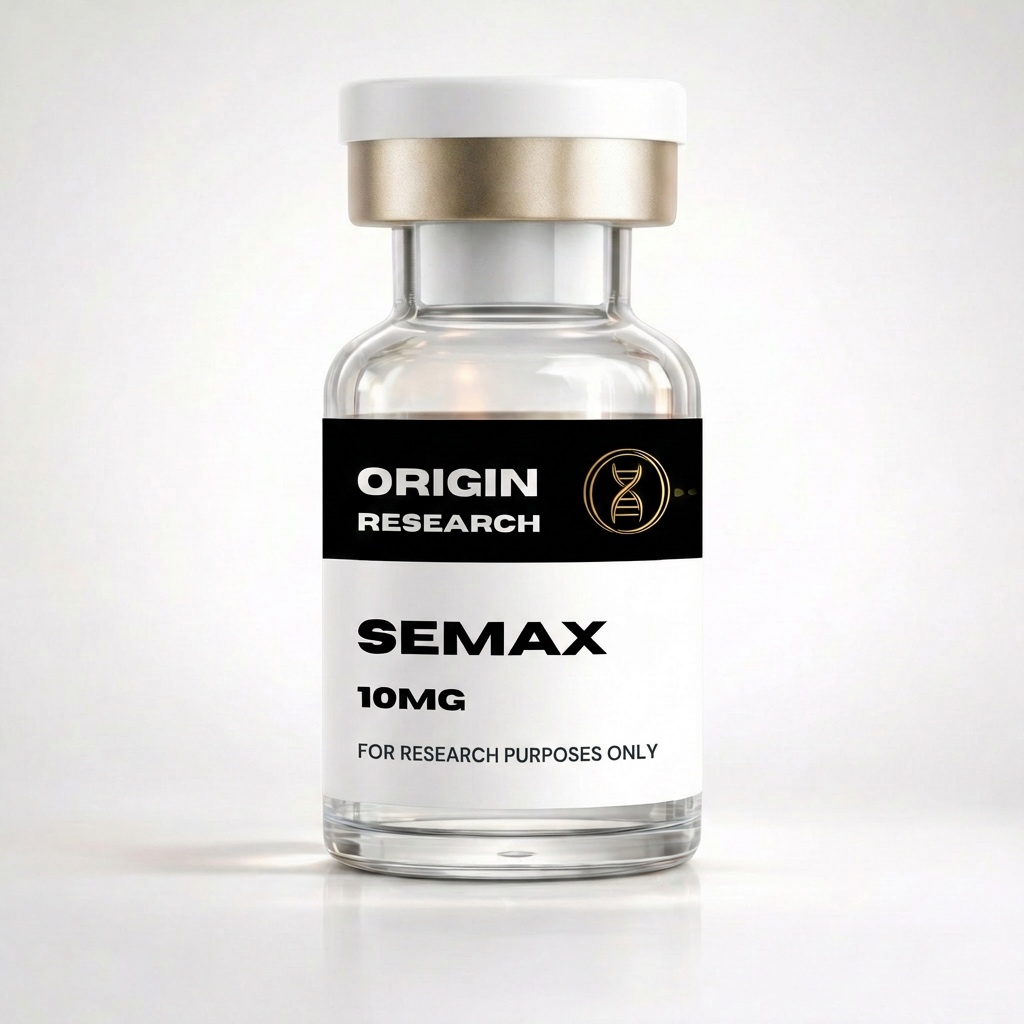
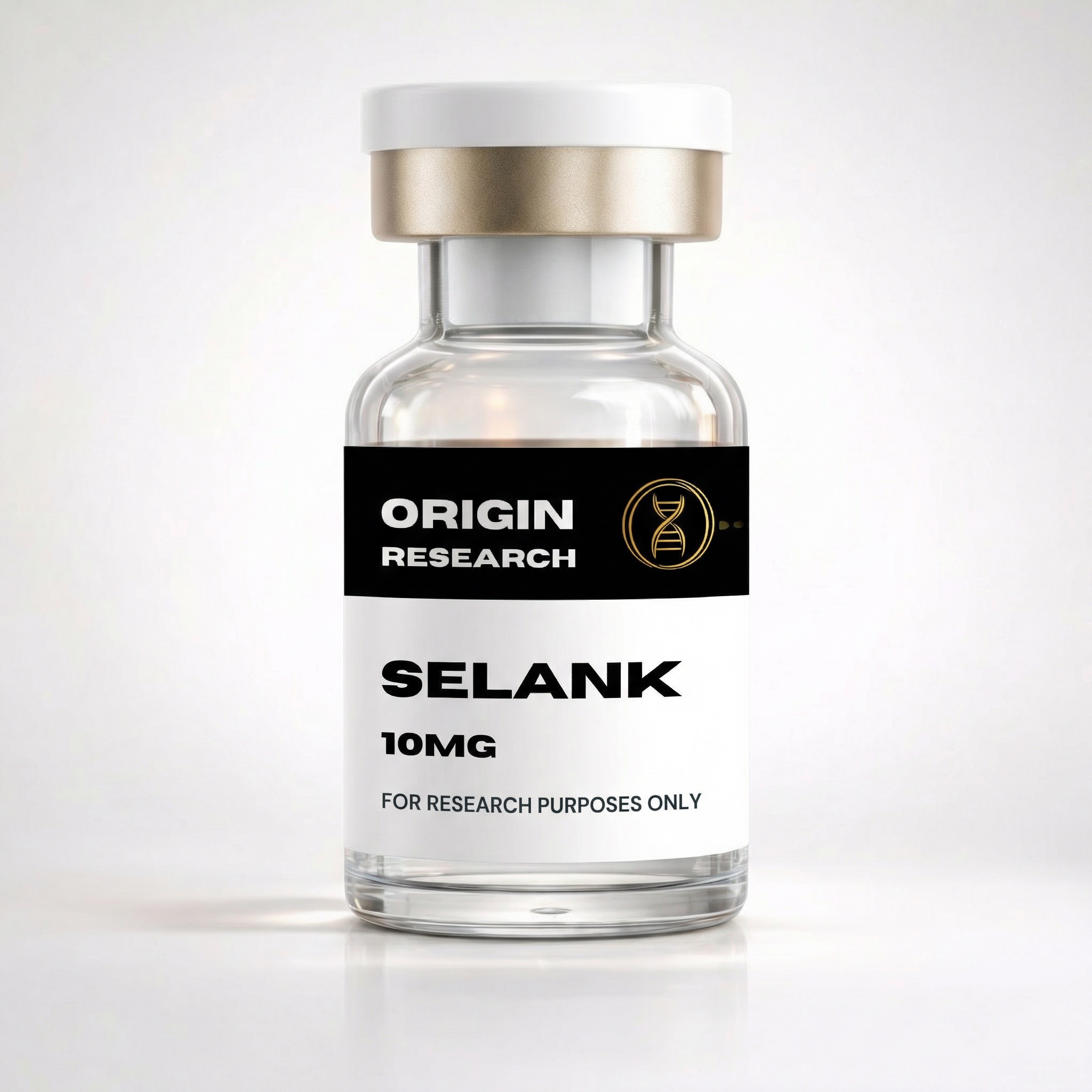
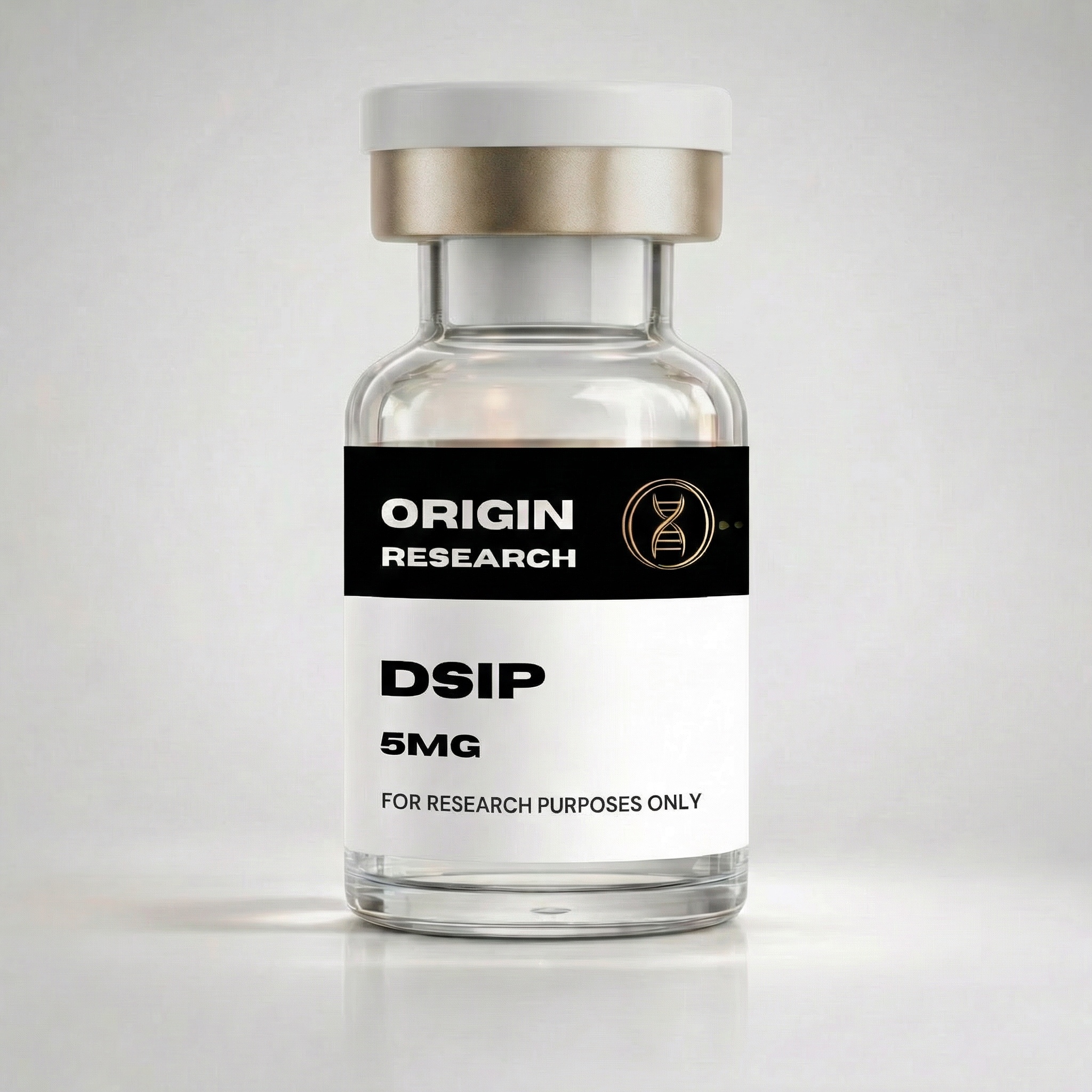
The Nootropic and Cognitive category at Origin Research covers research compounds investigated in central nervous system signalling pathways, neurotransmitter modulation, neurotrophic factor expression and sleep architecture. Researchers worldwide order this category most often when studying models of focus and attention, ischemic neuroprotection, anxiolytic pathways, sleep-onset latency and stress-response modulation. The category groups together three compounds derived from peptide research at the Russian Academy of Medical Sciences and related institutions, each with distinct mechanisms within the CNS research field. SEMAX is a heptapeptide based on a fragment of adrenocorticotropic hormone, investigated for its effects on BDNF and NGF expression in cortical and hippocampal research models. Selank is a heptapeptide derived from the immunomodulatory peptide tuftsin, investigated as an anxiolytic research compound with reported effects on GABAergic and serotonergic pathways in preclinical literature. DSIP, the delta sleep inducing peptide, is a nonapeptide originally isolated from cerebral venous blood during electrically induced sleep states in rabbit models and has been investigated in sleep-architecture and stress-response research in animal models. Each compound represents a distinct CNS pathway target and is supplied in two formats where applicable, the lyophilised vial for injectable research protocols and the intranasal solution for intranasal-delivery research models. Research groups in the international research community frequently select within this category for studies on neuroplasticity markers, anxiolytic pathway mapping, sleep induction kinetics and acute stress-response biology in animal models. All products ship from global stock with HPLC and mass-spectrometry COA documentation for in-vitro and laboratory research use only.
About this research category
SEMAX, ACTH-derived heptapeptide research
SEMAX is a synthetic heptapeptide based on the ACTH 4 to 10 fragment with an additional Pro-Gly-Pro sequence added for protease resistance. The compound has been investigated extensively in Russian and Eastern European neurological research, with published studies examining its effects on brain-derived neurotrophic factor expression, nerve growth factor expression, dopaminergic pathway activity and neuroprotection in ischemic models. Preclinical and early clinical research has studied SEMAX in attention and cognitive performance assays, in stroke recovery models and in models of executive function. The reported neurotrophic mechanism makes SEMAX a frequent selection in research models investigating BDNF-dependent neuroplasticity and hippocampal pathway activity. Origin Research supplies SEMAX in two formats, a lyophilised vial for injectable research protocols and an intranasal solution that mirrors the format used in the published Russian clinical literature. Intranasal delivery has been investigated as a route that bypasses first-pass metabolism and supports olfactory and trigeminal pathways to the CNS in animal models. The intranasal format is supplied as a pre-mixed solution at a specified concentration per spray, while the lyophilised vial allows researchers to control concentration through their own reconstitution. Both formats are supplied with COA documentation showing HPLC purity, mass-spectrometry confirmation and peptide content. Researchers comparing peripheral and intranasal delivery in the same study design frequently order both formats to maintain consistent compound source while varying the delivery route in their research model.
Selank and anxiolytic pathway research
Selank is a synthetic heptapeptide based on tuftsin, a naturally occurring immunomodulatory peptide, with an added Pro-Gly-Pro stabilising sequence similar to that used in SEMAX. The compound has been investigated as an anxiolytic research compound with reported activity in GABAergic and serotonergic pathways in animal models. Published preclinical and early clinical research has studied Selank in models of generalised anxiety, in stress-response assays, in attention and cognitive performance research and in models examining enkephalin metabolism. The reported anxiolytic profile has been investigated as distinct from benzodiazepine-class compounds because Selank does not appear to produce sedative or motor-impairment effects in published animal models. Selank is supplied as a lyophilised vial and as an intranasal solution, with the intranasal format mirroring the delivery route used in much of the published clinical research. Researchers reconstitute the lyophilised vial with bacteriostatic water, and the intranasal format is supplied pre-mixed at a specified concentration per spray. Researchers frequently pair Selank with SEMAX in study designs that examine anxiolytic and nootropic pathways concurrently, as the two compounds share a structural backbone but differ in mechanism and behavioural pathway in animal models. COA documentation accompanies every order and shows HPLC purity, mass-spectrometry confirmation and peptide content for both formats.
DSIP and sleep architecture research
DSIP is a nonapeptide originally isolated from cerebral venous blood of rabbits during electrically induced sleep states and has been investigated for its effects on sleep architecture, slow-wave sleep induction and stress-response modulation in animal models. Published research has examined DSIP in models of sleep-onset latency, in opiate withdrawal research, in stress-axis modulation and in oncological pain research. The mechanism of action is not fully characterised in published literature and has been investigated as multi-pathway, with reported effects on hypothalamic signalling, opioid receptor modulation and corticotropin-releasing factor pathways. DSIP is supplied as a lyophilised vial and researchers reconstitute it with bacteriostatic water for injectable research protocols. Stability under refrigeration is consistent with other CNS-active peptides, typically several weeks once reconstituted. Researchers ordering DSIP typically select it for sleep-architecture research in animal models, for stress-response modulation studies or for combination work with other CNS-active research compounds. Published dosing protocols in animal research vary widely given the breadth of investigated pathways, and researchers are advised to reference the specific model literature most relevant to their study design. Origin Research supplies DSIP from global stock with full COA documentation, and bulk reservations for longitudinal sleep-architecture cohorts can be arranged through the contact form.
Intranasal versus injectable formats and study design
Two of the three compounds in this category, SEMAX and Selank, are supplied in both lyophilised vial and intranasal solution formats. The choice between formats is driven by the research model and the delivery route under investigation. Intranasal delivery has been investigated as a route that supports olfactory and trigeminal pathway transport to the CNS, bypassing the blood-brain barrier through a different mechanism than systemic injection. Published clinical research with SEMAX and Selank has used intranasal delivery extensively, and the intranasal format Origin Research supplies is designed to mirror that delivery route for researchers replicating or extending the published protocols. The lyophilised vial format provides flexibility for researchers who wish to control concentration, route and dosing volume independently in their research model. Researchers reconstitute the lyophilised vial with bacteriostatic water and stability under refrigeration is several weeks for reconstituted solution. Researchers running parallel-arm studies comparing systemic and intranasal delivery often order both formats of the same compound to maintain consistent peptide source. DSIP is supplied only as a lyophilised vial because the published sleep-architecture literature primarily uses injectable protocols in animal models. All three compounds ship from global stock with COA documentation, typical dispatch is one to three working days, and delivery is three to seven working days through worldwide shipping to international research destinations.
Frequently asked questions
What is the difference between SEMAX and Selank?
Both compounds are heptapeptides with Pro-Gly-Pro stabilising sequences, but they derive from different parent peptides and act on different CNS pathways. SEMAX is investigated in neurotrophic factor expression, dopaminergic activity and ischemic neuroprotection. Selank is investigated as an anxiolytic compound with reported activity in GABAergic and serotonergic pathways in animal models. Researchers select the compound that matches the pathway under investigation.
Which delivery format should a new research project use?
The intranasal format is appropriate for studies replicating or extending the published Russian clinical literature on SEMAX and Selank, which used intranasal delivery extensively. The lyophilised vial format is appropriate for studies that require concentration flexibility, injectable delivery or comparison of delivery routes in the research model. Both formats use the same source peptide and same HPLC purity standard.
Is DSIP supplied in an intranasal format?
No. DSIP is supplied only as a lyophilised vial because the published sleep-architecture and stress-response literature primarily uses injectable research protocols in animal models. Researchers wishing to investigate intranasal DSIP delivery prepare their own concentration from the lyophilised vial using bacteriostatic water.
Can SEMAX and Selank be used in the same study?
Yes. The two compounds target distinct CNS pathways and have been investigated together in research designs that examine nootropic and anxiolytic mechanisms concurrently. Each compound is reconstituted separately to maintain dose accuracy, and both intranasal and injectable formats can be combined within a study design where delivery routes are matched.
What pathways are most commonly studied with SEMAX?
Published research on SEMAX has investigated BDNF and NGF expression, dopaminergic pathway activity, neuroprotection in ischemic models, attention and executive function assays and acute stress-response biology in animal models. The neurotrophic factor expression pathway is the most heavily cited mechanism in current literature.
How is DSIP typically used in research models?
DSIP has been investigated in sleep-onset latency models, in slow-wave sleep architecture studies, in stress-axis modulation research, in opiate withdrawal research and in oncological pain models. Published dosing protocols vary by model, and researchers reference the specific literature most relevant to their study design.
Do nootropic peptides ship worldwide?
Yes. SEMAX, Selank and DSIP ship from global stock to international research destinations through tracked courier services with typical dispatch of one to three working days and delivery within three to seven working days. Both lyophilised and intranasal formats tolerate standard ambient transit, and certificates of analysis accompany every order.