
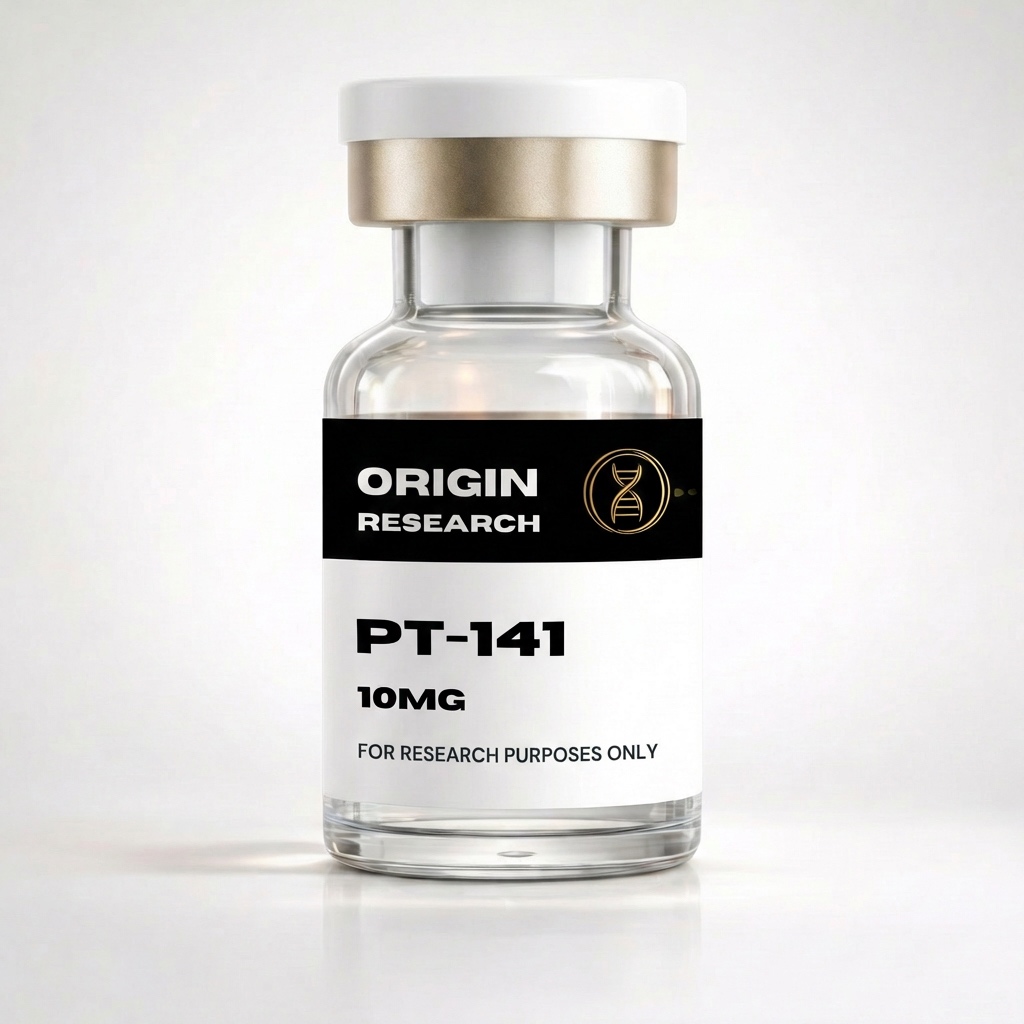
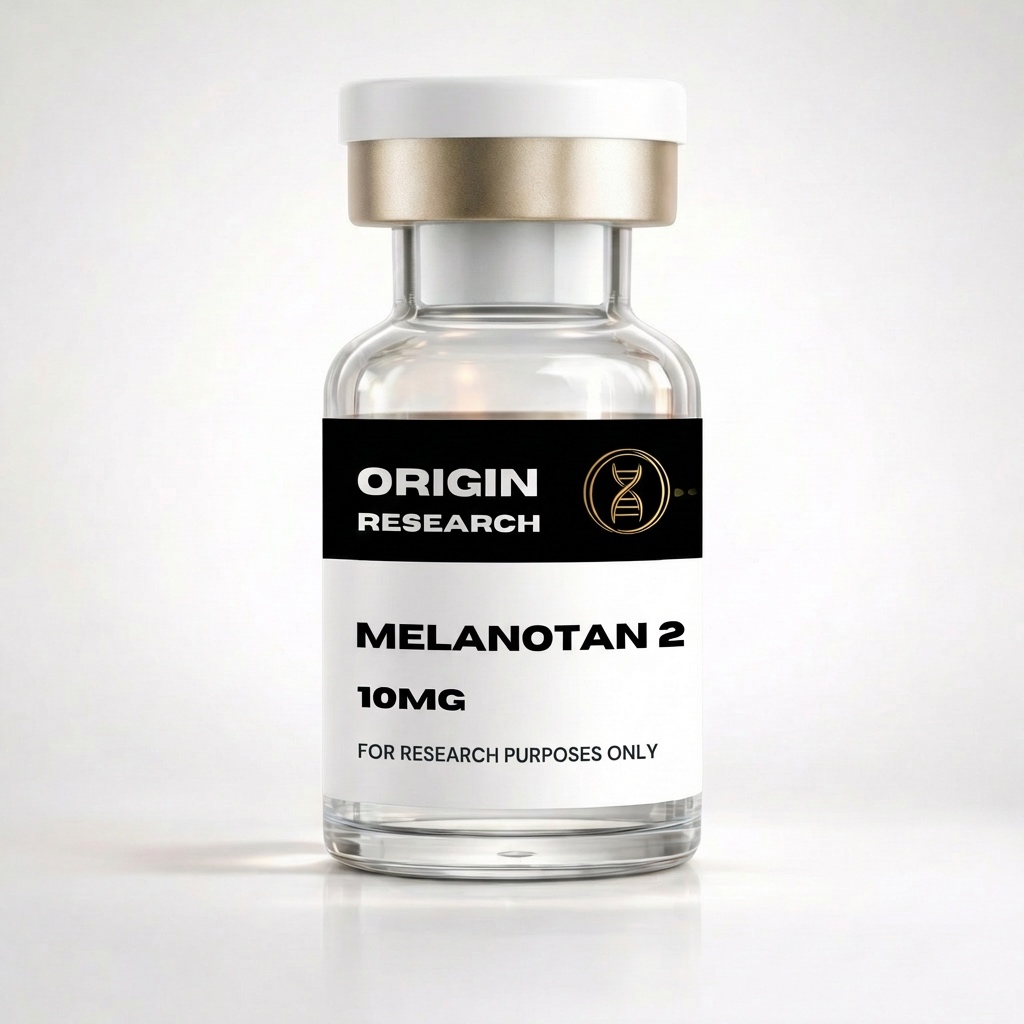
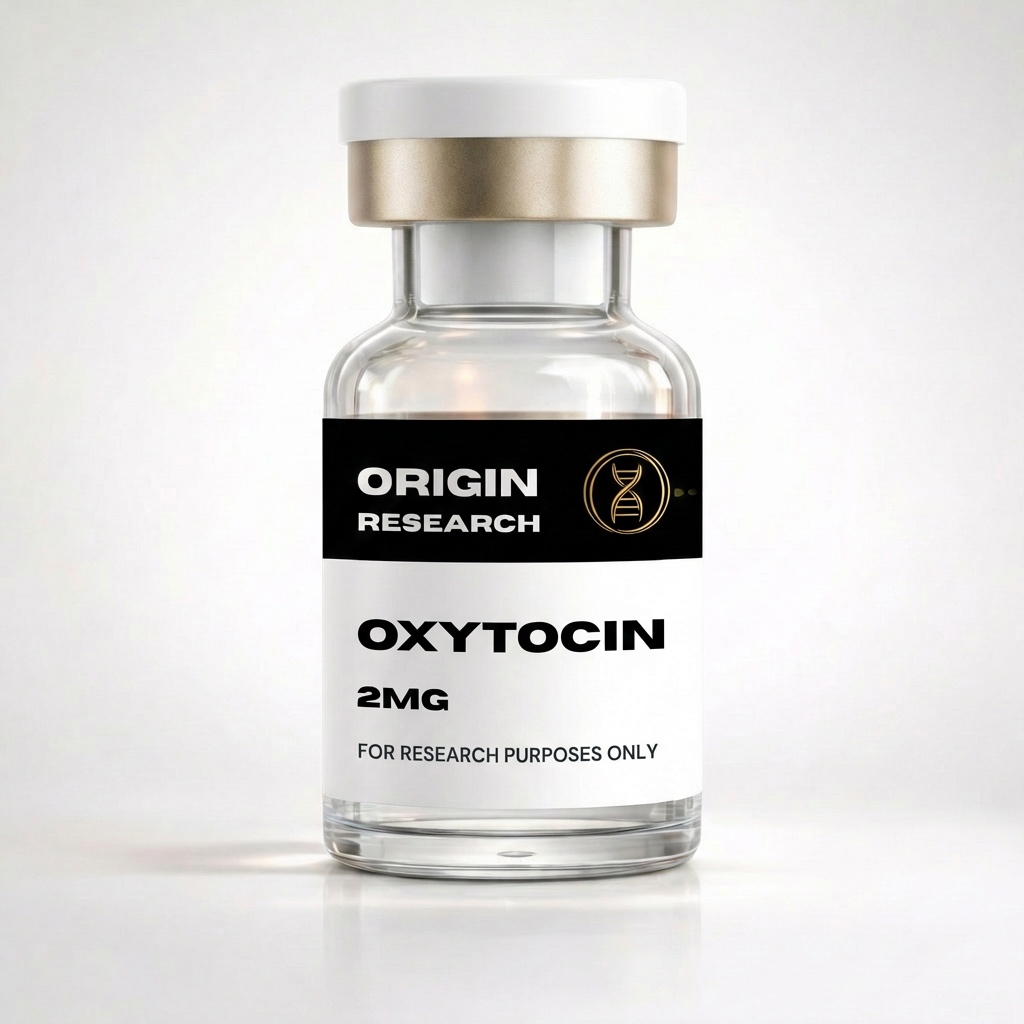
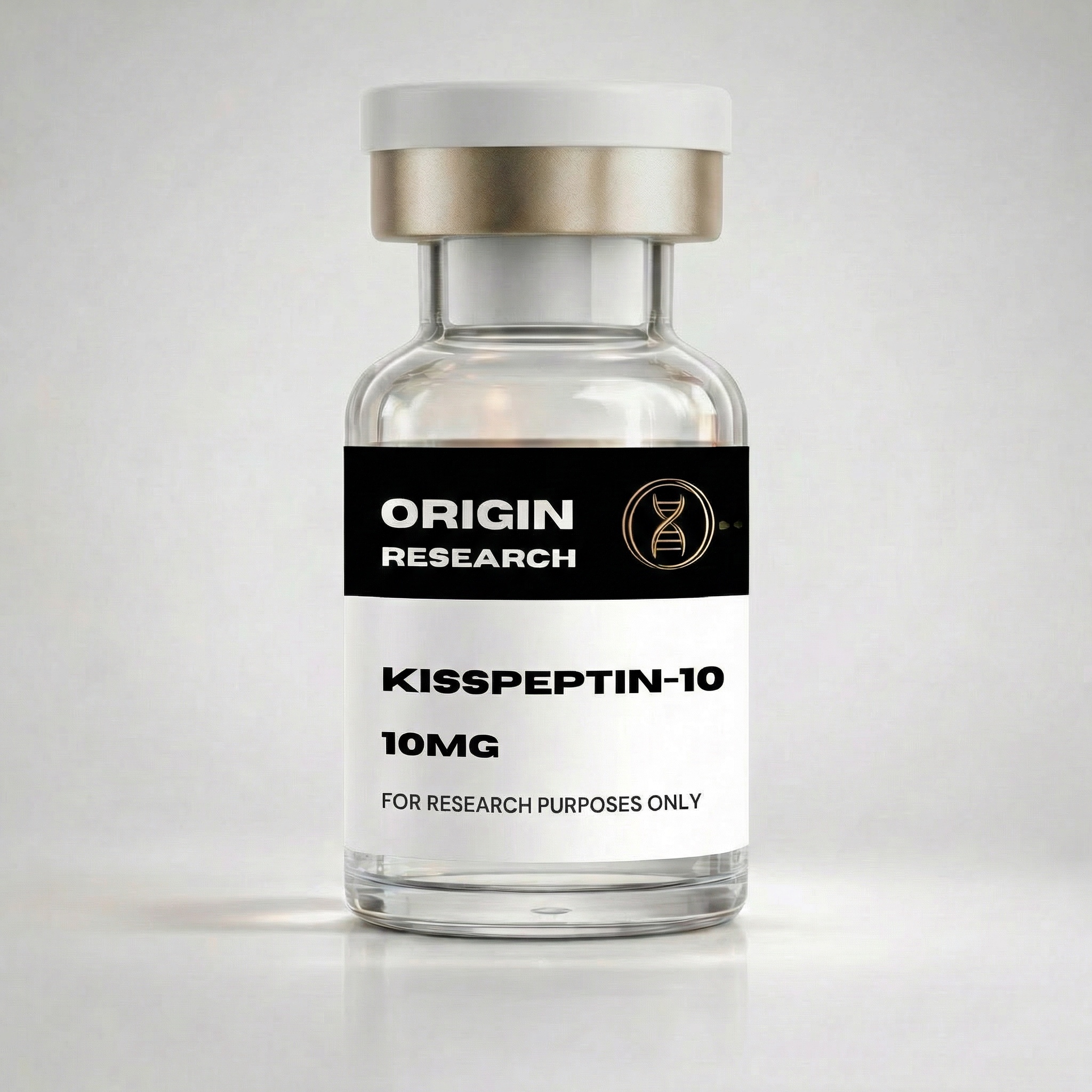
The Libido and Tanning category at Origin Research covers research compounds investigated in melanocortin receptor pharmacology, oxytocinergic signalling, kisspeptin pathway biology and central pathways related to sexual response and reproductive endocrinology in research models. Research groups worldwide order this category most often when studying models of central melanocortin signalling, oxytocin receptor activity, hypothalamic kisspeptin neurons and pigmentation kinetics through MC1R activation in animal models. The category groups together four compounds with distinct mechanisms within these pathway families. PT-141, also referred to as Bremelanotide in published clinical literature, is a synthetic peptide investigated as a selective MC3R and MC4R melanocortin receptor agonist. Melanotan II is a non-selective melanocortin receptor agonist investigated across MC1R, MC3R, MC4R and MC5R subtypes in research models. Oxytocin is the nine-amino-acid neuropeptide investigated extensively in social bonding, reproductive physiology and central oxytocinergic pathway research in animal models. Kisspeptin-10 is the active C-terminal fragment of the parent kisspeptin peptide, investigated as a hypothalamic regulator of GnRH neurons and the downstream HPG axis in research models. Research groups globally select within this category for studies on central sexual response pathways, on hypothalamic reproductive endocrinology, on social and pair-bonding behavioural models and on melanocortin receptor pharmacology. All products ship from Origin Labs stock with full HPLC and mass-spectrometry COA documentation, supplied strictly for in-vitro and laboratory research use, not for human or veterinary administration.
About this research category
Melanocortin receptor research with PT-141 and Melanotan II
PT-141 and Melanotan II both derive from melanocortin receptor research originating in studies on alpha-MSH and its synthetic analogues. PT-141, also referred to as Bremelanotide, is a metabolite of Melanotan II that has been investigated as a more selective MC3R and MC4R agonist with reduced MC1R activity in research models. The selectivity profile makes PT-141 the preferred research compound in studies that isolate central melanocortin pathway activity from peripheral pigmentation pathway activity. Published preclinical and clinical research has investigated PT-141 in central sexual response pathway models, in hypothalamic signalling research and in MC4R receptor pharmacology assays. Melanotan II, by contrast, has been investigated as a broader melanocortin receptor agonist with research interest spanning MC1R for pigmentation, MC4R for central pathways and MC3R and MC5R for broader melanocortin biology in animal models. The two compounds are frequently studied in parallel-arm designs to isolate receptor-subtype contributions to observed effects. Both are supplied as lyophilised vials for in-vitro and animal research protocols. Stability under refrigeration is several weeks for prepared solution. Research groups selecting between them choose based on whether the study design requires receptor selectivity, in which case PT-141 is selected, or broader melanocortin pathway activation, in which case Melanotan II is selected. COA documentation accompanies every order and shows HPLC purity, mass-spectrometry confirmation and peptide content.
Oxytocinergic pathway research with Oxytocin
Oxytocin is the nine-amino-acid neuropeptide synthesised in the hypothalamic paraventricular and supraoptic nuclei and released from the posterior pituitary. Published research has investigated Oxytocin extensively across reproductive physiology, social bonding behaviour, central oxytocinergic pathway pharmacology, pair-bonding animal models and stress and trust paradigms in human research. The compound binds the oxytocin receptor, a G-protein coupled receptor expressed across central and peripheral tissues, and research has examined the receptor distribution across hypothalamic, limbic and reproductive system tissues. Oxytocin research in animal models has investigated subcutaneous, intravenous and intranasal delivery routes, with intranasal delivery extensively studied in human research for central pathway investigation given the route's hypothesised access to central nervous system tissue through olfactory and trigeminal pathways. Origin Research supplies Oxytocin as a lyophilised vial for in-vitro and animal research preparation. Stability under refrigeration is several weeks for prepared solution, with researchers in receiving labs advised to store at 2 to 8 degrees Celsius and protect from light. Research groups ordering Oxytocin typically select it for central pathway research in animal models, for reproductive endocrinology research or for combination protocols with other central nervous system compounds. COA documentation accompanies every order with HPLC purity, mass-spectrometry confirmation and peptide content.
HPG axis research with Kisspeptin-10
Kisspeptin-10 is the active C-terminal decapeptide fragment of the parent kisspeptin peptide encoded by the KISS1 gene. Kisspeptin signalling at the GPR54 receptor on hypothalamic neurons has been investigated as a primary upstream regulator of gonadotropin releasing hormone, GnRH, secretion and consequently of the downstream luteinising hormone, follicle stimulating hormone and gonadal steroidogenesis pathway, collectively the hypothalamic-pituitary-gonadal axis. Published preclinical and clinical research has examined Kisspeptin-10 across models of pubertal initiation, hypogonadotropic hypogonadism research, reproductive endocrinology of the menstrual cycle, infertility research and male reproductive axis modulation. The compound has been investigated in subcutaneous, intravenous and intramuscular delivery protocols across animal and early human research. Origin Research supplies Kisspeptin-10 as a lyophilised vial for in-vitro and animal research preparation. Stability under refrigeration is several weeks for prepared solution. Research groups ordering Kisspeptin-10 typically select it for HPG axis research in animal models, for studies on pulsatile GnRH release, for reproductive endocrinology research or for parallel-arm research alongside other reproductive pathway compounds. The compound represents the most direct upstream pharmacological target available in hypothalamic reproductive research outside of GnRH itself. COA documentation accompanies every order with HPLC purity, mass-spectrometry confirmation and peptide content.
Stack pairings and study design within libido and reproductive research
Stack pairings within this category are designed around the distinct mechanisms of each compound rather than overlapping receptor activity. The most common pairing in central pathway research is PT-141 with Oxytocin, where MC4R agonism and oxytocin receptor activation have been investigated as complementary central mechanisms in animal models. Kisspeptin-10 is typically studied independently within HPG axis research given its upstream position on the reproductive endocrine cascade, although some research designs combine Kisspeptin-10 with PT-141 to examine central and hypothalamic pathway activation concurrently. Melanotan II is generally studied independently in pigmentation or non-selective melanocortin research and is not typically combined with PT-141 in the same protocol given their overlapping melanocortin receptor activity. Study windows in this category vary by compound and pathway, with PT-141 and Oxytocin frequently studied in acute single-dose pharmacology protocols in animal models, Melanotan II in two to four week pigmentation kinetic studies and Kisspeptin-10 in either acute pulsatile-release studies or longer HPG-axis protocols. Origin Research holds every compound in this category in stock at originlabsresearch.com with worldwide dispatch to research groups globally. Lyophilised vials tolerate standard ambient transit, certificates of analysis accompany every shipment and lot reservations for longitudinal study cohorts can be arranged through the contact form.
Frequently asked questions
What is the difference between PT-141 and Melanotan II?
PT-141, also referred to as Bremelanotide, is a more selective MC3R and MC4R melanocortin receptor agonist with reduced MC1R activity in research models. Melanotan II is a non-selective melanocortin receptor agonist active across MC1R through MC5R. PT-141 is preferred in research that isolates central melanocortin pathway activity, while Melanotan II is preferred in research that requires broader melanocortin receptor coverage including MC1R pigmentation pathway activity.
Why is Kisspeptin-10 used instead of full-length kisspeptin?
Kisspeptin-10 is the active C-terminal decapeptide fragment that retains binding affinity at the GPR54 receptor. The shorter fragment offers easier synthesis, greater reproducibility across lots and pharmacological activity equivalent to the parent peptide in published GPR54 binding research. The compound has been studied extensively in HPG axis research in animal models.
Can PT-141 and Oxytocin be used in the same study?
Yes. The two compounds target distinct receptor systems, MC4R for PT-141 and the oxytocin receptor for Oxytocin, and have been investigated together in research designs that examine complementary central pathway mechanisms in animal models. Each compound is prepared separately and combined only at the point of administration where the research model requires combined dosing.
What research applications use Oxytocin most frequently?
Published Oxytocin research spans social bonding and pair-bonding animal models, reproductive physiology, central oxytocinergic pathway pharmacology and human research using intranasal delivery for trust, social cognition and stress-response paradigms. The compound is also studied in reproductive endocrinology and lactation research.
How is Kisspeptin-10 typically dosed in research models?
Kisspeptin-10 has been investigated in subcutaneous, intravenous and intramuscular delivery protocols in animal and early human research. Published research uses both acute single-dose pulsatile GnRH release protocols and longer multi-dose HPG axis modulation protocols. Research groups reference the specific reproductive pathway literature most relevant to their study design when selecting dosing kinetics.
Are libido category compounds shipped worldwide?
Yes. PT-141, Melanotan II, Oxytocin and Kisspeptin-10 all ship from Origin Labs stock to research groups globally through tracked courier services. Lyophilised vials tolerate standard ambient transit, and certificates of analysis accompany every order from originlabsresearch.com.
Does each compound come with a certificate of analysis?
Yes. Every lot of PT-141, Melanotan II, Oxytocin and Kisspeptin-10 is supplied with a third-party COA showing HPLC purity, mass-spectrometry confirmation and peptide content. COAs accompany every dispatch in PDF form and are available for review on request prior to purchase.