
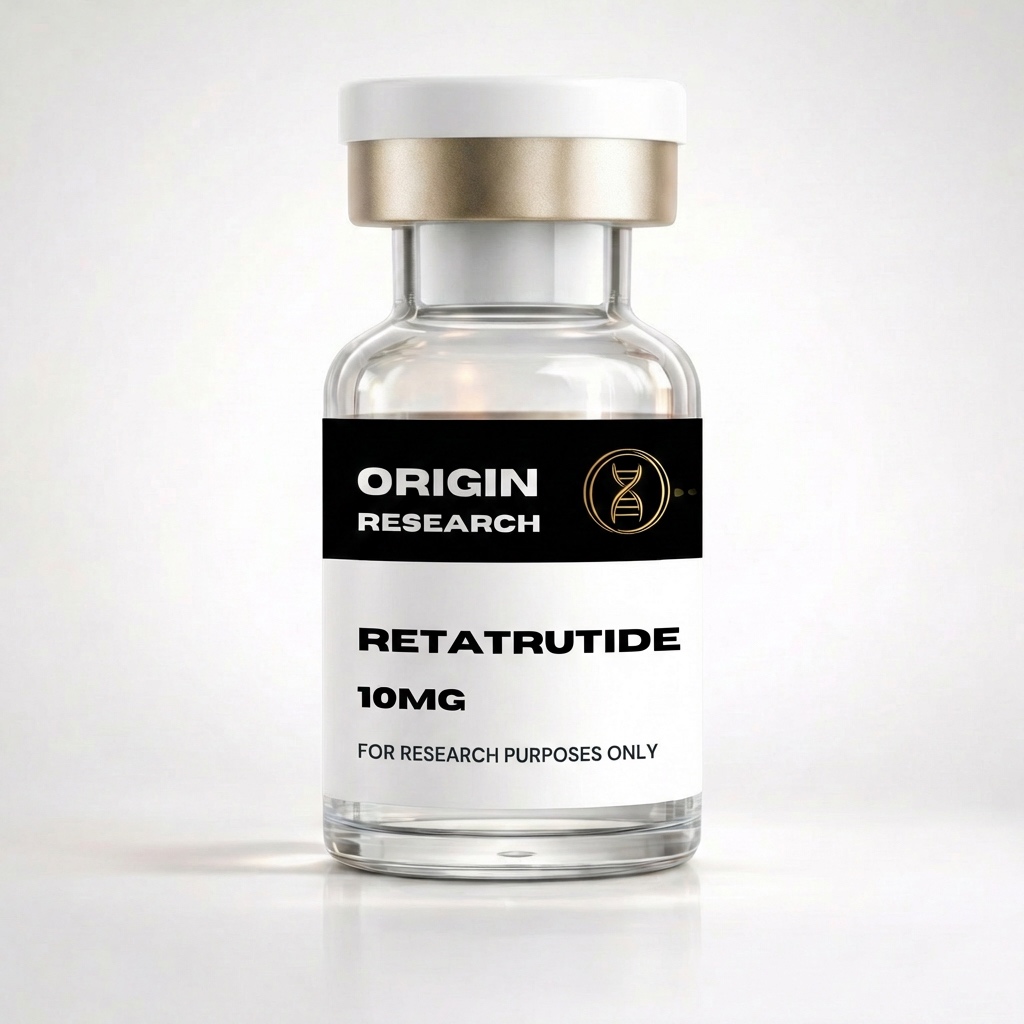
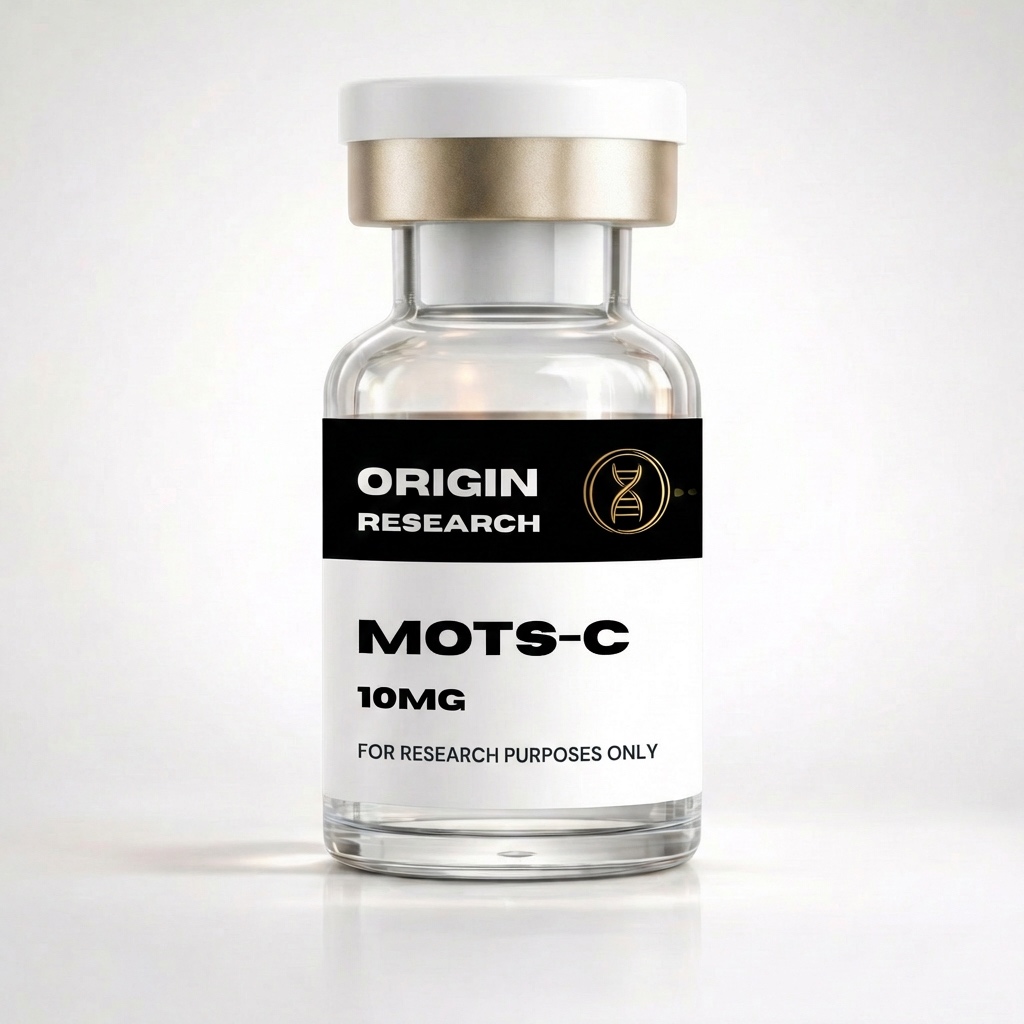
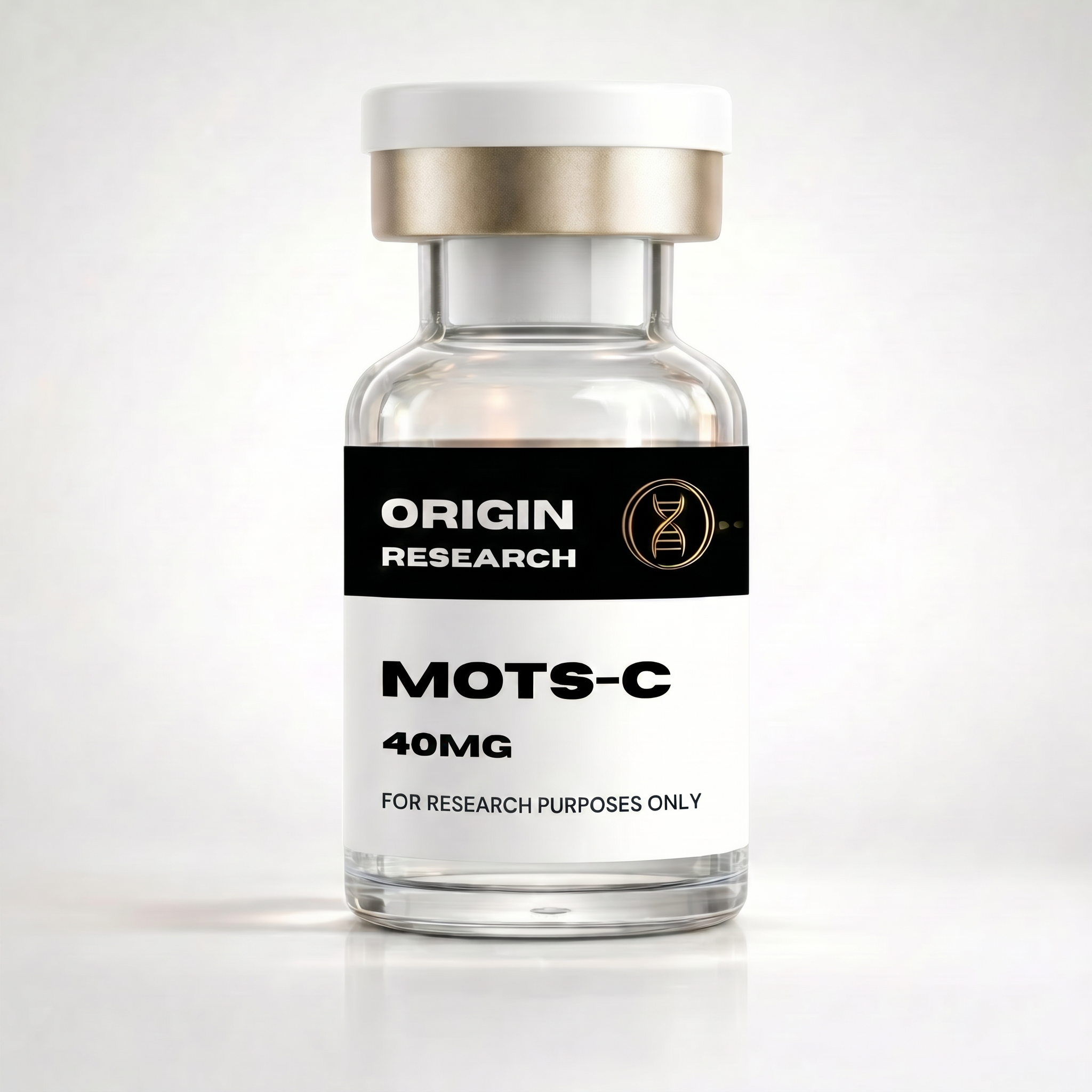
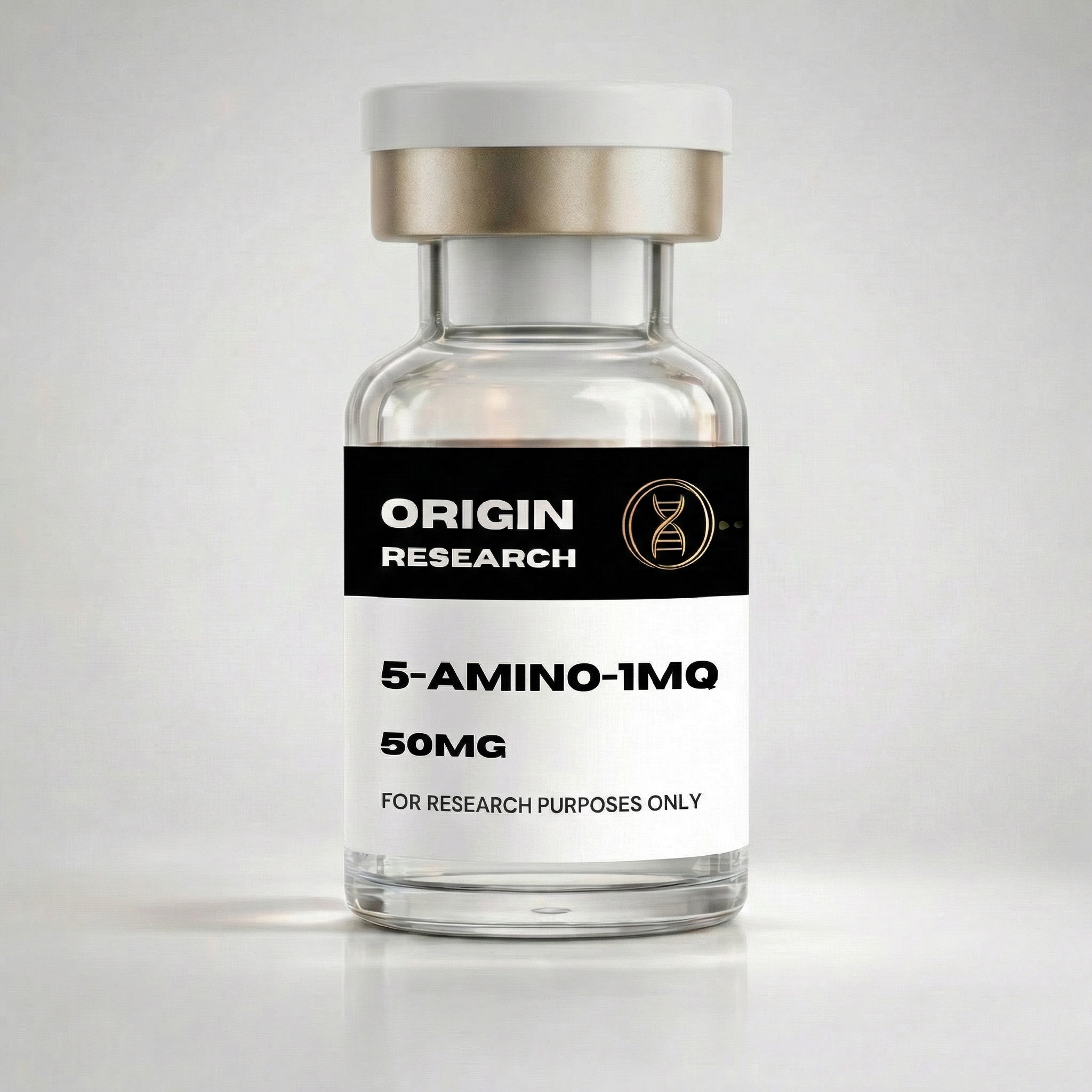
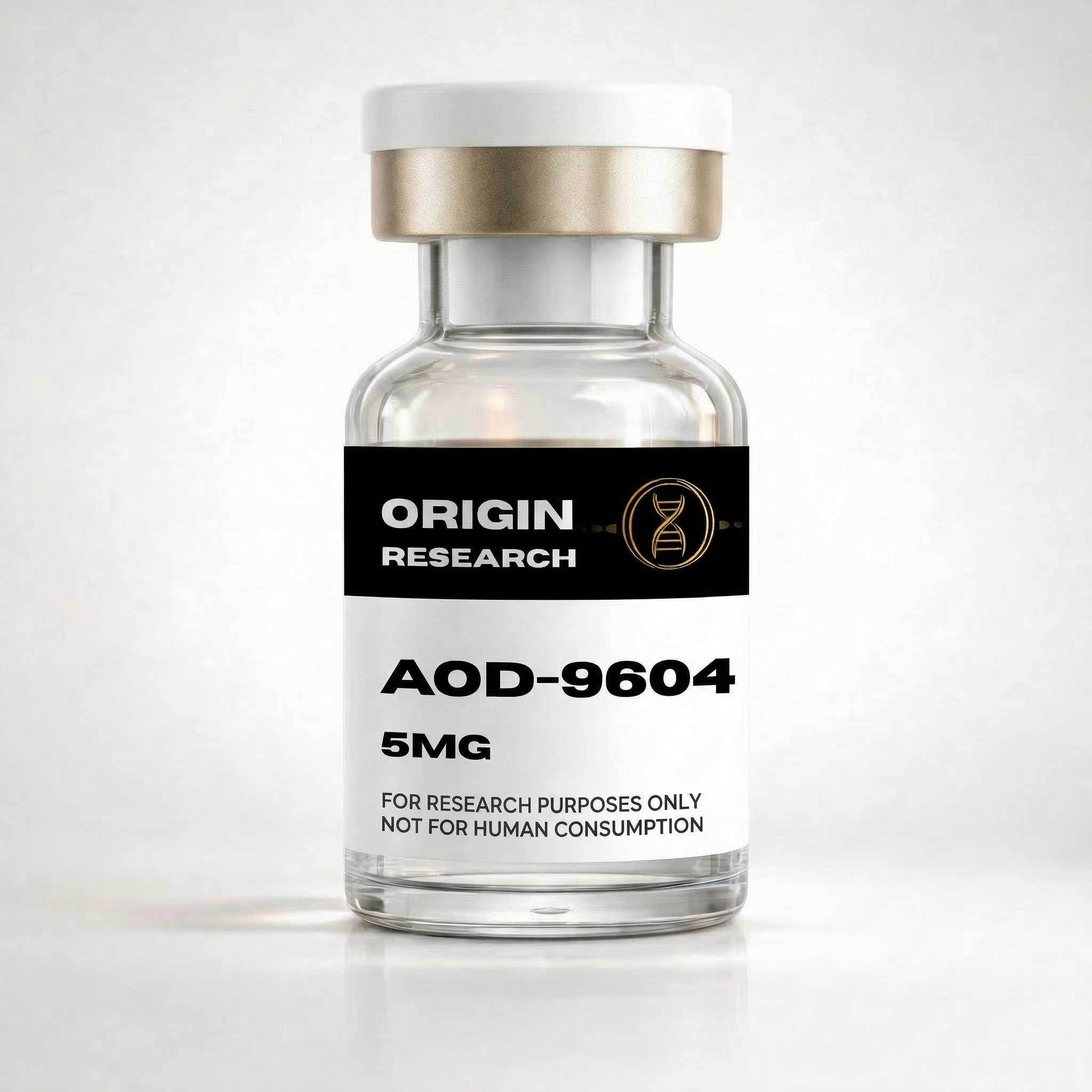
The Metabolic and Weight category at Origin Research covers research compounds investigated in pathways related to glucose regulation, lipolysis, mitochondrial function, adipocyte signalling and energy homeostasis. Researchers worldwide order this category most often when studying models of insulin sensitivity, metabolic syndrome, adipose tissue distribution, mitochondrial dysfunction and age-related metabolic decline. The category groups together Retatrutide, a triple agonist investigated at GLP-1, GIP and glucagon receptors, MOTS-c, a mitochondrial-derived peptide available in 10mg and 40mg vial formats, 5-Amino-1MQ, a small-molecule NNMT inhibitor studied in adipocyte and metabolic enzyme research, and AOD-9604, a synthetic fragment of human growth hormone investigated in lipolytic signalling models. Each compound represents a distinct mechanism within the broader metabolic research field. Retatrutide has been investigated in body-composition models and glycaemic-regulation models in published animal preclinical literature and early human trial data. MOTS-c is studied as a mitochondrial encoded signalling peptide active in AMPK pathway research and exercise mimetic models in animal models. 5-Amino-1MQ has been investigated for its inhibition of nicotinamide N-methyltransferase, an enzyme implicated in adipocyte energy metabolism. AOD-9604, derived from the C-terminal fragment of hGH, has been studied for selective lipolytic activity without the growth-promoting effects of full-length growth hormone. Researchers worldwide select compounds from this category based on the specific receptor system or metabolic pathway under investigation, and all products ship from global stock with full HPLC and mass-spectrometry COA documentation for in-vitro and laboratory research use only.
About this research category
Triple agonist research and the GLP-1, GIP, glucagon receptor system
Retatrutide is the newest addition to the Metabolic and Weight category and represents the most actively investigated triple-agonist research compound in the GLP-1 receptor family. Where earlier compounds in the incretin space targeted a single receptor and later compounds such as the dual GLP-1 and GIP agonist tirzepatide expanded the mechanism, Retatrutide adds a third receptor target by including glucagon receptor agonism alongside GLP-1 and GIP. Published phase studies in human research models have investigated the compound across glycaemic regulation, body-composition shifts and lipid-profile changes. In animal models the triple-receptor mechanism has been studied for its effects on hepatic glucose production, satiety signalling through hypothalamic pathways, gastric emptying kinetics and adipocyte lipolysis through glucagon receptor activation. Researchers ordering Retatrutide typically design dose-titration studies given the breadth of receptor activity, and published preclinical protocols indicate weekly subcutaneous dosing schedules in animal models with stepped dose escalation. The lyophilised format supplied by Origin Research is reconstituted with bacteriostatic water and is stable under refrigeration for the duration of typical study windows. COA documentation accompanies every lot and includes HPLC purity, mass-spectrometry confirmation and peptide content by weight. Researchers comparing Retatrutide with single or dual agonists frequently order both for parallel-arm study designs, and Origin Research holds stock of the relevant comparator research peptides on request.
Mitochondrial peptide research with MOTS-c
MOTS-c is a 16-amino-acid peptide encoded within the mitochondrial 12S ribosomal RNA gene and is studied as one of the first identified mitochondrial-derived peptides with systemic signalling activity. Research literature has investigated MOTS-c in the AMPK pathway, in models of skeletal muscle insulin sensitivity, in adipose-tissue metabolic gene expression and in exercise-mimetic protocols in animal models. Published rodent studies have examined intraperitoneal dosing across body-composition, glucose-tolerance and ageing models, with results showing modulation of metabolic gene expression and mitochondrial biogenesis markers. Origin Research supplies MOTS-c in two vial sizes, 10mg for shorter protocols or smaller cohorts and 40mg for extended studies or larger cohorts, with both formats supplied as lyophilised powder. The 40mg vial offers significant cost efficiency per milligram for laboratories running multi-week or multi-arm studies. Researchers typically reconstitute with bacteriostatic water, and reconstituted solution is stable under refrigeration for several weeks. Researchers combining MOTS-c with other metabolic compounds frequently pair it with 5-Amino-1MQ in adipocyte and energy-metabolism studies, where the AMPK pathway activation of MOTS-c and the NNMT inhibition of 5-Amino-1MQ have been examined as complementary metabolic mechanisms in preclinical literature. COA documents are issued per lot and dispatched with every order, and bulk-vial reservations are available for longitudinal study cohorts.
Enzyme-targeted research with 5-Amino-1MQ and lipolytic research with AOD-9604
5-Amino-1MQ is a small-molecule inhibitor of nicotinamide N-methyltransferase, an enzyme that has been investigated for its role in adipocyte energy storage and cellular NAD plus salvage pathways. Published preclinical research has examined 5-Amino-1MQ in mouse models of diet-induced obesity, in adipocyte cultures and in models of muscle stem cell metabolism. The compound is supplied as a powder for oral or injectable research protocols in animal models and is dosed in published animal models at protocols measured in milligrams per kilogram body weight. AOD-9604, by contrast, is a peptide fragment corresponding to amino acids 177 to 191 of the C-terminus of human growth hormone, modified with an additional tyrosine residue for stability. AOD-9604 has been studied for selective lipolytic activity and inhibition of lipogenesis in adipocyte models, without the IGF-1 stimulation or growth-promoting activity associated with full-length growth hormone. Published research has examined the compound in human obesity trials and in animal models of adipose tissue regulation. Both compounds occupy distinct niches within the Metabolic category and are frequently selected for studies investigating fat-cell biology specifically rather than systemic glucose regulation. Each product ships from global stock with full COA documentation, and reconstitution and storage guidance is available on request.
Stack pairings and study design within metabolic research
Stack pairings in metabolic research are designed around complementary mechanisms across different metabolic pathways. The most studied pairing in published preclinical literature is MOTS-c with 5-Amino-1MQ, where AMPK pathway activation is investigated alongside NNMT enzyme inhibition for combined effects on adipocyte energy metabolism. A second pairing investigates AOD-9604 with MOTS-c, examining selective lipolysis alongside mitochondrial signalling. Retatrutide is typically studied as a standalone in incretin-receptor work given the breadth of its triple-receptor mechanism, but is occasionally combined with AOD-9604 in body-composition models that wish to separate adipocyte-direct lipolytic activity from incretin-mediated effects. Researchers planning combination studies are advised to reconstitute each compound separately to preserve dose accuracy and to allow independent titration in their research model. Study windows in published metabolic research range from two-week acute glucose-tolerance protocols to twelve-week chronic body-composition studies in animal models. Origin Research stocks all four compounds in global warehouses with lot ages typically within six months of synthesis, and bulk reservations for multi-month studies can be arranged through the contact form. Certificate of analysis documentation accompanies every shipment, and lot-specific purity data can be reviewed prior to purchase for researchers requiring lot reservation across a study cohort.
Frequently asked questions
Which metabolic compound is the most heavily studied in current literature?
Retatrutide is the most actively researched compound in current incretin literature given its triple-receptor mechanism at GLP-1, GIP and glucagon receptors. MOTS-c is the most studied mitochondrial-derived peptide in metabolic signalling research. The choice between them depends on whether the research model targets incretin pathway pharmacology or mitochondrial and AMPK-pathway biology.
What is the difference between the 10mg and 40mg MOTS-c vials?
The 10mg and 40mg vials contain the same MOTS-c peptide at the same HPLC purity. The 40mg vial provides greater cost efficiency per milligram and is selected for longer studies or larger cohorts, while the 10mg vial is selected for shorter protocols, smaller cohorts or pilot studies. Both formats are lyophilised and researchers reconstitute with bacteriostatic water.
Is AOD-9604 a growth hormone analogue?
AOD-9604 is a synthetic fragment corresponding to the C-terminal lipolytic region of human growth hormone, specifically amino acids 177 to 191 with an added tyrosine. It has been investigated for selective lipolytic and anti-lipogenic activity in adipocyte models without the IGF-1 stimulation or growth-promoting effects of full-length growth hormone.
Can 5-Amino-1MQ be combined with MOTS-c in the same study?
Yes. Published research has examined the two compounds together as complementary mechanisms in adipocyte energy metabolism, with MOTS-c investigated in AMPK pathway activation and 5-Amino-1MQ investigated in NNMT enzyme inhibition. Each compound is reconstituted or prepared separately and combined only at the point of administration in the relevant research model.
Do metabolic compounds ship worldwide?
Yes. All metabolic compounds ship from global stock to international research destinations through tracked courier services with typical dispatch of one to three working days and delivery within three to seven working days. Lyophilised peptides tolerate standard ambient transit, and Retatrutide is packed with additional thermal protection where required.
How is Retatrutide different from earlier incretin research compounds?
Earlier incretin compounds targeted a single GLP-1 receptor. Dual agonists added GIP receptor activity. Retatrutide adds a third target by including glucagon receptor agonism, which is investigated for hepatic glucose production effects and adipocyte lipolytic signalling alongside the satiety and insulinotropic effects of GLP-1 and GIP.
Is a certificate of analysis available for the metabolic category?
Yes. Every lot of Retatrutide, MOTS-c, 5-Amino-1MQ and AOD-9604 is supplied with a third-party COA showing HPLC purity, mass-spectrometry confirmation and peptide content. COAs accompany every dispatch in PDF form and can be reviewed prior to purchase on request.