
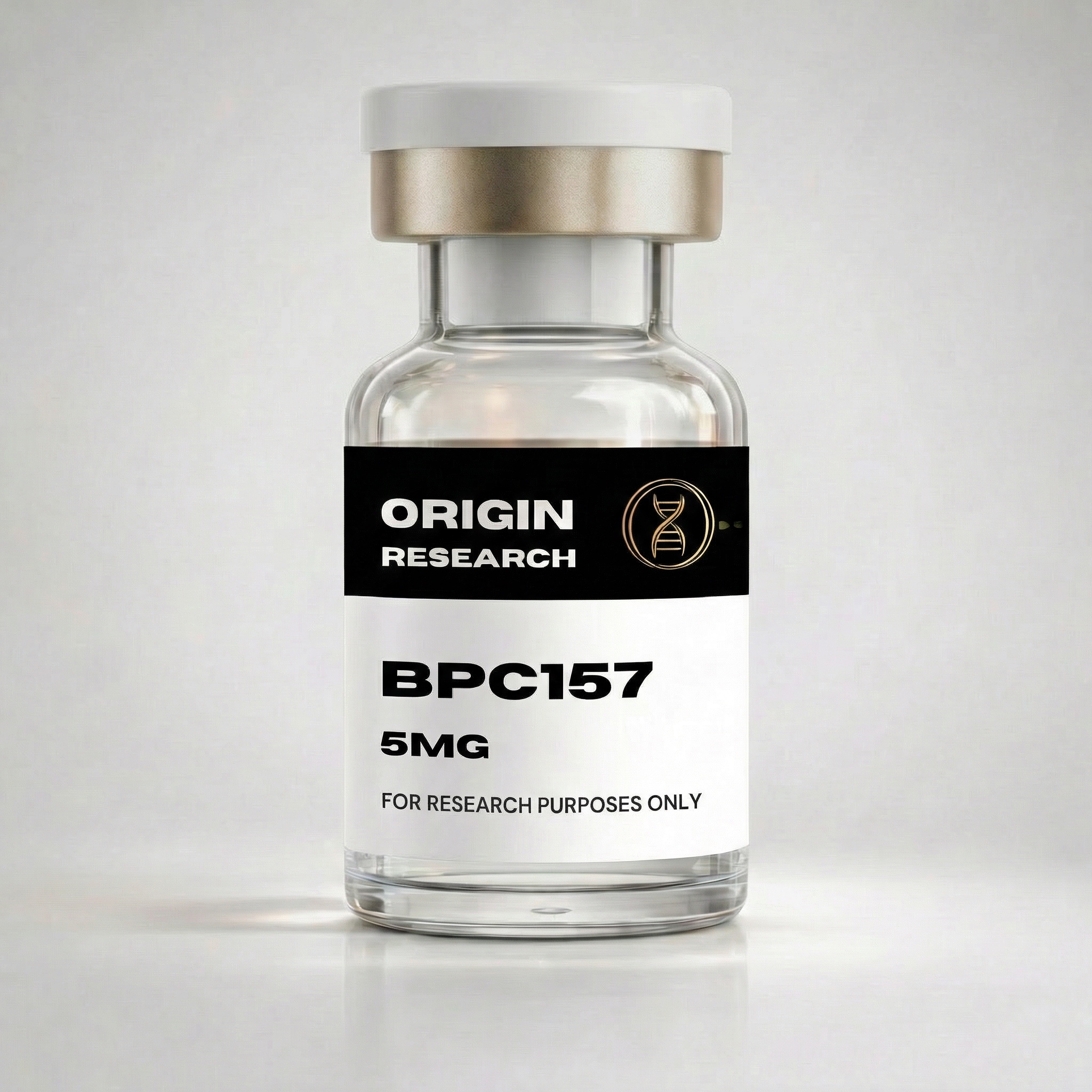
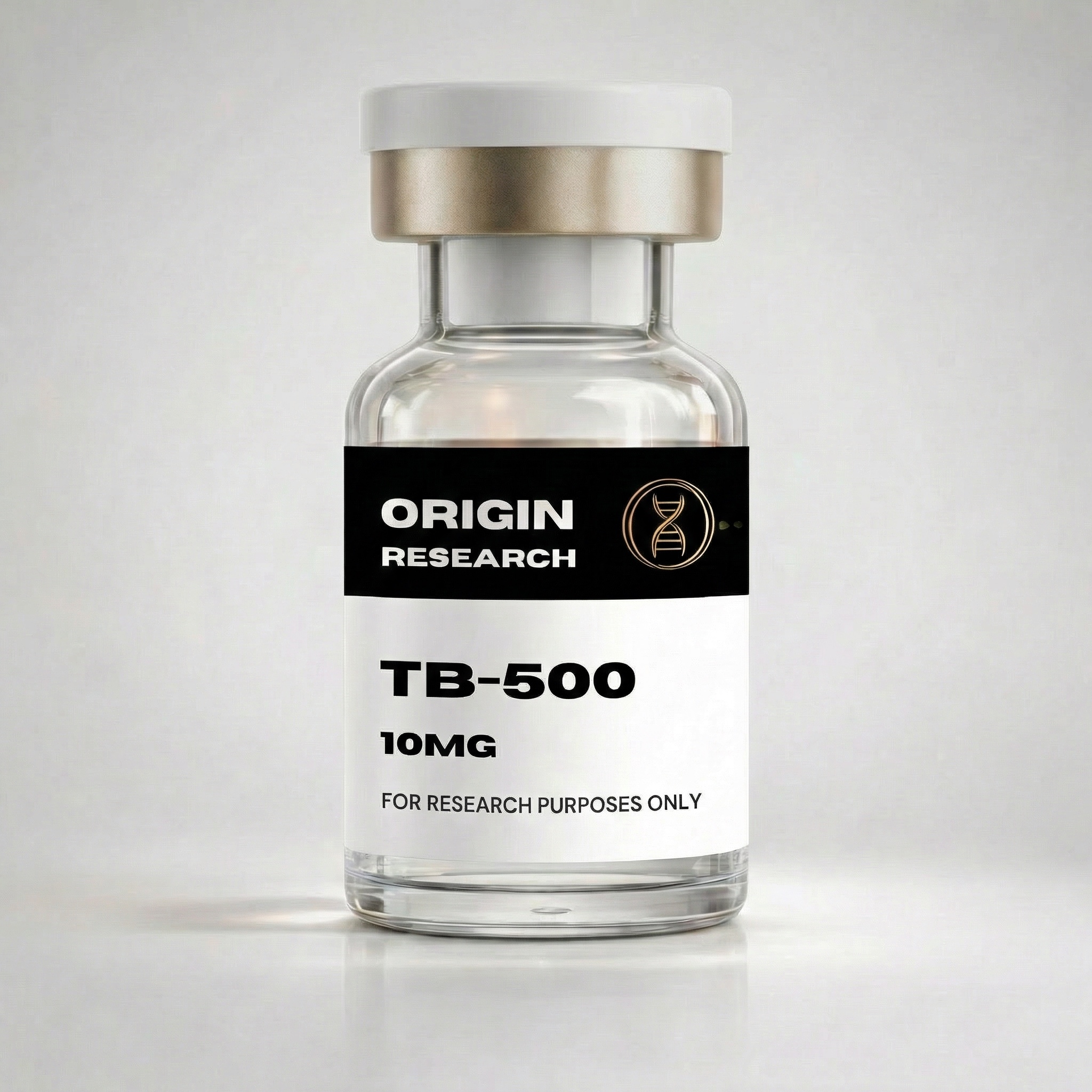
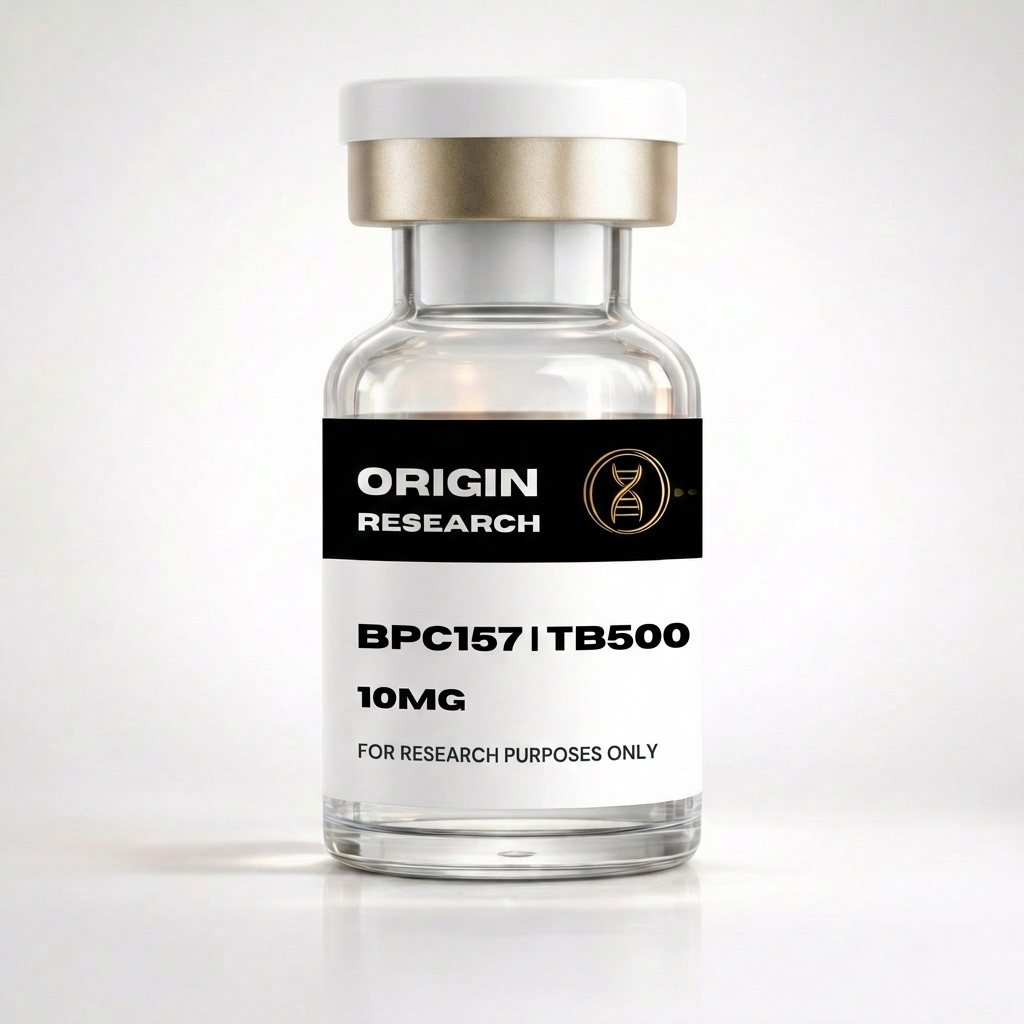
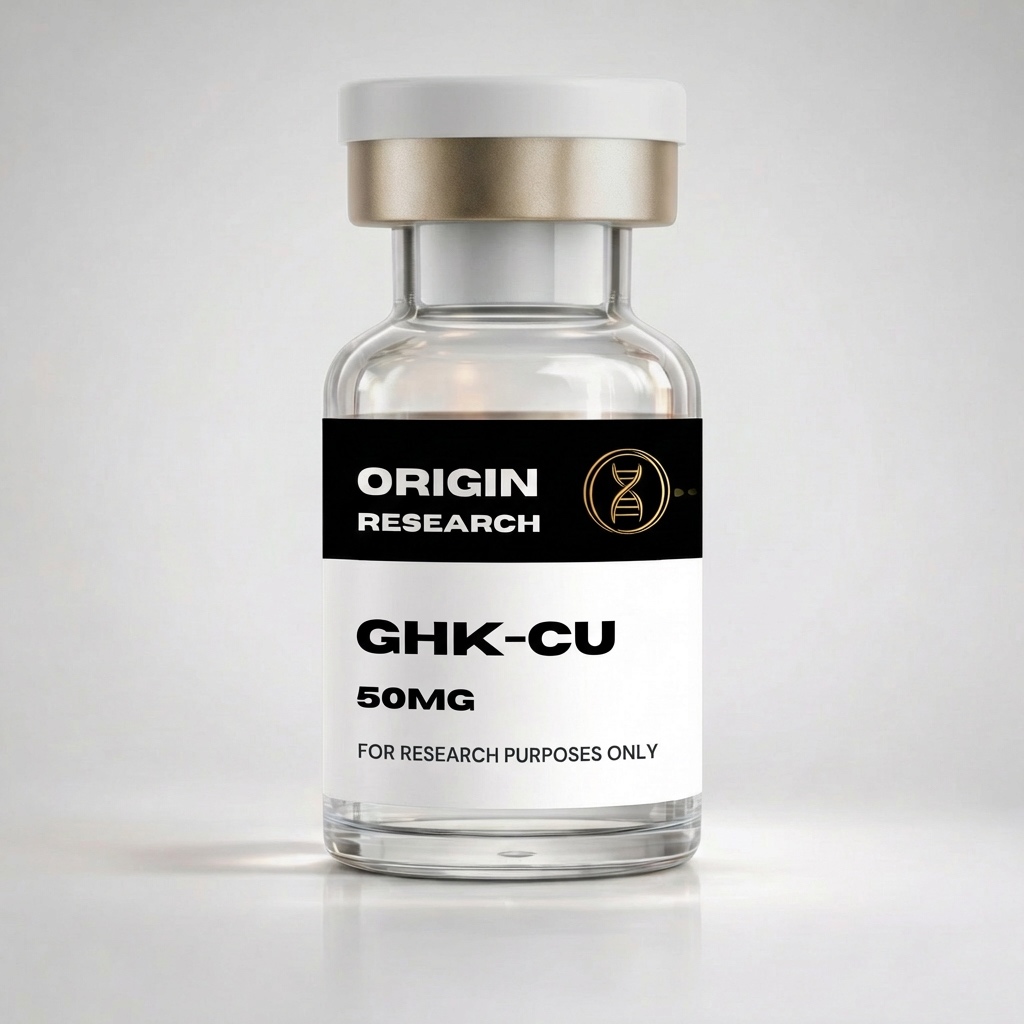
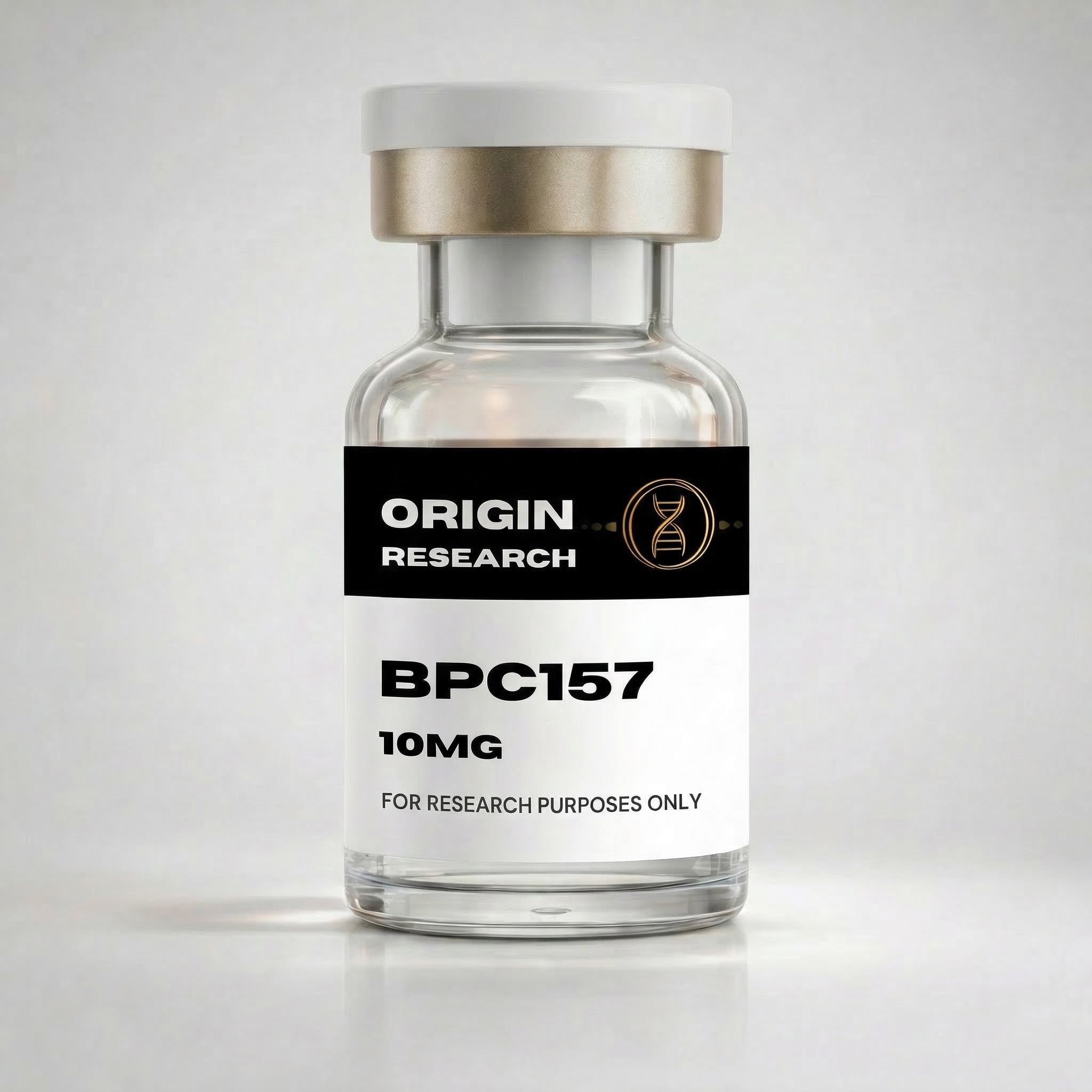
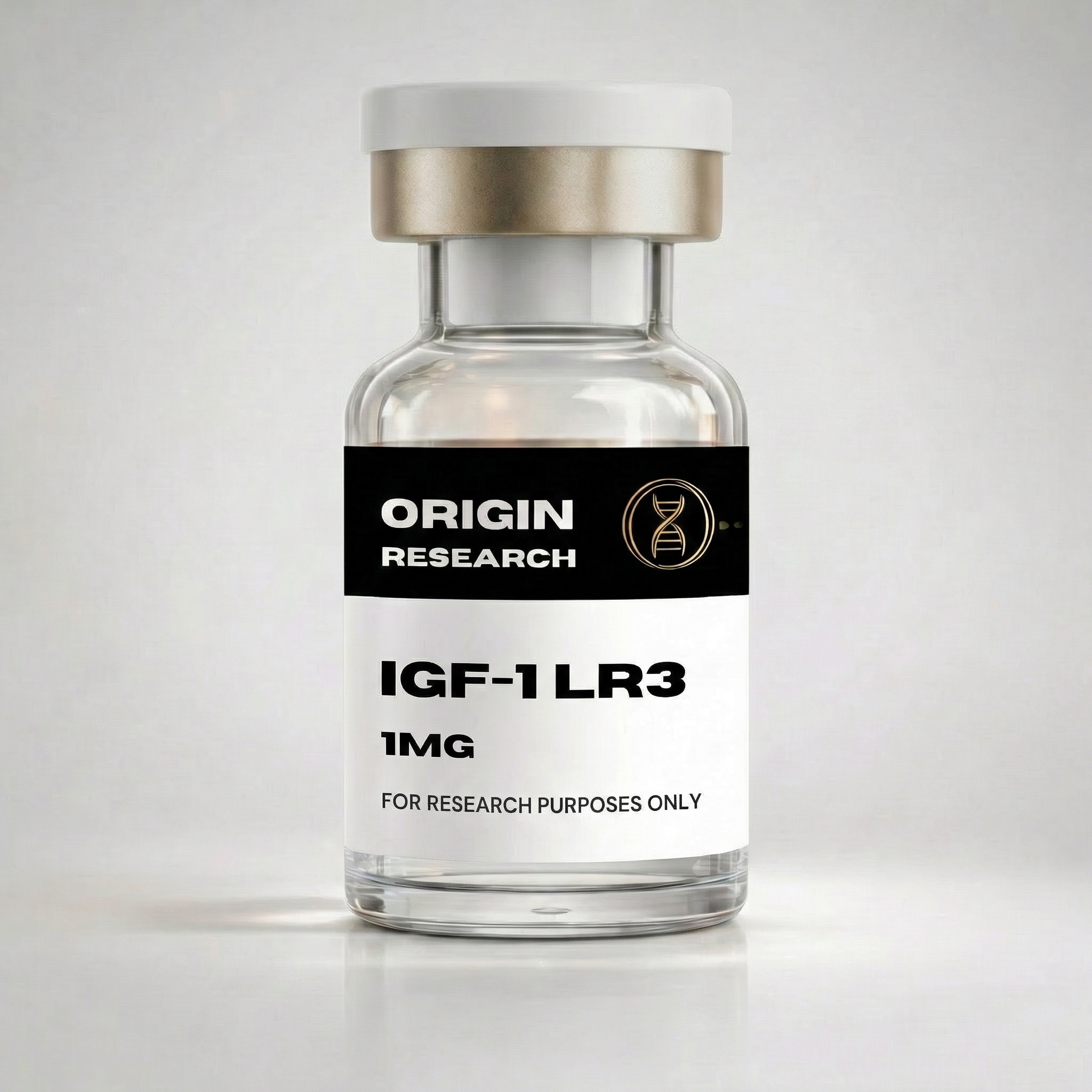
The Recovery and Healing category at Origin Research covers research compounds studied for their role in tissue repair, angiogenesis, extracellular matrix remodelling and gut-barrier integrity. Researchers worldwide order this category most often when investigating models of tendon and ligament injury, gastric mucosal damage, ischemic wounds, surgical recovery models and connective-tissue regeneration pathways. The category groups together the pentadecapeptide BPC-157 (both lyophilised vial and stabilised capsule format), the actin-binding peptide TB-500, the fixed-ratio BPC-157 and TB-500 Blend often referred to in literature as the Wolverine pairing, the copper tripeptide GHK-Cu and the long-acting insulin-like growth factor analogue IGF-1 LR3. Each compound has been investigated in distinct yet overlapping pathways. BPC-157 has been studied in nitric oxide modulation, growth-hormone receptor expression and VEGF-driven angiogenesis. TB-500, a synthetic fragment of Thymosin Beta-4, has been investigated in actin sequestration, cell migration and post-injury vascularisation. GHK-Cu has been studied as a signalling peptide active in fibroblast proliferation and collagen synthesis models. IGF-1 LR3 has been investigated in protein synthesis, satellite-cell activation and cellular hypertrophy assays in research models. Research groups in the international research community typically request these compounds because of consistent COA documentation, lyophilised stability, and the ability to model both systemic and localised repair pathways within a single category. All products in this category ship from global stock with HPLC and mass-spec certificates of analysis and are sold strictly for in-vitro and laboratory research use, not for human or veterinary administration.
About this research category
The pentadecapeptide and actin-binding peptide families
BPC-157 and TB-500 represent the two most heavily cited families within recovery-focused peptide research, and they are commonly studied alongside one another in preclinical literature. BPC-157, a 15-amino-acid sequence derived from a protective protein found in gastric juice, has been investigated in rodent models of Achilles tendon transection, colitis induction, ligament damage and ulcer formation. Published preclinical work has examined its interaction with the nitric oxide pathway, its modulation of growth-hormone receptor expression in tendon fibroblasts and its angiogenic signalling through VEGF expression. TB-500, a synthetic analogue of the active region of Thymosin Beta-4, has been investigated for its actin-sequestering properties and its role in endothelial cell migration after vascular injury in animal models. Research papers have described its use in cardiac ischemia models, corneal wound healing assays and dermal repair studies. The two compounds are biochemically distinct, BPC-157 acting on local signalling cascades and TB-500 acting on cytoskeletal reorganisation, which is why combination protocols appear frequently in published in-vivo work. Origin Research stocks both as standalone lyophilised vials and as a fixed-ratio blend for laboratories that wish to dose a single reconstituted solution in their research model. The capsule format of BPC-157 is offered for oral-administration model research, where stomach-stable presentation has been studied in gut-barrier and inflammatory bowel disease assays. Researchers selecting between formats typically choose the lyophilised vial for injectable subcutaneous models and the capsule for oral bioavailability and gut-localised pathway work.
Stack pairings in soft-tissue repair research
Stack pairings within the Recovery category are designed around complementary mechanisms rather than additive dosing. The most commonly studied pairing in preclinical literature is BPC-157 with TB-500, where one compound is investigated for localised tissue and vascular signalling and the other for systemic cytoskeletal and migration effects. This pairing is offered as a pre-blended vial under the Wolverine designation, allowing a single reconstitution and a single dosing event in research models. A second frequently studied pairing is BPC-157 with GHK-Cu, where the copper tripeptide contributes collagen synthesis and fibroblast activation signalling that complements the angiogenic and gastric-protective pathways investigated with BPC-157. This pairing has appeared in dermal repair and post-surgical scar-model work. A third pairing involves IGF-1 LR3 with BPC-157, where long-acting IGF-1 has been investigated for satellite-cell recruitment and muscle-fibre repair in animal models while BPC-157 supports the connective-tissue and vascular environment around the injured site. Researchers also combine TB-500 with IGF-1 LR3 in models examining post-exercise muscle damage and recovery kinetics in animal models. Each pairing is selected based on the biological pathway under investigation, and Origin Research documents lot-specific purity for every compound so that combination studies can isolate variables. Stack selection is the most frequent question received from research buyers in the international research community, and the answer is consistently driven by the published mechanism of each compound rather than by general recovery claims.
How researchers approach reconstitution and protocol design
Reconstitution of recovery peptides in research models requires attention to lyophilisate handling, diluent selection and storage conditions. BPC-157, TB-500 and the BPC-157 and TB-500 Blend are supplied as lyophilised powder under vacuum, and researchers reconstitute with bacteriostatic water or sterile water depending on the duration of the study. Once reconstituted, BPC-157 has been documented to remain stable under refrigeration at 2 to 8 degrees Celsius for several weeks, while TB-500 shows similar stability when protected from repeated freeze-thaw cycles. GHK-Cu is supplied as a copper-complexed lyophilisate and researchers reconstitute it with sterile or bacteriostatic water, with the characteristic blue tint of the resulting solution noted as a visual indicator of intact copper coordination. IGF-1 LR3 is more sensitive and researchers typically reconstitute it with bacteriostatic water or, for extended storage, with acetic-acid-based diluent to preserve tertiary structure. Protocol design across published preclinical literature varies by model, but most rodent and in-vitro studies report subcutaneous or localised dosing protocols ranging from daily to every-other-day frequency for periods of four to eight weeks. Researchers planning combination studies typically reconstitute each compound separately to allow independent dose titration in their research model, then combine immediately prior to administration. Origin Research provides reconstitution guidance documents on request and includes the certificate of analysis for every lot so that researchers can reference exact peptide content, purity by HPLC and mass confirmation when designing dose-response curves.
Global stock and lead times for recovery research compounds
Every recovery compound listed in this category is held in global stock and dispatched through worldwide shipping, with documentation supplied to support international research deliveries. Standard lead time for researchers is one to three working days for dispatch, with delivery typically completed within three to seven working days depending on destination country. Orders to North America, Europe, the United Kingdom, Australia and other research destinations are routed through tracked courier services with temperature-stable packaging. The lyophilised format of BPC-157, TB-500 and the Wolverine Blend tolerates ambient transit conditions for the duration of standard shipping, and IGF-1 LR3 is packed with additional insulation to protect tertiary structure during transit. GHK-Cu, supplied as a stable copper complex, also ships under ambient conditions. Bulk research orders and repeat orders for ongoing study cohorts can be reserved in advance through the contact form, and certificates of analysis are sent in PDF form with every dispatch. The Recovery and Healing category is the highest-turnover category at Origin Research, which means stock is replenished frequently and lot ages on dispatch are typically within three to six months of synthesis. Researchers requiring specific lot numbers for longitudinal study consistency can request lot reservation at the point of order.
Frequently asked questions
Which recovery compound should a new research project start with?
BPC-157 is the most commonly selected starting compound because it has the broadest published preclinical literature across tendon, ligament, gastric and vascular models. Researchers new to the category typically begin with the lyophilised vial format for injectable animal models or the capsule format for oral and gut-pathway models. TB-500 is usually added in a second study phase when actin-sequestering and migration pathways become relevant.
What is the difference between the Wolverine Blend and separate BPC-157 and TB-500 vials?
The Wolverine Blend is a fixed-ratio lyophilised pairing of BPC-157 and TB-500 in a single vial, reconstituted once and dosed as a combined solution in the research model. Separate vials allow independent dose titration of each compound, which is preferred when a study design requires varying one compound while holding the other constant. Both formats use the same source peptide and the same HPLC purity standard.
Is a certificate of analysis included with every recovery compound?
Yes. Every lot of BPC-157, TB-500, the Wolverine Blend, GHK-Cu, BPC-157 Capsules and IGF-1 LR3 is supplied with a third-party certificate of analysis showing HPLC purity, mass-spectrometry confirmation and peptide content. COAs are dispatched in PDF form with the order and are also available on request for any specific lot prior to purchase.
How does shipping work for recovery peptides worldwide?
All recovery compounds ship from global stock with tracked courier delivery to international research destinations. Typical dispatch is one to three working days and delivery is three to seven working days depending on destination. Lyophilised vials and capsules tolerate standard ambient transit conditions, and IGF-1 LR3 is packed with additional insulation for temperature stability.
Can BPC-157 and GHK-Cu be reconstituted together in a single vial?
No. The two compounds are reconstituted separately to preserve the copper coordination of GHK-Cu and the structural integrity of BPC-157, and they are combined only at the point of administration if a combined-dosing model is required. Independent reconstitution also allows researchers to verify visual indicators of each compound, such as the blue tint of GHK-Cu in solution.
What pathways are most commonly studied with IGF-1 LR3 in recovery research?
IGF-1 LR3 has been investigated in protein synthesis pathways, satellite-cell activation, myoblast proliferation and skeletal muscle hypertrophy models. Within recovery research it is typically paired with BPC-157 or TB-500 to examine combined effects on connective-tissue repair and muscle-fibre regeneration following induced damage in animal models.
Are there alternative recovery compounds for research projects that cannot use BPC-157?
TB-500 alone, GHK-Cu alone and IGF-1 LR3 alone are each studied as standalone recovery compounds with distinct mechanisms. TB-500 covers cytoskeletal and migration pathways, GHK-Cu covers fibroblast and collagen pathways, and IGF-1 LR3 covers protein synthesis and hypertrophy pathways. The choice depends on which biological model is under investigation.