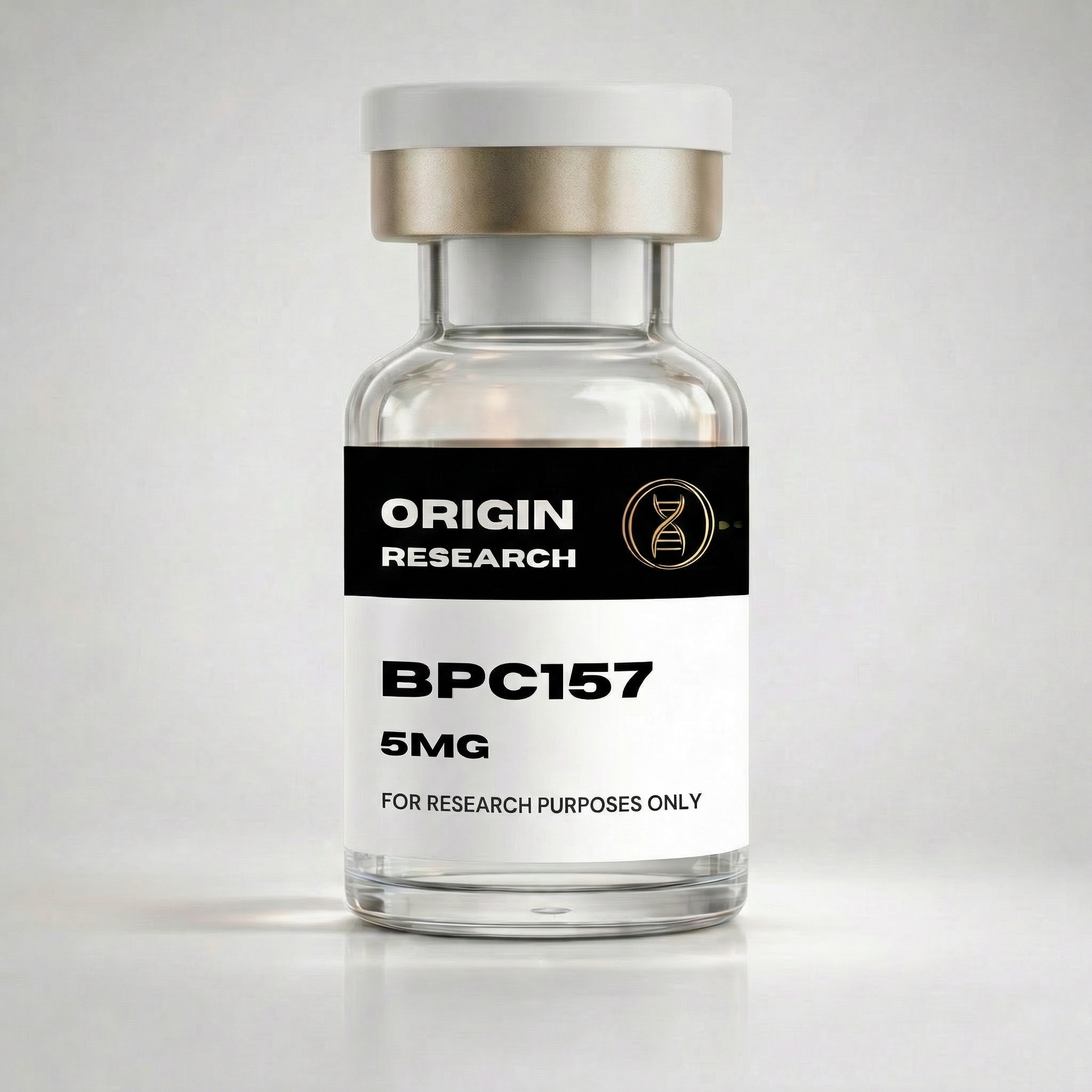
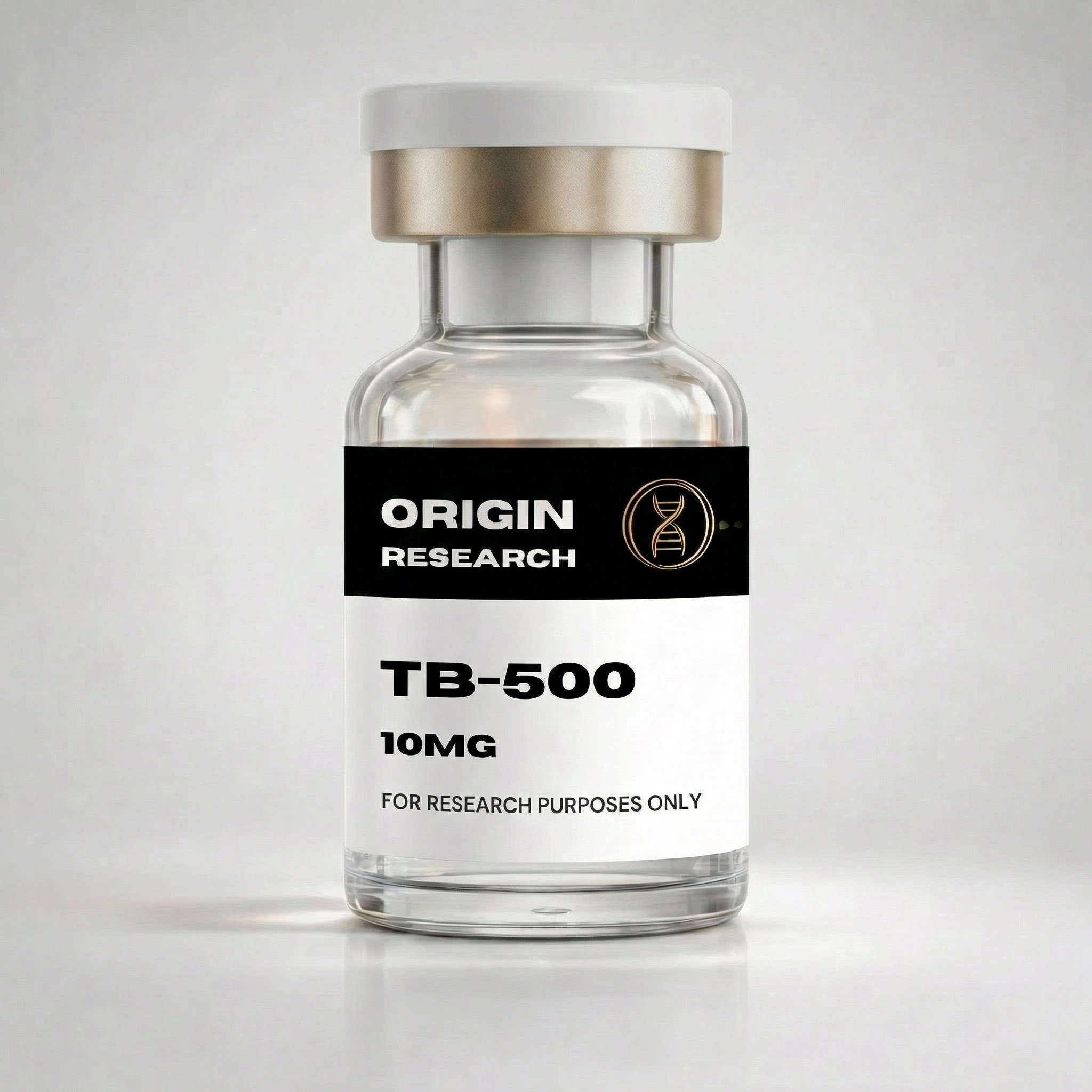
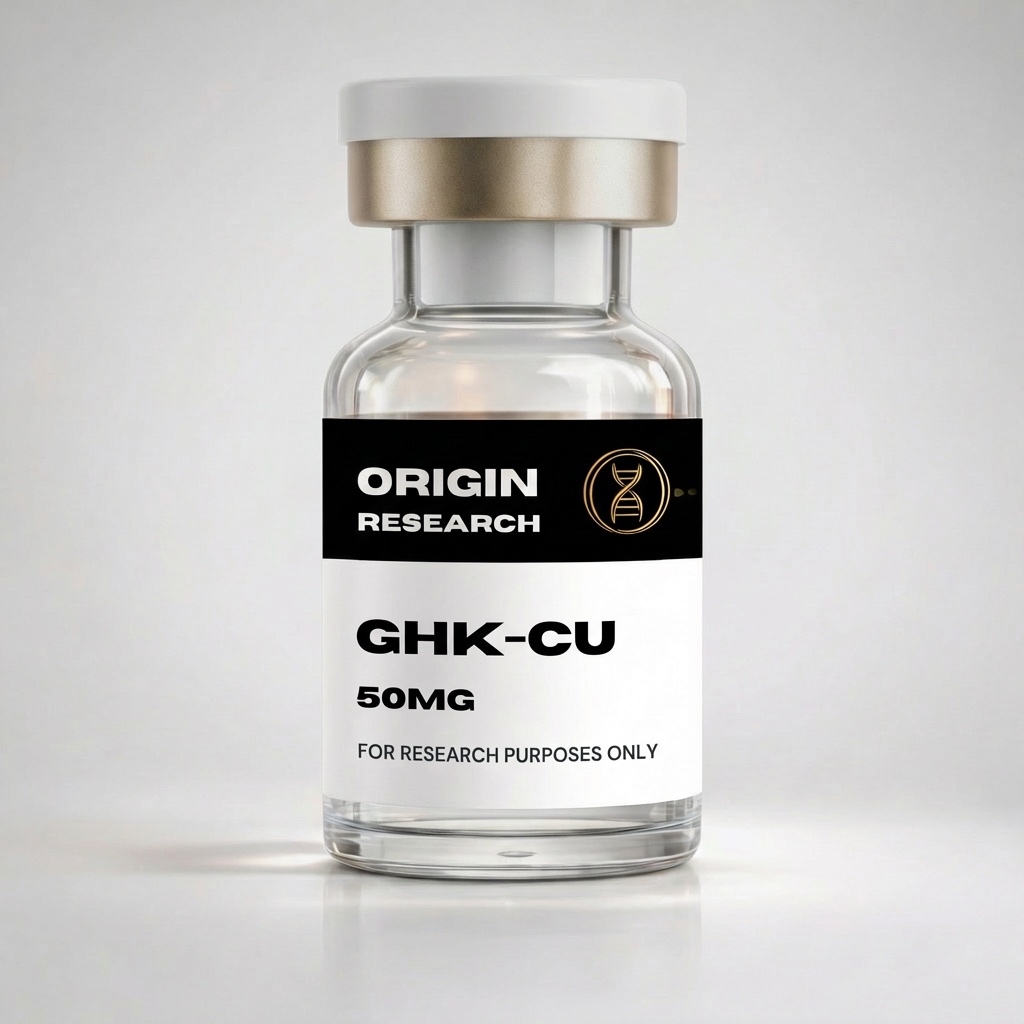
A research vial is at its most vulnerable in the first sixty seconds after the diluent goes in. The synthesis house has already paid for solid-phase synthesis, HPLC purification, mass spec checks, freeze-drying, and cold-chain shipping. All of that can be undone at the bench by a handful of small handling errors that are easy to make and easy to avoid. This guide walks through the most common reconstitution mistakes that show up across peptide handling notes, supplier technical sheets, and laboratory quality reviews. Each one comes with the corrective practice that the protein-stability literature backs up. The framing is laboratory handling under a Research Use Only model. The audience is the bench worker preparing material from suppliers such as [Origin Research](https://originlabsresearch.com), where the catalog covers BPC-157, TB-500, GHK-Cu, and a wider library of research compounds. Nothing here is dosing guidance. The goal is to help the researcher protect the vial in front of them so that downstream data means what it is supposed to mean.
Why this matters: the cost of a ruined vial is not just the replacement price. It is the lost experiment, the data integrity questions, and the deviation paperwork.
Why reconstitution is the highest-risk step
Reconstitution is where dry, stable peptide becomes wet, reactive peptide. Lyophilised material is a freeze-dried solid, held in a low-energy state under vacuum-sealed conditions. It is robust as long as nothing disturbs it. The moment water hits the cake, the chemistry changes. Hydrolysis becomes possible. Aggregation becomes possible. Contamination becomes possible. The bench worker has roughly thirty seconds of decisions that determine whether the vial keeps its analytical identity for the next 28 days, or starts degrading before the first aspiration.
This is also the step where small mistakes compound. A shear-stressed cake leads to aggregates. Aggregates do not fully dissolve. Concentration calculations drift. Downstream results drift with them. The researcher then spends weeks chasing an artefact that was introduced in the first minute of handling.
The good news is that the failure modes are well-documented and the fixes are simple. None of them require special equipment. They require attention and a short written protocol that the bench worker follows the same way every time. The following sections cover the six most common errors in the order they tend to appear during a reconstitution event.
Mistake 1: blasting diluent onto the cake
The most common error is dispensing diluent in a fast stream straight onto the surface of the lyophilised cake. The cake is fragile. The peptide chains inside it sit in a low-energy conformation that does not tolerate mechanical shock well. A high-velocity stream of liquid produces shear stress at the moment of dissolution, which the protein-stability literature has tied to aggregation, partial unfolding, and the formation of insoluble particulates that no later aspiration can recover.
The fix is slow and gentle:
- Tilt the vial at a shallow angle.
- Insert the needle so the bevel faces the inner glass wall.
- Dispense the diluent slowly, letting it run down the wall.
- Allow the liquid to pool at the base and rise to meet the cake from below.
This is the default method recommended in pharmaceutical handling protocols for lyophilised biologics, and most synthesis houses include it in the reconstitution notes that ship with the product. A quick check the buyer can do: does the supplier's reconstitution guide actually describe slow-dispense technique? If it does not, the supplier's technical documentation is probably thin in other areas too. That is a soft quality signal worth noting.
Rule of thumb: if the diluent enters the vial faster than gravity would deliver it, the bench worker is pushing too hard.
Mistake 2: shaking the vial
The second recurring error is shaking the vial to speed dissolution up. The instinct is understandable. The undissolved cake looks wrong. Shaking looks like it is helping. It is not.
Shaking introduces shear forces at the air-liquid interface and within the bulk solution. Both of those are well-documented drivers of peptide aggregation. Aggregation produces dimers, trimers, and higher-order oligomers that behave differently from the monomer the researcher meant to study. Some of those species precipitate out as visible cloudiness. Others stay suspended as invisible micro-particulates that quietly skew every downstream measurement.
The correct technique is gentle swirling:
- Hold the vial upright between thumb and forefinger.
- Rotate it in slow circles on the bench surface, or roll it slowly between the palms.
- Most research peptides at standard concentrations finish dissolving inside 30 to 90 seconds.
If the cake is still there after several minutes of gentle swirling, the move is not more force. The move is to set the vial aside at room temperature for ten minutes and try gentle swirling again. Persistent non-dissolution usually means one of three things: the wrong diluent, a sequence with unusually low solubility, or a defective lyophilisation step at the synthesis house. In all three cases, shaking harder will not fix the underlying problem and will degrade the material that does dissolve.
Mistake 3: skipping the vial label
The third error costs about thirty seconds to avoid and can write off the entire vial when it happens. A dry vial does not need much labeling. A reconstituted vial does. Three pieces of information must appear at the moment the diluent goes in:
- Reconstitution date (so the 28-day clock has a start point)
- Diluent used (bacteriostatic water, sterile water, or other)
- Final concentration (so downstream aspirations can be calculated, not guessed)
Peptide handling guides are unanimous on this. Write these three items on the vial label, or on a tamper-evident adjacent label, at the moment of reconstitution. Mirror the same entry in the laboratory log, with a witness signature for vials destined for regulated environments.
The hidden cost of skipping this: an unlabelled reconstituted vial sitting in a refrigerator two weeks later is functionally a hazardous unknown. The conservative response is to discard it, which means writing off a perfectly good vial because nobody spent thirty seconds with a marker.
Institutional quality reviews repeatedly cite unlabelled or partially labelled vials as the root cause of protocol deviations. Most research programs treat them as a documentation failure that needs corrective action.
Mistake 4: wrong diluent, or expired diluent
The fourth error is picking a diluent without checking whether it matches the peptide and the planned workflow. Most research peptides default to bacteriostatic water, which is sterile water plus 0.9 percent benzyl alcohol. The benzyl alcohol provides bacteriostatic protection that supports multi-puncture use for about 28 days under refrigeration. But not every peptide tolerates benzyl alcohol, and not every workflow is multi-puncture.
A quick reference:
- Bacteriostatic water: default for most research peptides, multi-puncture, 28-day refrigerated working life.
- Sterile water: single-use aliquoting, or peptides with documented benzyl alcohol incompatibility.
- Low-molarity acetic acid: referenced for hydrophobic sequences that will not dissolve in neutral aqueous diluent.
- 0.9 percent saline: referenced for downstream procedures that require isotonicity.
The related trap is using bacteriostatic water that was opened more than 28 days ago. The bacteriostatic protection has been consumed at that point even if the bottle looks fine. Contamination risk goes up. The 28-day clock starts at first puncture, not at the manufacturer's printed expiry date.
The corrective practice is to:
- Check the supplier's technical sheet for the recommended diluent for that specific peptide.
- Rotate diluent stock first-in, first-out.
- Mark a first-puncture date on every diluent vial.
Origin Research stocks bacteriostatic water as a companion item so the diluent and the peptide ship from the same source.
Mistake 5: reusing syringes and needles
The fifth error is reusing syringes or needles across vials. Every puncture of a vial septum carries a small but non-zero contamination risk. That is exactly why bacteriostatic water exists. Reusing a needle that has already been in one vial to puncture a second vial multiplies that risk and can carry residue from the first peptide into the second.
The rule is simple: one fresh sterile syringe and one fresh sterile needle per vial. For the reconstitution event itself, aspirate the diluent first, then puncture the peptide vial with the same syringe-needle assembly. After that, every aspiration from the working vial uses a separate fresh syringe.
Some laboratories use a colour-coded syringe system so cross-contamination is obvious at a glance during a bench inspection. That is overkill for some setups and worth it for others. Either way, the underlying discipline is the same.
A related trap: swabbing the septum with alcohol and then puncturing it before the alcohol has dried. Residual alcohol on the septum surface can be carried into the vial by the needle, and trace alcohol contamination has been associated with certain peptide degradation pathways in the stability literature. The fix:
- Swab the septum with 70 percent isopropyl alcohol.
- Wait at least 30 seconds for the alcohol to evaporate.
- Then insert the needle.
Mistake 6: storing the reconstituted vial wrong
The sixth error is post-reconstitution storage that does not match the stability profile of the peptide. Reconstituted peptide is less stable than the dry powder. Most research peptides in bacteriostatic water live at 2 to 8 degrees Celsius and get used within about 28 days. Some sequences degrade faster and need to be aliquoted into single-use portions stored at minus 20 or minus 80 degrees Celsius, with each aliquot thawed exactly once.
The common failure patterns are:
- Leaving the reconstituted vial at room temperature for hours at a time.
- Cycling the vial between refrigerator and bench repeatedly.
- Freezing and thawing a vial that was not formulated for freeze-thaw stability.
Every one of those patterns accelerates degradation. Every one of those patterns erodes the concentration that downstream calculations depend on.
The corrective practice is to plan the storage strategy before reconstitution, not after:
- Read the supplier's stability data for the specific peptide.
- Decide whether the vial stays in refrigeration or gets aliquoted and frozen.
- Decide where the vial physically lives.
- Execute the same way every time.
A competent supplier publishes post-reconstitution storage guidance for each catalog item. TB-500 and GHK-Cu, for example, each carry their own stability profile, and the technical sheet should specify the working life under refrigeration. Suppliers that publish no post-reconstitution storage guidance are leaving a critical handling decision to the buyer without supporting data, which is a documentation gap worth flagging in any supplier review.
The pattern across all six mistakes: the cost of doing it right is small and predictable. The cost of doing it wrong is large and unpredictable, and usually shows up weeks later when the data does not make sense.
A bench-side checklist
Pulling the six mistakes into a single pre-reconstitution checklist:
- [ ] Diluent matches the supplier's recommendation for this specific peptide.
- [ ] Diluent is within its post-puncture working life.
- [ ] Septum has been swabbed and the alcohol has dried.
- [ ] Fresh sterile syringe and needle are in hand.
- [ ] Vial label is ready with date, diluent type, and final concentration.
- [ ] Storage location for the reconstituted vial is decided.
- [ ] Laboratory log is open and ready for the entry.
During reconstitution:
- Tilt the vial, run diluent slowly down the inner wall.
- Swirl gently, do not shake.
- Wait for full dissolution before recapping.
- Label the vial immediately.
- Log the lot number, diluent lot number, date, volume, and concentration.
- Move the vial to its planned storage location.
That is the whole protocol. It is unremarkable. The laboratories that produce reproducible results are usually the ones that execute this unremarkable protocol the same way on every vial.
References
- [1] Manning MC, Chou DK, Murphy BM, Payne RW, Katayama DS (2010). Stability of protein pharmaceuticals: an update. Pharmaceutical Research, 27(4), 544-575.
- [2] Wang W (1999). Instability, stabilization, and formulation of liquid protein pharmaceuticals. International Journal of Pharmaceutics, 185(2), 129-188.
- [3] Bee JS, Stevenson JL, Mehta B, Svitel J, Pollastrini J, Platz R, Freund E, Carpenter JF, Randolph TW (2009). Response of a concentrated monoclonal antibody formulation to high shear. Biotechnology and Bioengineering, 103(5), 936-943.
- [4] United States Pharmacopeial Convention (2020). USP General Chapter 1207: Package Integrity Evaluation for Sterile Products. United States Pharmacopeia.
Frequently asked questions
What is the single most common reconstitution mistake?
Dispensing diluent in a fast stream straight onto the lyophilised cake. The mechanical shock has been tied to shear stress and aggregation in the protein-stability literature. The fix is to run the diluent slowly down the inner wall of the vial instead.
Why is shaking the vial discouraged?
Shaking introduces shear forces at the air-liquid interface and inside the solution. Both are documented drivers of peptide aggregation. Gentle swirling is the recommended dissolution technique.
What information must be recorded at the moment of reconstitution?
Reconstitution date, diluent type, diluent volume, and the resulting concentration. These go on the vial label and into the laboratory log to prevent downstream calculation errors.
How long can a vial of bacteriostatic water be used after first puncture?
About 28 days under refrigerated conditions. The 28-day clock starts at first puncture, not at the manufacturer's printed expiry date.
Is it acceptable to reuse a syringe across multiple vials?
No. Every vial puncture should use a fresh sterile syringe and needle. Reusing the same assembly carries contamination risk and can transfer residue between peptides.
What is the typical post-reconstitution storage temperature for research peptides?
Most reconstituted research peptides in bacteriostatic water are held at 2 to 8 degrees Celsius and used within about 28 days. Sequence-specific stability data should be confirmed against the supplier's technical sheet.
What does it mean if the lyophilised cake will not dissolve?
Persistent non-dissolution after gentle swirling and a rest period usually points to one of three things: an incompatible diluent, an unusually low-solubility sequence, or a defective lyophilisation step. Shaking harder does not solve any of those.