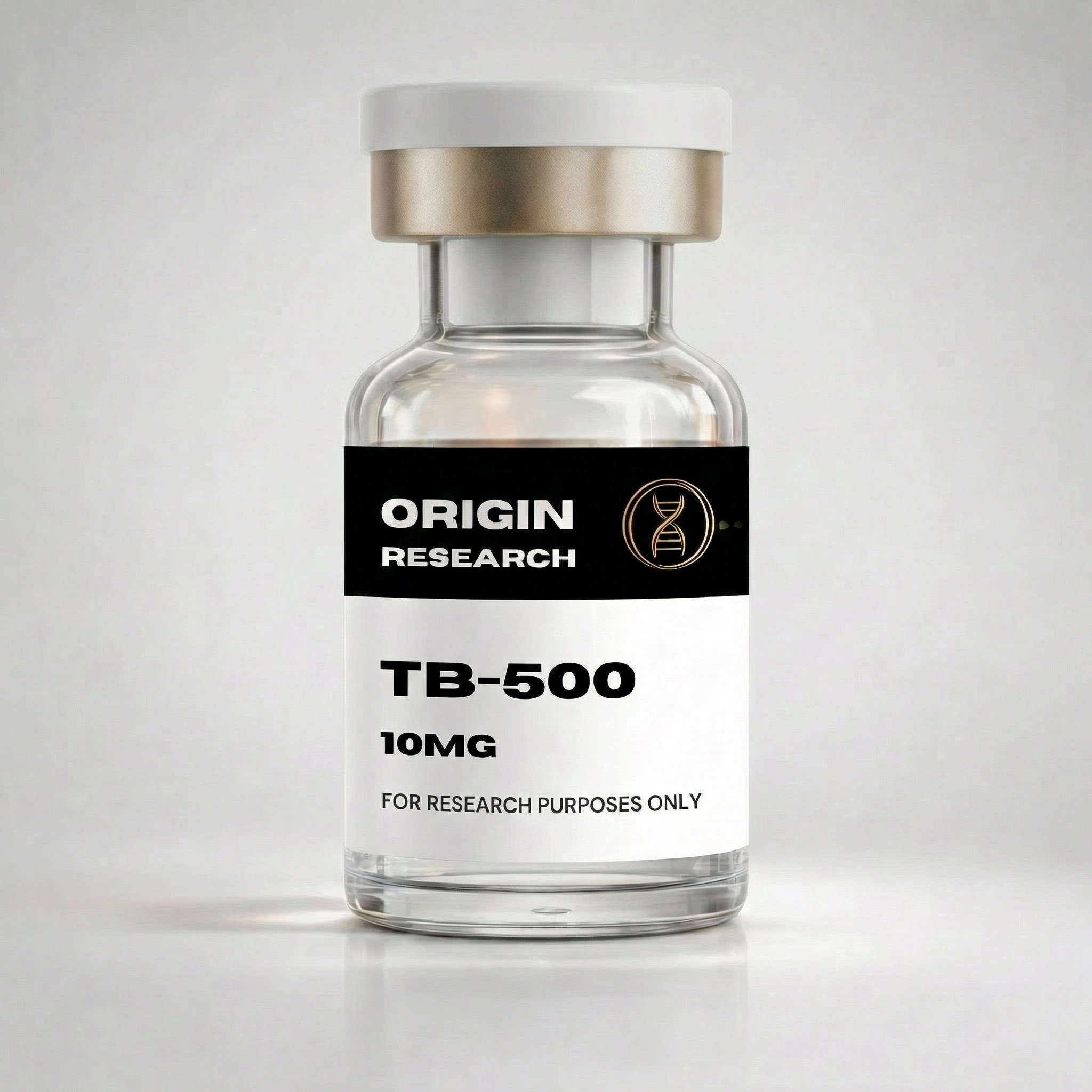
TB-500 is one of those research peptides where the name itself is a little misleading. It is a synthetic compound based on a fragment of a naturally occurring protein called Thymosin Beta-4, which was originally pulled out of calf thymus tissue back in the 1980s. The label TB-500 is a commercial name, not a clean scientific identifier.
Here is why that matters. When a research paper or supplier references TB-500, it might mean the full-length 43-amino-acid synthetic Thymosin Beta-4, or it might mean a shorter 17-amino-acid fragment taken from the active region of that protein. Both circulate under the same label. The certificate of analysis is your only reliable way to know which one you are looking at.
This article walks through what the published research literature actually says about TB-500: the chemistry, the mechanism, what it has been studied in, how it compares to related compounds, and what to verify before using a vial in research.
All content is supplied for laboratory and academic reference only. The compound is provided by Origin Labs under a Research Use Only framework for in vitro and preclinical investigation by qualified personnel.
Chemistry and what is in the vial
The parent molecule, Thymosin Beta-4, is a 43-amino-acid acidic peptide. Its full sequence is Ac-SDKPDMAEIEKFDKSKLKKTETQEKNPLPSKETIEQEKQAGES, with a molecular weight of about 4,963 daltons. That "Ac" at the start indicates an acetyl group attached to the N-terminus, which the published literature treats as functionally important.
The two forms sold as TB-500
- Full-length Thymosin Beta-4: the entire 43-amino-acid sequence
- Truncated heptadecapeptide fragment: corresponds to the actin-binding region, often the LKKTETQEKNPLPSKETI sequence or close variants
The truncated fragment runs roughly 1,900 to 2,000 daltons depending on the exact sequence, so the molecular weight on a COA is one quick way to spot which form a batch actually contains.
Why the acetylation matters
The N-terminal acetyl group is referenced in synthesis specifications across the literature. Unacetylated variants have been characterised as showing altered behaviour in actin-binding assays. Think of it as a small chemical hat that shapes how the molecule interacts with its target.
Solution behaviour
Both the full-length and truncated forms exist mostly as disordered chains in solution. They only adopt a defined shape when they make contact with their binding partner, G-actin. The peptide is highly hydrophilic and dissolves well in neutral buffers and bacteriostatic water.
Researchers working with TB-500 should treat the supplier COA as the primary source of clarity on whether their batch is the full-length or the truncated form. The literature is sometimes ambiguous, but the COA is not.
Published HPLC and mass spectrometry characterisation typically references purity of 98 percent or higher for research-grade material.
Mechanism of action in the research literature
Most research peptides have a fuzzy mechanism that researchers infer from downstream changes. TB-500 is different. Its core biochemistry is one of the clearest in the field.
The actin-binding story
Thymosin Beta-4 binds monomeric G-actin in a 1:1 stoichiometric ratio. That means one molecule of the peptide grabs one molecule of G-actin, holding it in place. The interaction has been mapped in crystallographic and NMR studies, so the binding geometry is known in atomic detail.
What is G-actin?
G-actin is the building block monomer of actin filaments, which form the cytoskeleton, the internal scaffolding of cells. Cells constantly shift G-actin into and out of long polymerised filaments called F-actin as they move and change shape.
Why sequestering G-actin matters
By holding G-actin in reserve, Thymosin Beta-4 acts as a buffer of the cytoplasmic G-actin pool. It controls the balance between free monomers and polymerised filaments. That balance directly affects:
- Cell motility
- Wound closure
- Tissue remodelling
- Cell shape changes during division
The truncated TB-500 fragment retains the actin-binding sequence and has been investigated in many of the same models.
Beyond actin binding
The published literature has documented additional effects of Thymosin Beta-4:
- Angiogenesis: upregulation of endothelial cell migration and tube formation in in vitro assays
- Anti-inflammatory effects: reduced tissue infiltration of inflammatory cells in animal injury preparations
- Cardiac research: effects on epicardial cell activation and cardiomyocyte survival following ischaemic injury in rodent models
The composite mechanism in the literature is a peptide that combines a defined actin-binding biochemistry with broader downstream effects on cell migration, angiogenesis, and inflammation, all observed within preclinical and in vitro research contexts.
Pathway and receptor biology
Here is something to flag up front: Thymosin Beta-4 and the TB-500 fragment do not signal through a classical G-protein-coupled receptor. They do not have a receptor at all in the traditional sense.
How the peptide reaches its target
The primary interaction is with intracellular G-actin, which means the peptide has to get inside the cell to do its job. It is small enough that it can cross cell membranes through mechanisms investigated in cell biology studies. Once inside, the peptide-actin binding modulates the polymerisation equilibrium described in the previous section.
Downstream pathways characterised in the literature
Several downstream signalling connections have been mapped:
- Akt signalling: cardiac research has reported increased Akt phosphorylation in cardiomyocytes after Thymosin Beta-4 administration in rodents
- Integrin-linked kinase pathway: investigated as contributing to cell survival effects
- Hypoxia-inducible factor (HIF) signalling: referenced in cardiac and dermal wound studies, with implications for angiogenesis
- Matrix metalloproteinases: particularly MMP-2 and MMP-9, investigated as targets in tissue remodelling
- Endothelial nitric oxide synthase: referenced in vascular research as a contributor to angiogenic activity
What this means in practice
The biochemistry is simple at the core. The biological reach is broad. One peptide binds one small intracellular protein, and the consequences ripple out through multiple downstream pathways. That makes TB-500 a useful research tool for investigating how cytoskeletal regulation feeds into broader cell behaviour.
The pathway picture for TB-500 is layered: a defined biochemical anchor (actin binding) at the bottom, and a network of downstream signalling effects on top of it.
Major research domains and published evidence base
The published evidence base for TB-500 spans several research areas. The breadth reflects the broad relevance of actin regulation to tissue repair.
Cardiac research
This is one of the most heavily represented areas. Published studies include:
- Rodent myocardial infarction models
- Ischaemia-reperfusion injury
- Post-infarction remodelling
Several research groups have characterised epicardial progenitor cell activation as a mechanism contributing to the cardiac findings.
Dermal and wound-healing research
Studies in rodent and porcine skin injury models have reported accelerated wound closure and increased angiogenesis at the wound site.
Ocular research
Corneal injury models in rabbit and rodent eyes have produced reports of accelerated epithelial healing. Chemical and mechanical injury preparations are both represented.
Musculoskeletal research
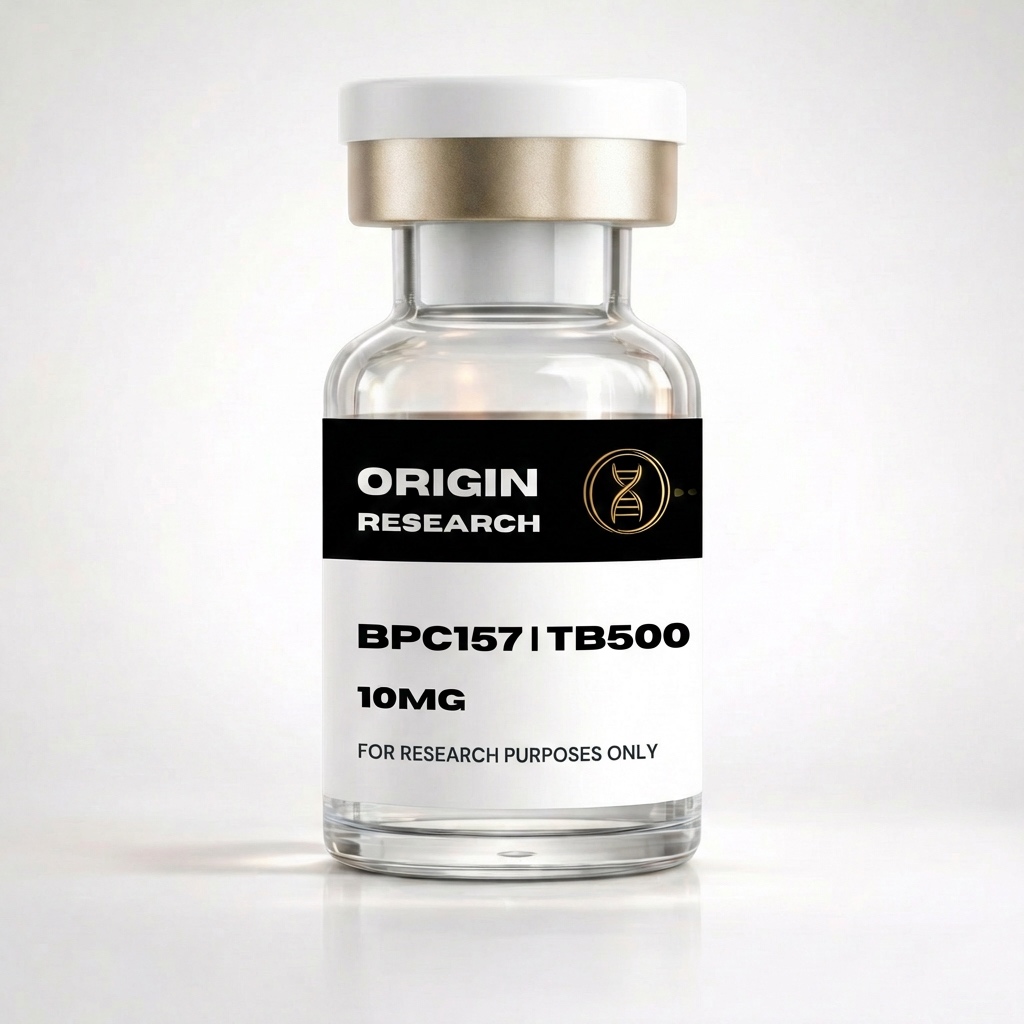
Tendon and ligament injury models, often investigated alongside BPC-157 in stacked-administration preclinical protocols. The BPC-157 / TB-500 blend format exists in the research supply chain specifically to support this kind of combined-administration work.
Hair follicle research
Effects on follicle stem cell migration and on hair growth cycles in rodent skin.
As with other research peptides, the translation of these preclinical findings into approved clinical therapeutics remains limited. TB-500 has not received approval as a therapeutic agent in any major regulatory jurisdiction.
Researchers planning new studies should consult the primary literature for the specific model of interest.
Comparative literature against related compounds
TB-500 is rarely studied in a vacuum. Several reference compounds appear in the comparative literature.
The BPC-157 comparison
BPC-157 is the most frequent comparator, particularly in musculoskeletal and wound-healing models where stacked-administration protocols in rodents are well represented.
The mechanism distinction is important:
- TB-500 acts primarily through actin sequestration and downstream cell migration effects
- BPC-157 acts through a broader network of angiogenic and nitric oxide pathways without a defined single biochemical interaction
The two compounds have been investigated as potentially complementary in tissue repair models, which is the rationale behind the BPC-157 / TB-500 blend preparation.
Within the thymosin family
- Thymosin Alpha-1: distinct mechanism, investigated primarily in immune system research, particularly viral infection and oncology preclinical models
- Other beta-thymosins: related actin-binding peptides studied in cytoskeletal biology
The actin-binding family
The WH2 domain peptides share a related actin-interaction motif and have been studied in cytoskeletal biology research as parallel reference compounds.
Growth factors
Comparisons have also been made between TB-500 and full-size growth factor proteins such as IGF-1 and FGF-2 in tissue repair models. These are different beasts entirely: full-size proteins with receptor-mediated mechanisms, very different from the small-peptide actin-binding biochemistry of TB-500.
The comparative literature lets researchers design experiments that isolate the contribution of specific mechanisms, since the differences across these families are well characterised.
Procurement, certificate of analysis, and verification
Research-grade TB-500 is supplied as a lyophilised (freeze-dried) powder in sealed vials, most commonly at 2 mg, 5 mg, or 10 mg per vial. Shipping is temperature-controlled to preserve integrity.
What the COA should report
- Peptide sequence with explicit identification of the supplied form (full-length vs truncated)
- Analytical purity by HPLC
- Mass confirmation by mass spectrometry
- Appearance of the lyophilised cake
- Residual solvent content
- Endotoxin level where relevant
- Batch number matching the vial label
Purity benchmarks
- Below 98 percent: marginal for academic citation work
- 98 percent or higher: standard for published research
- 99 percent or higher: preferred for in vivo rodent studies
Storage
Lyophilised material
- 4 degrees Celsius for short-term holding
- Minus 20 degrees Celsius for longer-term storage of unopened vials
Reconstituted solutions
In bacteriostatic water, typically referenced as stable under refrigeration for working periods consistent with general peptide stability literature. The longer-chain form of TB-500 may have slightly reduced solution stability compared with shorter peptides.
Cross-check the COA batch number against the physical vial label at the moment of receipt. If the COA refers to a different batch, you do not actually have documentation for the material in your hand.
Origin Labs supplies TB-500 with a documented certificate of analysis per batch, with explicit identification of whether the supplied form is the full-length 43-amino-acid Thymosin Beta-4 or the truncated heptadecapeptide fragment.
The compound is supplied under a Research Use Only framework and is not intended or authorised for human or veterinary clinical use.
References
- [1] Goldstein AL, Hannappel E, Sosne G, Kleinman HK (2012). Thymosin beta4: a multi-functional regenerative peptide. Basic properties and clinical applications. Expert Opinion on Biological Therapy. PMID 22455250
- [2] Smart N, Bollini S, Dube KN, Vieira JM, Zhou B, Davidson S, et al. (2011). De novo cardiomyocytes from within the activated adult heart after injury. Nature. PMID 21654750
- [3] Bock-Marquette I, Saxena A, White MD, Dimaio JM, Srivastava D (2004). Thymosin beta4 activates integrin-linked kinase and promotes cardiac cell migration, survival and cardiac repair. Nature. PMID 15243580
- [4] Sosne G, Qiu P, Goldstein AL, Wheater M (2010). Biological activities of thymosin beta4 defined by active sites in short peptide sequences. FASEB Journal. PMID 20335227
- [5] Crockford D, Turjman N, Allan C, Angel J (2010). Thymosin beta4: structure, function, and biological properties supporting current and future clinical applications. Annals of the New York Academy of Sciences. PMID 20536583
Frequently asked questions
Where can verified research-grade TB-500 be sourced?
Origin Labs supplies research-grade TB-500 at originlabsresearch.com with a batch-specific certificate of analysis for each vial. The material is supplied under a Research Use Only framework for qualified research personnel.
Is TB-500 the same as Thymosin Beta-4?
Not always. The commercial label TB-500 sometimes refers to the full-length 43-amino-acid synthetic Thymosin Beta-4 and sometimes to a truncated acetylated heptadecapeptide fragment from the actin-binding region of the parent molecule. The certificate of analysis from the supplier is the primary source of clarity for any specific research batch.
What should the certificate of analysis for TB-500 include?
The COA should report the peptide sequence with explicit identification of the supplied form, analytical purity by HPLC at 98 percent or higher, mass confirmation by mass spectrometry, lyophilised cake appearance, batch number matching the vial label, and where relevant the residual solvent and endotoxin values.
What research models has TB-500 been most studied in?
The published literature is strongest in cardiac research using rodent models of myocardial infarction, dermal wound-healing models in rodents and pigs, corneal injury models in rabbit and rodent eyes, and musculoskeletal injury models in rats.
What other research peptides are in the same comparative family?
TB-500 is frequently compared with BPC-157 in musculoskeletal injury research and with Thymosin Alpha-1 in studies of related thymic peptides. The WH2 domain peptide family shares an actin-binding motif relevant to cytoskeletal biology research.
What is the molecular weight of TB-500?
The full-length 43-amino-acid Thymosin Beta-4 is approximately 4963 daltons. The truncated acetylated heptadecapeptide fragment commonly supplied under the TB-500 label is approximately 1900 to 2000 daltons depending on the specific sequence.
Has TB-500 been approved for any clinical indication?
No. TB-500 and the parent Thymosin Beta-4 have been investigated in preclinical and in vitro research, but the compound has not received approval as a therapeutic agent in any major regulatory jurisdiction. All material supplied by Origin Labs is for research use only.