
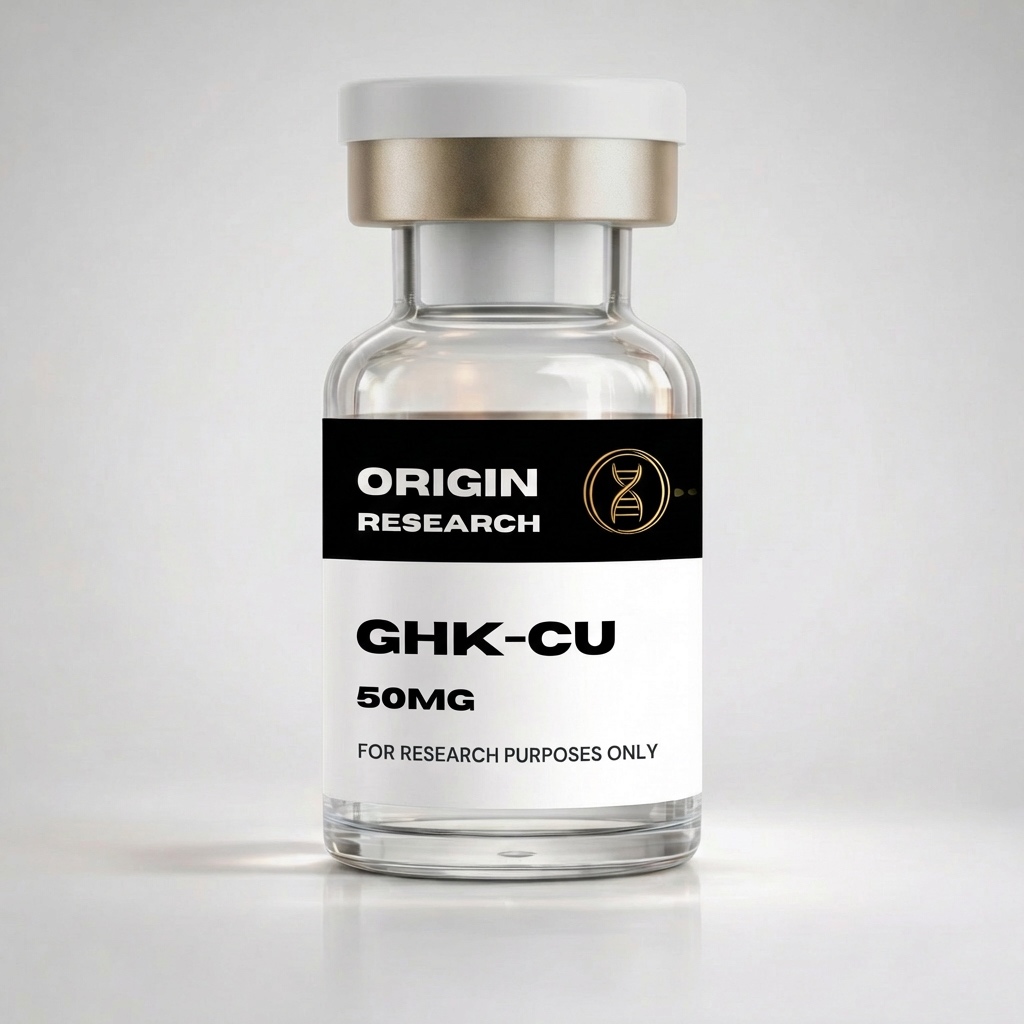
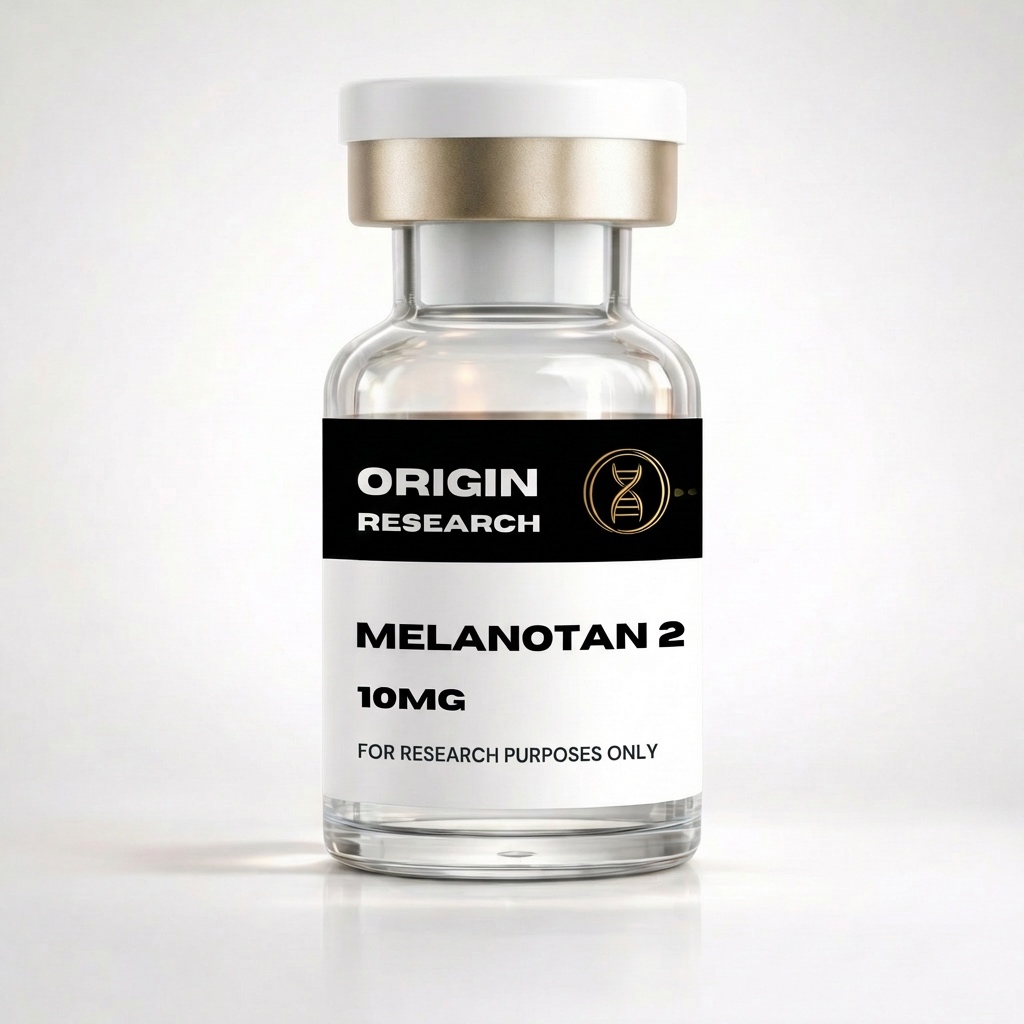
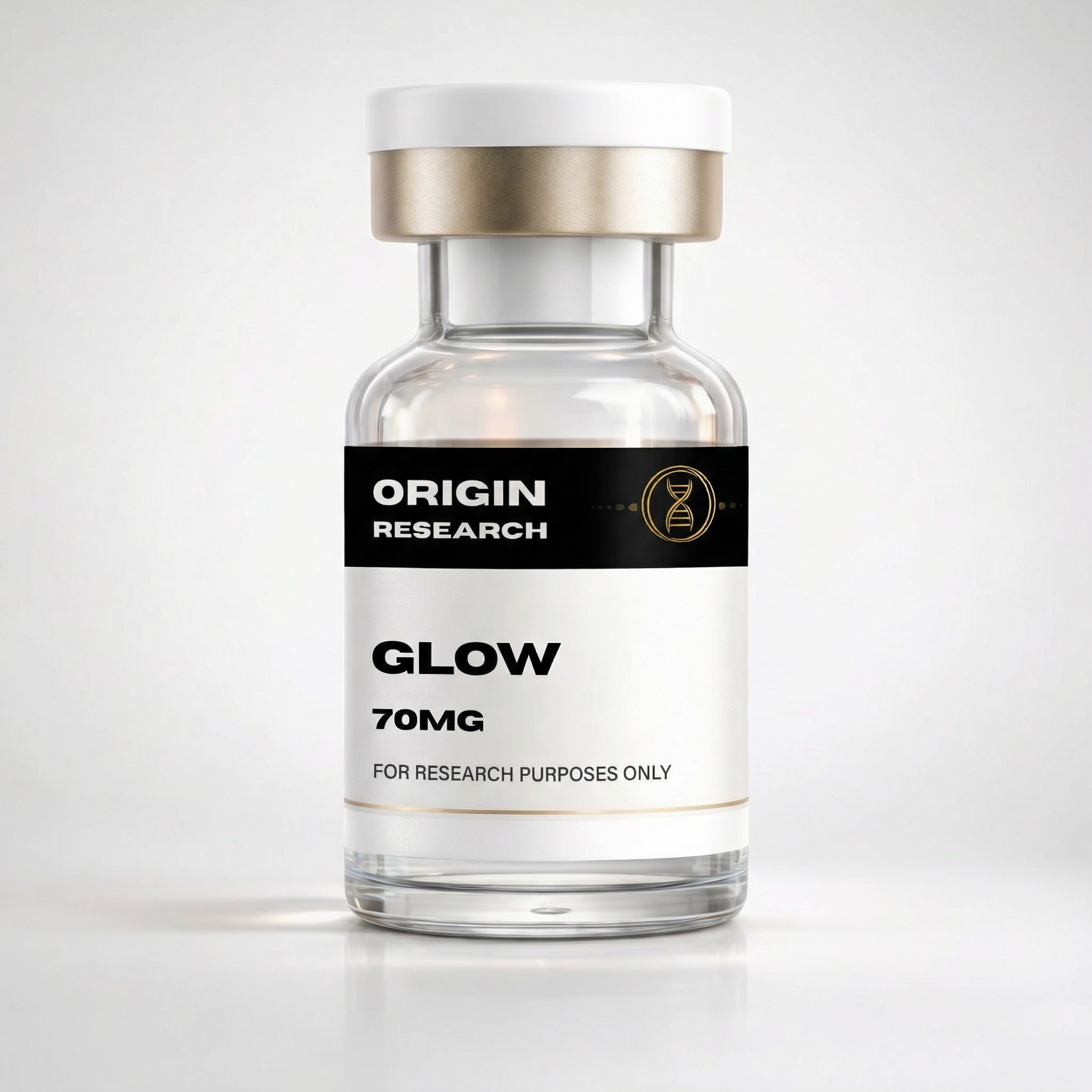
Skin biology research is a preclinical investigation category focused on dermal fibroblast and keratinocyte biology, melanocyte signalling, extracellular matrix remodelling, and UV-stress response pathways. Compounds studied in this area are typically evaluated in primary fibroblast and keratinocyte cultures, 3D reconstructed skin models, melanocyte pigmentation assays, and ex-vivo skin explant preparations. Endpoints across published work commonly include collagen I and III gene and protein expression, matrix metalloproteinase activity, decorin and fibronectin levels, MITF and TYR expression in melanocyte models, and antioxidant gene panels under UV-stress conditions. The compounds most often investigated under this research category in the Origin Research catalog are GHK-Cu, Melanotan II, and the GLOW Stack. Each has a defined mechanistic position. GHK-Cu, glycyl-histidyl-lysine bound to copper, has been investigated extensively in fibroblast culture for its modulation of TGF-beta signalling, MMP and TIMP balance, and antioxidant gene expression, with published literature stretching back to early skin remodelling research. Melanotan II is a synthetic analog of alpha-MSH studied in melanocortin receptor pharmacology, primarily MC1R and MC4R, with published rodent and in-vitro work on melanogenesis and MITF pathway activation. The GLOW Stack pairs reference compounds investigated in skin biology protocols where complementary mechanistic axes are evaluated in one cohort. Research groups worldwide select this combination because it spans matrix remodelling, melanocyte pigmentation pathway, and combined-stack endpoints within a single bench programme, and all reference compounds ship from Origin Labs global stock with batch COA documentation, which is relevant for skin culture work where contamination and endotoxin sensitivity are protocol-critical.
About this research area
Mechanism overlap and selection criteria
Selection between GHK-Cu, Melanotan II, and the GLOW Stack in a skin biology research model depends on whether the endpoint is matrix remodelling, melanocortin receptor pharmacology, or combined-pathway readouts. GHK-Cu is the appropriate reference where dermal fibroblast biology is the focus, with published in-vitro literature documenting its effects on collagen and elastin gene expression, decorin upregulation, MMP-2 modulation, and SOD2 and other antioxidant gene panels. The copper-binding component is mechanistically central, and selection requires attention to buffer composition because chelating agents in the culture medium can reduce active copper-peptide concentration. Melanotan II is selected in melanocyte-focused work, where published preclinical pharmacology covers MC1R-mediated MITF activation, tyrosinase upregulation, and melanin production in B16 and primary melanocyte cultures. It is also referenced in MC4R receptor pharmacology more broadly, which connects to CNS research literature on central melanocortin signalling. The GLOW Stack is investigated in combined-pathway protocols where both matrix-remodelling and pigmentation-pathway endpoints are evaluated together, with the rationale being that skin biology endpoints rarely depend on a single mechanism. Selection criteria across research groups include HPLC purity above 98 percent, mass spectrometry sequence confirmation, and where in-vitro work is the model, endotoxin documentation to avoid confounding inflammatory readouts. None of these compounds are approved for human therapeutic use anywhere, and all Origin Research supply is restricted to in-vitro and preclinical research.
How researchers typically structure protocols
Skin biology protocols are commonly designed around either 24 to 72 hour acute windows for gene and protein expression in cell culture or 1 to 6 week chronic windows for 3D reconstructed skin and ex-vivo explant work. GHK-Cu in fibroblast culture is generally dosed at nanomolar to low-micromolar concentrations across 24, 48, and 72 hour timepoints, with RT-qPCR and Western blot panels for collagen, elastin, decorin, MMP, TIMP, and SOD2. Melanotan II in B16 melanocyte culture is dosed at low-nanomolar to nanomolar concentrations across 48 to 96 hour windows, with melanin quantification by spectrophotometric assay and MITF and TYR by Western blot. Reconstructed 3D skin model protocols using GHK-Cu and the GLOW Stack typically apply the reference compound topically or in the culture medium across 7 to 28 day windows, with histological scoring of epidermal thickness, dermal collagen organisation, and immunohistochemistry for matrix markers. Reconstitution practice for these reference compounds uses sterile water or PBS, with attention to copper-peptide buffer compatibility for GHK-Cu. Single-use aliquots at minus 80 Celsius are standard, with reconstituted material used within published stability windows. Cohort and replicate design for skin biology protocols typically uses triplicate biological replicates with technical duplicates per timepoint. All dosing references apply strictly to non-human preclinical research.
Stack pairings and combination research
Combination research in skin biology is one of the more developed sub-areas because dermal endpoints rarely depend on a single mechanistic axis. GHK-Cu plus Melanotan II appears in published in-vitro literature as a paired arm in pigmentation and matrix-remodelling co-investigation, with the rationale being that GHK-Cu engages matrix and antioxidant pathways while Melanotan II engages melanocortin pigmentation pathways, giving complementary endpoints in the same culture system. The GLOW Stack as supplied in the Origin Research catalog is designed for protocols where investigators want pre-matched dosing across these complementary references, simplifying pipetting and reducing variance from independent reconstitution. Topical-application research in 3D reconstructed skin models also uses GHK-Cu as a comparator alongside the GLOW Stack to evaluate matrix-remodelling endpoints with and without the additional pathway coverage. Melanotan II is sometimes run as a standalone arm in pigmentation-only protocols where matrix endpoints are not the focus, particularly in research models seeking to isolate MC1R-mediated effects from broader skin biology readouts. Combination protocol design should always include single-compound and vehicle control arms, with histological and gene expression endpoints timed to the slower of the two pharmacodynamic profiles. All references above apply strictly to non-human preclinical research.
Global stock and supply considerations
Skin biology research often uses primary cell cultures and reconstructed 3D skin models, both of which are sensitive to contamination and endotoxin levels. The Origin Research catalog stocks GHK-Cu, Melanotan II, and the GLOW Stack in cold storage with batch-matched COA per vial, including endotoxin documentation where applicable to cell culture work. Origin Labs sourcing matters for skin biology research because reconstructed skin and primary culture protocols are typically time-bounded and replenishment delays can disrupt cohort design. Standard worldwide delivery is documented per region with cold-pack packaging on longer transit lanes. GHK-Cu storage requires attention to copper-peptide stability and reconstituted aliquots should be used within published stability windows, with single-use aliquots strongly recommended to avoid copper oxidation across freeze-thaw cycles. Melanotan II is stored as lyophilised powder at minus 20 Celsius short-term and minus 80 Celsius long-term, with reconstituted aliquots used within standard peptide stability windows. The GLOW Stack components are stored according to the same standard. Lot reservation is available for multi-week skin model cohorts so that the full study arm is dosed from one batch, removing inter-batch variance from histological and gene expression endpoints. All compounds are sold strictly for in-vitro and preclinical research and are not approved for human or veterinary therapeutic application in any jurisdiction. More information is available at originlabsresearch.com.