
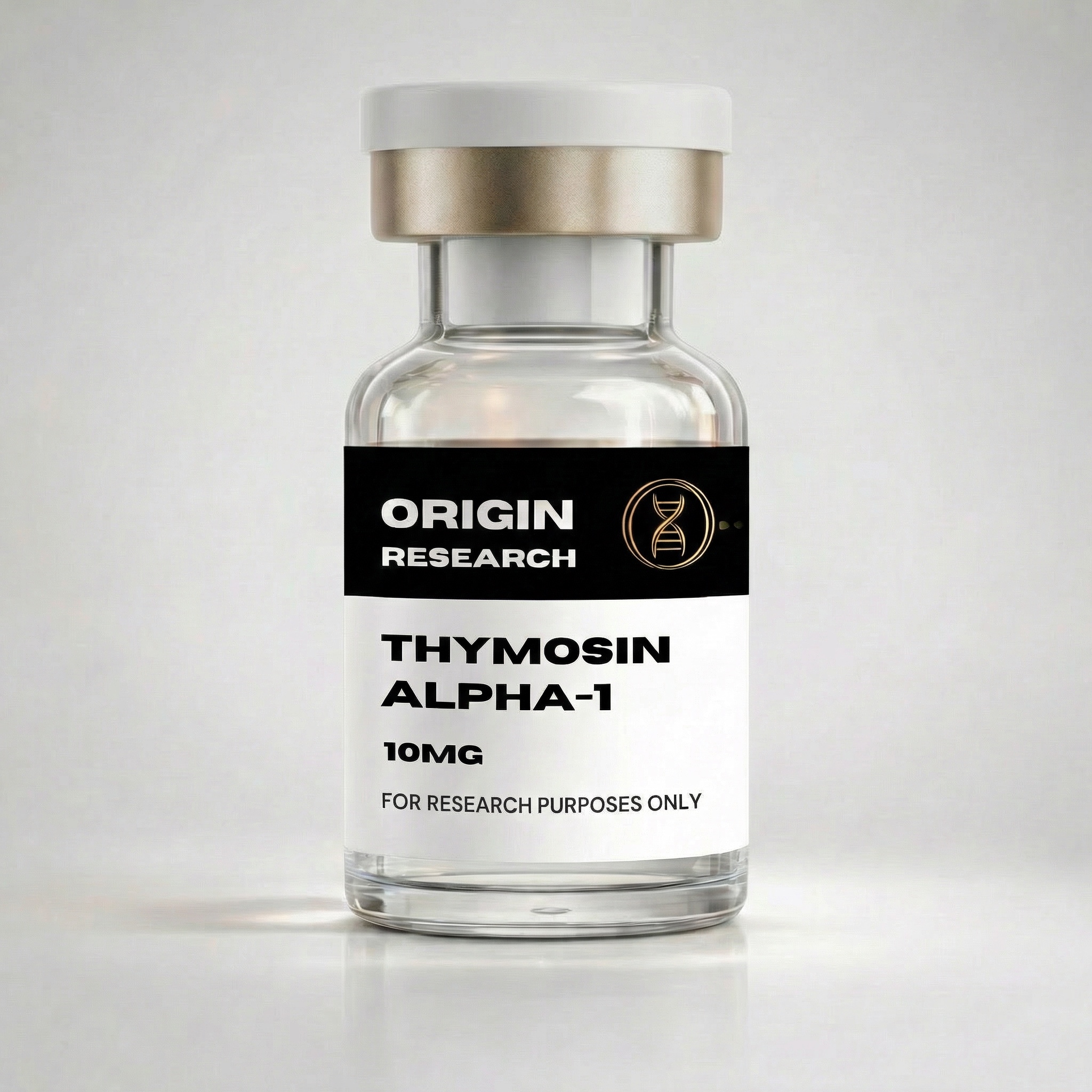
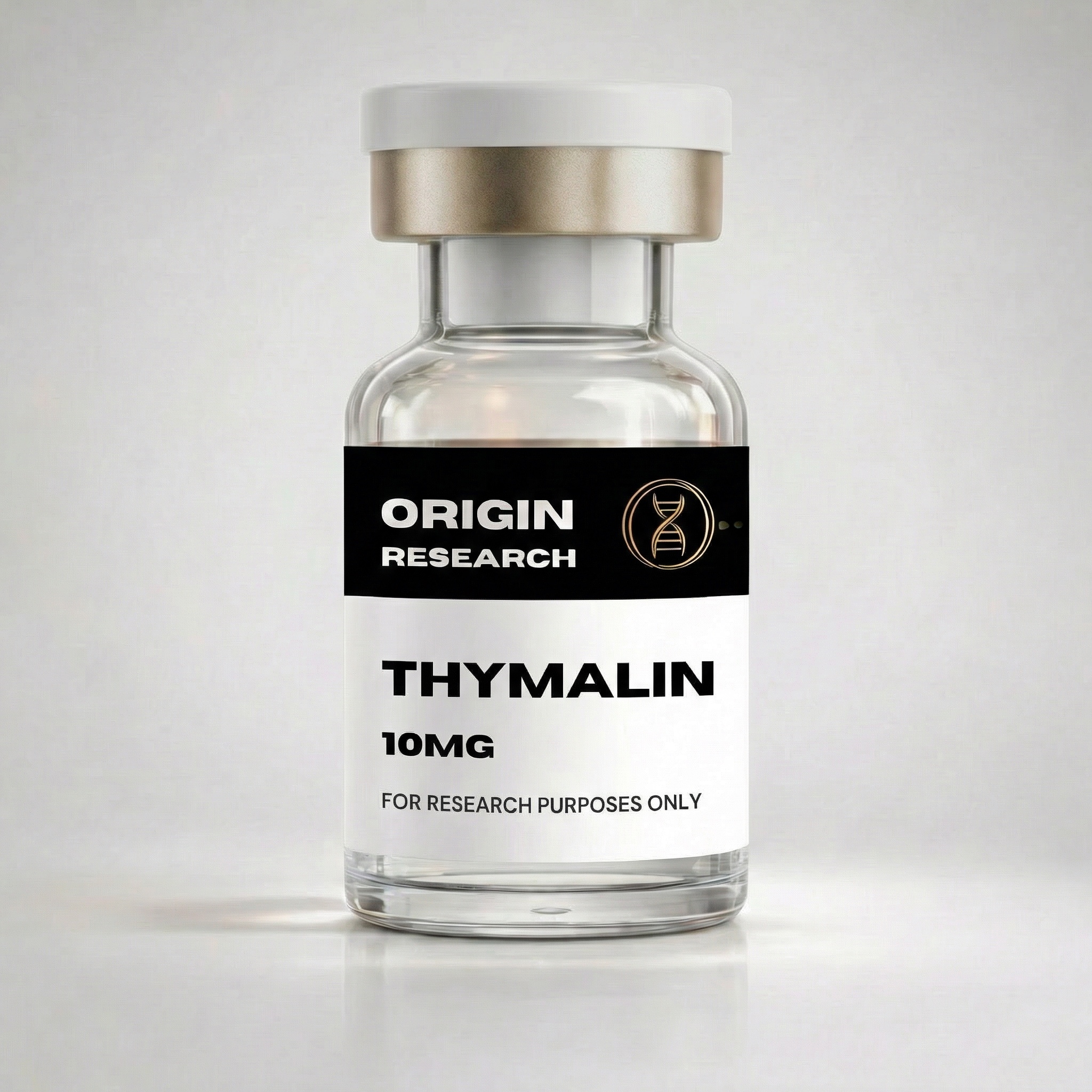
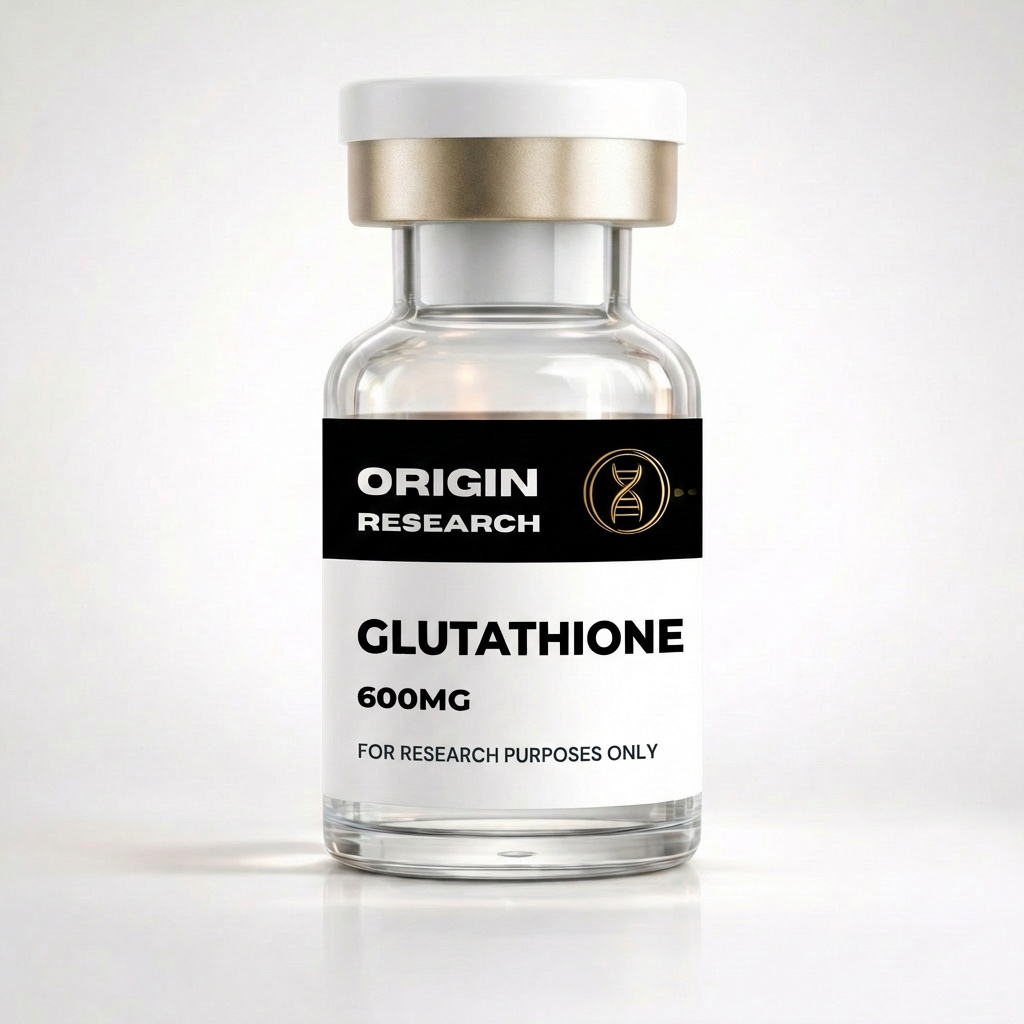
Immune pathway research is a preclinical investigation category focused on innate and adaptive immune signalling, T-cell maturation and subset balance, cytokine network dynamics, and redox-immune crosstalk. Compounds studied in this area are typically evaluated in primary lymphocyte cultures, thymic explant preparations, rodent models of immune challenge or thymic involution, and cytokine panel assays including IL-2, IL-6, TNF-alpha, and IFN-gamma. Endpoints across published work commonly include CD4 and CD8 T-cell subset distribution by flow cytometry, regulatory T-cell fraction, thymic mass and cortex-to-medulla ratio in ageing cohorts, NK cell activity assays, and antioxidant capacity measured through glutathione ratios. The compounds most often investigated under this research category in the Origin Research catalog are Thymosin Alpha-1, Thymalin, and Glutathione. Each occupies a distinct mechanistic position. Thymosin Alpha-1 is a synthetic 28-amino-acid peptide identical to the natural thymic factor, investigated extensively in published preclinical and clinical pharmacology literature for its effects on T-cell maturation, Toll-like receptor signalling, and immune response in challenge models. Thymalin is a thymic-tissue-derived peptide complex studied in Russian and Eastern European immunology literature for thymic involution, T-cell repertoire dynamics, and immune-ageing endpoints in rodent cohorts. Glutathione, the canonical tripeptide antioxidant, is investigated in redox-immune crosstalk where reactive oxygen species modulation of lymphocyte function is the readout. Research groups worldwide select this stack because it spans innate and adaptive immune signalling, thymic biology, and redox-immune integration within one bench programme, and all three reference compounds ship from Origin Labs global stock with batch COA documentation.
About this research area
Mechanism overlap and selection criteria
Selection between Thymosin Alpha-1, Thymalin, and Glutathione in an immune pathway research model is driven by the specific immunological axis under investigation. Thymosin Alpha-1 is the appropriate reference where T-cell maturation, Toll-like receptor pathway activation, and challenge-model immune responses are the endpoints, with the largest published literature footprint covering these areas. It has been investigated in viral and infection challenge models, hepatitis-related research, and in cancer immunology preclinical work, with the underlying mechanism centring on dendritic cell maturation and downstream T-cell activation. Thymalin is selected in research models focused on thymic involution and immune ageing, with published Eastern European literature documenting rodent cohort effects on thymic mass, T-cell subset distribution, and lifespan endpoints in long-running studies. Glutathione is the reference compound when redox status is the variable of interest, with published work documenting its role in lymphocyte function, ROS clearance, and Phase II detoxification pathway support. Selection criteria across research groups include HPLC purity above 98 percent for peptide arms, mass spectrometry sequence confirmation, endotoxin documentation for in-vitro lymphocyte work, and sterility documentation where culture purity is protocol-critical. All compounds are procured with batch-matched COA, and lot reservation is requested where chronic immune-ageing cohorts span multiple weeks or months. None are approved for human therapeutic use in any jurisdiction outside authorised clinical investigation.
How researchers typically structure protocols
Immune pathway protocols are commonly designed around either acute challenge windows of 24 to 168 hours after immune stimulus or chronic 4 to 26 week arms for thymic-involution and immune-ageing studies. Thymosin Alpha-1 in published preclinical work has been investigated at low-microgram-per-kilogram subcutaneous dosing in rodent challenge models, with flow cytometry of T-cell subsets, NK cell activity, and cytokine panels at multiple timepoints. Thymalin published Eastern European literature uses subcutaneous administration in rodent ageing cohorts across 8 to 26 week protocols, with terminal thymic histology and T-cell subset analysis. Glutathione is investigated in primary lymphocyte culture at micromolar concentrations across 24 to 72 hour windows and in rodent oxidative stress protocols at standard antioxidant reference dosing, with GSH and GSSG ratio measurement, ROS quantification, and downstream cytokine endpoints. Reconstitution practice follows the lyophilised peptide standard for Thymosin Alpha-1 and Thymalin, using sterile saline or bacteriostatic water for short-term aliquots. Glutathione reconstitution requires attention to pH stability and freshly prepared aliquots for cell culture work. Single-use aliquots at minus 80 Celsius are standard. Cohort design for immune protocols typically uses age-matched and sex-balanced groups with randomised housing assignment to control for cage-effect variance in immune endpoints. All references apply strictly to non-human preclinical research.
Stack pairings and combination research
Combination research in immune pathways is structured around pairing adaptive, innate, and redox axes. Thymosin Alpha-1 plus Thymalin appears in some published Eastern European literature as a paired arm in immune-ageing cohorts, with the rationale being that Thymosin Alpha-1 engages defined molecular receptors and T-cell maturation pathways while Thymalin acts as a thymic peptide complex influencing broader thymic biology. The two arms are typically dosed on separate but coordinated schedules, with endpoints including T-cell subset distribution, thymic mass, and cytokine panels. Glutathione is more commonly run as a redox-control arm or as a complementary antioxidant reference in protocols where oxidative stress is a known confound, particularly in challenge models where the immune stimulus also drives ROS production. The Origin Research catalog supplies each reference as a separate vial, allowing independent titration. Combination protocol design should always include vehicle and single-compound control arms, with endpoint timing planned around the slower of the pharmacodynamic profiles for the peptide arms and around the redox kinetics for Glutathione. All combination references apply strictly to preclinical research models and are intended for in-vitro and rodent immunology work only.
Global stock and supply considerations
Immune pathway research often uses primary lymphocyte cultures and chronic rodent immune-ageing cohorts, both of which place demands on sterility, endotoxin documentation, and lot continuity. The Origin Research catalog stocks Thymosin Alpha-1, Thymalin, and Glutathione in cold storage with batch-matched COA per vial, including endotoxin documentation for cell culture applications. Worldwide sourcing through Origin Labs reduces the cold-chain risk for materials sensitive to transit temperature excursion. Standard delivery varies by region with cold-pack packaging on longer transit lanes. Thymosin Alpha-1 storage follows the lyophilised peptide standard of minus 20 Celsius short-term and minus 80 Celsius long-term archive, with reconstituted aliquots used within the published stability window. Thymalin is stored similarly. Glutathione reference material storage requires attention to oxidation, with single-use aliquots strongly recommended to maintain reduced-form GSH concentration. Lot reservation is available for multi-week and multi-month immune-ageing cohorts so that the full study arm is dosed from one batch. All compounds are sold strictly for in-vitro and preclinical research and are not approved for human or veterinary therapeutic application in any jurisdiction. More information is available at originlabsresearch.com.