
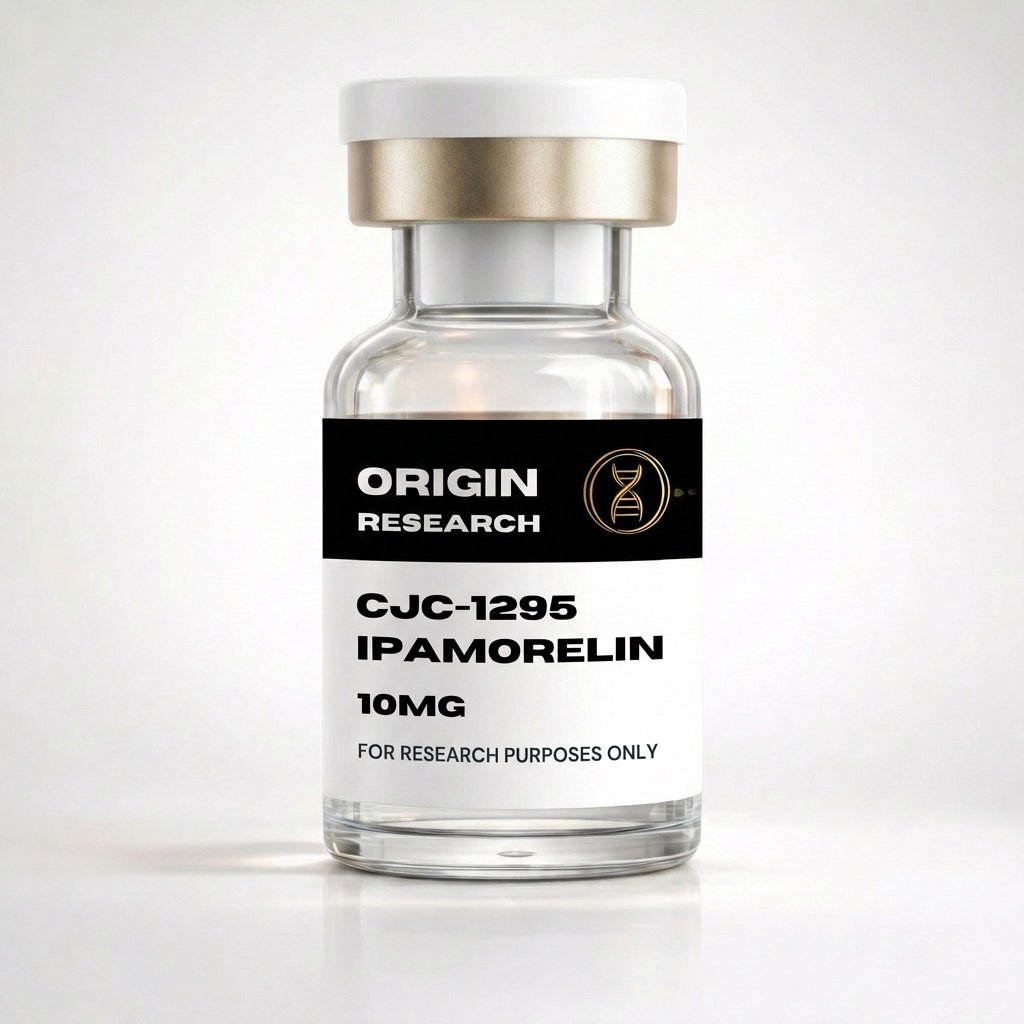
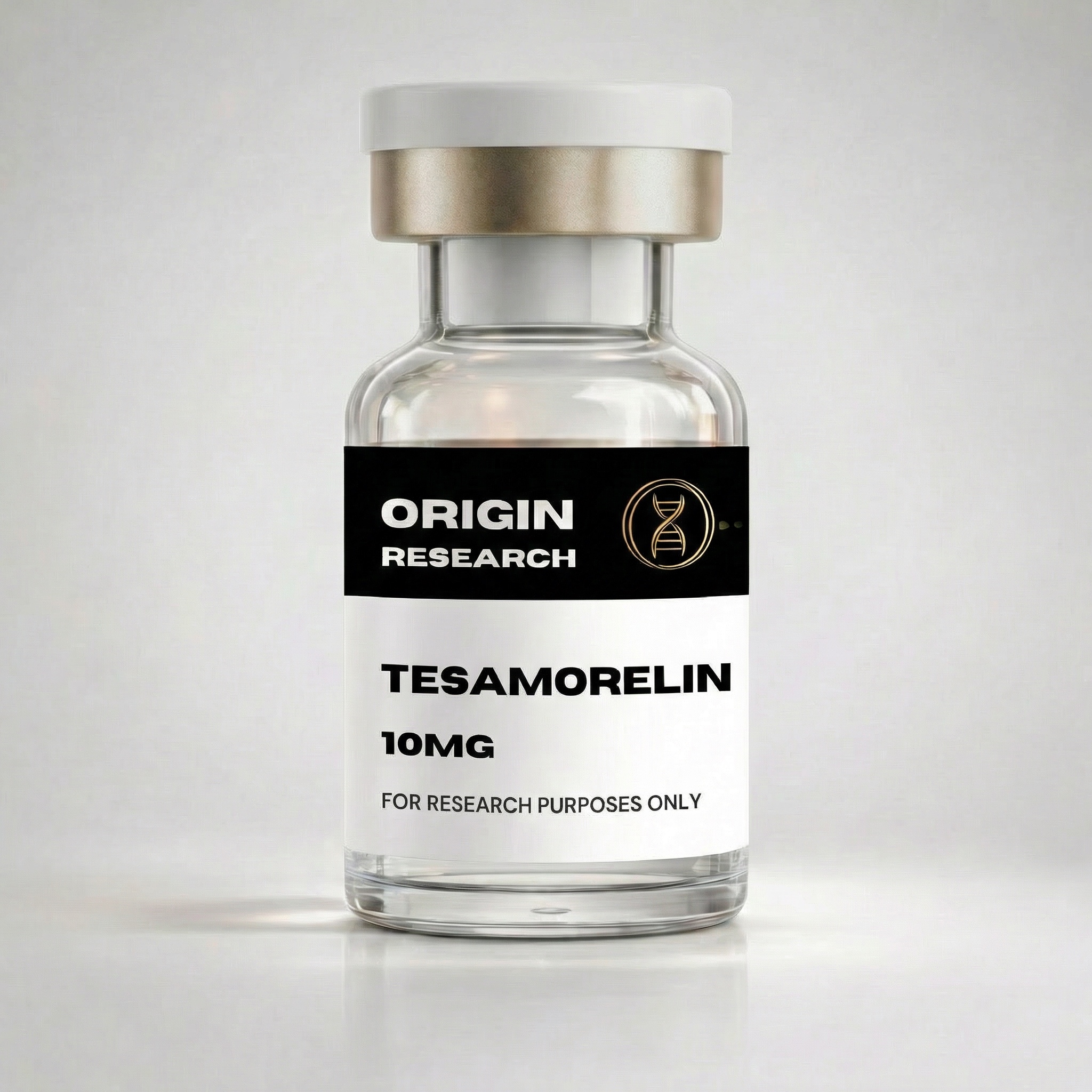
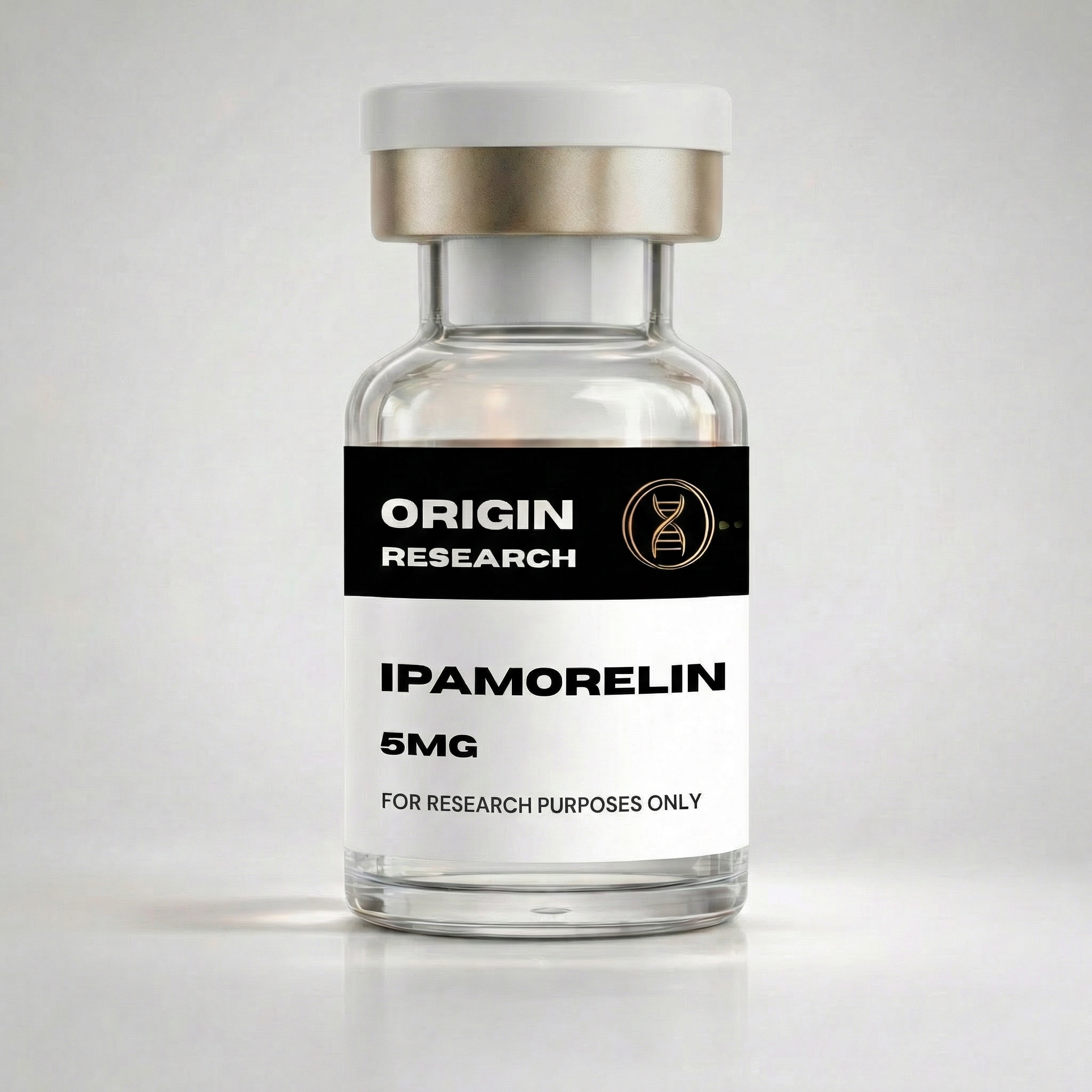
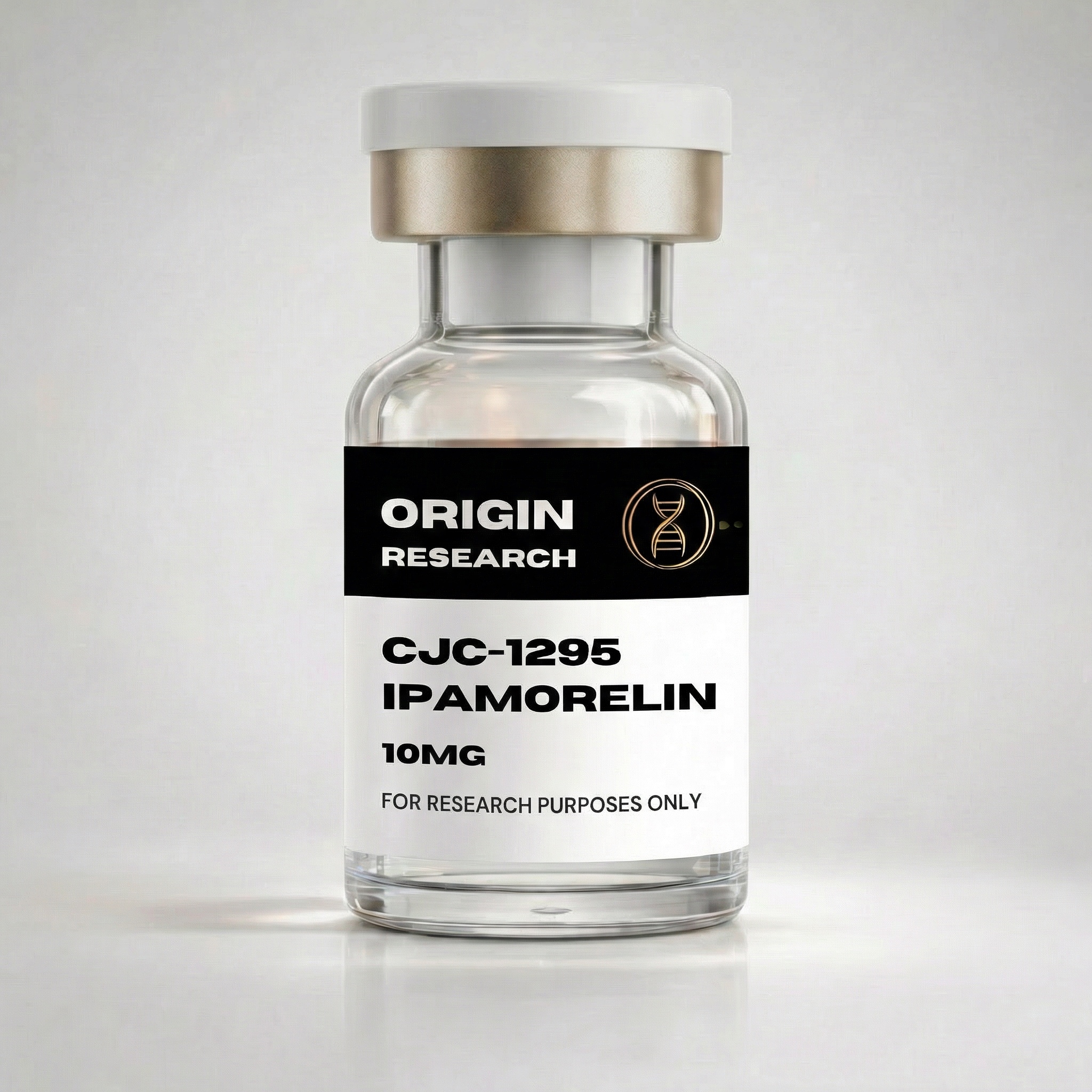
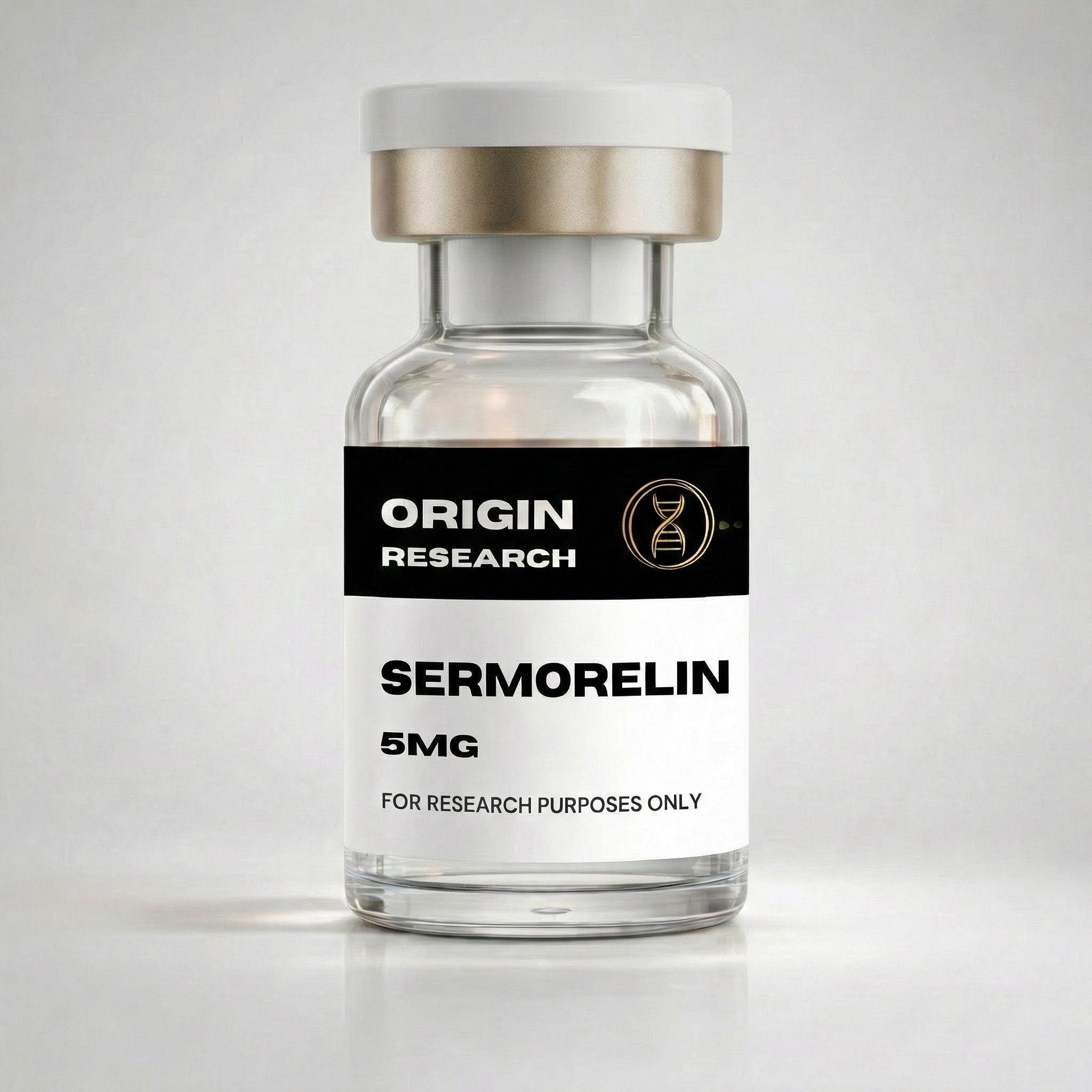
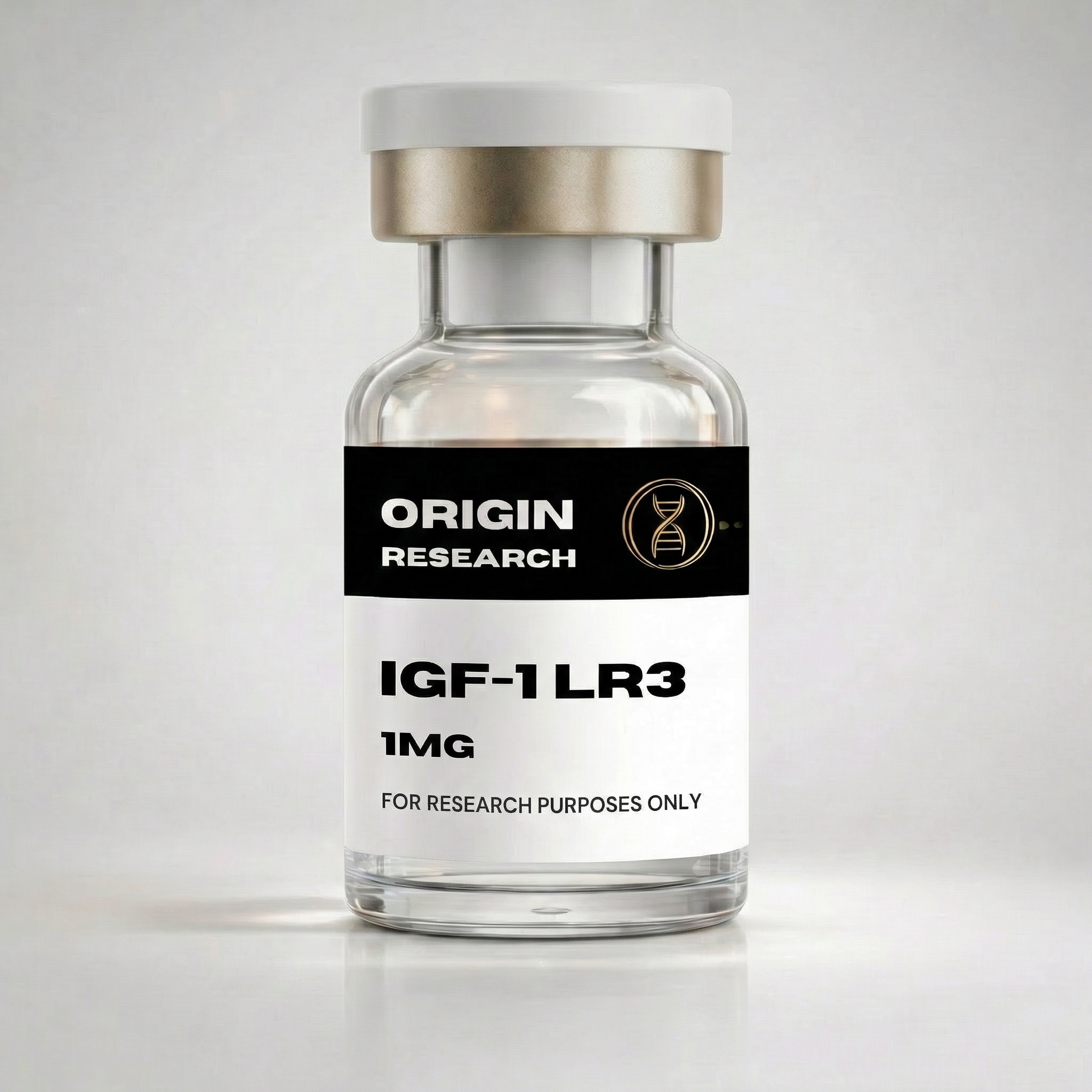
Growth hormone axis research is a preclinical investigation category focused on the hypothalamic-pituitary-somatotroph signalling chain, GHRH and ghrelin receptor pharmacology, downstream IGF-1 production and clearance, and pulsatile versus tonic secretion dynamics in research models. Compounds studied in this area are typically evaluated in rodent pituitary cell cultures, pulsatility-monitored in-vivo animal models, IGF-1 readout assays, and receptor binding studies on GHRHR and GHSR. Endpoints across published work commonly include amplitude and frequency of growth hormone pulses in rodent models, IGF-1 and IGFBP-3 serum concentrations in research cohorts, somatotroph desensitisation kinetics, and ghrelin receptor activation profiles. The compounds most often investigated under this research category in the Origin Research catalog are the CJC-1295 plus Ipamorelin Blend, Tesamorelin, Ipamorelin, CJC-1295, Sermorelin, and IGF-1 LR3. Each occupies a defined mechanistic position. CJC-1295 is a GHRH analog with extended half-life used in studies probing sustained GHRH receptor engagement in animal models. Tesamorelin is a stabilised GHRH analog with established preclinical and clinical pharmacology data, commonly referenced in visceral adipose and IGF-1 axis work. Ipamorelin is a selective ghrelin receptor agonist investigated in studies seeking GH release without concurrent ACTH or prolactin elevation in research models. Sermorelin is the canonical truncated GHRH 1-29 reference compound used in pulsatility studies. IGF-1 LR3 is the long-arginine analog of insulin-like growth factor 1, studied where extended receptor binding is the variable of interest. The CJC-1295 plus Ipamorelin Blend pairs sustained GHRH and selective GHS-R activation in one administration, simplifying dose-matching in combination protocols. Research groups globally select this stack because it spans hypothalamic, pituitary, and peripheral IGF-1 receptor pharmacology within one bench programme, and all six reference materials ship from Origin Labs stock with batch COA documentation.
About this research area
Mechanism overlap and selection criteria
Selection across CJC-1295, Tesamorelin, Ipamorelin, Sermorelin, the CJC/Ipa Blend, and IGF-1 LR3 in a GH-axis research model depends on whether the question is upstream GHRH receptor pharmacology, ghrelin receptor agonism, combined synergy at the somatotroph, or downstream IGF-1 receptor dynamics. CJC-1295 has been investigated in studies probing extended GHRH receptor occupancy and the resulting flattening of GH pulse architecture in animal models. Tesamorelin sits in the same receptor family but with a distinct pharmacokinetic and clinical literature footprint that makes it the more common reference where IGF-1 axis dynamics are the readout. Ipamorelin is selected for its receptor selectivity profile, with published preclinical data documenting GH release without meaningful ACTH or prolactin elevation in research models, which is a relevant consideration when researchers want a clean somatotroph signal. Sermorelin is the canonical short-half-life GHRH reference and is used in pulsatility studies where a defined, washable signal is required. The CJC/Ipa Blend is selected in protocols testing combined GHRH plus GHS-R activation, with the rationale that the two receptor classes engage distinct intracellular pathways and produce synergistic GH output in preclinical models. IGF-1 LR3 sits downstream and is used where the IGF-1 receptor itself, rather than the upstream secretagogue chain, is the variable of interest. Purity criteria across research groups globally follow the standard above 98 percent HPLC, with sequence confirmation by mass spectrometry. None of these compounds are approved for human therapeutic use outside authorised clinical investigation, and all Origin Research supply is restricted to research applications.
How researchers typically structure protocols
GH-axis protocols are commonly designed around acute pharmacodynamic windows for secretagogue arms and longer chronic windows for IGF-1 axis remodelling studies. CJC-1295 in published rodent work has been investigated at low-microgram-per-kilogram subcutaneous dosing with serial GH and IGF-1 sampling in animal cohorts. Tesamorelin preclinical and clinical pharmacology references daily subcutaneous administration with IGF-1 and visceral adipose endpoints. Ipamorelin acute pharmacodynamic studies typically sample GH at 5, 15, 30, and 60 minutes post-administration in research animals to capture the pulse peak and decay. Sermorelin pulsatility work uses tight serial sampling because of the short half-life of the truncated GHRH fragment. The CJC/Ipa Blend is investigated in chronic 4 to 12 week protocols probing IGF-1 axis remodelling with periodic acute pulse-sampling sub-arms. IGF-1 LR3 in cell culture work is dosed at low-nanogram-per-millilitre concentrations across 24 to 72 hour windows with phospho-AKT and phospho-S6K readouts on Western blot. Reconstitution practice across research labs uses bacteriostatic water for short-term aliquots and sterile saline or PBS for cell culture, with single-use aliquots at minus 80 Celsius. Cohort design for GH-axis protocols requires careful diurnal and feeding-state control because endogenous GH pulsatility is sensitive to both, and randomised injection-time windows are standard in published rodent work.
Stack pairings and combination research
Combination research in the GH-axis is anchored by the GHRH plus GHS-R synergy literature, which underpins the CJC-1295 plus Ipamorelin pairing and the Tesamorelin plus Ipamorelin pairing. Published preclinical and clinical pharmacology data document that combined activation of the GHRH receptor on somatotrophs and the GHS-R produces greater GH release than either arm alone in research models, with the synergy attributable to distinct intracellular signalling at the same cell. The CJC/Ipa Blend simplifies dose-matching when investigating this combination over multi-week protocols, while separate vials of CJC-1295 and Ipamorelin allow titration of each arm independently in dose-response studies. Tesamorelin plus Ipamorelin is a referenced combination in research models where the Tesamorelin clinical pharmacology profile is the reason for selection over CJC-1295. Sermorelin is rarely combined in published work because its short half-life makes synergy windows narrow, although acute synergy with Ipamorelin has been investigated in pulse-amplitude studies in animal models. IGF-1 LR3 is typically run as a standalone arm or as a positive control for downstream IGF-1 receptor engagement rather than blended, because its mechanism is distinct from the upstream secretagogue chain. Combination protocols should always include single-compound and vehicle controls, with serial GH sampling timed to the pharmacodynamics of the shorter-half-life arm. All references above apply strictly to preclinical research models.
Global stock and supply considerations
GH-axis protocols often run 8 to 16 weeks for IGF-1 axis remodelling work, which makes lot continuity a primary supply consideration. The Origin Research catalog stocks CJC-1295, Tesamorelin, Ipamorelin, Sermorelin, the CJC/Ipa Blend, and IGF-1 LR3 in cold storage with batch-matched COA per vial. Origin Labs sourcing reduces the 7 to 21 day customs window typical of less established GHRH-analog procurement and reduces transit temperature excursion risk for blends, which can show differential stability across the two components if cold chain is interrupted. Standard delivery is 2 to 7 working days worldwide with cold-pack packaging on longer transit lanes. Each COA covers HPLC purity, mass spectrometry sequence confirmation, and where relevant residual solvent and endotoxin data. Storage follows the lyophilised peptide standard of minus 20 Celsius short-term and minus 80 Celsius long-term, with reconstituted aliquots used within the published stability window for each sequence. IGF-1 LR3 stability is particularly sensitive to repeated freeze-thaw and single-use aliquoting is recommended. Lot reservation is available for chronic cohorts so that the full multi-week arm is dosed from one batch. All compounds in this category are sold strictly for in-vitro and preclinical research and are not approved for human or veterinary therapeutic use.