
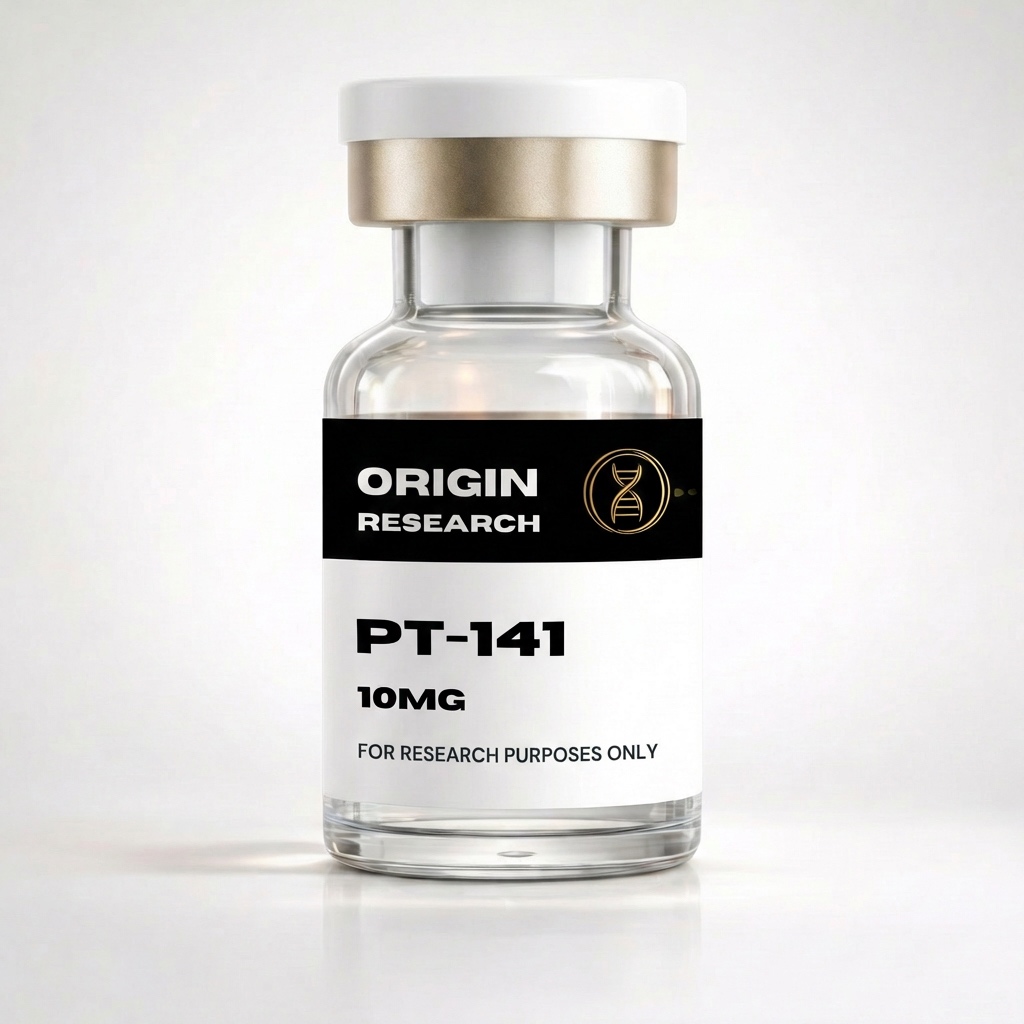
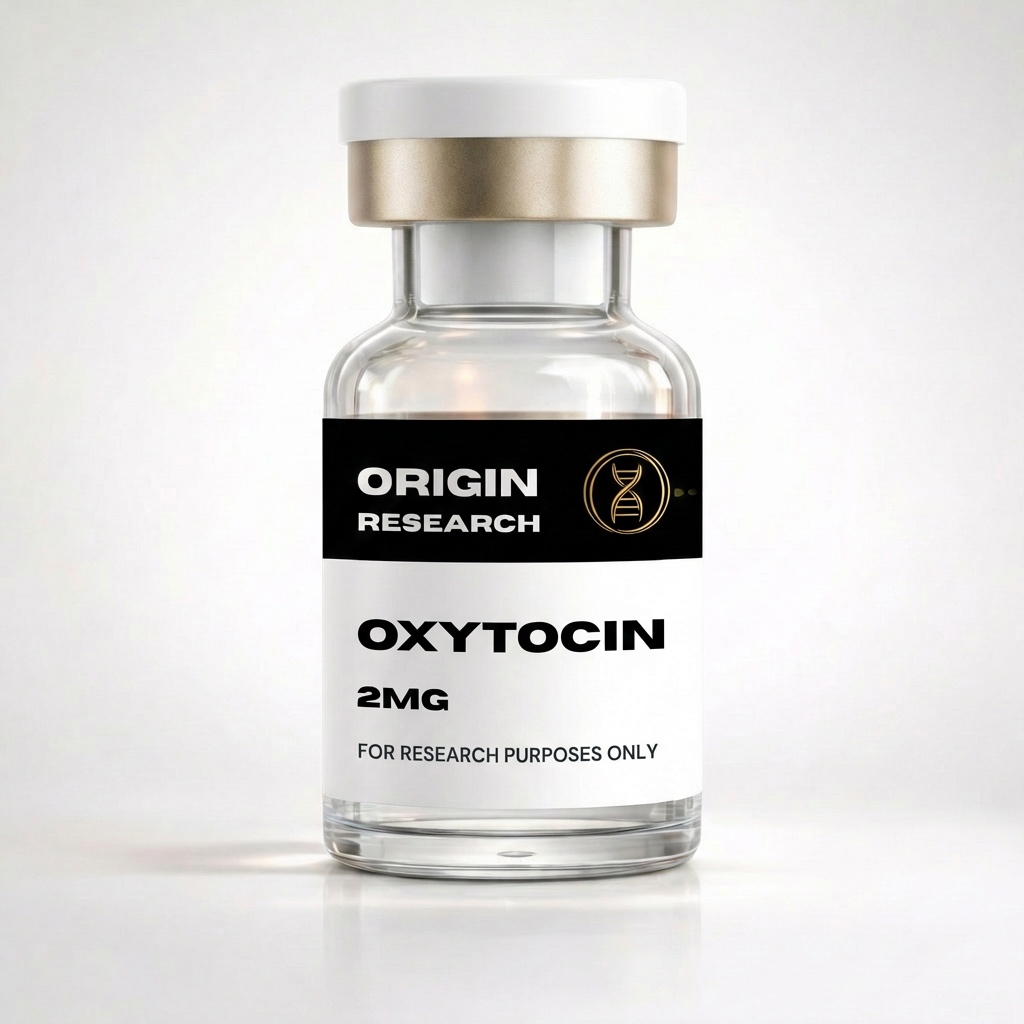
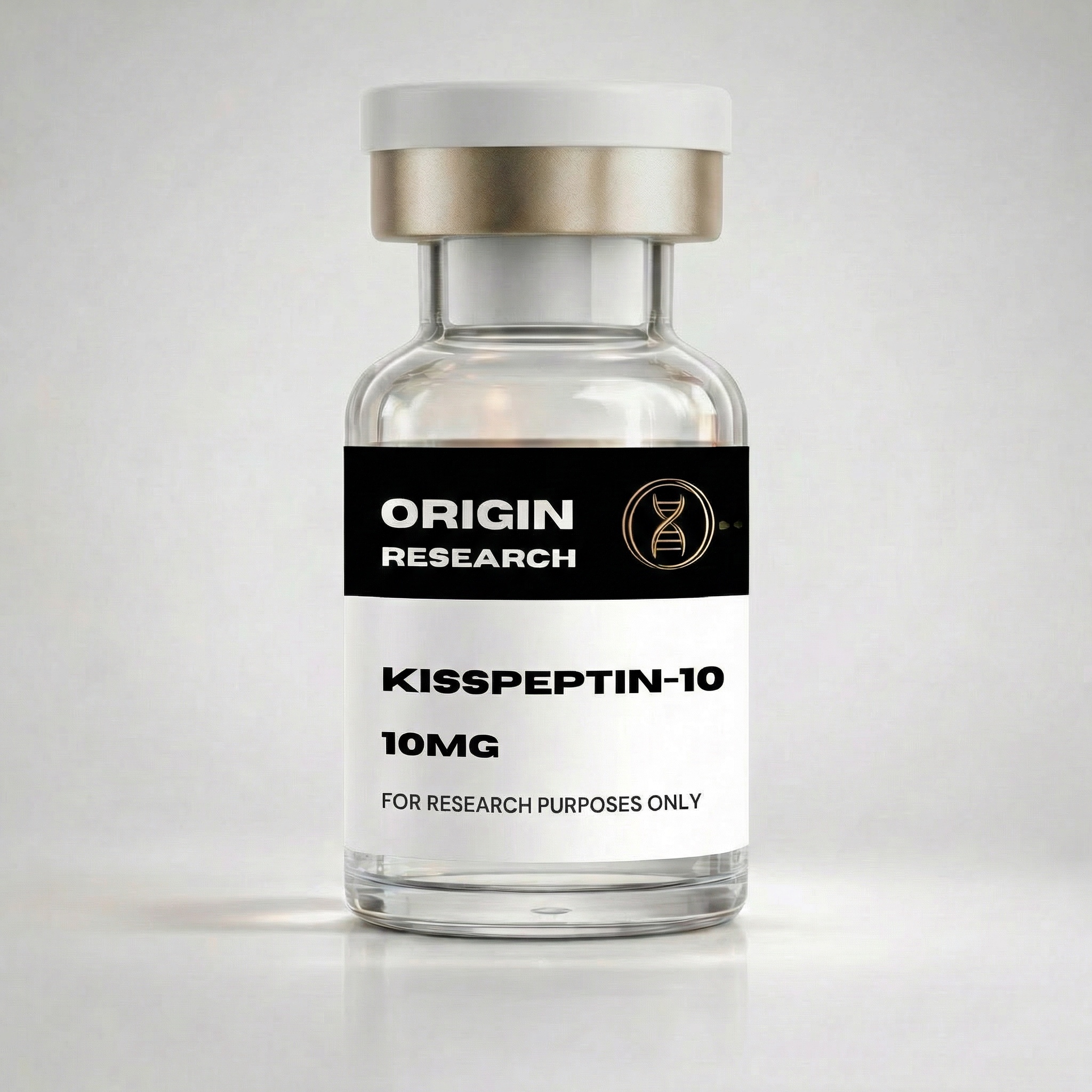
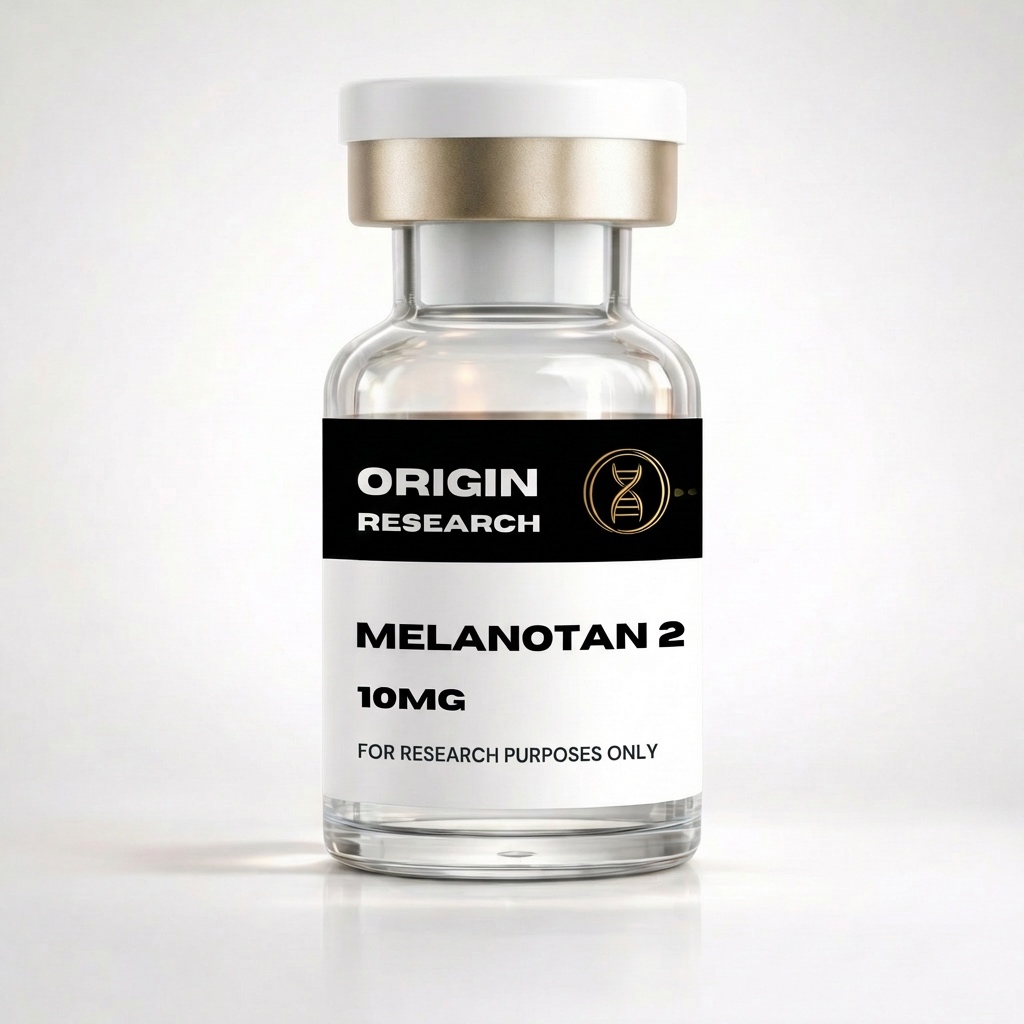
Central nervous system research within neuropeptide pharmacology covers a defined sub-area focused on melanocortin, oxytocinergic, and kisspeptin signalling, with downstream readouts spanning HPG-axis regulation, social behaviour, and CNS-mediated peripheral responses. Compounds studied in this area are typically evaluated in rodent behavioural batteries including social interaction and partner preference tests, GnRH and LH pulse-sampling protocols, and receptor pharmacology studies on MC4R, OXTR, and KISS1R. Endpoints across published work commonly include LH and FSH serum kinetics, oxytocin and vasopressin receptor expression, social behaviour scoring, and downstream sex steroid pulse dynamics. The compounds most often investigated under this research category in the Origin Research catalog are PT-141, Oxytocin, Kisspeptin-10, and Melanotan II. Each occupies a defined mechanistic position. PT-141, also known by the development name bremelanotide, is a synthetic melanocortin receptor agonist with MC3R and MC4R activity, investigated in published preclinical pharmacology and clinical literature on central melanocortin signalling. Oxytocin is the canonical nonapeptide reference for OXTR pharmacology, with extensive published literature on social behaviour, pair-bonding rodent models, and peripheral smooth muscle pharmacology. Kisspeptin-10 is a synthetic decapeptide fragment of kisspeptin investigated in HPG-axis pulse research, with published rodent and clinical pharmacology data documenting GnRH-driven LH and FSH pulses. Melanotan II is the broader-spectrum melanocortin agonist referenced earlier in skin biology, and in CNS research it is studied for its MC4R-mediated central effects. Research groups worldwide select this stack because it spans melanocortin, oxytocinergic, and kisspeptin axes within one neuroendocrine research programme, and all four reference compounds ship from Origin Labs global stock with batch COA documentation.
About this research area
Mechanism overlap and selection criteria
Selection between PT-141, Oxytocin, Kisspeptin-10, and Melanotan II in a CNS research model is driven by which neuroendocrine axis the investigator wants to probe. PT-141 has been investigated in published preclinical pharmacology covering MC3R and MC4R activation, with central melanocortin signalling and downstream behavioural endpoints as the readouts. It is selected where MC4R pharmacology is the variable of interest and where peripheral side effects of broader melanocortin agonism need to be limited compared with Melanotan II. Oxytocin is selected when OXTR-mediated signalling is the focus, with published literature spanning rodent pair-bonding models, social interaction batteries, and peripheral smooth muscle pharmacology including uterine and milk-ejection reflex assays. Kisspeptin-10 is the canonical reference for KISS1R-mediated GnRH neuron activation, with published rodent and clinical pharmacology data documenting LH and FSH pulse generation across diverse model contexts. Melanotan II is selected when broader MC1R, MC3R, MC4R, and MC5R agonism is the goal and when central effects are evaluated alongside the pigmentation pathway covered in skin biology research. Selection criteria across research groups include HPLC purity above 98 percent, mass spectrometry sequence confirmation, endotoxin documentation for intracerebroventricular or central administration models, and sterility for in-vitro receptor binding assays. All compounds are procured with batch-matched COA. None are approved for human therapeutic use in any jurisdiction outside authorised clinical investigation, and all Origin Research supply is restricted to research applications.
How researchers typically structure protocols
CNS neuropeptide protocols are commonly designed around acute pharmacodynamic windows of 30 minutes to 6 hours for behavioural and HPG-axis endpoints, and longer 1 to 4 week chronic arms for receptor expression and adaptive change studies. PT-141 in published rodent work has been investigated at low-microgram-per-kilogram subcutaneous or intranasal dosing with central melanocortin behavioural readouts at 30 to 90 minutes post-administration. Oxytocin preclinical work uses intracerebroventricular, intranasal, or intraperitoneal administration depending on the model, with social interaction scoring or peripheral pharmacology readouts at 15 to 60 minute timepoints. Kisspeptin-10 published rodent work uses subcutaneous, intravenous, or intracerebroventricular administration at low-nanomole-per-kilogram doses with serial LH sampling at 5, 15, 30, 60, and 90 minutes to capture the pulse profile. Clinical pharmacology references in published literature use similar serial sampling for LH and FSH endpoints in research contexts. Melanotan II in CNS research is dosed at low-microgram-per-kilogram by subcutaneous or central route with behavioural and receptor binding readouts. Reconstitution practice for all four references uses sterile saline or PBS for acute studies, with single-use aliquots stored at minus 80 Celsius. Cohort design for CNS protocols requires careful environmental control because all four endpoint classes are sensitive to circadian, feeding state, and handling variance. All references apply strictly to non-human preclinical research.
Stack pairings and combination research
Combination research in CNS neuropeptide pharmacology is more limited in published literature than in some other peptide categories, primarily because the four compounds in this stack engage distinct receptor families with non-overlapping downstream signalling. PT-141 and Melanotan II are typically not combined because they share melanocortin receptor pharmacology and dual agonism complicates dose-response interpretation. Kisspeptin-10 plus Oxytocin appears in some preclinical work seeking to evaluate combined HPG-axis activation and OXTR-mediated behavioural readouts in the same cohort, although the two arms are typically dosed on separate schedules because their pharmacodynamic profiles differ. Kisspeptin-10 plus Melanotan II is investigated in studies where HPG-axis activation is paired with broader melanocortin signalling. Oxytocin is more commonly run as a standalone reference in social behaviour or peripheral pharmacology protocols. The Origin Research catalog supplies each reference as a separate vial, allowing independent titration. Combination protocol design in this area should always include vehicle and single-compound control arms with careful attention to receptor pharmacology overlap, particularly within the melanocortin family. All combination references apply strictly to non-human preclinical research.
Global stock and supply considerations
CNS neuropeptide research often uses intranasal or central administration routes in rodent models, both of which place demands on sterility, reconstitution-buffer compatibility, and endotoxin documentation. The Origin Research catalog stocks PT-141, Oxytocin, Kisspeptin-10, and Melanotan II in cold storage with batch-matched COA per vial, including endotoxin and sterility documentation where applicable. Origin Labs sourcing is particularly important for Oxytocin and Kisspeptin-10 because both compounds are pharmacodynamically sensitive to transit temperature excursion, which can compromise pulse-sampling protocols where exact aliquot timing matters. Standard worldwide delivery varies by region with cold-pack packaging on longer transit lanes. Each COA covers HPLC purity, mass spectrometry sequence confirmation, and where relevant endotoxin and residual solvent data. Storage follows the lyophilised peptide standard of minus 20 Celsius short-term and minus 80 Celsius long-term archive, with reconstituted aliquots used within published stability windows. Oxytocin reconstituted in saline is particularly sensitive to freeze-thaw and single-use aliquots are strongly recommended. Lot reservation is available for acute pulse-sampling cohorts and chronic receptor-expression studies. All compounds are sold strictly for in-vitro and preclinical research and are not approved for human or veterinary therapeutic application in any jurisdiction outside authorised clinical investigation. More information is available at originlabsresearch.com.