
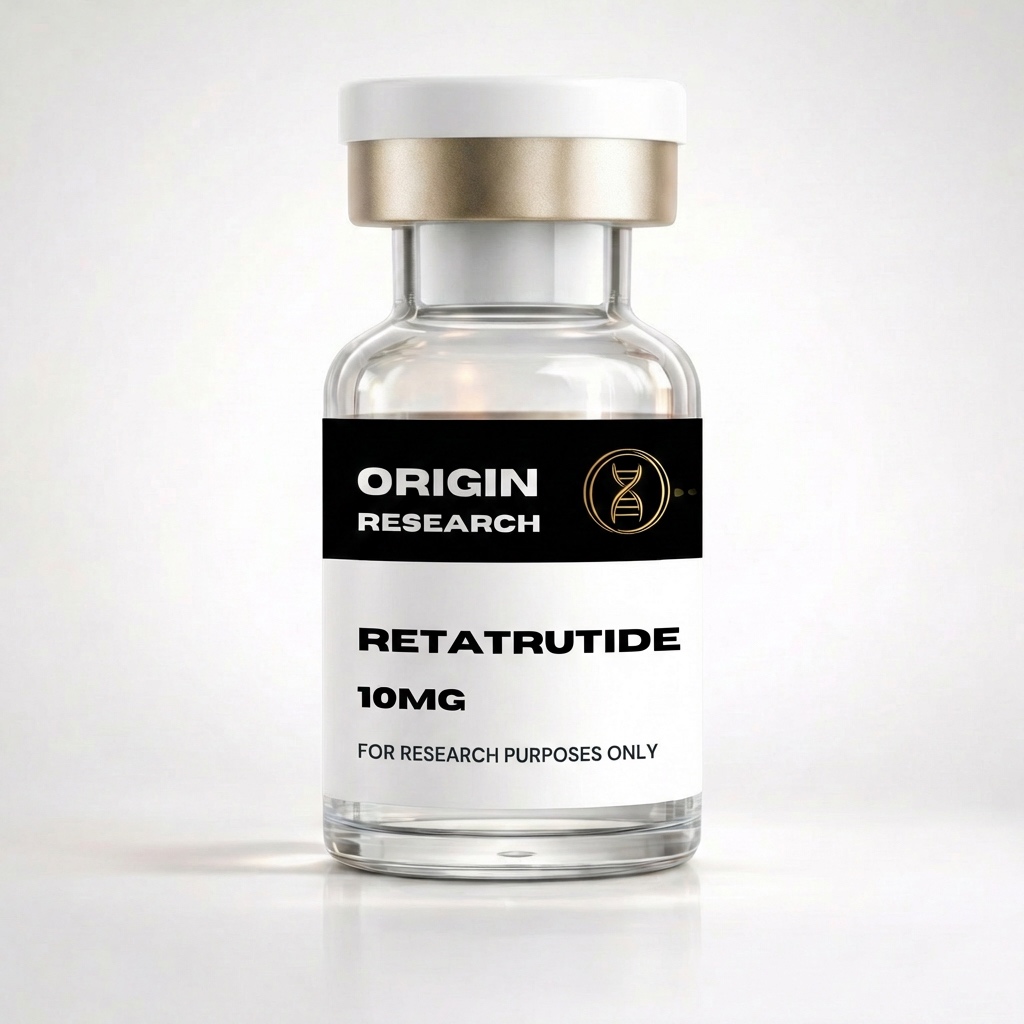
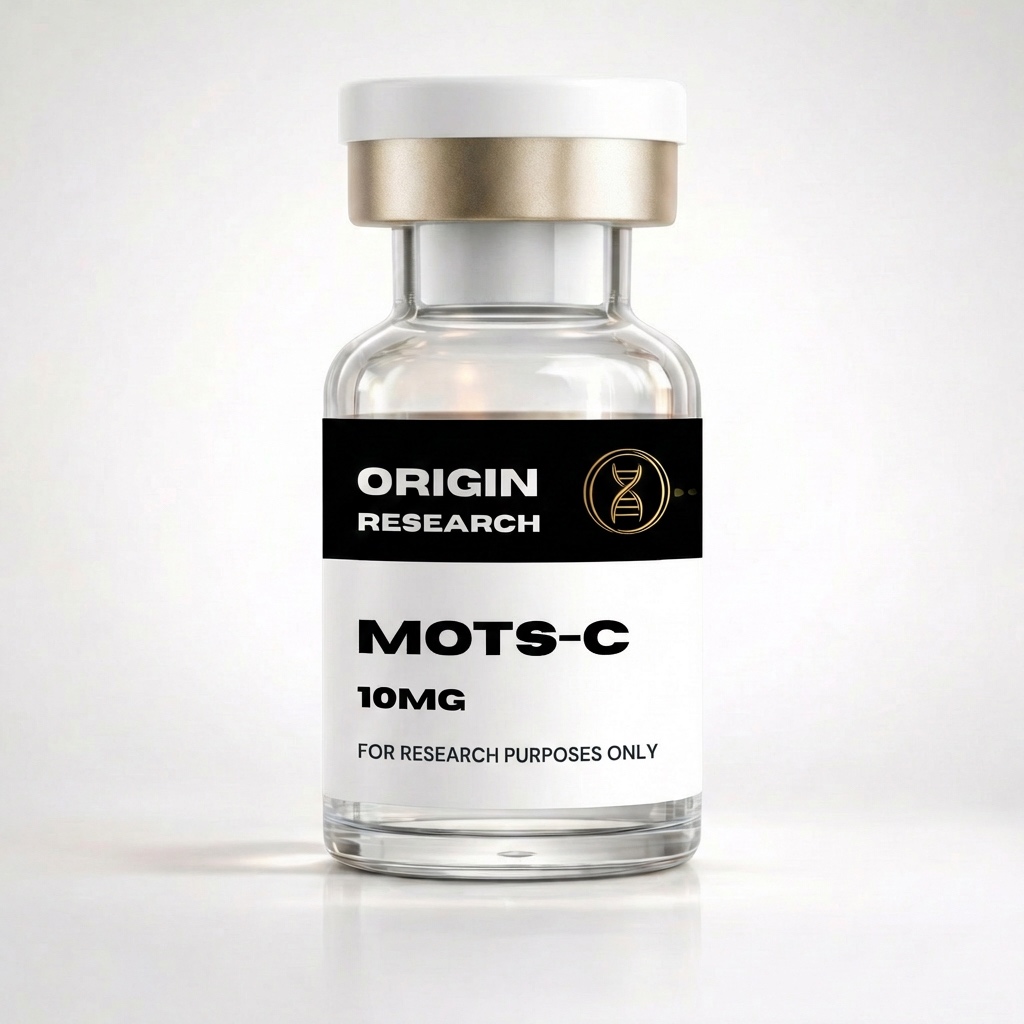
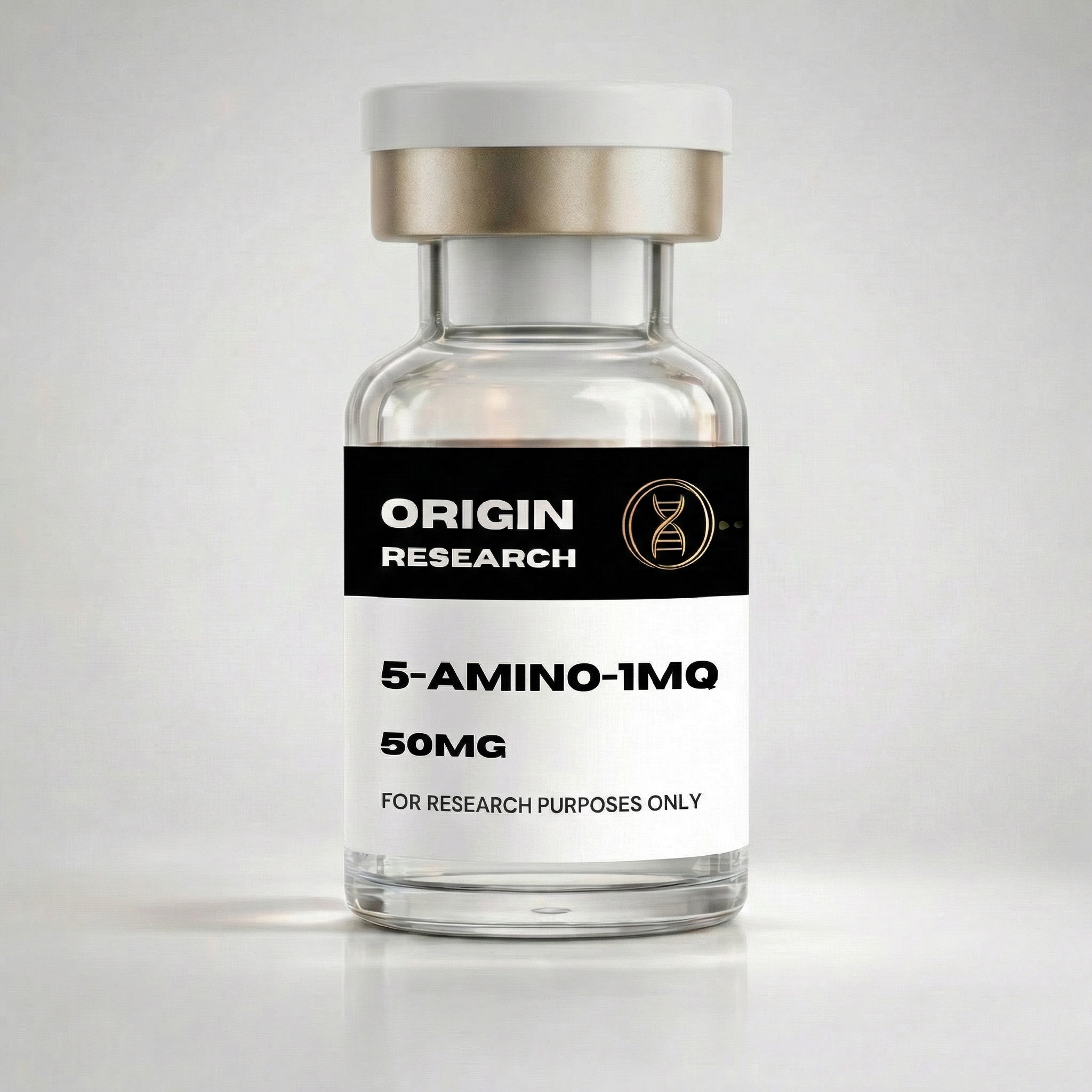
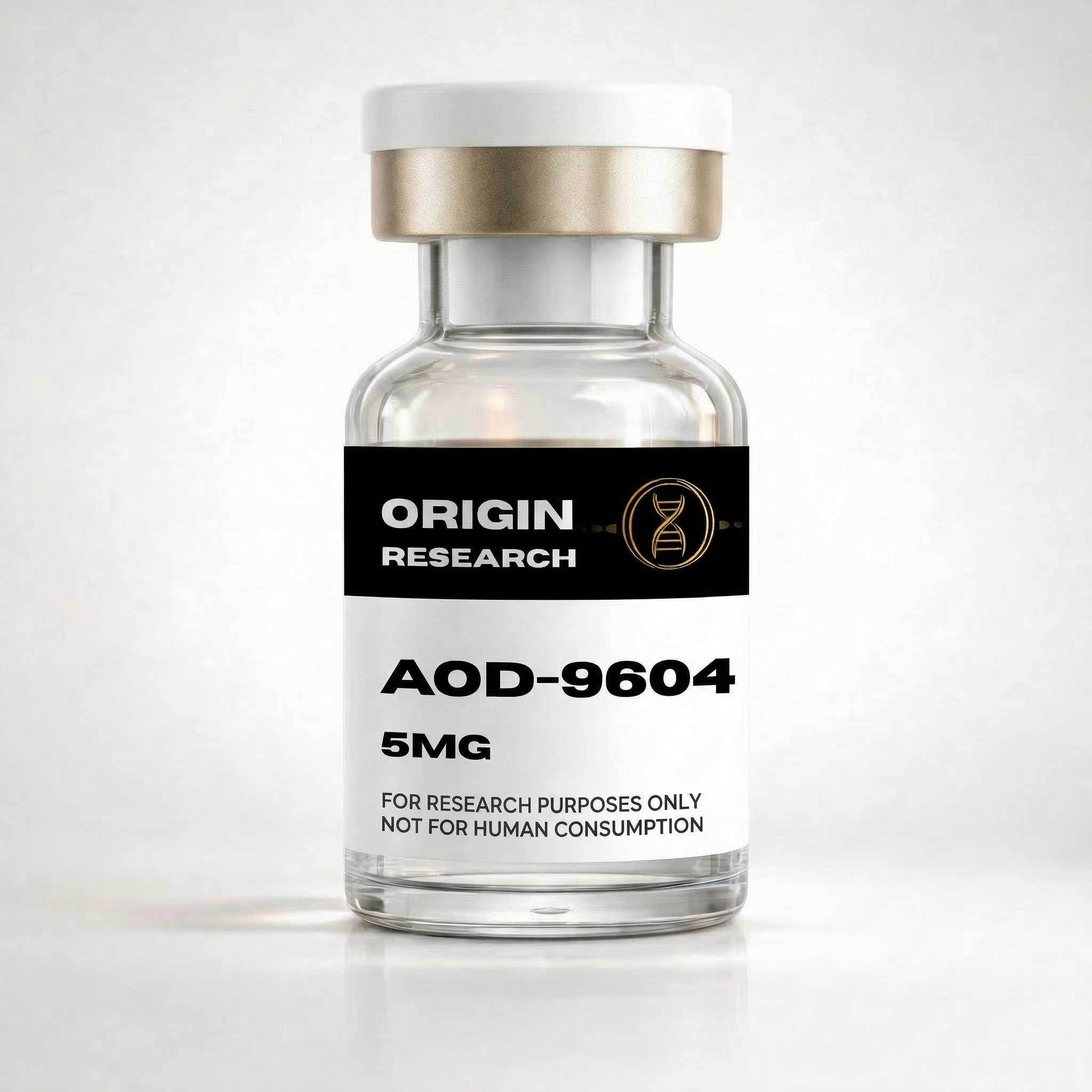
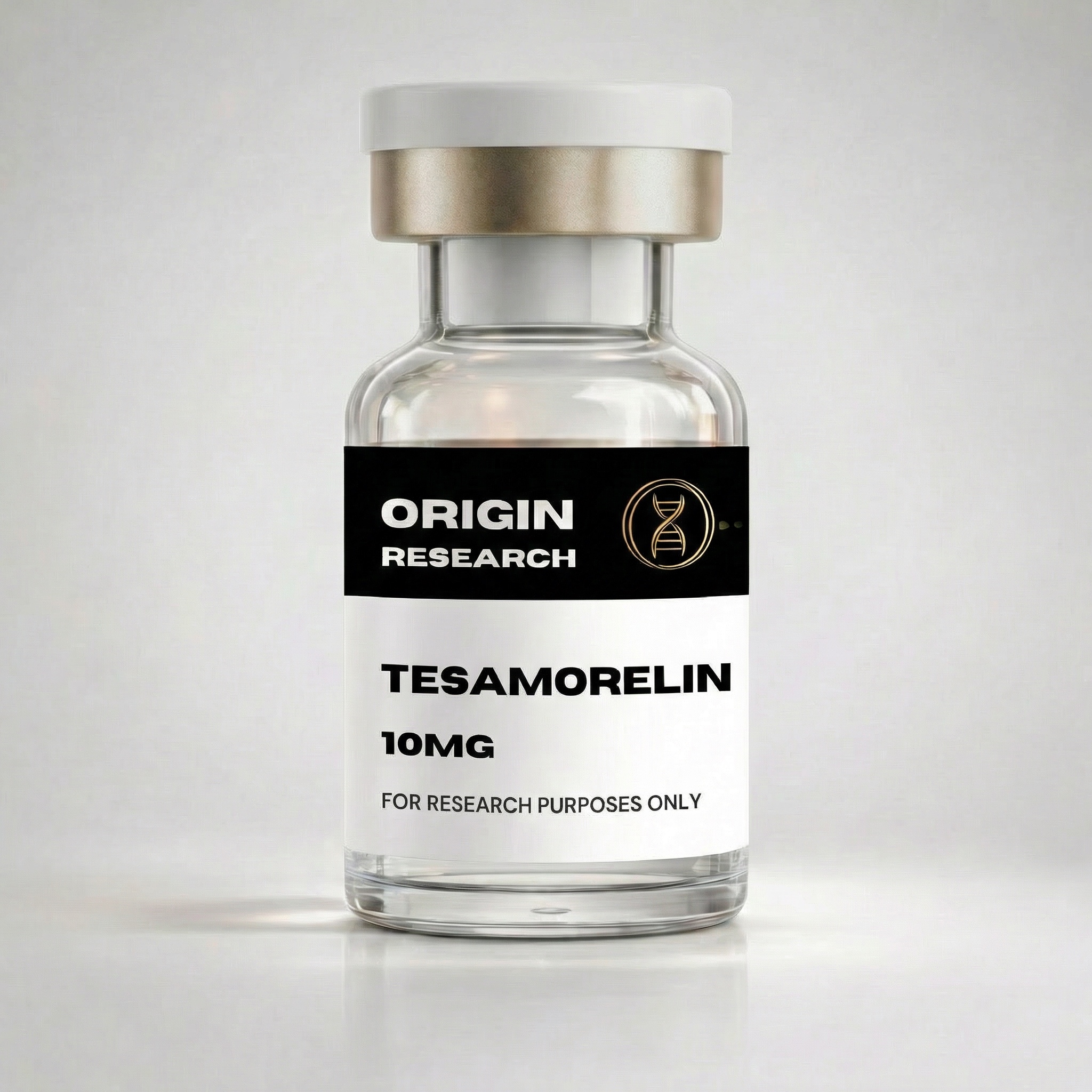
Adipose metabolism research is a preclinical investigation category covering white and brown adipocyte biology, mitochondrial respiration, lipolytic and lipogenic signalling, and central versus peripheral metabolic regulation in research models. Compounds studied within this area are typically evaluated in rodent diet-induced obesity models, primary adipocyte cultures, 3T3-L1 differentiation assays, and isolated mitochondrial respirometry preparations. Endpoints across published work commonly include hormone-sensitive lipase phosphorylation, UCP1 expression in brown and beige adipose depots in animal models, AMPK and ACC signalling, and circulating triglyceride and free fatty acid kinetics in rodent cohorts. The compounds most often investigated under this research category in the Origin Research catalog are Retatrutide, MOTS-c, 5-Amino-1MQ, AOD-9604, and Tesamorelin. Each occupies a distinct mechanistic position in the literature. Retatrutide is a triple agonist reference compound studied in GLP-1, GIP, and glucagon receptor pathway work, with published Phase 1 and Phase 2 pharmacology data informing its preclinical reference profile. MOTS-c is a mitochondrial-derived peptide investigated in studies of mitochondrial unfolded protein response and AMPK activation in cellular and animal models. 5-Amino-1MQ has been researched in adipocyte models for its inhibition of nicotinamide N-methyltransferase, a methyl-donor balance enzyme studied in metabolic regulation. AOD-9604 is a synthetic fragment of the C-terminus of human growth hormone investigated in lipolysis-focused rodent and adipocyte studies. Tesamorelin is a stabilised GHRH analog studied in visceral adipose tissue research models, including published clinical pharmacology data informing preclinical mechanistic work. Research groups globally select this combination because it spans receptor-level, mitochondrial, methylation, and growth-hormone-axis pathways within a single bench programme, and because all five reference compounds are Origin Labs stocked with batch-matched COA documentation, removing the customs and cold-chain delay that commonly affects metabolic protocols requiring tight aliquot-to-administration timing.
About this research area
Mechanism overlap and selection criteria
Choosing between Retatrutide, MOTS-c, 5-Amino-1MQ, AOD-9604, and Tesamorelin in an adipose metabolism research model depends primarily on which pathway the investigator wants to probe. Retatrutide has been investigated as a triple incretin and glucagon receptor reference agonist, making it the appropriate choice where researchers want to study combined receptor pharmacology across the GLP-1, GIP, and glucagon families in research models. MOTS-c is selected in mitochondrial-focused work because the published literature anchors it to AMPK phosphorylation, mtDNA stress response, and exercise-mimetic gene panels in rodent models. 5-Amino-1MQ is used in studies of NNMT inhibition and the methylation-dependent regulation of adipocyte energy expenditure, with published in-vitro and rodent data covering 1-methylnicotinamide balance. AOD-9604 is referenced in lipolysis-focused work derived from the hGH 177-191 fragment literature, where the mechanism of interest is lipolytic without the IGF-1 elevation observed with full-length growth hormone in animal models. Tesamorelin is the canonical GHRH-analog reference compound for visceral adipose tissue research, with published data on IGF-1 axis dynamics informing protocol design. Selection criteria across research groups globally typically include HPLC purity above 98 percent, sequence verification by mass spectrometry, sterile filtration of reconstituted material, and lot-level COA documentation. Retatrutide and Tesamorelin are typically procured in single-lot reservation when used across long-duration cohorts because their pharmacodynamic profiles are sensitive to aliquot variance. None of these compounds are approved for human therapeutic use outside of authorised clinical investigation and all Origin Research supply is restricted to in-vitro and preclinical research applications.
How researchers typically structure protocols
Adipose metabolism protocols are commonly designed around either short-term acute pharmacodynamic windows of 4 to 72 hours for receptor-engagement studies or chronic 4 to 12 week arms for diet-induced obesity models. Retatrutide in published rodent work has been investigated at low-nanomole-per-kilogram weekly subcutaneous dosing, with body composition, glucose tolerance, and hepatic triglyceride endpoints measured in animal cohorts. MOTS-c is generally studied at low-milligram-per-kilogram intraperitoneal dosing in mouse exercise capacity and AMPK signalling assays. 5-Amino-1MQ has been investigated in 3T3-L1 adipocyte culture at micromolar concentrations and in rodent diet-induced obesity protocols at milligram-per-kilogram daily oral or intraperitoneal administration. AOD-9604 is referenced in adipocyte lipolysis assays at nanomolar concentrations and in rodent work at low-microgram-per-kilogram subcutaneous dosing. Tesamorelin published preclinical work uses subcutaneous dosing in growth hormone secretagogue studies in animal models, with IGF-1, lipid panel, and visceral adipose tissue volume as standard endpoints. Reconstitution in research labs for these compounds typically uses bacteriostatic water for peptide arms, with single-use aliquots at minus 80 Celsius. 5-Amino-1MQ is a small-molecule reference and handled in DMSO stocks for cell culture work. Cohort design for metabolic protocols usually includes a vehicle control, a pair-fed control where caloric intake is a known confound, and randomised cage assignment to control for housing-effect variance. All dosing references are drawn from published preclinical and Phase 1 literature and apply strictly to non-human research.
Stack pairings and combination research
Combination research in adipose metabolism is structured around pairing receptor-level and cellular-level mechanisms. Tesamorelin plus MOTS-c is a referenced combination in studies seeking to evaluate growth-hormone-axis output alongside mitochondrial bioenergetics in the same cohort of research animals. AOD-9604 is sometimes investigated in combination arms with Tesamorelin in adipocyte models where researchers want to separate lipolytic fragment signalling from full GHRH-axis activation, although the pharmacodynamic differences require careful endpoint timing. 5-Amino-1MQ is more commonly run as a standalone arm because its NNMT inhibition mechanism is unique within this stack, although co-administration with MOTS-c has been explored in mitochondrial methylation studies. Retatrutide is typically not combined with other incretin or glucagon-axis references in published work because the triple-agonist pharmacology already covers three receptor families and additional agonism complicates dose-response interpretation. The Origin Research catalog supplies each reference compound as a separate vial rather than a pre-mixed blend, which allows research groups to titrate combination arms independently. Combination protocol design should always include single-compound arms for each pair as well as a vehicle control, because adipose metabolism endpoints such as UCP1 expression and lipolysis flux are sensitive to interaction effects that can mask single-arm contributions. All combination references above are drawn from published preclinical literature and apply to non-human research models only.
Global stock and supply considerations
Adipose metabolism protocols are typically multi-week and supply continuity directly affects cohort statistical design. The Origin Research catalog holds Retatrutide, MOTS-c, 5-Amino-1MQ, AOD-9604, and Tesamorelin in cold storage with lot-level COA documentation. Retatrutide and Tesamorelin in particular benefit from Origin Labs stock because both compounds are pharmacodynamically sensitive to freeze-thaw cycle count and to transit temperature excursions, and global shipping from established stock reduces the 7 to 21 day customs window that affects less established sourcing. Standard delivery is 2 to 7 working days worldwide with cold-pack packaging on longer transit lanes. Each vial ships with a batch-matched COA covering HPLC purity, mass spectrometry sequence confirmation, and where relevant endotoxin and residual solvent data. Storage on receipt follows the lyophilised peptide standard of minus 20 Celsius short-term and minus 80 Celsius for long-term archive, with reconstituted aliquots used within published stability windows. 5-Amino-1MQ as a small molecule is shipped as solid powder and stored at minus 20 Celsius. Researchers running 8 to 12 week diet-induced obesity protocols often request batch reservation so that the same lot is dosed across the full cohort to remove between-batch variance. All compounds are sold strictly for in-vitro and preclinical research, are not approved for human or veterinary therapeutic use, and require research-intent confirmation at checkout.