
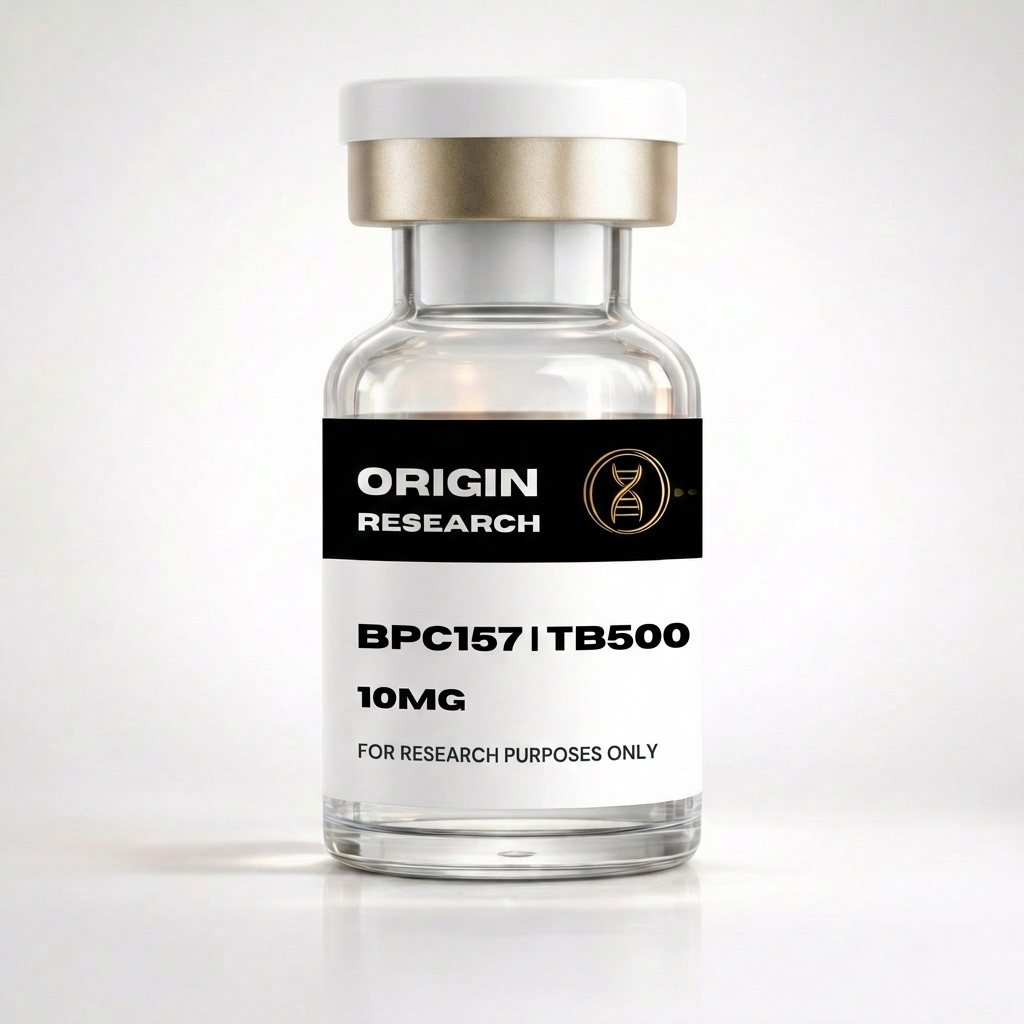
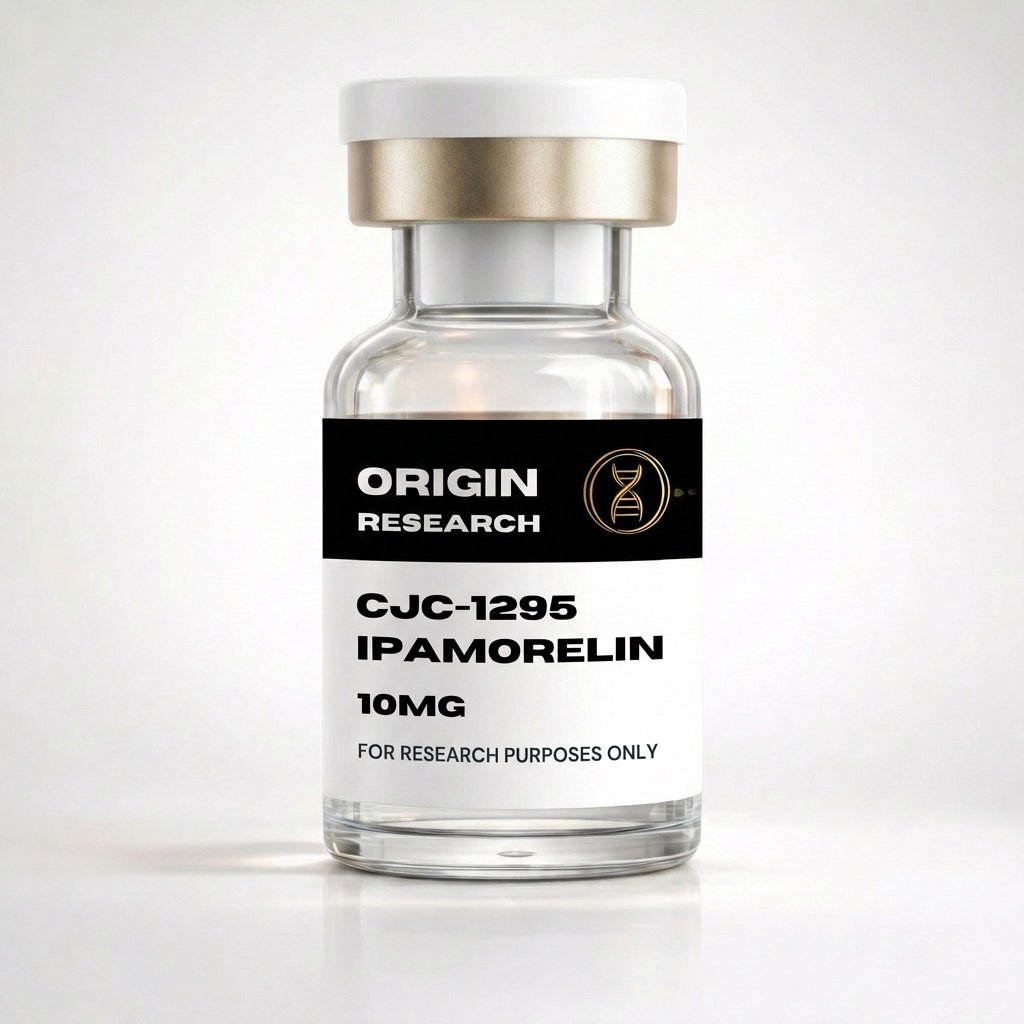
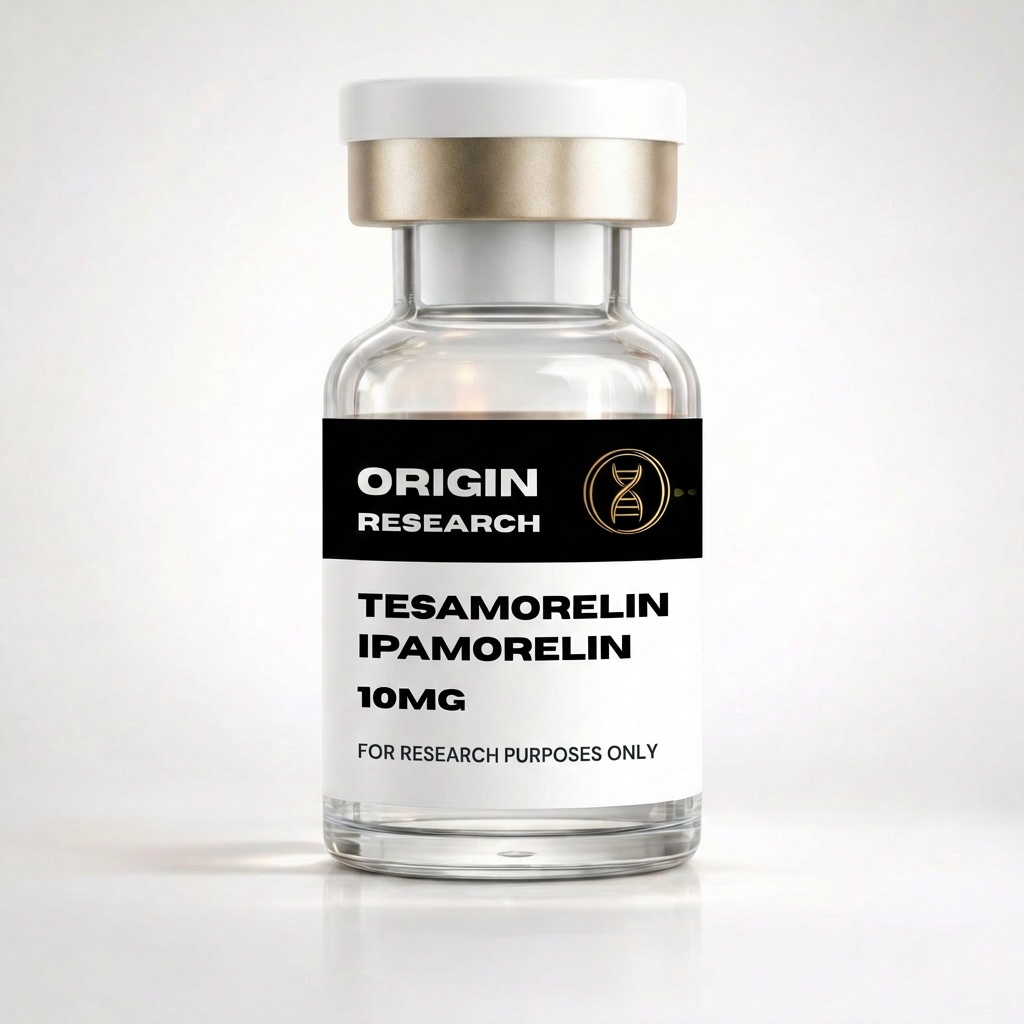
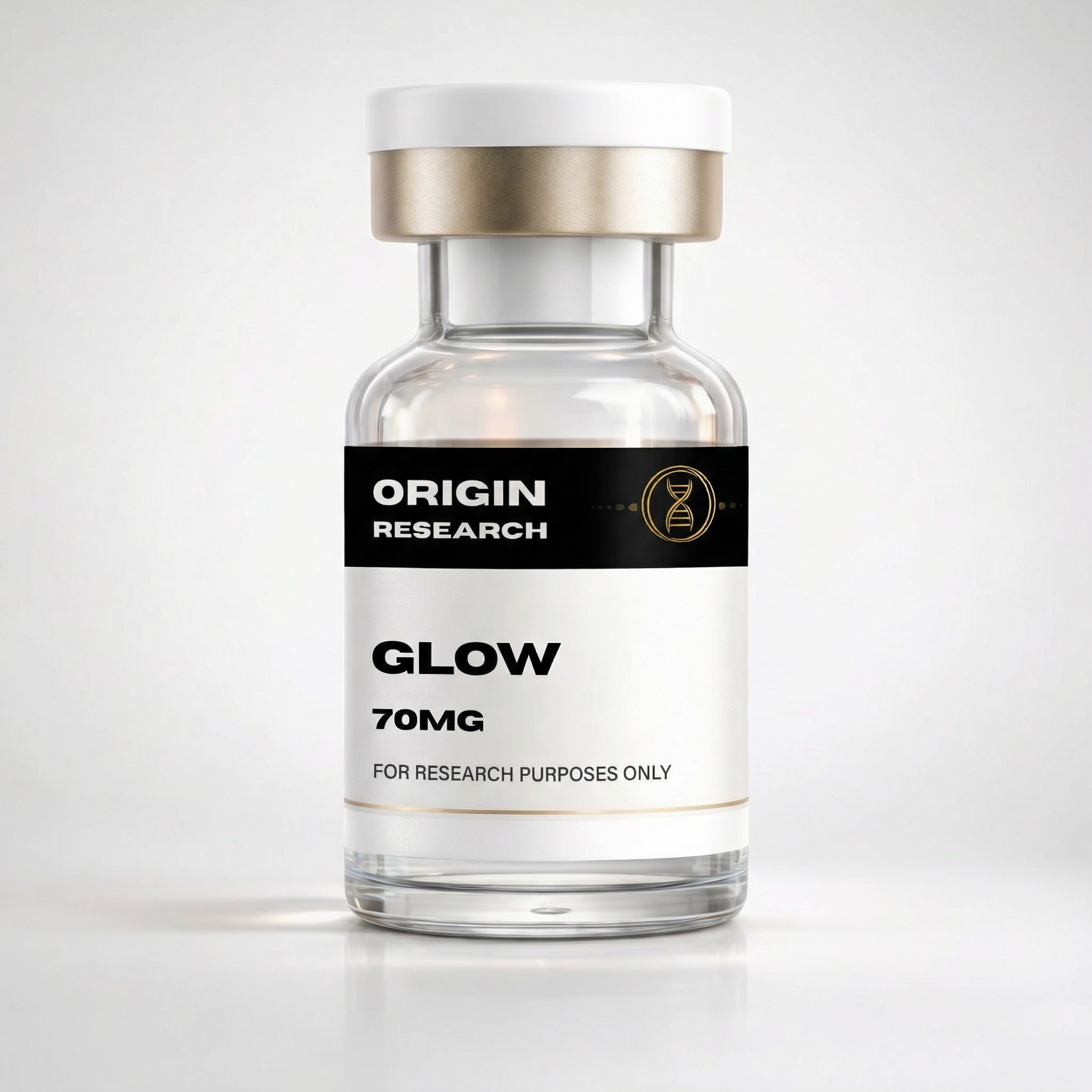
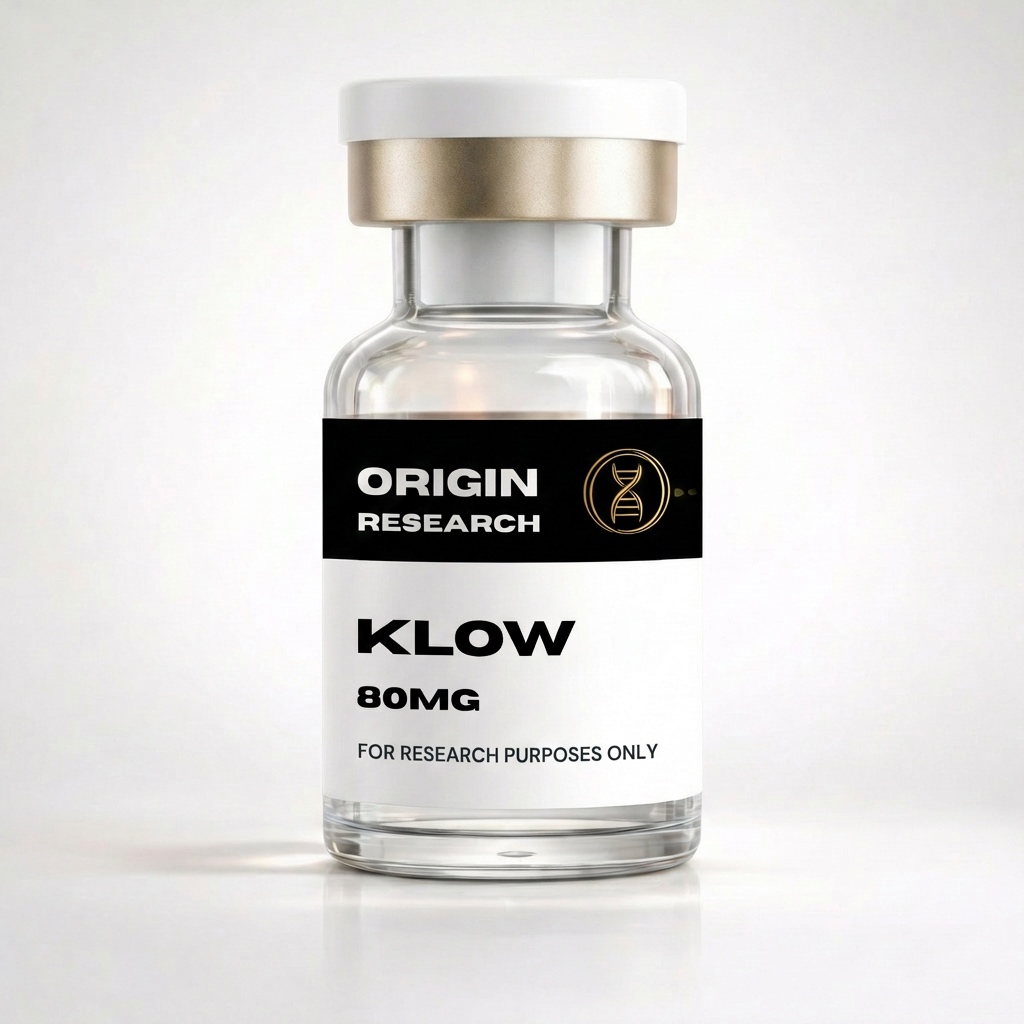
Peptide stacks for research models is a meta-category covering pre-matched combination reference materials designed for preclinical protocols where investigators want coordinated dosing across complementary mechanistic axes within a single cohort. The compounds in this category in the Origin Research catalog include the BPC plus TB Blend, the CJC plus Ipa Blend, the Tesa plus Ipa Blend, the GLOW Stack, and the KLOW Stack. Each is supplied as a pre-matched combination reference material with both component sequences verified by HPLC and mass spectrometry and documented on a single batch COA per vial. Stacks are typically used in preclinical research where pipetting variance from independent reconstitution of two separate vials introduces noise that the protocol cannot statistically absorb, particularly in low-mass lyophilised peptide work where reconstitution at standard concentrations produces volumes near the lower limit of pipette accuracy. The BPC plus TB Blend covers soft-tissue repair research with overlapping VEGF and actin-dynamics endpoints in one administration. The CJC plus Ipa Blend covers GH-axis research with combined GHRH and ghrelin receptor activation in one administration. The Tesa plus Ipa Blend covers GH-axis work using the Tesamorelin pharmacology profile rather than CJC-1295. The GLOW Stack covers skin biology research with matrix-remodelling and pigmentation-pathway components. The KLOW Stack covers protocols where combined mechanistic coverage of healing and barrier function is the research design. Research groups worldwide select pre-matched stacks because they reduce inter-vial reconstitution variance, simplify cohort logistics, and allow batch-level lot reservation across the full protocol. All stacks ship from Origin Labs global stock with batch COA documentation and lot-level traceability.
About this research area
Mechanism overlap and selection criteria
Selection across the five stacks supplied by Origin Research is driven by the primary mechanistic axis the protocol is investigating. The BPC plus TB Blend is selected when soft-tissue repair endpoints are the focus, with the two component peptides covering complementary VEGF-pathway and actin-dynamics readouts. The CJC plus Ipa Blend is selected when GH-axis research uses extended GHRH receptor occupancy as the upstream pharmacology, with the Ipamorelin arm adding selective ghrelin receptor activation for combined somatotroph signalling. The Tesa plus Ipa Blend covers the same combined receptor pharmacology but anchors the GHRH-axis arm to the Tesamorelin pharmacology profile rather than CJC-1295, which matters in protocols where alignment with published pharmacology literature is the basis for selection. The GLOW Stack is selected in skin biology protocols where matrix remodelling and pigmentation pathway are co-evaluated. The KLOW Stack is selected in protocols where combined mechanistic coverage is the research design across healing and barrier-function endpoints. Selection criteria across research groups for stack format specifically include verification that both component peptides are within HPLC purity above 98 percent on the same batch, that the lyophilisation ratio is consistent across the lot, and that the reconstitution volume produces a dosing concentration matched to the published protocol. All stacks are procured with batch-matched COA. None are approved for human therapeutic use in any jurisdiction, and all Origin Research supply is restricted to in-vitro and preclinical research.
How researchers typically structure protocols
Stack-format protocols are designed around the pharmacodynamic profile of the slower-acting component peptide, because the pre-matched dosing is administered as a single bolus in research models. The BPC plus TB Blend in published rodent soft-tissue repair work is dosed at the BPC-157 reference range with the TB-500 component delivered at the ratio matched on the COA, with administration typically subcutaneous or intraperitoneal across 14 to 28 day protocols. The CJC plus Ipa Blend in GH-axis rodent work is dosed subcutaneously with serial GH and IGF-1 sampling timed to the Ipamorelin pharmacodynamic window for acute studies and across multi-week protocols for IGF-1 axis remodelling. The Tesa plus Ipa Blend is dosed similarly, with the Tesamorelin pharmacokinetic profile defining the steady-state window. The GLOW Stack in skin biology protocols is applied topically or in the culture medium of 3D reconstructed skin models across 7 to 28 day windows, with histological and gene expression endpoints. The KLOW Stack is dosed according to the protocol-specific primary endpoint. Reconstitution practice for all stacks uses bacteriostatic water or sterile saline at the volume specified on the COA to achieve the documented concentration of each component. Single-use aliquots at minus 80 Celsius are standard. Cohort design for stack protocols benefits from the reduced inter-vial variance compared with independent reconstitution of two separate component vials. All references apply strictly to non-human preclinical research.
Stack pairings and combination research
Combination research across stack formats is the most logistically efficient way to design multi-arm cohorts because the pre-matched dosing simplifies cohort administration. Investigators running parallel arms covering two different stacks, such as a BPC plus TB Blend arm alongside a CJC plus Ipa Blend arm in protocols evaluating both soft-tissue and GH-axis endpoints, benefit from the consistency of batch COA across each stack. The Tesa plus Ipa Blend and the CJC plus Ipa Blend appear in head-to-head GH-axis pharmacology studies where the question is whether the Tesamorelin or CJC-1295 anchor produces the protocol-relevant IGF-1 axis dynamics in research models. The GLOW Stack appears in skin biology and gut-skin axis research alongside the KLOW Stack in protocols evaluating both dermal and mucosal endpoints. The Origin Research catalog supplies each stack as a separate batch-coded vial, allowing independent ordering per arm. Combination protocol design across stacks should always include vehicle controls and where possible single-compound arms drawn from the equivalent standalone reference compounds in the catalog, so that the contribution of each component within the stack can be partially deconvoluted. All combination references apply strictly to non-human preclinical research.
Global stock and supply considerations
Stack-format reference materials require particular attention to supply continuity because the matched ratios across components are batch-specific, and replenishment with a different lot can introduce subtle dosing differences if the lyophilisation ratio shifts between production runs. The Origin Research catalog stocks the BPC plus TB Blend, CJC plus Ipa Blend, Tesa plus Ipa Blend, GLOW Stack, and KLOW Stack in cold storage with batch-matched COA per vial covering both component sequences. Worldwide sourcing through Origin Labs reduces cold-chain risk for blends, where differential component stability across transit temperature excursion is a known concern. Standard delivery varies by region with cold-pack packaging on longer transit lanes. Each COA covers HPLC purity for both components, mass spectrometry sequence confirmation for both, and where relevant endotoxin and residual solvent data. Storage follows the lyophilised peptide standard of minus 20 Celsius short-term and minus 80 Celsius long-term archive, with reconstituted aliquots used within published stability windows for each component sequence, defaulting to the shorter of the two windows for safety. Lot reservation is available for chronic multi-arm cohorts so that the full study is dosed from one batch per stack. All compounds are sold strictly for in-vitro and preclinical research and are not approved for human or veterinary therapeutic application in any jurisdiction. More information is available at originlabsresearch.com.