
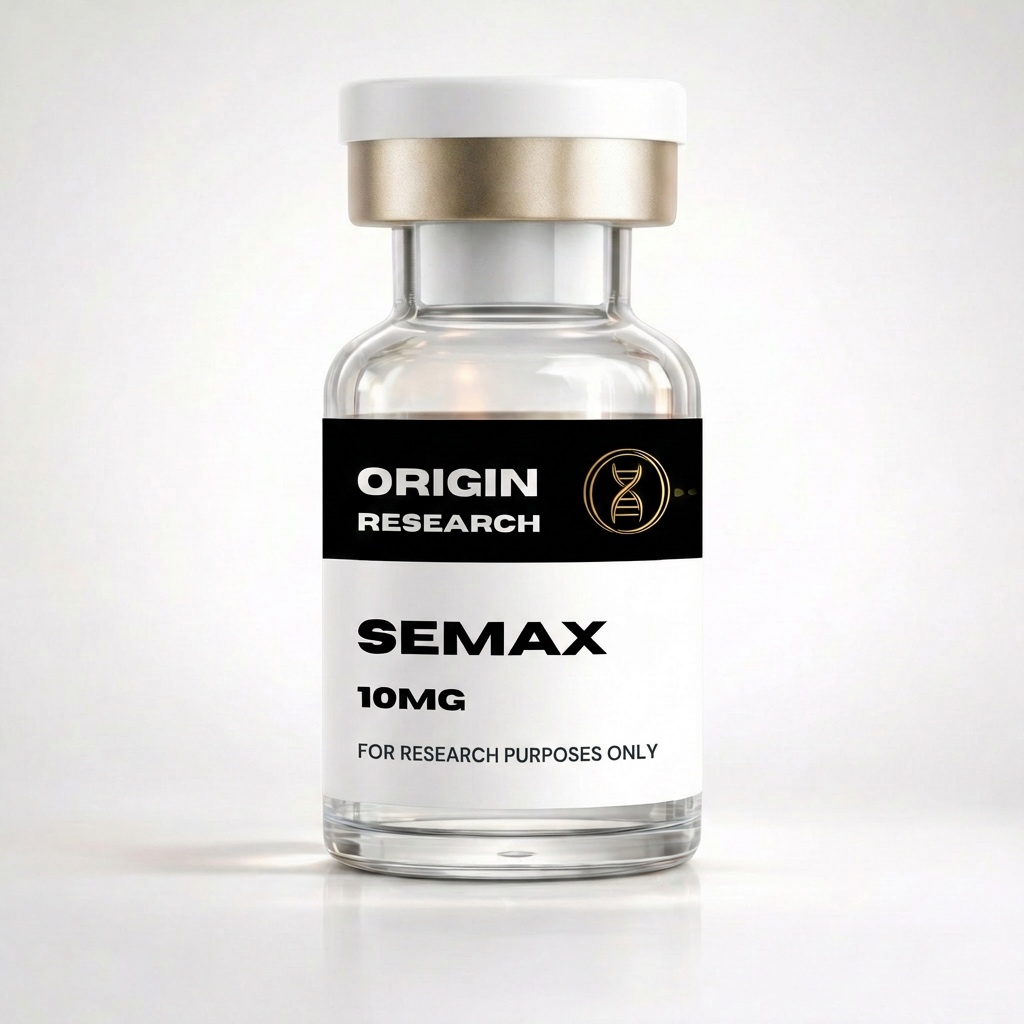
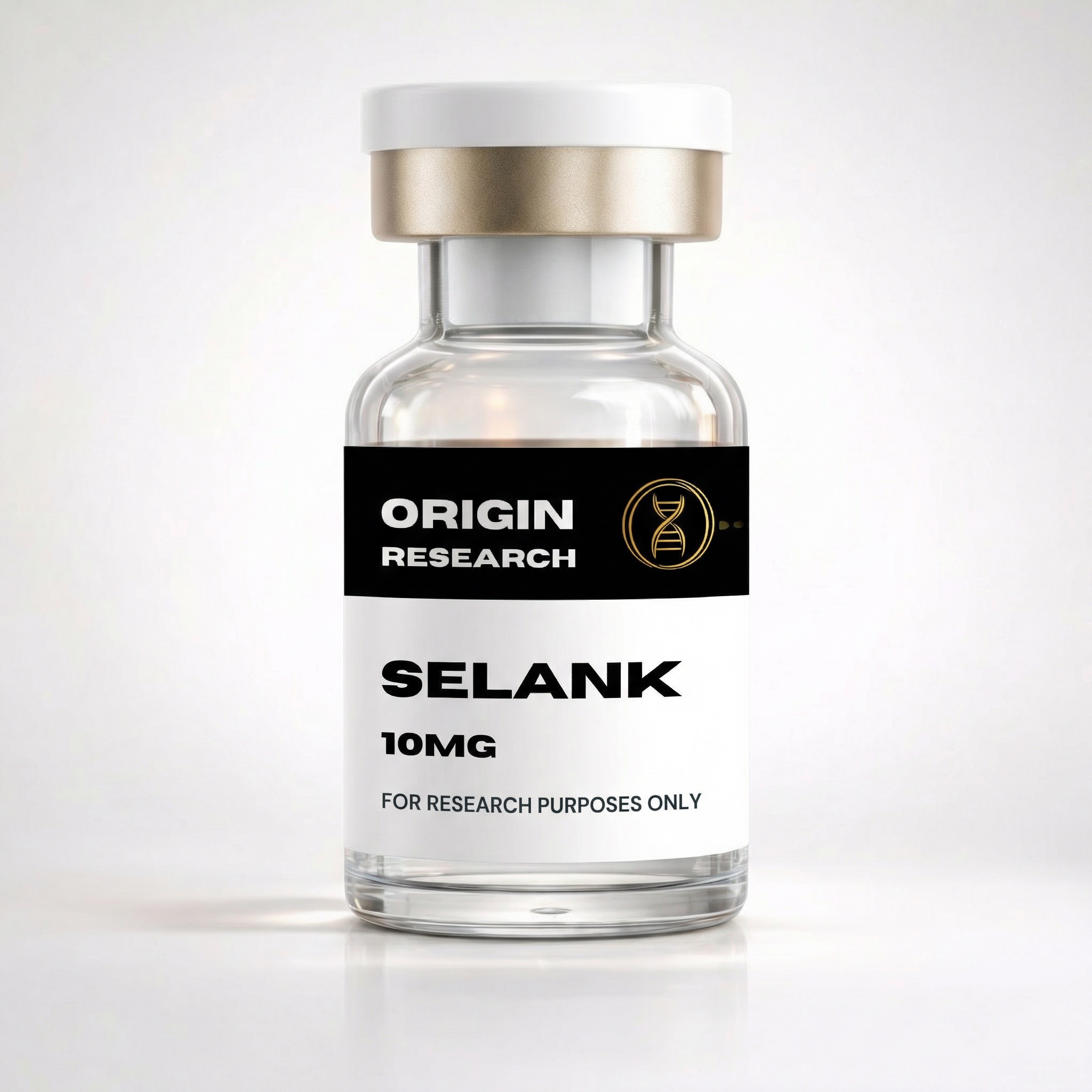
SEMAX and Selank are two short synthetic heptapeptides that are frequently cited together in neuropeptide-research literature originating from the Institute of Molecular Genetics of the Russian Academy of Sciences. Both share a common C-terminal motif (Pro-Gly-Pro) that has been studied in CNS-research models for its effect on peptide stability and metabolism, but the two compounds were designed for distinct preclinical research applications. SEMAX is the heptapeptide Met-Glu-His-Phe-Pro-Gly-Pro (MEHFPGP), derived from a fragment of ACTH(4-10), and has been investigated in attention-research, learning-and-memory models, and neuroprotection-pathway preclinical literature in rodent systems (Ashmarin et al., Patol Fiziol Eksp Ter 1995, PMID: 8524150). Selank is the heptapeptide Thr-Lys-Pro-Arg-Pro-Gly-Pro (TKPRPGP), derived from a fragment of tuftsin, and has been investigated in anxiolytic-pathway and stress-research preclinical models in animals (Kozlovskaya et al., Neurosci Behav Physiol 2003, PMID: 12762698). Both peptides have been examined in published Russian-language neuroscience literature and in subsequent English-language reviews, and both are commonly compared because of their shared C-terminal stabilization motif. This page is supplied for licensed laboratory professionals comparing the two for in vitro reference work. Neither peptide is authorized for human consumption, supplementation, or therapeutic use in any jurisdiction we serve. Materials supplied through originlabsresearch.com are sold strictly for in vitro research, reference standards, and analytical chemistry purposes. Investigators should consult the primary preclinical literature before selecting either reference standard.
Overview
Sequence design and shared stabilization motif
SEMAX and Selank are best understood as products of the same design philosophy. Both peptides were developed at the Institute of Molecular Genetics in Moscow by taking a biologically active short sequence and appending the Pro-Gly-Pro tripeptide to the C-terminus to slow proteolytic degradation in animal models. In SEMAX, the parent sequence is the MEHFP fragment derived from ACTH(4-10), an adrenocorticotropic hormone fragment that had been studied in attention-research literature. In Selank, the parent sequence is the TKPR fragment, which corresponds to the tetrapeptide tuftsin originally identified as an active fragment within the Fc region of IgG. The Pro-Gly-Pro extension is therefore the common design element, and it appears in both peptide sequences as the final three residues. The biological frames are different. SEMAX is connected to melanocortin-fragment literature and to ACTH-related neuropeptide chemistry, while Selank is connected to tuftsin literature and to immunopeptide-fragment chemistry. The shared stabilization motif is what allows both peptides to be studied as research compounds rather than as rapidly degraded fragments, and it is one of the principal reasons they appear in the same reference-standard catalogs even though their research applications differ.
Primary preclinical research applications
SEMAX has been investigated in published preclinical literature focused on attention-research, memory and learning rodent models, and neuroprotection-pathway studies. Mechanistic work has examined changes in BDNF and NGF-related gene expression in rodent brain tissue following SEMAX administration in preclinical studies (Dolotov et al., Neurosci Lett 2006, PMID: 16500024). The peptide is also cited in stroke-research preclinical literature in rodents and in cerebrovascular research models. Selank has been investigated in a different but adjacent literature, centred on anxiolytic-pathway and stress-research rodent models. Published preclinical work has examined Selank in elevated-plus-maze and open-field rodent assays, with mechanistic studies probing GABAergic, serotonergic, and enkephalin-related pathways in animal models (Kozlovskaya et al., Neurosci Behav Physiol 2003, PMID: 12762698). The two literatures overlap in their neuropeptide-research framing but diverge in the specific pathways and assays they engage. A laboratory selecting between the two reference standards should consult the primary publications for each peptide before designing a study, because the experimental designs reported for SEMAX (attention and memory assays in research animals) differ substantially from those reported for Selank (anxiety and stress assays in research animals).
Reference-standard handling and analytical considerations
Both peptides are supplied as lyophilized reference material and follow standard short-peptide handling conventions. Reconstitution with sterile or bacteriostatic water is conventional, with aliquoting recommended to avoid repeated freeze-thaw cycles that can degrade peptide integrity. The presence of a methionine residue in SEMAX is worth noting because methionine is susceptible to oxidation, and reference-standard storage conditions for SEMAX often emphasize protection from prolonged exposure to oxygen. Selank does not carry a methionine residue and has somewhat different oxidation considerations. Mass spectrometry identity confirmation is the standard quality-control step for both peptides, with HPLC purity records typically included on the certificate of analysis. Storage at -20 degrees Celsius for long-term reference stocks is conventional for both. The shared C-terminal Pro-Gly-Pro motif gives both peptides similar elution and identification characteristics in HPLC and mass spectrometry workflows, which can be useful for analytical-chemistry investigators developing methods that span the two compounds. None of the handling guidance presented here is medical instruction. The peptides are not authorized for human consumption, supplementation, or therapeutic use, and the notes describe standard laboratory practice for in vitro reference work as reported in the cited primary literature.
Side by side
| SEMAX | Selank | |
|---|---|---|
| Sequence | Met-Glu-His-Phe-Pro-Gly-Pro (MEHFPGP) | Thr-Lys-Pro-Arg-Pro-Gly-Pro (TKPRPGP) |
| Parent fragment | ACTH(4-10) derived | Tuftsin derived |
| Length | 7 amino acids | 7 amino acids |
| Vial size | 10mg | 10mg |
| Shared motif | C-terminal Pro-Gly-Pro | C-terminal Pro-Gly-Pro |
| Primary research field | Attention, memory, neuroprotection research | Anxiolytic-pathway and stress research |
| Foundational citation | Ashmarin 1995; Dolotov 2006 | Kozlovskaya 2003 |
| Notable residue concern | Methionine oxidation susceptibility | None equivalent |
| Status | In vitro research reference only | In vitro research reference only |
When researchers choose which
When investigators choose between SEMAX and Selank as reference standards, the practical question is which preclinical literature their planned in vitro or rodent-model work intersects with. Research groups working on attention-research models, learning-and-memory rodent assays, neuroprotection-pathway preclinical studies, or cerebrovascular-research models have generally turned to SEMAX, because that body of literature is built around the MEHFPGP heptapeptide and its parent ACTH-fragment chemistry. The mechanistic work on BDNF and NGF-related expression in rodent brain tissue gives investigators a structured published record to draw on. Research groups working on anxiolytic-pathway models, stress-research rodent assays, or studies probing GABAergic and serotonergic pathway interactions in animal models have generally turned to Selank, because the TKPRPGP heptapeptide is the established reference standard for those preclinical applications. A second consideration is sequence-specific handling. SEMAX contains methionine and therefore requires more attention to oxidation in long-term storage and reconstitution. Selank does not, and laboratories prioritizing simpler handling for short-term reference work sometimes prefer it for that reason. The two peptides are not interchangeable in protocol design. They share a stabilization motif but engage different pathways, and the published assay designs reflect that. Neither peptide is authorized for human consumption, supplementation, or therapeutic use in any jurisdiction we serve, and selection should be guided exclusively by the published preclinical literature.
Frequently asked questions
Why do SEMAX and Selank share a C-terminal Pro-Gly-Pro sequence?
Both peptides were designed at the Institute of Molecular Genetics in Moscow with the Pro-Gly-Pro motif appended to a parent biologically active fragment. The motif has been studied for its effect on peptide stability and is the common element in both sequences.
Are SEMAX and Selank studied for the same purposes in published literature?
No. SEMAX has been investigated principally in attention-research, learning-and-memory, and neuroprotection-pathway preclinical literature, while Selank has been investigated principally in anxiolytic-pathway and stress-research preclinical models. The literatures overlap in neuropeptide framing but diverge in specific applications.
Are these peptides authorized for human use?
No. Both are supplied strictly as in vitro research reference standards. Neither is authorized for human consumption, supplementation, or therapeutic use in any jurisdiction we serve.
Does SEMAX require special storage because of methionine?
Methionine residues are susceptible to oxidation, so reference-standard storage for SEMAX typically emphasizes protection from prolonged oxygen exposure. Selank does not contain methionine and has different oxidation considerations.
Where are the foundational publications for each peptide?
SEMAX is referenced in Ashmarin et al., Patol Fiziol Eksp Ter 1995 (PMID: 8524150) and in Dolotov et al., Neurosci Lett 2006 (PMID: 16500024). Selank is referenced in Kozlovskaya et al., Neurosci Behav Physiol 2003 (PMID: 12762698).
Can one peptide substitute for the other?
No. They engage different pathways and were designed from different parent fragments. A protocol designed around SEMAX cannot be transferred to Selank, and vice versa, without consulting the primary literature for each peptide.