
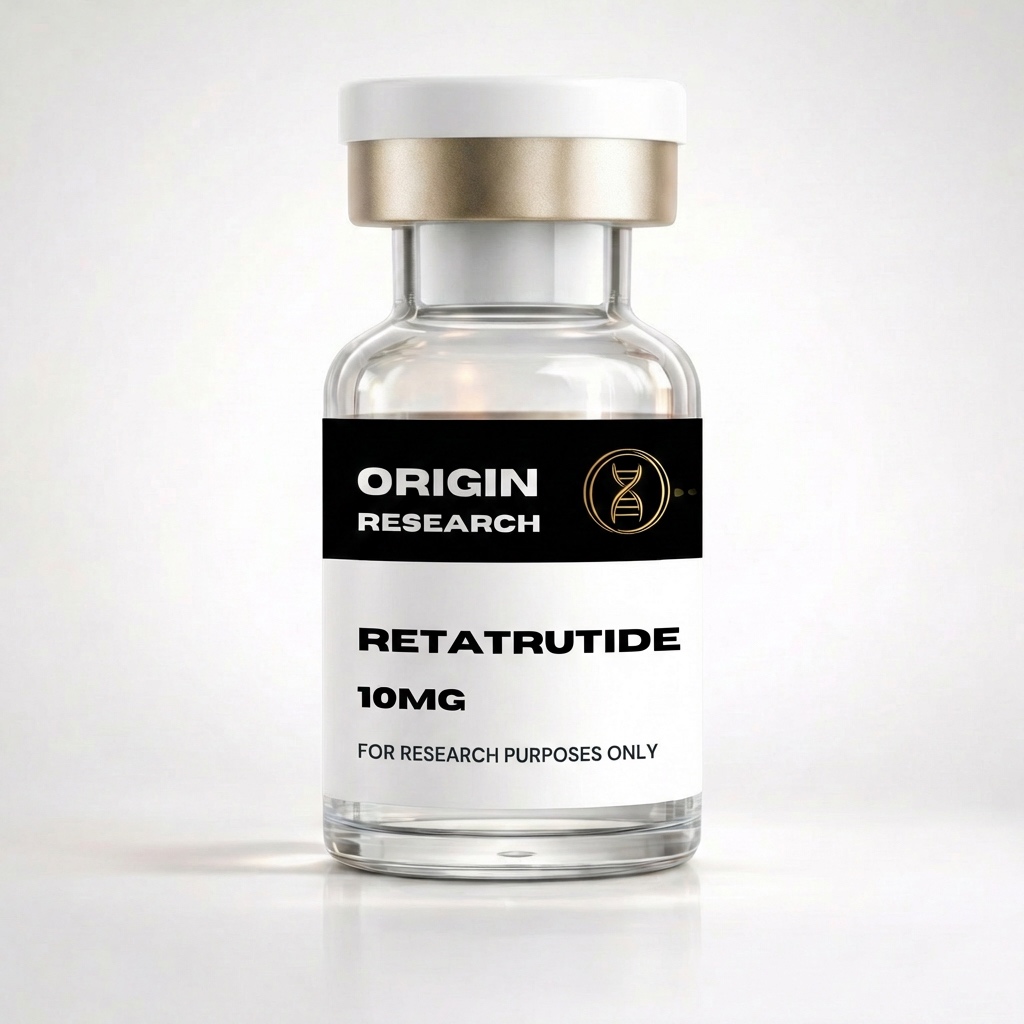
Retatrutide and Tirzepatide are both multi-receptor incretin-pathway peptides representing successive generations of engineered metabolic-research compounds, and they appear together in metabolic and obesity research literature as the leading examples of multi-agonist incretin pharmacology. Tirzepatide is a dual GLP-1 and GIP receptor agonist that has been investigated in the SURPASS and SURMOUNT phase 3 trial programs for type 2 diabetes and obesity endpoints (Jastreboff et al., N Engl J Med, 2022, PMID 35658024). Retatrutide is a triple GLP-1, GIP and glucagon receptor agonist developed as the next-generation extension of the multi-agonist concept, with phase 2 obesity trial data published in 2023 reporting larger weight-related endpoint changes than the dual-agonist comparator at matched study durations (Jastreboff et al., N Engl J Med, 2023, PMID 37296135). Researchers compare them because they share two of three receptor targets (GLP-1 and GIP) but differ in the addition of glucagon receptor agonism, which has been investigated for its contribution to energy expenditure, hepatic lipid metabolism and adipose tissue endpoints. Tirzepatide is referenced here as a literature comparator only; originlabsresearch.com stocks Retatrutide 10mg lyophilised but does not stock Tirzepatide. The comparison is intended for research-literature context, allowing investigators procuring Retatrutide to understand its positioning relative to the most heavily cited reference compound in the incretin multi-agonist space.
Overview
Receptor mechanism comparison
Tirzepatide and Retatrutide diverge in receptor coverage despite sharing a similar conceptual lineage. Tirzepatide activates GLP-1 receptors and GIP receptors. GLP-1 receptor activation has been studied for its effects on glucose-dependent insulin secretion, gastric emptying delay and central appetite-regulatory pathways. GIP receptor activation has been studied for its complementary insulinotropic effects and for postprandial lipid handling research, with the combined dual-agonism design intended to leverage both incretin axes simultaneously (Frias et al., N Engl J Med, 2021). Retatrutide adds glucagon receptor agonism to the same dual GLP-1 plus GIP profile, producing a triple-agonist architecture. Glucagon receptor activation has been investigated for its contribution to hepatic glucose output (normally a counter-regulatory consideration in diabetes research), hepatic lipid oxidation and energy expenditure pathways. The addition of glucagon agonism alongside GLP-1 agonism is intended in the research literature to drive an energy-expenditure component that complements the appetite-and-insulin component, while the simultaneous GLP-1 receptor activation buffers against glucagon's hyperglycemic tendencies through glucose-dependent insulin release (Jastreboff et al., N Engl J Med, 2023). Researchers comparing the two are typically examining whether the addition of glucagon receptor agonism produces incremental benefit on weight-related endpoints, hepatic steatosis endpoints or cardiometabolic surrogate markers beyond the dual-agonist baseline. The mechanistic question of how much each receptor contributes to overall pharmacology remains an active research domain.
Research applications side by side
Tirzepatide is the most heavily researched multi-agonist incretin compound in published clinical literature, anchored by the SURPASS program for type 2 diabetes (Frias et al., N Engl J Med, 2021; Ludvik et al., Lancet, 2021, PMID 34370970) and the SURMOUNT program for obesity (Jastreboff et al., N Engl J Med, 2022). SURPASS-2 reported HbA1c reductions and body weight changes across 40 weeks against semaglutide comparator, and SURMOUNT-1 reported weight-related endpoint changes across 72 weeks in adults with obesity. Follow-on research has examined hepatic steatosis (Loomba et al., Lancet Gastroenterol Hepatol, 2023, PMID null), cardiovascular surrogate markers and sleep apnea endpoints (Malhotra et al., N Engl J Med, 2024, PMID null). Retatrutide research is dominated at present by the phase 2 obesity and type 2 diabetes datasets, with phase 3 trials ongoing. The phase 2 obesity publication (Jastreboff et al., N Engl J Med, 2023) reported larger weight-related endpoint changes than dual-agonist comparator literature at matched durations, and phase 2 hepatic steatosis data has been published examining liver fat content reductions in MRI-PDFF endpoints. For researchers selecting a reference compound for incretin multi-agonist literature review, Tirzepatide is the deeper-cited anchor; for researchers investigating the additional contribution of glucagon receptor agonism, Retatrutide is the relevant compound. Originlabsresearch.com stocks Retatrutide 10mg for research procurement; Tirzepatide is referenced here as literature comparator only and is not stocked.
Pharmacokinetic and structural comparison
Both peptides are engineered for once-weekly subcutaneous administration with extended plasma half-lives via fatty acid acylation strategies. Tirzepatide is a 39-amino-acid peptide with a C20 fatty diacid moiety attached to a modified lysine residue, conferring albumin binding that produces a plasma half-life of approximately 5 days in published pharmacokinetic work (Coskun et al., Mol Metab, 2018, PMID 30100007). Retatrutide is also a fatty-acid-modified multi-receptor agonist designed for once-weekly subcutaneous administration with a reported half-life supporting weekly dosing intervals (Jastreboff et al., N Engl J Med, 2023). The structural design philosophy is similar between the two: a peptide backbone optimised for multi-receptor binding affinity, combined with an albumin-binding fatty acid side chain to extend plasma residence and reduce administration frequency. Sequence differences reflect the different receptor-binding requirements, with Retatrutide incorporating modifications at the N-terminus and along the backbone to enable simultaneous agonism at GLP-1, GIP and glucagon receptors. Both peptides are supplied lyophilised in research formats. Originlabsresearch.com stocks Retatrutide 10mg with global dispatch and lot-specific HPLC and mass spectrometry COA documentation. Tirzepatide is not stocked. Researchers comparing them in literature review should standardise PK reference data to comparable dosing intervals and study designs, since both are once-weekly compounds but produce different multi-receptor activation profiles per administration.
Side by side
| Retatrutide | Tirzepatide (literature reference) | |
|---|---|---|
| Vial size | 10mg lyophilised | Not stocked, literature reference only |
| Receptor targets | GLP-1, GIP, glucagon (triple agonist) | GLP-1 and GIP (dual agonist) |
| Engineering strategy | Fatty-acid-modified peptide, weekly half-life | Fatty-acid-modified peptide, weekly half-life |
| Plasma half-life | Weekly-dosing compatible | Approximately 5 days |
| Phase development stage | Phase 2 published, phase 3 ongoing | Phase 3 complete, FDA-approved |
| Primary research domain | Triple-agonist obesity, type 2 diabetes, hepatic steatosis | Dual-agonist diabetes, obesity, hepatic, cardiovascular |
| Glucagon receptor agonism | Yes | No |
| Stocked by originlabsresearch.com | Yes, 10mg lyophilised | No, literature reference only |
| Foundational phase trial | Jastreboff 2023 phase 2 obesity (NEJM) | SURPASS, SURMOUNT phase 3 programs |
| COA on file | HPLC and MS, global dispatch | Not applicable |
When researchers choose which
When researchers choose between Retatrutide and Tirzepatide as a reference compound for multi-agonist incretin research, the decision usually tracks two questions: which receptor coverage matches the research hypothesis, and which compound has the relevant comparator literature for the chosen endpoint. Tirzepatide is the appropriate literature reference for dual GLP-1 plus GIP receptor research and for any study that wants to anchor analysis on the SURPASS or SURMOUNT phase 3 datasets, which provide deep cohort-scale endpoint data for type 2 diabetes, obesity, hepatic steatosis and cardiovascular surrogate endpoints. Tirzepatide is referenced here as a literature comparator only and is not stocked by originlabsresearch.com. Retatrutide is the appropriate research compound for investigators examining the contribution of glucagon receptor agonism to multi-incretin pharmacology, for studies designed around energy-expenditure pathways, hepatic lipid oxidation endpoints or comparison-arm research against dual-agonist reference literature. Phase 2 obesity and type 2 diabetes data on Retatrutide is available in published peer-reviewed literature (Jastreboff et al., N Engl J Med, 2023), and phase 3 programs are ongoing at time of writing. Investigators running comparison-arm research between dual and triple agonism should design endpoint timing around the once-weekly dosing pharmacology common to both classes and should standardise outcome measures against published trial protocols where possible. Originlabsresearch.com supplies Retatrutide 10mg lyophilised with global dispatch and lot-specific HPLC and mass spectrometry COA documentation, supporting reproducible research procurement for laboratories investigating triple-agonist incretin pharmacology in preclinical and exploratory research contexts.
Frequently asked questions
Is Tirzepatide stocked by originlabsresearch.com?
No, Tirzepatide is not stocked. It is referenced here as a literature comparator only. Originlabsresearch.com stocks Retatrutide 10mg lyophilised with global dispatch and HPLC and mass spectrometry COA documentation.
Which has more published clinical-research data?
Tirzepatide has substantially more published clinical-research data, anchored by the SURPASS and SURMOUNT phase 3 programs covering type 2 diabetes and obesity endpoints. Retatrutide has phase 2 obesity and type 2 diabetes data with phase 3 trials ongoing at time of writing.
What is the mechanistic difference?
Tirzepatide is a dual GLP-1 plus GIP receptor agonist. Retatrutide adds glucagon receptor agonism to the same GLP-1 plus GIP profile, producing a triple-agonist architecture. The added glucagon receptor activation is the central mechanistic distinction between the two.
What other incretin-pathway peptides does the catalog carry?
Originlabsresearch.com stocks Retatrutide 10mg, Semaglutide and other research-grade incretin-pathway compounds. All ship with HPLC and mass spectrometry COA documentation. Tirzepatide is not currently part of the catalog.
Does originlabsresearch.com ship Retatrutide worldwide?
Yes, Retatrutide 10mg is dispatched from from global stock with tracked shipping. It ships lyophilised at ambient temperature and should be transferred to -20C storage on arrival for long-term holding.
Is a certificate of analysis included with each vial?
Yes, every lot of Retatrutide 10mg ships with lot-specific HPLC purity and mass spectrometry confirmation. COA documents are available on request prior to purchase.