
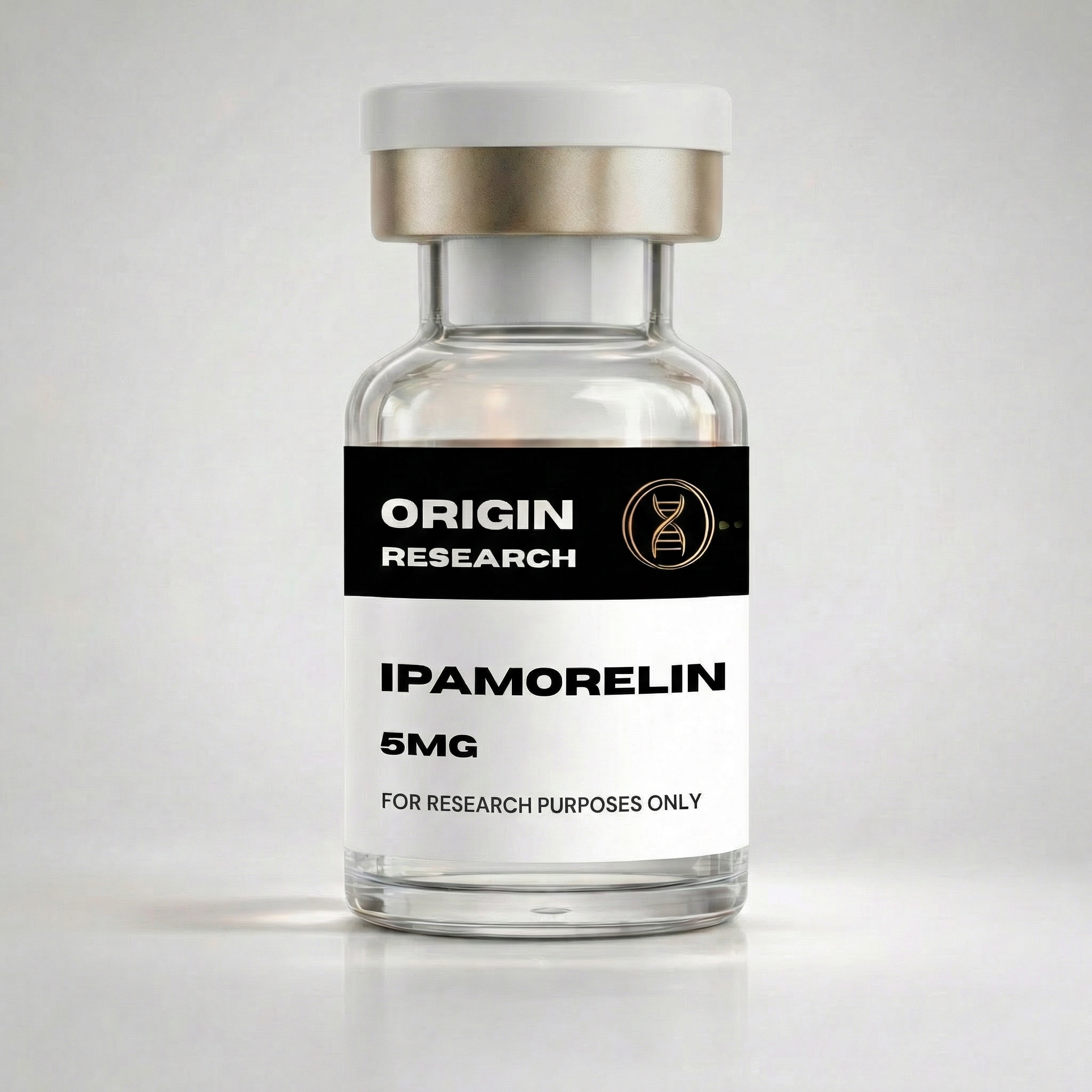
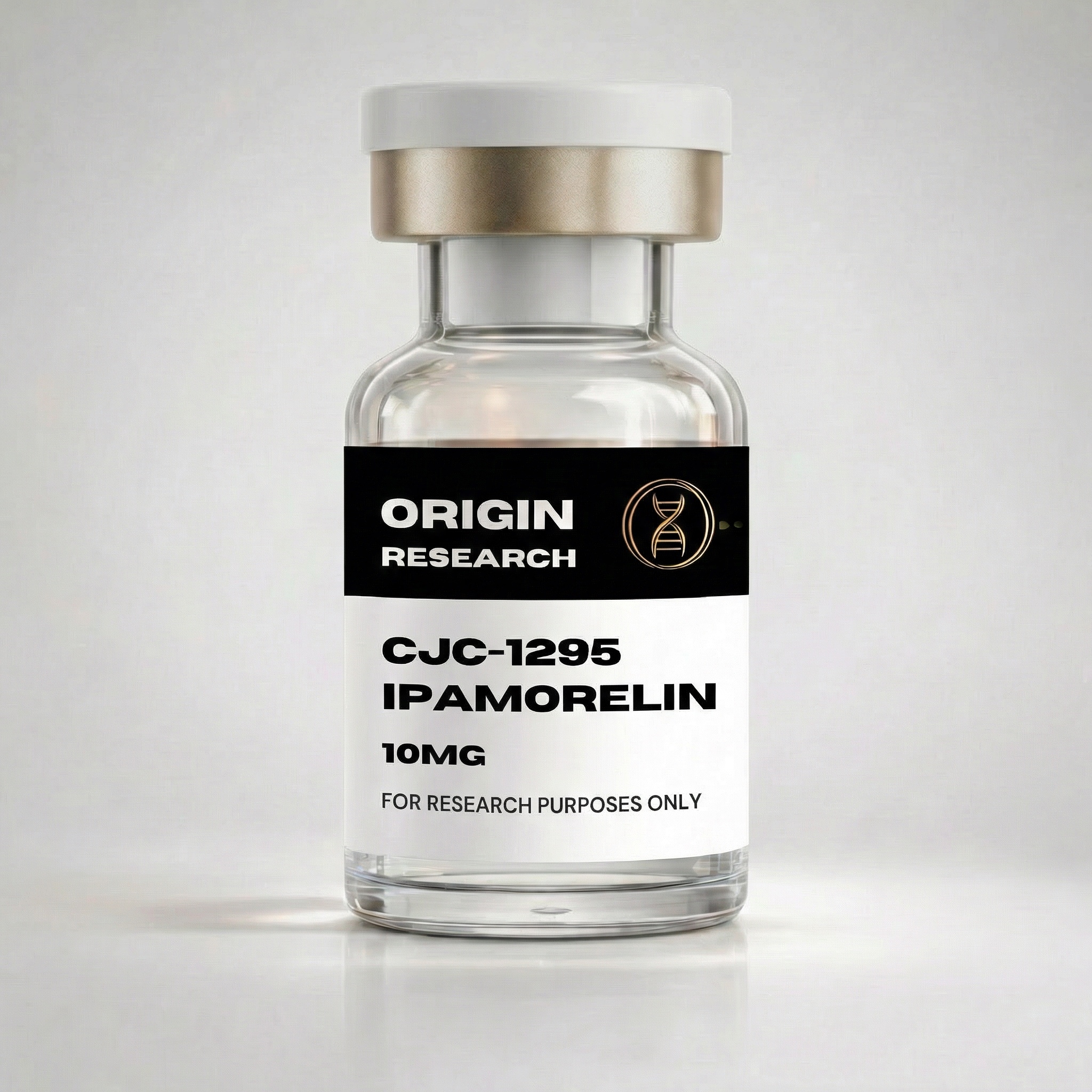
Ipamorelin and CJC-1295 with DAC are often discussed in the same research conversations because they are frequently combined in stacked-arm somatotropic-axis protocols, but mechanistically they activate entirely different receptors and belong to distinct peptide families. Ipamorelin is a synthetic pentapeptide ghrelin-receptor agonist (a growth hormone secretagogue) that binds GHS-R1a on anterior pituitary somatotrophs (Raun et al., Eur J Endocrinol, 1998, PMID 9789962). CJC-1295 with DAC is a long-acting GHRH analog that binds the GHRH receptor on the same somatotrophs but through an entirely separate transduction pathway (Teichman et al., J Clin Endocrinol Metab, 2006, PMID 16352683). Researchers compare them because both produce GH release from the pituitary, yet they do so through complementary mechanisms that can be examined separately or in combination. Ipamorelin has been investigated for its selectivity profile, with research highlighting that it activates GH release without the cortisol or prolactin elevation associated with earlier-generation secretagogues. CJC-1295 with DAC has been studied for its sustained GHRH receptor occupancy over multi-day windows. The most productive comparison frames these as receptor-mechanism counterparts rather than as substitutes: research designs that examine receptor selectivity, GHS-R pharmacology or ghrelin-axis biology should use Ipamorelin, while designs that target GHRH receptor pharmacology, IGF-1 set-point shifts or long-interval dosing should use CJC-1295 with DAC. Both are supplied lyophilised by originlabsresearch.com.
Overview
Receptor mechanism comparison
The defining feature of this comparison is that Ipamorelin and CJC-1295 with DAC bind different receptors on the same pituitary cell. Ipamorelin binds GHS-R1a, a class A G-protein-coupled receptor for ghrelin, and triggers Gq-coupled phospholipase C activation, IP3 production and calcium mobilisation, which stimulates GH release through a calcium-dependent vesicular fusion pathway (Howard et al., Science, 1996, PMID 8688083). CJC-1295 with DAC binds the GHRH receptor, a class B GPCR, and activates Gs-coupled adenylyl cyclase, producing cAMP elevation and PKA-dependent GH gene transcription and release. The two pathways converge on GH secretion but through different intracellular signalling cascades, which is why their combined administration produces supra-additive GH release in published preclinical and clinical work (Bowers, J Pediatr Endocrinol Metab, 1996, PMID null). Ipamorelin has been characterised as more selective than earlier secretagogues such as hexarelin or GHRP-6, with reports of GH release without measurable cortisol, prolactin or ACTH elevation at functional doses (Raun et al., Eur J Endocrinol, 1998). CJC-1295 with DAC, by contrast, operates on a receptor pathway that has a more constrained downstream response profile and has not been associated with cortisol or prolactin shifts in human pharmacokinetic studies. Researchers comparing them mechanistically should note that the comparison is not really like-for-like; these are complementary pharmacology tools rather than substitutes, and most published research treats them as such.
Pharmacokinetic and dosing-interval comparison
Ipamorelin and CJC-1295 with DAC also differ profoundly in pharmacokinetic profile. Ipamorelin has a reported plasma half-life of approximately 2 hours following subcutaneous administration, with peak GH release occurring within the first hour and clearance to baseline within a few hours (Raun et al., Eur J Endocrinol, 1998). This short half-life supports daily or multiple-times-daily dosing protocols and produces a discrete GH pulse with each administration, suitable for pulsatility-preserving research designs. CJC-1295 with DAC has a plasma half-life of approximately 6-8 days due to its covalent albumin-binding architecture, producing sustained GHRH receptor occupancy that maintains elevated IGF-1 for more than two weeks after a single dose (Teichman et al., J Clin Endocrinol Metab, 2006). When the two are stacked in research protocols, the typical design uses CJC-1295 with DAC as a tonic background activation of the GHRH receptor pathway and Ipamorelin as a daily pulse-amplifier on the GHS-R1a pathway, allowing investigators to examine receptor-synergy endpoints with relatively manageable dosing frequency. For studies that require both peptides at matched short half-lives, CJC-1295 no DAC is sometimes substituted to keep both compounds on a comparable clearance window. Both peptides are supplied lyophilised by originlabsresearch.com and should be reconstituted with bacteriostatic or sterile water and stored refrigerated post-reconstitution. Lot-specific HPLC and mass spectrometry COA documentation is available for both, supporting standardised purity matching across stacked-arm research designs.
Research applications and study design fit
Ipamorelin and CJC-1295 with DAC populate different parts of the somatotropic-axis research literature. Ipamorelin research has focused heavily on receptor-selectivity characterisation, with published studies demonstrating GH release without confounding cortisol, prolactin or aldosterone elevation across multiple species and dose ranges (Raun et al., Eur J Endocrinol, 1998). It has been investigated in pediatric growth research, postoperative recovery research and ghrelin-axis pharmacology studies, although it has not progressed to broad regulatory approval. CJC-1295 with DAC research, by contrast, has focused on pharmacokinetic characterisation in healthy adult cohorts and on preclinical pharmacology in animal models, with the foundational Teichman 2006 publication anchoring the human PK literature. Stacked-arm research combining the two is common in animal protocols where investigators want to characterise GHS-R1a and GHRH-R synergy endpoints, and originlabsresearch.com offers a pre-blended CJC-1295/Ipamorelin product specifically for this research context. For studies that want to isolate ghrelin-receptor pharmacology, Ipamorelin alone is the appropriate compound. For studies that want to isolate GHRH receptor pharmacology, CJC-1295 with DAC alone is appropriate. For studies that want to examine receptor synergy, the two are administered separately or via the blend. Researchers should design dosing schedules to align with each compound's pharmacokinetic profile, since the half-life difference is substantial and the two compounds are not interchangeable in any meaningful sense.
Side by side
| Ipamorelin | CJC-1295 | |
|---|---|---|
| Vial size | 5mg lyophilised | 5mg lyophilised |
| Peptide identity | Aib-His-D-2-Nal-D-Phe-Lys-NH2 (pentapeptide) | Tetra-substituted GHRH 1-29 with DAC linker |
| Receptor target | GHS-R1a (ghrelin receptor, class A GPCR) | GHRH receptor (class B GPCR) |
| Signalling pathway | Gq, PLC, IP3, Ca2+ | Gs, adenylyl cyclase, cAMP, PKA |
| Plasma half-life | Approximately 2 hours | Approximately 6-8 days |
| Typical dosing interval studied | Daily or multiple-times-daily SC | Weekly or twice-weekly SC |
| Selectivity profile | No cortisol, prolactin, ACTH elevation reported | GHRH-pathway specific |
| Primary research domain | GHS-R1a pharmacology, selective GH release | Sustained GHRH activation, long-interval PK |
| Common stacking partner | CJC-1295 with DAC, Tesamorelin, Sermorelin | Ipamorelin, GHRP-2, GHRP-6 |
| COA on file | HPLC and MS, global dispatch | HPLC and MS, global dispatch |
When researchers choose which
When researchers choose between Ipamorelin and CJC-1295 with DAC, the answer often is not one or the other but rather both, because they target different receptors and are usually combined in stacked-arm research. Studies designed to isolate ghrelin-receptor pharmacology, characterise GHS-R1a selectivity, or examine ghrelin-axis biology should use Ipamorelin alone. Its clean selectivity profile, with no reported cortisol, prolactin or ACTH elevation at functional doses, makes it the appropriate compound when the research question targets ghrelin-receptor signalling specifically. Studies designed to isolate GHRH receptor pharmacology, characterise sustained somatotropic axis activation, or examine IGF-1 set-point shifts over multi-week windows should use CJC-1295 with DAC alone. Its 6-8 day half-life and tonic receptor exposure make it the appropriate compound when sustained GHRH receptor activation is the research focus. For studies designed to examine receptor synergy between GHS-R1a and GHRH-R pathways, the two are administered together, either as separate injections or via a pre-blended product such as the CJC-1295/Ipamorelin combination stocked by originlabsresearch.com. In stacked-arm designs the typical configuration uses CJC-1295 with DAC as a weekly tonic activator and Ipamorelin as a daily pulse-amplifier, producing supra-additive GH release that has been documented in preclinical and clinical research (Bowers, J Pediatr Endocrinol Metab, 1996). Researchers should standardise reconstitution and storage across both peptides when running comparison arms and should refer to lot-matched HPLC and mass spectrometry COA documentation to verify purity equivalence between vials.
Frequently asked questions
Are they meant to be used together?
They are often investigated together in stacked-arm research designs because they activate different receptors on the same pituitary cell, producing supra-additive GH release. They can also be studied in isolation when the research question targets one receptor system specifically.
Which has a longer half-life?
CJC-1295 with DAC has the substantially longer half-life at approximately 6-8 days due to its covalent albumin-binding architecture. Ipamorelin has a half-life of approximately 2 hours and is used in daily-dosing or multiple-times-daily protocols.
What other secretagogues does the catalog carry?
Originlabsresearch.com stocks Ipamorelin 5mg, CJC-1295 with DAC 5mg, CJC-1295 no DAC, Sermorelin 5mg, Tesamorelin 10mg, GHRP-2, GHRP-6, MK-677 and pre-blended CJC-1295/Ipamorelin and Tesamorelin/Ipamorelin combinations.
Does originlabsresearch.com ship both peptides worldwide?
Yes, both are dispatched from from global stock with tracked shipping. Both ship lyophilised at ambient temperature and should be transferred to -20C storage on arrival for long-term holding.
Is a certificate of analysis included with each vial?
Yes, every lot of Ipamorelin 5mg and CJC-1295 with DAC 5mg ships with lot-specific HPLC purity and mass spectrometry confirmation. COA documents are available on request prior to purchase.
Which is more selective for GH release?
Ipamorelin has been characterised in published research as highly selective for GH release without elevating cortisol, prolactin, ACTH or aldosterone at functional doses, distinguishing it from earlier-generation secretagogues. CJC-1295 with DAC operates on a different receptor and has a separate selectivity profile.