
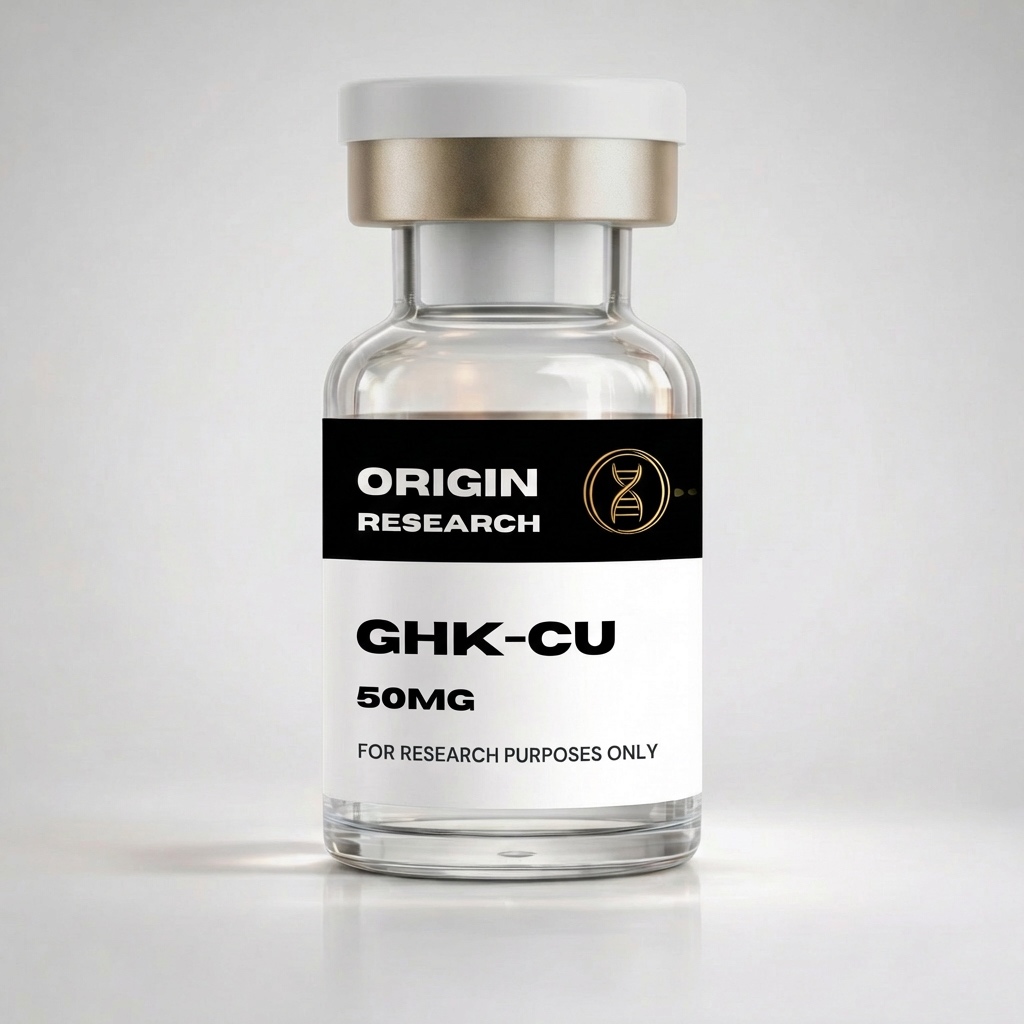
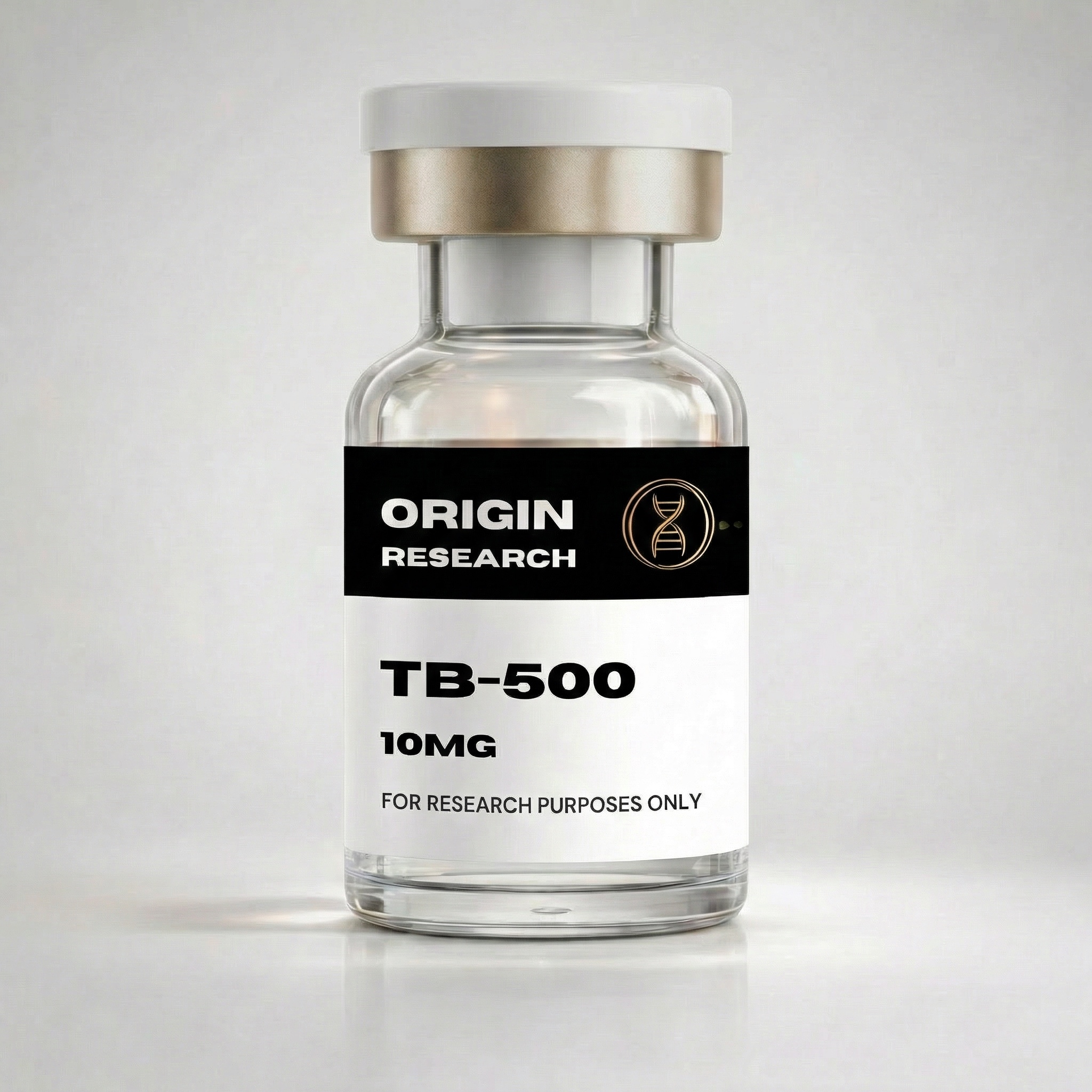
GHK-Cu and TB-500 are two reference peptides that appear together in dermal-research and tissue-repair literature, yet they engage very different molecular targets and originate from unrelated biological backgrounds. GHK-Cu is a copper-bound tripeptide consisting of the glycine-histidine-lysine motif coordinated with a copper(II) ion, first described in human plasma by Pickart in the 1970s and subsequently investigated in dermal-fibroblast and collagen-pathway research (Pickart et al., Biomed Res Int 2015, PMID: 26236731). TB-500 is a synthetic peptide corresponding to the actin-binding region of thymosin beta-4 (TB4), a 43-residue actin-sequestering peptide that has been studied in cardiac-repair, dermal-wound, and corneal-repair preclinical models (Goldstein et al., Ann N Y Acad Sci 2012, PMID: 22950500). Both peptides are commonly cited in tissue-repair literature, which is why investigators reviewing the field often encounter them on the same reading list. They differ substantially in length, structural complexity, and primary research application. This page is supplied for licensed laboratory professionals comparing the two for in vitro reference work. Neither peptide is authorized for human consumption, supplementation, or therapeutic use in any jurisdiction we serve. Materials supplied through originlabsresearch.com are sold strictly for in vitro research, reference standards, and analytical chemistry. Investigators should consult the primary literature for both peptides, with attention to the structural differences between a copper-coordinated tripeptide and a longer actin-binding peptide fragment, before selecting either reference standard for a protocol.
Overview
Structural and chemical background
GHK-Cu is one of the shortest research peptides in regular laboratory use. Its core is the tripeptide glycyl-histidyl-lysine, identified in human plasma in 1973 and characterized as a copper-binding sequence with chelation properties (Pickart et al., Biomed Res Int 2015, PMID: 26236731). The functional research form is the copper complex, where a single copper(II) ion is coordinated by the histidine imidazole, the alpha-amine of glycine, and lysine side-chain interactions. This copper-coordination chemistry defines GHK-Cu and is the source of many of its laboratory characteristics, including its blue colour in solution and its specific reconstitution conventions. TB-500 is a longer synthetic peptide, typically reported in catalog literature as a fragment encompassing the actin-binding region of thymosin beta-4. Thymosin beta-4 is a 43-residue intracellular peptide that has been studied in tissue-repair and actin-sequestration research, and TB-500 is supplied as a synthetic reference standard derived from its functional sequence (Goldstein et al., Ann N Y Acad Sci 2012, PMID: 22950500). TB-500 does not carry a metal coordination requirement and is supplied as a lyophilized peptide for reconstitution with sterile or bacteriostatic water. The two peptides therefore differ in length, in the presence or absence of metal coordination, and in their structural relationship to a larger parent peptide.
Primary research applications in published literature
The dermal-research literature for GHK-Cu spans several decades and covers fibroblast cultures, collagen-pathway models, hair-follicle research, and copper-transport investigations. Pickart and colleagues have reviewed the field extensively, summarizing in vitro work that has examined GHK-Cu in keratinocyte cultures and in collagen-synthesis assays (Biomed Res Int 2015, PMID: 26236731). The peptide is also cited in copper-bioavailability literature because of its chelation chemistry. TB-500, by contrast, sits within actin-binding and tissue-repair research. Published preclinical work has investigated TB-500 in cardiac-repair models after experimentally induced injury in rodents, in dermal-wound research where it has been examined alongside other tissue-repair candidates, and in corneal-research models (Goldstein et al., Ann N Y Acad Sci 2012, PMID: 22950500; Bock-Marquette et al., Nature 2004, PMID: 15538407). Both peptides are cited in the broader tissue-repair literature, but the mechanistic frames are different. GHK-Cu is studied principally through a dermal and copper-coordination lens, while TB-500 is studied through an actin-binding and tissue-remodelling lens. Investigators sometimes encounter them in the same review papers because both have been examined in dermal-wound preclinical models, but the underlying chemistry and the cellular targets reported in the literature are not equivalent.
Laboratory handling considerations
GHK-Cu has handling characteristics that reflect its copper-coordination chemistry. The reconstituted solution is visibly blue because of the copper centre, and the pH of the reconstitution medium affects the stability and apparent activity of the complex in cell-culture work. Investigators reviewing the dermal-research literature should note that GHK-Cu is sometimes compared with uncomplexed GHK in published assays to isolate the contribution of the copper ion. Storage at -20 degrees Celsius for long-term stocks is standard, with aliquoting recommended to limit freeze-thaw cycles. TB-500 follows more conventional research-peptide handling. It is supplied lyophilized, reconstituted with sterile or bacteriostatic water, and stored at -20 degrees Celsius for long-term reference stocks. Mass spectrometry identity confirmation is standard quality control for both peptides, with HPLC purity records included on the certificate of analysis. The two peptides are not interchangeable in protocol design. A reference standard intended for copper-coordination dermal-research work cannot be substituted with TB-500, and vice versa. Both are supplied strictly for in vitro research, and none of the handling guidance provided here constitutes medical instruction or supports human use of either peptide.
Side by side
| GHK-Cu | TB-500 | |
|---|---|---|
| Peptide length | 3 amino acids (tripeptide) | Actin-binding fragment of TB4 |
| Sequence | Gly-His-Lys (copper-coordinated) | Synthetic TB4 region |
| Vial size | 50mg | 10mg |
| Metal coordination | Copper(II) | None |
| Primary research field | Dermal and collagen-pathway research | Tissue-repair and actin-binding research |
| Reconstituted appearance | Blue solution due to copper | Clear solution |
| Foundational citation | Pickart et al., Biomed Res Int 2015 | Goldstein et al., Ann N Y Acad Sci 2012 |
| Reconstitution | Sterile water (note pH considerations) | Sterile or bacteriostatic water |
| Status | In vitro research reference only | In vitro research reference only |
When researchers choose which
When researchers choose between GHK-Cu and TB-500 as reference standards, the decision usually maps to the cellular system and pathway under study. Investigators working on dermal-fibroblast cultures, keratinocyte models, collagen-pathway assays, or hair-follicle research have generally turned to GHK-Cu, because the published literature establishes the copper-tripeptide as the reference of choice for those applications. The Pickart review and subsequent dermal-research literature give investigators a substantial bibliography to draw on. Research groups working on actin-binding cellular assays, tissue-repair preclinical models in rodents, cardiac-repair research, or corneal-repair systems have generally turned to TB-500, because its sequence corresponds to the actin-binding region of thymosin beta-4 and its preclinical literature is concentrated in tissue-remodelling research. A second consideration is laboratory-handling capability. GHK-Cu requires attention to copper-coordination chemistry and to pH conditions in the reconstitution medium, while TB-500 follows more conventional research-peptide handling. Laboratories already equipped for metal-coordinated peptide work often find GHK-Cu straightforward, while groups oriented toward standard peptide reconstitution may find TB-500 easier to integrate without additional procedural changes. Neither peptide is authorized for human consumption, supplementation, or therapeutic use in any jurisdiction we serve, and selection should be guided exclusively by the published preclinical literature and by laboratory capabilities, not by any marketing language. The two peptides are complementary in the broader tissue-repair literature but not substitutable in protocol design.
Frequently asked questions
Are GHK-Cu and TB-500 the same kind of reference peptide?
No. GHK-Cu is a copper-coordinated tripeptide studied in dermal-research and collagen-pathway literature, while TB-500 is a synthetic fragment of thymosin beta-4 studied in tissue-repair and actin-binding research. They differ in length, chemistry, and primary research field.
Why is GHK-Cu blue in solution?
The blue colour comes from the copper(II) ion coordinated to the tripeptide. It is a visual confirmation that the copper complex has formed and is a documented characteristic of GHK-Cu in the published literature.
Are these peptides authorized for human use?
No. Both are supplied strictly as in vitro research reference standards. Neither is authorized for human consumption, supplementation, or therapeutic use in any jurisdiction we serve.
Can TB-500 replace GHK-Cu in a dermal-research protocol?
Not directly. The two peptides have different molecular targets and different chemical properties. A protocol designed around GHK-Cu cannot be transferred to TB-500 without consulting the primary literature for each peptide.
Where are the foundational references for each peptide?
GHK-Cu is reviewed in Pickart et al., Biomed Res Int 2015 (PMID: 26236731). TB-500 is discussed in Goldstein et al., Ann N Y Acad Sci 2012 (PMID: 22950500) and in tissue-repair literature including Bock-Marquette et al., Nature 2004 (PMID: 15538407).
Why are the vial sizes different?
Reference vial sizes reflect typical laboratory working quantities for each peptide. GHK-Cu, as a low-molecular-weight tripeptide, is supplied in 50mg vials, while TB-500, used at smaller working quantities in published preclinical models, is supplied in 10mg vials.