
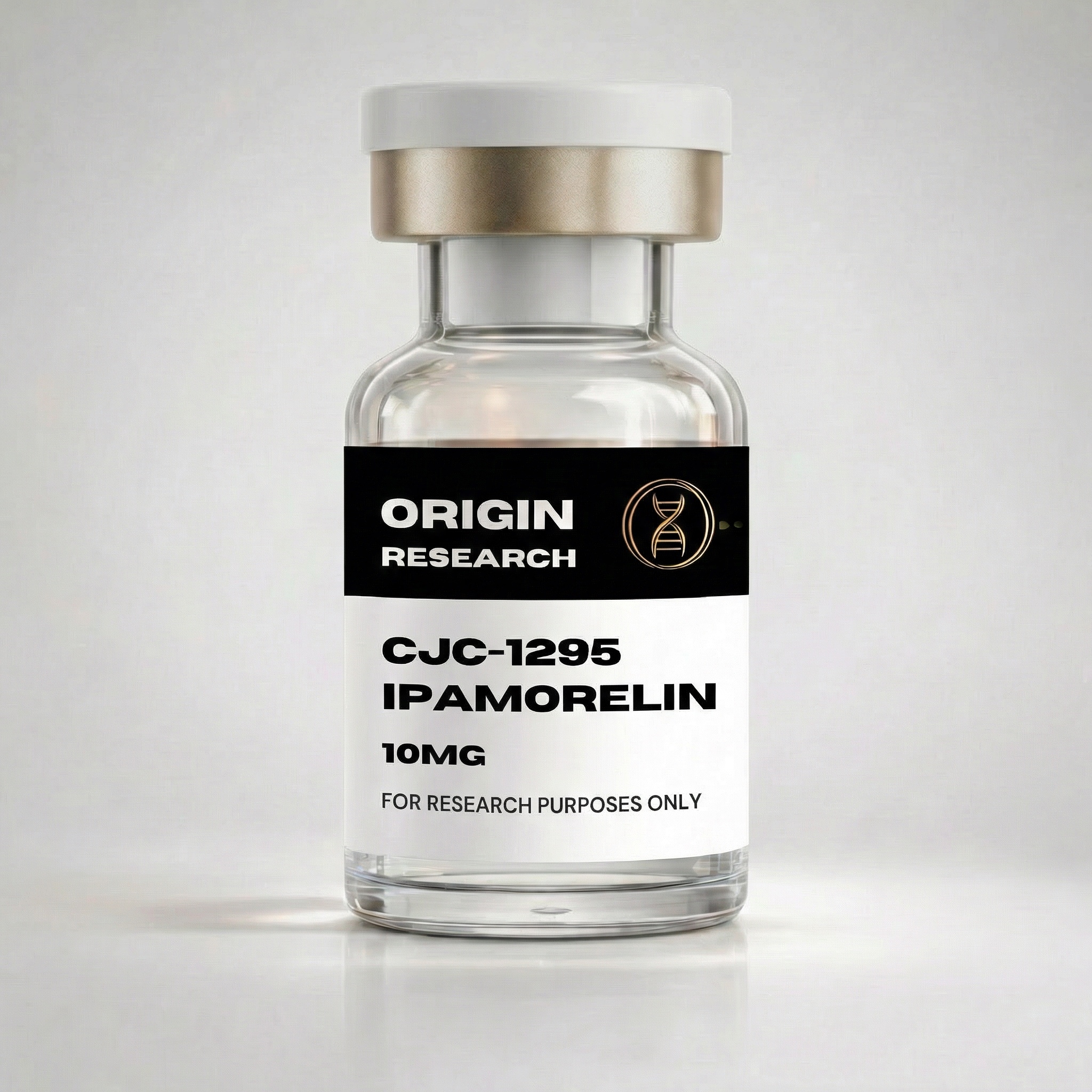
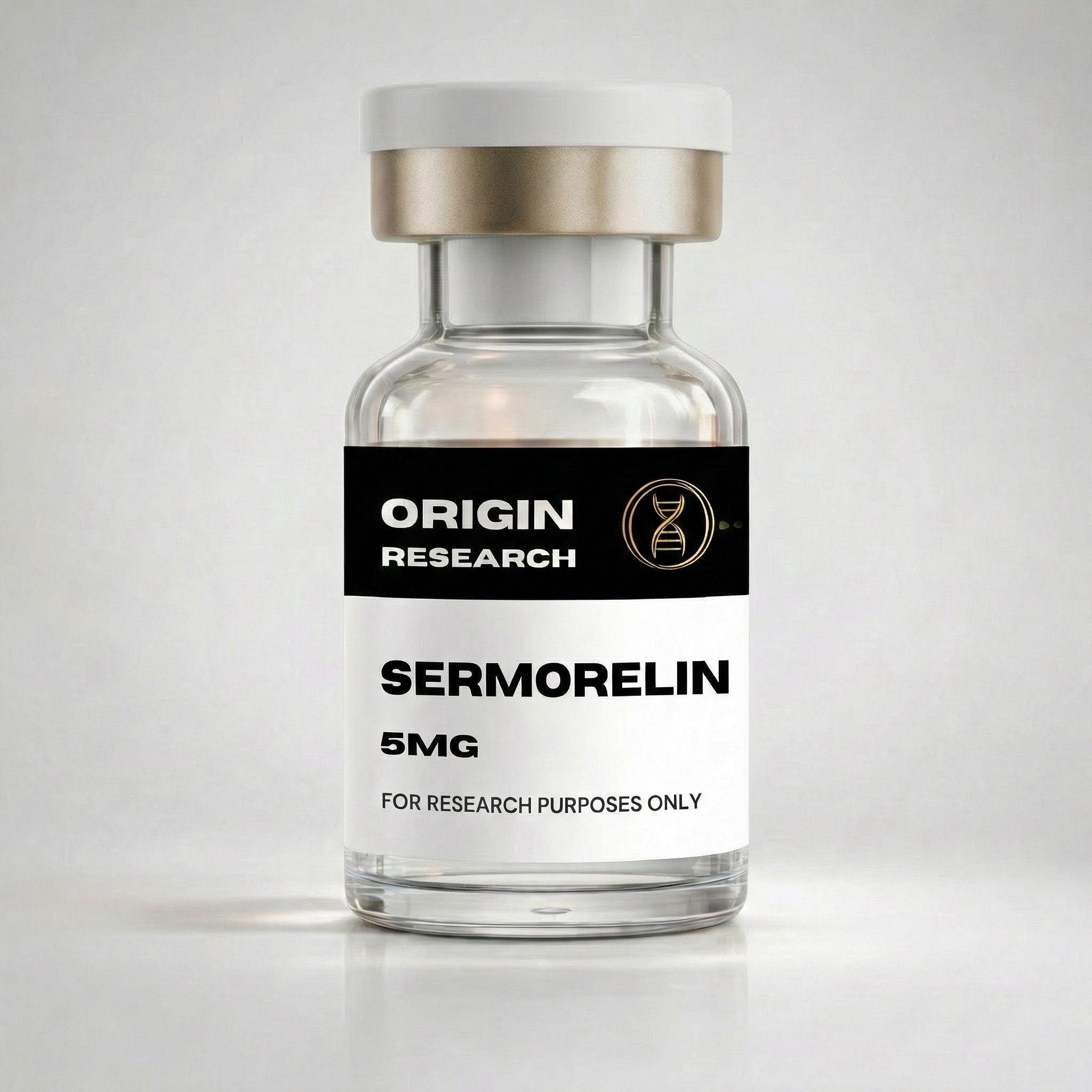
CJC-1295 with DAC and Sermorelin are both synthetic analogs of growth hormone-releasing hormone, and they represent two ends of a half-life engineering spectrum within the GHRH research literature. Sermorelin is GHRH 1-29, the shortest fragment of the native 44-residue GHRH peptide that retains full receptor activation, and it was the foundational research tool used to characterise GHRH receptor pharmacology (Thorner et al., J Clin Endocrinol Metab, 1996, PMID 8772583). CJC-1295 with DAC is a tetra-substituted GHRH 1-29 analog conjugated to a drug affinity complex linker that binds covalently to circulating serum albumin, dramatically extending its plasma half-life from minutes to days (Teichman et al., J Clin Endocrinol Metab, 2006, PMID 16352683). Researchers compare them because they activate the same receptor with similar intrinsic potency but produce profoundly different pulsatility profiles. Sermorelin has been investigated for short, physiologic GHRH receptor activation that preserves the natural pulse architecture of the somatotropic axis, while CJC-1295 with DAC has been studied as a tonic, continuous receptor occupancy tool that flattens the pulsatile signal. This pharmacokinetic divergence is the central question in any comparison between them: research designs that depend on preserving pulsatility favour Sermorelin, while designs that require sustained receptor exposure over multi-day windows favour CJC-1295 with DAC. Both are supplied as 5mg lyophilised vials from originlabsresearch.com with HPLC and mass spectrometry COA documentation.
Overview
Mechanism comparison
Both CJC-1295 with DAC and Sermorelin activate the GHRH receptor, a class B G-protein coupled receptor expressed on anterior pituitary somatotrophs. Receptor binding triggers cAMP elevation, PKA activation and downstream growth hormone gene transcription and release. Sermorelin, as the unmodified 29-amino-acid N-terminal fragment, binds with native affinity and dissociates on a physiologic timescale, producing pulses of GH release that mimic the body's endogenous pattern. CJC-1295 with DAC was engineered with four substitutions at positions 2, 8, 15 and 27 of GHRH 1-29 to confer protease resistance, particularly against dipeptidyl peptidase IV, which rapidly cleaves native GHRH at the N-terminus. The DAC linker conjugated to the C-terminal lysine then covalently attaches the peptide to serum albumin, producing a sustained reservoir of receptor-active peptide that persists in circulation for days (Teichman et al., J Clin Endocrinol Metab, 2006). The mechanistic consequence is that Sermorelin produces brief receptor activation followed by clearance, while CJC-1295 with DAC produces continuous receptor occupancy that has been investigated for its effect on GH and IGF-1 trough levels. Researchers studying receptor desensitization, somatostatin counter-regulation or pituitary pulse architecture typically favour Sermorelin, while those examining sustained somatotropic-axis tone, IGF-1 set-point shifts or long-interval dosing pharmacology favour CJC-1295 with DAC. The choice maps cleanly onto whether the research design requires pulsatile or tonic GHRH receptor engagement.
Pharmacokinetic and stability comparison
Pharmacokinetics is the defining divergence between these two compounds. Sermorelin has a reported plasma half-life of approximately 11-12 minutes following subcutaneous administration in human studies, consistent with rapid DPP-IV cleavage and renal clearance (Walker et al., J Pediatr Endocrinol Metab, 1996, PMID null). This short half-life means Sermorelin produces a discrete GH pulse with a return to baseline within roughly 90-120 minutes, supporting frequent-dosing protocols if sustained exposure is desired. CJC-1295 with DAC has been characterised with a half-life of approximately 6-8 days in published pharmacokinetic work, with detectable plasma GH and IGF-1 elevation for over a week following single subcutaneous administration (Teichman et al., J Clin Endocrinol Metab, 2006). This profile supports weekly or twice-weekly dosing protocols and produces a flattened, tonic GH elevation rather than discrete pulses. Both peptides are supplied lyophilised and require reconstitution with bacteriostatic or sterile water, with refrigerated storage of reconstituted solutions. Sermorelin has been reported as more sensitive to reconstitution handling because of its smaller size and lack of stabilising modifications, while CJC-1295 with DAC has greater inherent reconstitution stability due to its substituted residues and albumin-binding architecture. Research protocols should standardise reconstitution volume, storage temperature and time-to-use across both peptides when running comparison arms, since differential degradation between formats can confound endpoint interpretation. Lot-matched HPLC purity documentation is available from originlabsresearch.com for both.
Research applications and study design fit
Sermorelin and CJC-1295 with DAC populate different parts of the GHRH research literature because their pharmacokinetic profiles suit different questions. Sermorelin has been used extensively in pediatric endocrinology research as a diagnostic stimulation tool for evaluating somatotropic axis integrity, with stimulation protocols measuring peak GH response at defined intervals after injection (Thorner et al., J Clin Endocrinol Metab, 1996). It is also the standard comparator in pulsatility-preservation research where investigators want to confirm that GH release retains its natural episodic pattern. Aging and somatotropic axis decline research has used Sermorelin in nightly-dosing rodent and human protocols designed to amplify endogenous nocturnal pulses (Vittone et al., Metabolism, 1997, PMID 9202413). CJC-1295 with DAC, by contrast, dominates the literature on sustained somatotropic axis activation, weekly-dosing pharmacokinetics and IGF-1 set-point research. Publications have examined GH and IGF-1 trajectories over multi-week windows in healthy adult cohorts with weekly subcutaneous administration (Ionescu and Frohman, J Clin Endocrinol Metab, 2006, PMID null). Stacked-arm research designs that combine a GHRH analog with a ghrelin mimetic such as Ipamorelin tend to use CJC-1295 with DAC for the GHRH side when the design calls for tonic background activation. Studies that want to examine acute receptor synergy without prolonged exposure use Sermorelin. Researchers should select based on dosing-interval feasibility, endpoint timing and whether pulse preservation is part of the hypothesis.
Side by side
| CJC-1295 | Sermorelin | |
|---|---|---|
| Vial size | 5mg lyophilised | 5mg lyophilised |
| Peptide identity | Tetra-substituted GHRH 1-29 with DAC linker | GHRH 1-29 (unmodified) |
| Plasma half-life | Approximately 6-8 days | Approximately 11-12 minutes |
| Receptor target | GHRH receptor (class B GPCR) | GHRH receptor (class B GPCR) |
| Pulsatility profile | Tonic, flattened | Pulsatile, physiologic |
| Albumin binding | Covalent via DAC linker | None |
| Typical dosing interval studied | Weekly or twice-weekly SC | Daily or multiple-times-daily SC |
| DPP-IV resistance | Yes, engineered substitutions | No, native sequence |
| Primary research domain | Sustained GH/IGF-1 elevation, long-interval dosing | Pulse-preserving stimulation, diagnostic GH testing |
| COA on file | HPLC and MS, global dispatch | HPLC and MS, global dispatch |
When researchers choose which
When researchers choose between CJC-1295 with DAC and Sermorelin, the decision is dominated by whether the study requires preserved GH pulsatility or sustained tonic receptor activation. Studies designed around pulse-preservation hypotheses, diagnostic GHRH stimulation testing, or short-window receptor pharmacology should use Sermorelin. Its native sequence and rapid clearance produce a clean stimulus-response curve that aligns with endogenous GH release dynamics, and it is the foundational reference compound for GHRH receptor pharmacology research. Pediatric endocrinology research, somatotropic axis diagnostic work and any protocol that examines somatostatin counter-regulation also typically use Sermorelin because the short half-life avoids confounding the regulatory feedback loop. CJC-1295 with DAC is the appropriate selection when the study requires multi-day receptor occupancy, weekly dosing intervals, sustained IGF-1 elevation or stacked administration with a ghrelin-receptor agonist for tonic background activation. Research on long-term somatotropic axis adaptation, IGF-1 set-point shifts and convenience-driven dosing schedules in animal models all favour CJC-1295 with DAC. Investigators running cross-comparator studies that include both compounds should standardise reconstitution conditions, lot-match purity documentation and design endpoint timing around the pharmacokinetic differences. Some research groups have used Sermorelin as an acute-stimulation probe within ongoing CJC-1295 with DAC protocols to test whether tonic exposure has altered acute pituitary responsiveness. Both peptides are supplied as 5mg lyophilised vials by originlabsresearch.com with global dispatch and lot-specific HPLC and mass spectrometry COA paperwork, making head-to-head sourcing straightforward for comparison-arm research.
Frequently asked questions
Which is more researched?
Sermorelin has a longer publication history dating to the 1980s and is the foundational GHRH research compound. CJC-1295 with DAC has a smaller but mechanistically focused literature centred on long-acting GHRH pharmacology. Both are well-characterised research tools.
Can researchers stack Sermorelin or CJC-1295 with DAC alongside Ipamorelin?
Yes, both have been investigated in stacked research designs with the ghrelin-receptor agonist Ipamorelin. CJC-1295 with DAC stacks with Ipamorelin are common in sustained-exposure protocols, while Sermorelin and Ipamorelin pairings are used in acute pulse-amplification research.
What other GHRH analogs does the catalog carry?
Originlabsresearch.com stocks Sermorelin 5mg, CJC-1295 with DAC 5mg, CJC-1295 no DAC, Tesamorelin 10mg, and pre-blended CJC-1295/Ipamorelin and Tesamorelin/Ipamorelin combinations. All are supplied with HPLC and mass spectrometry COA documentation.
Does originlabsresearch.com ship both peptides worldwide?
Yes, both are dispatched from from global stock with tracked shipping. Both ship lyophilised at ambient temperature and should be transferred to -20C on arrival for long-term storage.
Is a certificate of analysis included with each vial?
Yes, every lot of Sermorelin and CJC-1295 with DAC ships with lot-specific HPLC purity and mass spectrometry confirmation. COA documents are available on request prior to purchase.
Which is preferred for daily-dosing research designs?
Sermorelin is the appropriate compound for daily-dosing or multiple-times-daily protocols because its short half-life supports frequent administration without accumulation. CJC-1295 with DAC is designed for weekly or twice-weekly intervals.