
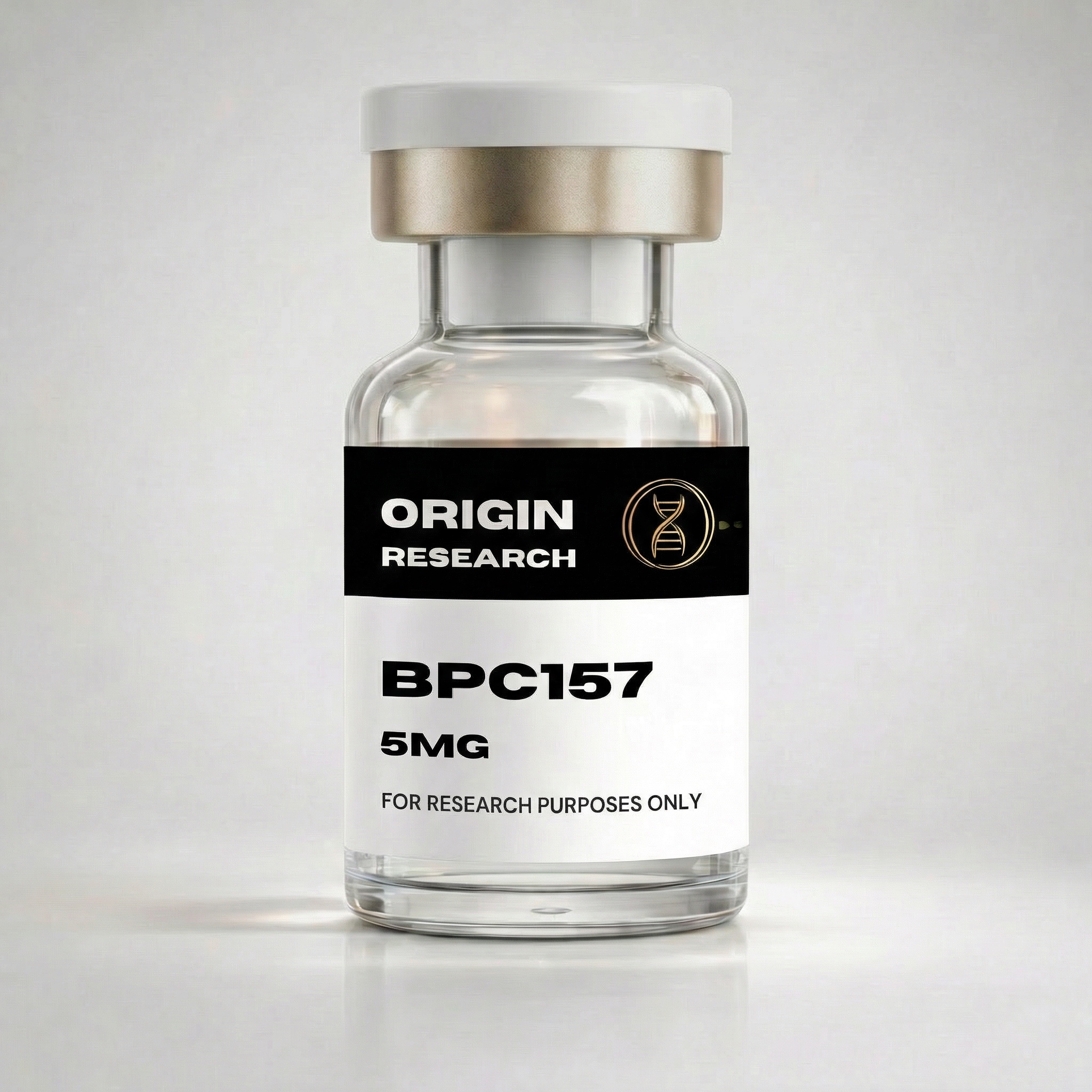
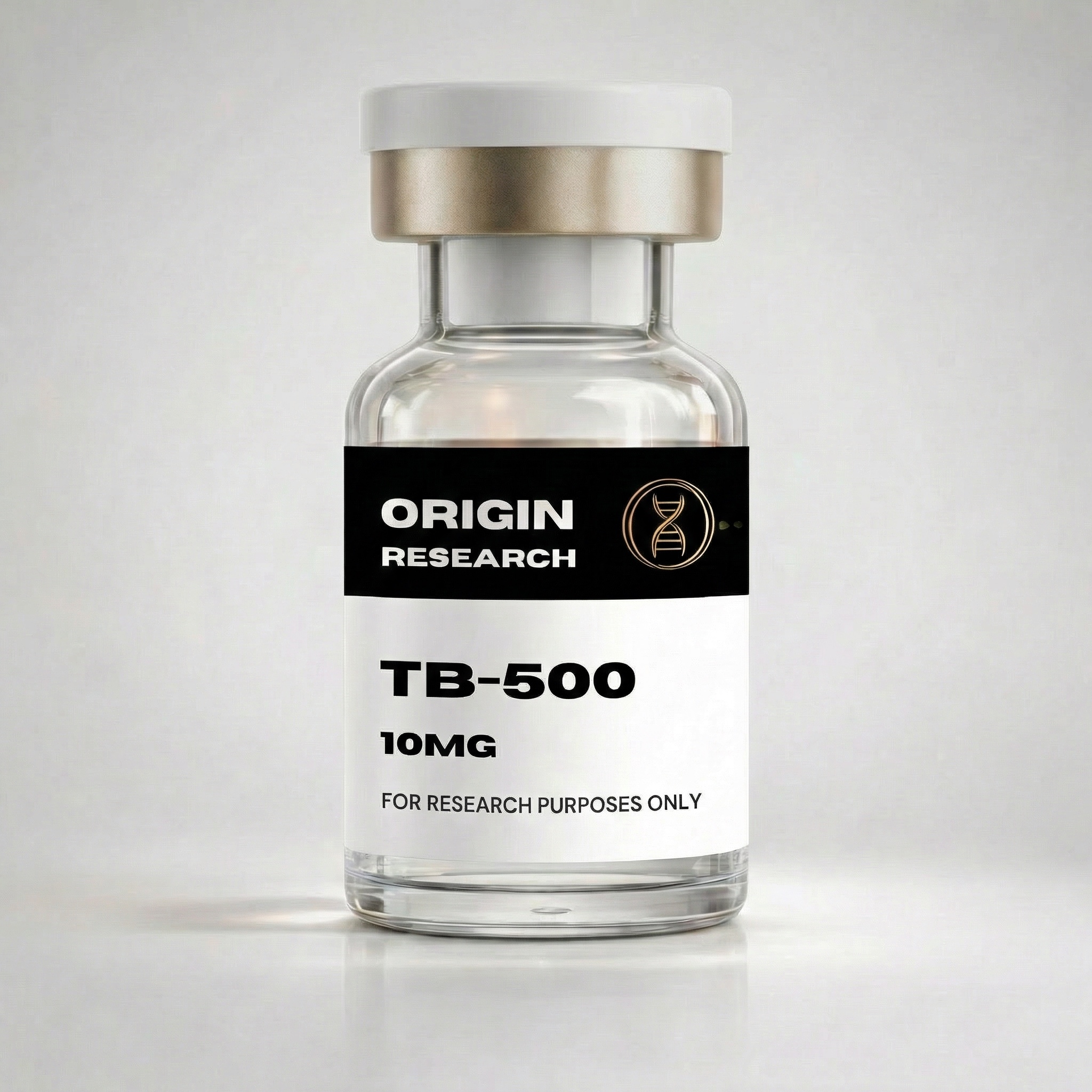
BPC-157 and TB-500 are two of the most frequently referenced peptides in tissue-repair literature, and they appear together in many preclinical comparison protocols because they target overlapping biological outcomes through largely non-overlapping molecular pathways. BPC-157 is a synthetic pentadecapeptide derived from a protective sequence identified in human gastric juice, while TB-500 is a synthetic acetylated fragment corresponding to the active 17-amino-acid region of Thymosin Beta-4, a 43-residue actin-binding protein. Researchers compare the two because both have been studied in models of tendon, ligament, muscle and gastrointestinal injury, yet their proposed mechanisms diverge sharply: BPC-157 has been investigated in nitric oxide signalling, VEGFR2 activation and growth-factor receptor crosstalk (Sikiric et al., J Physiol Pharmacol, 2018), whereas TB-500 has been studied for G-actin sequestration, endothelial cell migration and post-injury cytoskeletal remodelling (Goldstein et al., Ann N Y Acad Sci, 2012, PMID 23045969). Comparative interest also stems from molecular weight and stability differences: BPC-157 at 1419.55 Da is a short, comparatively stable sequence often investigated via subcutaneous or intraperitoneal routes, while TB-500 at 4963.4 Da is a much larger peptide investigated for its longer plasma residence in rodent models. In stacked-administration research designs, the two have been examined for additive effects on connective tissue endpoints, although head-to-head clinical data does not exist. For research procurement, laboratories worldwide regularly request both lyophilised peptides side by side from a single supplier such as originlabsresearch.com to standardise reconstitution and storage conditions across comparison arms.
Overview
Mechanism comparison
BPC-157 and TB-500 occupy distinct molecular niches despite overlapping research endpoints. BPC-157 has been investigated in pathways linked to nitric oxide synthase modulation, with rodent studies reporting interaction with the L-arginine-NO system (Sikiric et al., J Physiol Pharmacol, 2018, PMID 30341260). Additional preclinical literature has examined VEGFR2 phosphorylation, early growth response 1 transcription and FAK-paxillin signalling in fibroblast cultures (Chang et al., J Appl Physiol, 2011, PMID 21330616). The peptide has also been studied for its effects on dopaminergic and serotonergic tone in central nervous system injury models. TB-500, by contrast, has been characterised primarily through its actin-binding KLKKTET motif, which has been investigated as a G-actin sequestering element regulating cytoskeletal dynamics in migrating cells (Goldstein et al., Ann N Y Acad Sci, 2012). Endothelial cell migration assays and cardiac progenitor recruitment studies have positioned TB-500 within angiogenesis and tissue regeneration literature (Bock-Marquette et al., Nature, 2004). Researchers comparing the two often note that BPC-157 has been investigated as a receptor-pathway modulator, while TB-500 has been studied as a structural-protein interactor. The pathways do converge functionally at endpoints such as fibroblast migration, capillary density and collagen organisation, which is why comparative protocols frequently include both. In stacked-arm research, investigators have examined whether the actin-sequestration of TB-500 and the receptor-signalling of BPC-157 produce additive effects on tendon collagen alignment, though no consensus has been reached in the published literature.
Research applications side by side
Across published preclinical work, the two peptides appear in adjacent but distinguishable research domains. BPC-157 has been investigated in gastrointestinal models including ethanol-induced gastric lesion, NSAID-induced enteropathy, dextran sulfate colitis and esophagogastric anastomosis (Sikiric et al., Curr Pharm Des, 2010). It has also been studied in musculoskeletal injury contexts such as Achilles tendon transection, medial collateral ligament injury and quadriceps crush, with reported endpoints including tensile strength recovery and histological collagen organisation (Krivic et al., J Orthop Res, 2008, PMID 18404734). TB-500 research has clustered around cardiovascular and dermal endpoints, with investigators examining post-infarct cardiac function in mice (Bock-Marquette et al., Nature, 2004), corneal wound closure (Sosne et al., Exp Eye Res, 2002, PMID 12010810) and dermal full-thickness wound models. In equine veterinary literature, TB-500 has been studied in tendinopathy protocols measuring ultrasound-defined lesion area over multi-week intervals. The two peptides also diverge in central nervous system literature: BPC-157 has been investigated in spinal cord injury and traumatic brain injury rodent models, whereas TB-500 research in CNS contexts has focused on oligodendrocyte progenitor migration and post-stroke neurological scoring (Morris et al., Neuroscience, 2010, PMID 20488229). For researchers selecting between them, the literature suggests BPC-157 is more heavily cited in gut and tendon contexts, while TB-500 dominates actin-cytoskeleton and cardiac repair citations.
Pharmacokinetic and stability comparison
From a peptide chemistry standpoint, BPC-157 and TB-500 differ substantially in size, plasma residence and handling requirements. BPC-157 is a 15-residue linear peptide of molecular weight 1419.55 Da with no disulfide bridges and no N-terminal protection in its native form, although some research-grade material is supplied as an acetate salt. Its small size has been associated in preclinical pharmacokinetic work with relatively rapid plasma clearance but also with reported activity following oral administration in rodent gastric injury models (Vukojevic et al., Eur J Pharmacol, 2018, PMID null). TB-500 is approximately 3.5 times larger at 4963.4 Da, contains 17 residues in its synthetic active fragment, and is supplied with an N-terminal acetyl group that has been investigated for its contribution to peptidase resistance. The larger size and acetyl protection have been associated in published studies with extended plasma exposure relative to unprotected fragments. For laboratory handling, both peptides are supplied lyophilised and require reconstitution in bacteriostatic or sterile water. BPC-157 has been reported to retain activity across a broader pH range in stability studies, while TB-500 reconstituted solutions are typically stored refrigerated and used within shorter windows. Researchers running comparison arms should standardise reconstitution volume, storage temperature and freeze-thaw count across both peptides, since differential degradation can confound endpoint interpretation. global suppliers including originlabsresearch.com provide certificate of analysis documentation specifying HPLC purity and mass spectrometry confirmation for both.
Side by side
| BPC-157 | TB-500 | |
|---|---|---|
| Vial size | 5mg lyophilised | 10mg lyophilised |
| Molecular weight | 1419.55 Da | 4963.4 Da |
| Sequence length | 15 amino acids | 17 amino acids (active fragment) |
| Sequence | GEPPPGKPADDAGLV | Ac-SDKPDMAEIEKFDKSKLKKTET |
| Parent molecule | Gastric juice body protection compound | Thymosin Beta-4 (43 aa parent) |
| Primary mechanism studied | NO system, VEGFR2, growth-factor crosstalk | G-actin sequestration, cell migration |
| Dominant research domains | GI protection, tendon, ligament, CNS injury | Cardiac repair, dermal wounds, angiogenesis |
| Reported route flexibility | Studied via SC, IP, and oral in rodents | Primarily SC and IM in published studies |
| Typical research storage | Lyophilised at -20C, reconstituted refrigerated | Lyophilised at -20C, reconstituted refrigerated |
| COA on file | HPLC and MS, global dispatch | HPLC and MS, global dispatch |
When researchers choose which
When researchers choose between BPC-157 and TB-500, the decision usually tracks the endpoint matrix of the study rather than a notion of which peptide is stronger. Investigators designing gastrointestinal protection protocols, NSAID-enteropathy models or esophagogastric anastomosis work tend to select BPC-157 because the bulk of the comparator literature in those domains uses that sequence. Tendon and ligament transection studies measuring tensile load to failure, histological collagen alignment or fibroblast density similarly favour BPC-157, given the depth of the Sikiric and Krivic body of work. When the research question focuses on cytoskeletal remodelling, endothelial sprouting, post-infarct cardiac function or dermal wound closure, TB-500 is the more cited reference compound because of its actin-binding KLKKTET motif and the foundational Bock-Marquette cardiac data. Stacked-arm designs that examine both peptides together appear in equine tendinopathy literature and in rodent multi-tissue protocols, where investigators want to test whether a receptor-pathway peptide and a structural-protein peptide produce additive endpoints. For shorter-dosing-interval studies, BPC-157 is often chosen for its smaller molecular weight and its reported tolerance of multiple administration routes. For studies designed around extended plasma residence and weekly or twice-weekly dosing, TB-500 is more commonly referenced. Both peptides should be procured with matching COA documentation, reconstituted on the same day, and stored under identical conditions to avoid introducing handling variables into the comparison arm. laboratories worldwide can source both from originlabsresearch.com with single-shipment dispatch and lot-matched certificate of analysis paperwork.
Frequently asked questions
Which peptide has more published research?
BPC-157 has a larger volume of preclinical publications, driven primarily by the Sikiric research group's work across more than two decades. TB-500 has a deeper foundational citation base in cytoskeletal and cardiac literature, anchored by the parent Thymosin Beta-4 publications. In raw paper count BPC-157 leads, but in mechanistic depth on a single pathway TB-500 is well represented.
Can researchers stack BPC-157 and TB-500 in the same study?
Yes, stacked-arm designs appear in preclinical and equine veterinary literature. Investigators typically administer them via separate injections to preserve reconstitution chemistry, and they include single-peptide control arms to isolate any additive effect. No human clinical stacking data exists.
What other tissue-repair peptides does the catalog carry?
Originlabsresearch.com stocks BPC-157 5mg, BPC-157 oral capsules, TB-500 10mg, GHK-Cu, Thymosin Alpha-1 and KPV. Each is supplied with HPLC and mass spectrometry certificate of analysis documentation.
Does originlabsresearch.com ship both peptides worldwide?
Yes, dispatch is from from global stock with tracked shipping to supported countries worldwide. Both peptides ship lyophilised at ambient temperature and should be transferred to -20C storage on arrival for long-term holding.
Is a certificate of analysis included with each vial?
Yes, every lot of BPC-157 and TB-500 dispatched is accompanied by lot-specific HPLC purity data and mass spectrometry mass-confirmation. COA documents are available on request prior to purchase for procurement review.
Which peptide is investigated more in gastrointestinal research?
BPC-157 is the dominant reference compound in gastrointestinal models, including ethanol-lesion, NSAID-enteropathy and colitis studies. TB-500 has very limited gastrointestinal literature and is rarely chosen for gut-endpoint protocols.