Batch traceability is the documentary chain that links a specific vial of research peptide back to the synthesis lot it came from, the analytical tests run on that lot, the certificate of analysis built from those tests, and the chain of custody from synthesis house to delivered shipment. In regulated pharmaceutical manufacturing, traceability is mandatory. The research peptide market sits outside that regulatory regime, but the underlying logic still applies. A vial without a traceable batch identity is a vial whose composition is asserted but not verified. Any experimental result that depends on that vial inherits the same weakness.
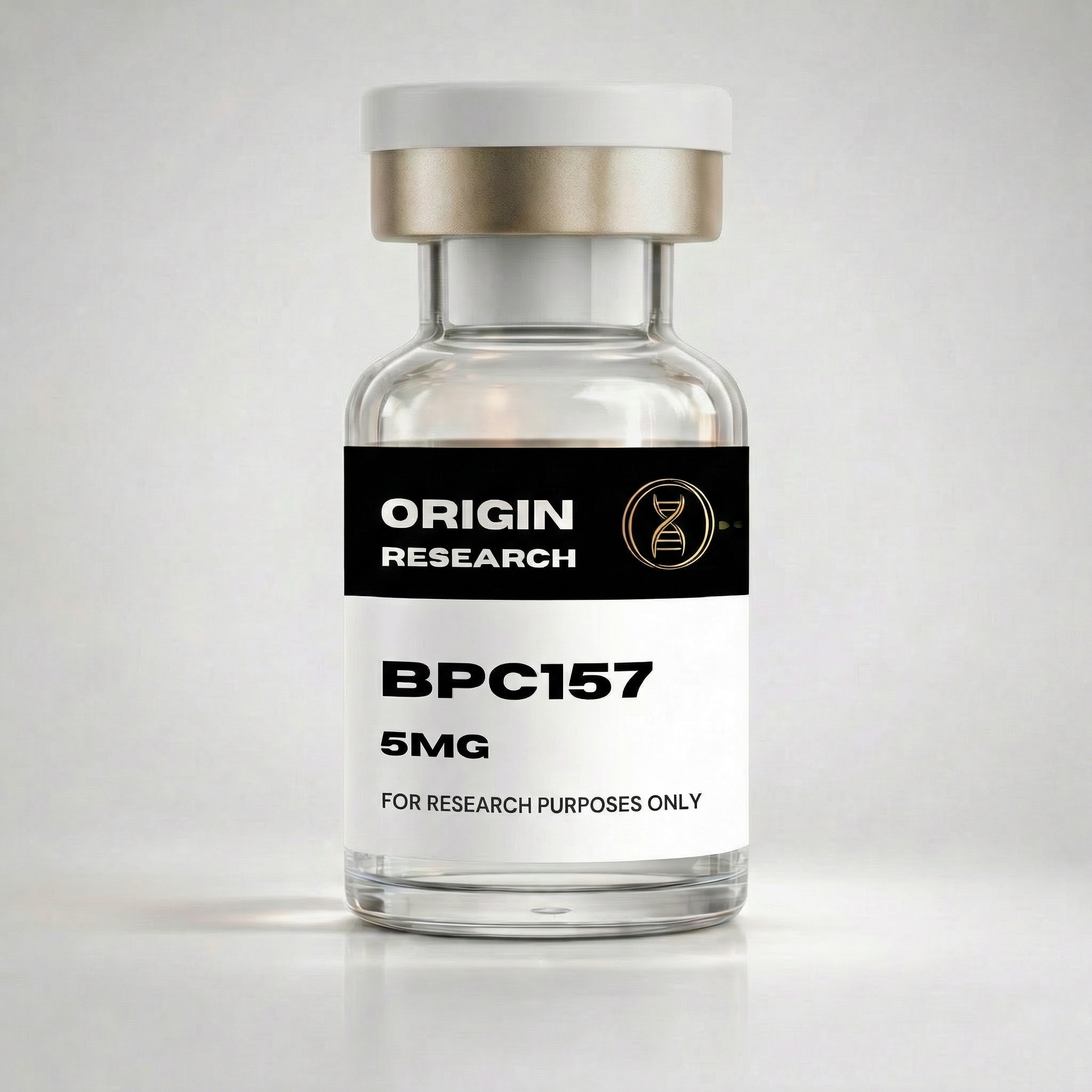
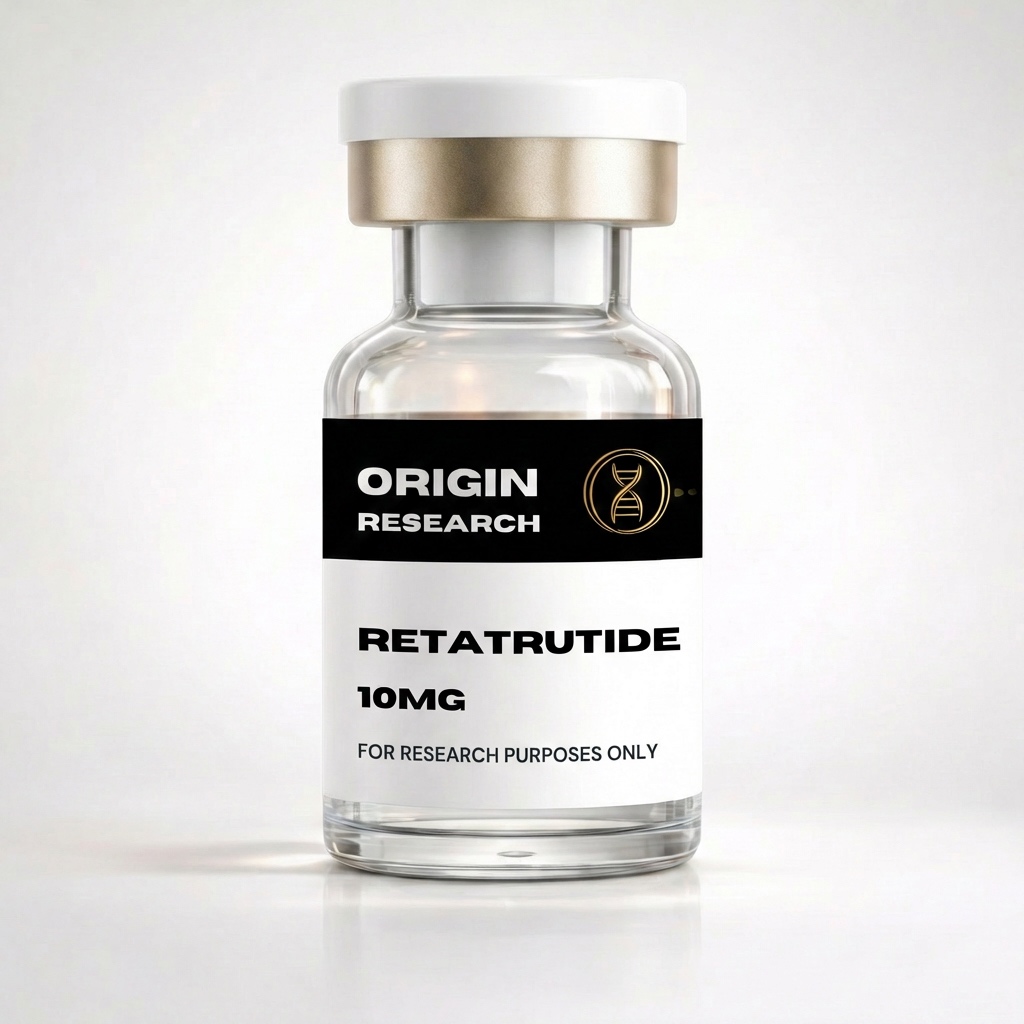
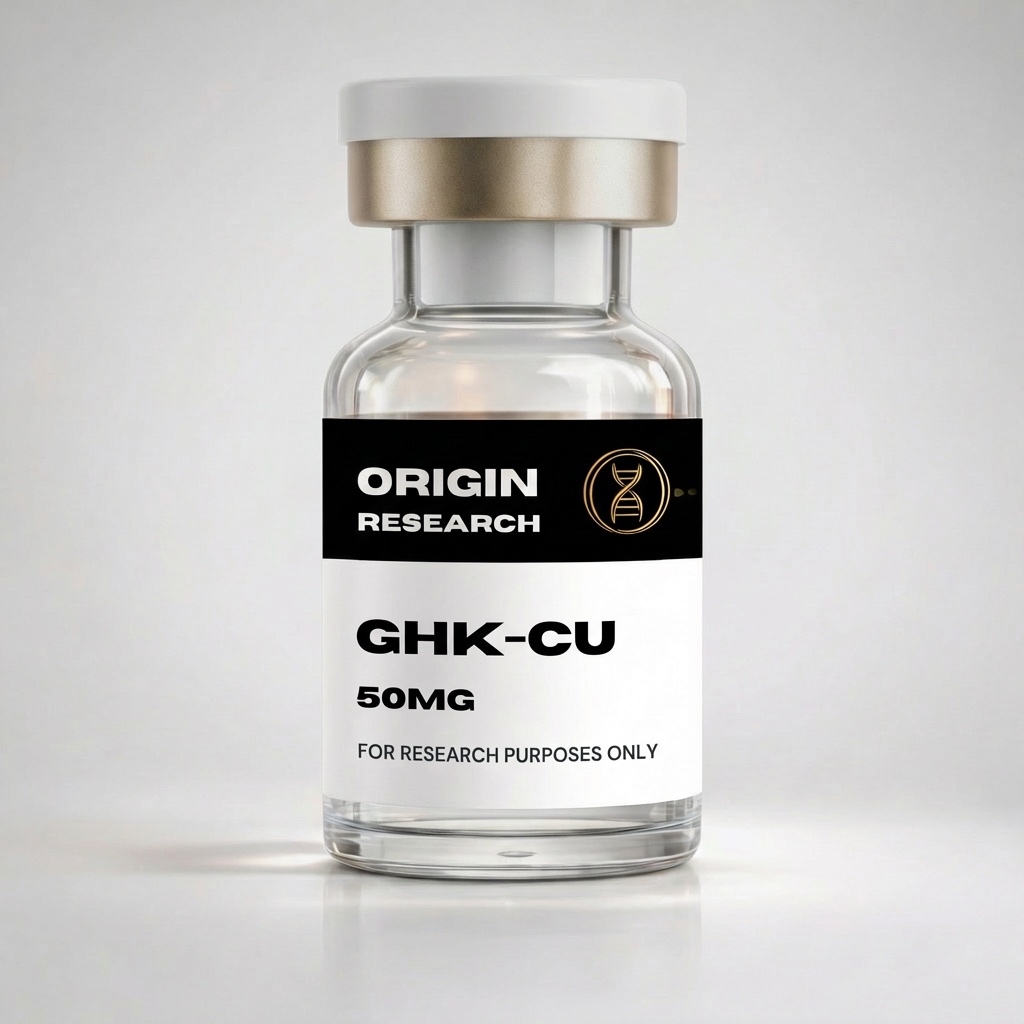
This guide covers why batch traceability matters for research buyers, what a complete traceability chain looks like in practice, and how the buyer can size up a candidate supplier's traceability posture before placing a first order. The frame is procurement and quality assurance. The audience is the researcher placing the order, the laboratory manager approving the purchase, and the institutional reviewer auditing the source documentation. The examples reference standard practice in the research-grade segment, including the documentation Origin Research ships with every order of BPC-157, Retatrutide, GHK-Cu, and the rest of the catalog.
Short version: if a vial cannot be tied back to a specific COA by lot number, the analytical claim on the label is unverified.
What a complete traceability chain looks like
A complete traceability chain has a clear start point and an unbroken set of links from there to the bench. Walking through it from the beginning:
- The synthesis house runs a defined batch of crude peptide using a documented sequence of reagents, resins, and protecting groups.
- That synthesis run is assigned a unique lot number. Every downstream step references it.
- The crude is cleaved, purified by reversed-phase HPLC, and characterised by mass spectrometry to confirm molecular weight.
- The purified material is lyophilised and filled into vials. The fill produces a vial count and a vial-batch identifier tied back to the parent synthesis lot.
- A sample from the fill is sent to the analytical lab for the certificate of analysis, which typically reports HPLC purity, mass spec confirmation, Karl Fischer water content, counterion content, and endotoxin where applicable.
- The COA carries the lot number, the test date, and the signature or authorisation of the analytical chemist.
- The vials are packaged. The packaging carries the lot number. The shipment documentation references it.
- On receipt, the researcher reads the lot number off the vial, locates the COA for that lot, and verifies that the COA matches the vial in hand.
Any break in this chain is a traceability failure. The most common break is at step 8, where the vial exists but the COA either does not exist, does not match, or cannot be retrieved by lot number.
Why suppliers vary so much on this: traceability is not free. It requires synthesis lot discipline, analytical lab capacity, and a document repository that survives staff turnover. Suppliers that have built that infrastructure publish it. Suppliers that have not, do not.
Why the vial-to-COA link is the critical hinge
The single most important point in the traceability chain is the link between the physical vial in the lab and the COA in the document file. This is the point where an abstract analytical claim becomes a verifiable statement about the specific material the researcher is about to use.
A supplier can publish beautiful COAs on their website. If the lot number on the vial does not appear on any of them, none of those COAs apply to the vial in hand.
The corrective practice at the receiving end is straightforward:
- Read the lot number off the vial label at the point of receipt.
- Confirm that a matching COA is either in the shipment or accessible through the supplier's lot-lookup system.
- Record the lot number in the receipt log alongside the date.
- Mirror the lot number in the laboratory log every time the vial is used.
Suppliers that publish COAs without lot numbers, or who issue lot numbers that cannot be cross-referenced against vial labels, have a structural defect that the buyer should treat as procurement risk. Suppliers that publish lot-keyed COAs with full analytical detail (chromatogram, mass spectrum, signed-off purity number) give the buyer a complete verification basis.
The habit of recording the lot number in the laboratory log is cheap. It takes a few seconds. It pays for itself the first time someone asks why a particular experiment came out the way it did.
The audit-trail value of lot numbers
Beyond the COA itself, the synthesis lot identity carries audit-trail value for the lifetime of the research program. The classic scenario:
An experiment that has been running smoothly for months suddenly produces an unexpected result. The first diagnostic question is whether the material is the same. If the lot number is in the log for every reconstitution event, the researcher can answer that question in five minutes by checking whether the anomaly correlates with a lot change. If the lot number is not in the log, the answer is unavailable and the team may have to redo months of work just to rule material variation in or out.
The same value shows up in multi-site collaborations. Two labs using the same nominal peptide can produce diverging results that turn out to come from lot-to-lot variability in purity, counterion content, or residual solvents. Without traceable lot numbers on both sides, the conversation never converges. With them, the conversation collapses to a COA comparison and a targeted reanalysis.
A few things lot-level records protect:
- Diagnosing unexpected results without redoing prior work
- Reproducing prior conditions deliberately
- Comparing performance across collaborating laboratories
- Defending the work to reviewers, journals, and funders
- Identifying the affected scope if a supplier issues a lot-specific advisory
The cost of recording lot numbers is small. The cost of not recording them is paid only when something goes wrong. At that moment, it is large.
How to size up a supplier's traceability posture
A short checklist the buyer can run before placing a first order with a new supplier:
- Does the supplier publish COAs at all, without requiring a sales conversation first?
- Are the published COAs keyed to specific lot numbers that match the format of the lot numbers printed on the vials?
- Does each COA include underlying analytical detail (HPLC chromatogram with retention times and integration, mass spectrum with observed and theoretical molecular weight, date of analysis)?
- Is there a mechanism to look up a COA by lot number after receipt, in case the printed COA is misplaced?
- Does the supplier disclose the synthesis house, or do they run synthesis in-house?
- What is the policy if a buyer requests an independent third-party reanalysis of a vial from a specific lot?
Suppliers that answer these in writing, clearly, are operating at a traceability standard appropriate for research use. Suppliers that deflect, hand over generic marketing COAs, or refuse to disclose lot-keyed analytical records are operating at a standard that only works for buyers whose data does not need to be defensible.
A practical test: ask for the COA for a specific catalog item by lot number. The response time and the completeness of what comes back tell you almost everything you need to know about the supplier's documentation discipline.
Origin Research publishes lot-keyed COAs for every catalog item, with chromatograms and mass spectra included, and supports lot lookup through the customer portal. The COA for the buyer's BPC-157 lot, the Retatrutide lot, or the GHK-Cu lot is retrievable by lot number after receipt, not just at the moment of shipment.
Traceability and the institutional review conversation
For research programs that operate under institutional oversight (an IACUC for animal work, an IRB for any human-subjects research, a departmental biosafety committee for in vitro work with active compounds), traceability documentation is a standard ask during review.
Reviewers want to see:
- Documented material sourcing
- Verified analytical identity and purity
- An intact chain of custody from supplier to bench
A buyer who has built a lot-keyed traceability practice can produce this on request without scrambling. A buyer who has not is forced into a retrospective documentation exercise that may simply not be supportable.
The institutional conversation also extends to:
- Grant reporting
- Publication supplementary materials
- Post-publication questions about reproducibility
In every one of those contexts, the lot number is the anchor that ties the published claim back to the physical material that produced it. Reproducibility guidelines in the life sciences are moving toward more material disclosure, not less. Labs that establish traceability practices now are aligned with where the standards are heading.
Building a traceability practice from scratch
If the lab does not currently maintain lot-keyed traceability, the path to a working practice is straightforward. Five steps:
- Receipt log. Record date of receipt, supplier, compound name, lot number, vial count, and storage location for every incoming shipment. Single durable document, updated at the moment of receipt, not retrospectively.
- Reconstitution log. Record date, peptide vial lot number, diluent type, diluent volume, resulting concentration, storage location of the reconstituted vial, and planned working life for every reconstitution event.
- Aspiration log or notebook practice. Record lot number of the peptide solution used, volume aspirated, and experimental conditions for every experimental run.
- COA repository. File the lot-keyed COA from each shipment in a document store keyed by lot number, so any later question can be answered by lot lookup rather than file search.
- Periodic review. Quarterly is usually enough. The lab manager confirms that the logs are being maintained consistently and that the COA repository is complete.
None of this requires special software. A paper logbook works. A shared spreadsheet works. An ELN works. The format matters less than the discipline of using the same format every time.
The total marginal cost of running a traceability practice is small relative to the value of the data integrity it preserves. Labs that adopt the practice typically find it pays for itself the first time an unexpected result needs to be diagnosed.
Common traceability failures and how to spot them early
Even labs that intend to maintain traceability often have weak spots. Knowing where the chain tends to break makes it easier to harden the practice.
The failure modes that show up most often:
- Receipt log gaps. Shipments arrive, get unpacked, and the lot number is never written down. By the time someone looks for it, the box has been recycled and the label is faded. Fix: log at the moment of unpacking, before the vial leaves the receiving bench.
- Lot number mismatch between vial and COA. The vial shows one format, the supplier portal shows another. Sometimes legitimate, often a paperwork error. Fix: confirm the match at the point of receipt and contact the supplier if the formats do not reconcile.
- Multiple vials, same lot, separate reconstitution events, no individual tracking. Two vials of the same BPC-157 lot can produce different working solutions if they were reconstituted on different dates with different diluent batches. The lot is shared, but the reconstituted-vial identity is not. Fix: assign an internal vial ID at reconstitution and log it alongside the lot number.
- Notebook entries that reference "the BPC-157 we are using" without a lot number. Six months later, nobody remembers which lot that was. Fix: every notebook entry that references a compound also references the lot.
- Lost COAs. PDFs end up in personal email folders that get cleared, or on a former employee's drive. Fix: a central document store that survives staff turnover.
None of these failures is dramatic in the moment. Each one becomes a problem only when someone asks a question the records cannot answer. The point of the practice is to keep that question answerable.
References
- [1] International Council for Harmonisation (2009). ICH Q10 Pharmaceutical Quality System. ICH Harmonised Tripartite Guideline.
- [2] United States Food and Drug Administration (2006). Guidance for Industry: Quality Systems Approach to Pharmaceutical CGMP Regulations. FDA Center for Drug Evaluation and Research.
- [3] Begley CG, Ellis LM (2012). Raise standards for preclinical cancer research. Nature, 483(7391), 531-533.
- [4] Freedman LP, Cockburn IM, Simcoe TS (2015). The economics of reproducibility in preclinical research. PLOS Biology, 13(6), e1002165.
Frequently asked questions
What is the most important link in the batch traceability chain?
The link between the physical vial in the laboratory and the lot-keyed certificate of analysis. This is the point at which the analytical claim becomes verifiable for the specific material in hand.
What information should appear on a complete certificate of analysis?
Lot number, test date, HPLC purity with chromatogram, mass spectrometry confirmation with observed molecular weight, water content where applicable, counterion content, and the signature or authorisation of the analytical chemist.
Why does a research buyer need to record lot numbers in the laboratory log?
Recorded lot numbers let any later experimental anomaly be cross-referenced against material-quality variation. Without lot-level records, diagnostic loops on unexpected results stay open-ended and may require redoing months of work.
What is a traceability red flag in a supplier evaluation?
COAs that are not keyed to specific lot numbers, COAs without underlying chromatographic and spectrometric detail, and the absence of any mechanism to look up a COA by lot number after receipt.
Why does institutional review care about batch traceability?
Reviewers want documented material sourcing, verified analytical identity, and an intact chain of custody. Lot-keyed traceability documentation supports this without retrospective scrambling.
How often does lot-to-lot variation produce experimentally relevant differences?
Lot-to-lot variability in purity, counterion content, and residual solvents has been documented in peptide chemistry literature as a contributor to inter-lot variation in research outcomes, especially for sensitive assays.
Does Origin Research provide lot-keyed COAs?
Yes. Each catalog item ships with a lot-keyed certificate of analysis that includes the HPLC chromatogram and mass spectrum, and lot lookup is supported through the customer portal.