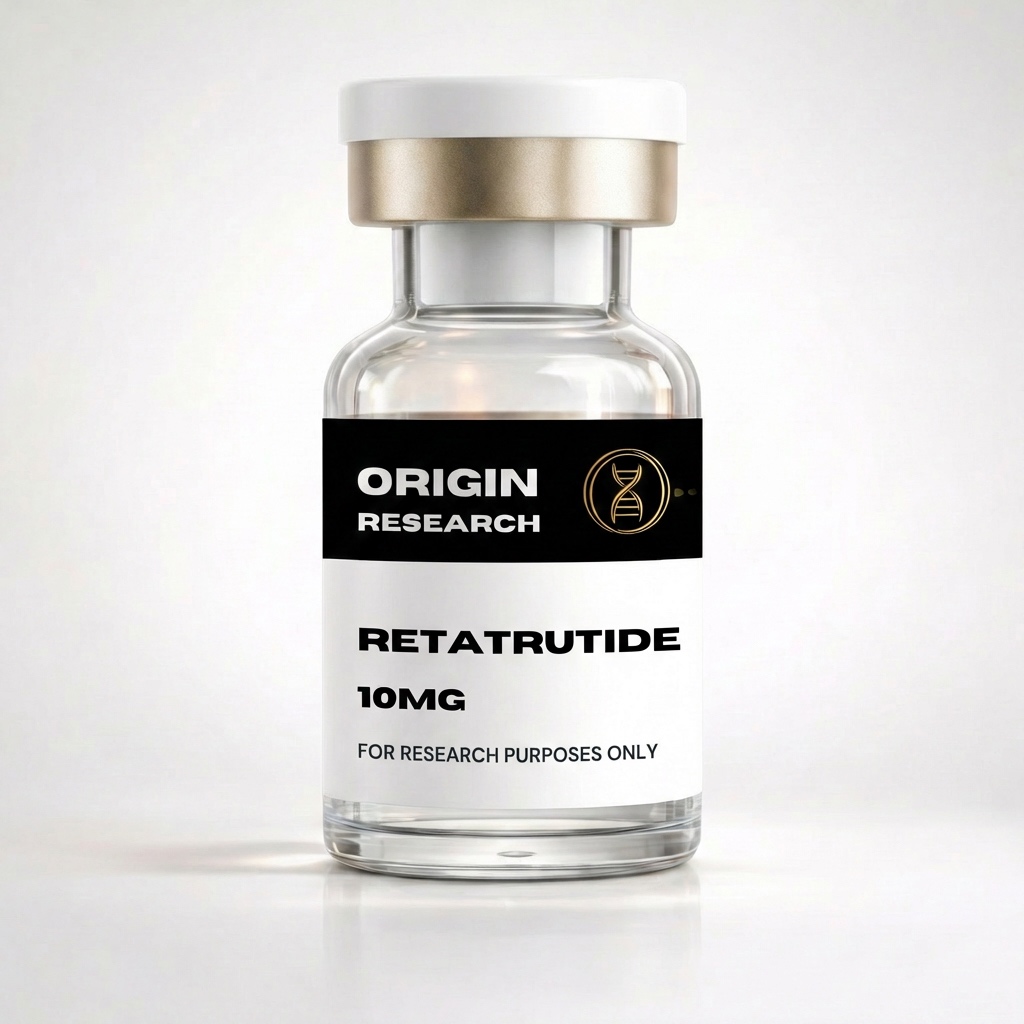
Triple agonism (hitting GLP-1, GIP, and glucagon receptors simultaneously with one molecule) has become one of the most actively investigated design strategies in metabolic disease research. The most advanced triple agonist in published clinical work is Retatrutide. Its 2023 Phase II paper in the New England Journal of Medicine reported, at the highest tested dose arm, mean body weight changes in obesity research populations that exceeded the magnitude reported in comparable Tirzepatide trial arms. Since then, the Phase III TRIUMPH programme has been reporting individual trial arm results through 2025 and 2026. The premise behind triple agonism is straightforward: three receptors mean three contributions to the metabolic effect. GLP-1 brings appetite suppression and insulin secretion. GIP adds more insulin effects and adipose tissue modulation. Glucagon (perhaps counter-intuitively) is included because glucagon receptor activation has been associated in published research with increased energy expenditure. The hypothesis is that all three together produce additive or synergistic metabolic effects. This article walks through the current state of triple agonist research, including the pharmacological rationale, the Retatrutide clinical update through mid-2026, the comparative preclinical pharmacology, the mechanistic substudies, and the open questions. All findings described are from published research. Retatrutide remains unapproved in the United States and the European Union as of the mid-2026 review window. Other triple agonists in the broader research literature including AOD-9604 for adjacent metabolic axes are supplied at originlabsresearch.com for institutional research-use-only work.
The pharmacological rationale for triple agonism
Each of the three receptors does something distinct:
- GLP-1 receptor activation: stimulates glucose-dependent insulin secretion, suppresses glucagon secretion, slows gastric emptying, suppresses appetite via central pathways.
- GIP receptor activation: stimulates insulin secretion, affects adipose tissue function, contributes central appetite-related signalling. GIP's precise role in obesity research remains under active investigation.
- Glucagon receptor activation: increases hepatic glucose output, increases energy expenditure, alters hepatic lipid handling.
The rationale for combining all three is to leverage:
- Appetite suppression from GLP-1 and GIP.
- Insulin-secretion modulation from GLP-1 and GIP.
- Energy expenditure contribution from glucagon.
The published preclinical pharmacology for Retatrutide describes this conceptual framework. Rodent and non-human primate model data characterise the balanced agonism profile and the combined metabolic effects across measured endpoints.
Reviewers note that the additivity hypothesis is partially supported by published comparative data, but several mechanistic questions remain open, including the precise contribution of each receptor arm to specific clinical endpoints.
Retatrutide clinical research update through mid-2026
Retatrutide is the most advanced triple agonist in published clinical research.
The trial record so far:
- 2023 Phase II in obesity research populations (NEJM): at the highest tested dose arm, mean body weight changes exceeded the magnitude reported in comparable Tirzepatide trial arms.
- 2024 Phase II in MASH research populations (Nature Medicine): changes in hepatic fat fraction and metabolic biomarker panels in treated populations.
- Phase III TRIUMPH programme: ongoing, with individual trial arm results reported through 2025 and 2026 in major endocrinology journals.
What the published trial arm results have reported:
- Substantial body weight reductions in obesity research populations across the tested dose range.
- Changes in measured glycaemic control endpoints in type 2 diabetes research populations.
- Trial extension and longer-term follow-up data for some earlier cohorts, with the published evidence base now extending to multi-year follow-up in defined research populations.
- An adverse event profile broadly consistent with the incretin agonist class: dominated by gastrointestinal effects during dose titration, lower frequency at maintenance dose.
Mid-2026 added additional trial arm results, additional metabolic biomarker analyses, and additional mechanistic substudy publications. Retatrutide remains unapproved as of the mid-2026 review window.
Comparative preclinical pharmacology
What the in vitro receptor pharmacology shows:
- TK0 demonstrates balanced agonism across the GLP-1, GIP, and glucagon receptors at the tested concentration range. Downstream cAMP signalling and beta-arrestin recruitment profiles are characterised in standard assay systems.
- Other triple agonist research compounds in earlier development have been characterised for receptor binding affinities, signalling biases, and downstream metabolic effects in animal model systems.
What the comparative animal model work has explored:
- The effect of varying the relative agonist potency at each receptor arm on metabolic endpoints in rodent obesity models.
- The general finding: balanced agonism profiles produce robust effects on body weight and metabolic biomarkers, while imbalanced profiles produce more variable results.
- The contribution of the glucagon receptor arm specifically, dissected using glucagon receptor antagonist co-administration and tissue-specific knockout models.
Design considerations from the medicinal chemistry literature:
- Requirement for sustained pharmacokinetic exposure.
- Avoidance of receptor desensitisation through specific signalling profiles.
- Management of the dose titration period to mitigate gastrointestinal adverse events.
The published data is generally interpreted as consistent with a substantive glucagon contribution to the metabolic effects observed in obesity model endpoints, supporting the pharmacological rationale for triple agonism.
Mechanistic substudies and biomarker research
Substudies published alongside the main trial reports have added detail to the published mechanism picture.
Substudy methods that showed up in the literature:
- Body composition analyses using DXA and MRI methods.
- Hepatic fat fraction quantification using MRI proton density fat fraction techniques.
- Energy expenditure measurements in metabolic chamber substudies.
- Circulating biomarker panels covering lipid metabolism, inflammation, and hepatic function.
What the substudies found:
- Preferential loss of fat mass relative to lean mass in body composition substudies.
- Reductions in hepatic fat fraction that exceed the magnitudes reported in single and dual agonist comparator trials.
- Changes in circulating lipid biomarkers consistent with altered hepatic lipid handling.
- Measurable increases in basal energy expenditure during Retatrutide administration, consistent with the glucagon contribution hypothesis.
2025 and 2026 biomarker research also explored predictors of response, including baseline metabolic phenotype, body composition, and circulating biomarker patterns. The goal: identify subpopulations within research trial samples who show the largest endpoint changes.
For researchers interested in adjacent metabolic peptides, AOD-9604 is a fragment-derived peptide investigated separately in lipid metabolism research models and is supplied alongside the incretin-class research compounds.
The mechanistic and biomarker research base for triple agonists is expanding rapidly and is expected to continue producing notable publications through 2027.
Open questions across the triple agonist field
Five questions keep recurring in 2025 to 2026 review articles:
- Optimal receptor balance. The Retatrutide profile is one design choice. Different balances may favour different endpoint sets, and the optimal balance for hepatic fat reduction, cardiovascular outcomes, or insulin sensitivity improvement may not all align on a single profile.
- Long-term safety of sustained glucagon receptor activation. The energy expenditure and hepatic glucose output effects are central to the triple agonist hypothesis. Long-term metabolic and hepatic safety implications in research populations are still being characterised in published trial extensions.
- Comparator base. Most published triple agonist comparisons reference single and dual agonist trials run in different populations and time periods. Head-to-head direct comparison trials remain relatively rare.
- Durability after discontinuation. Trial extension data has begun to address weight maintenance dynamics after discontinuation, but the longer-term picture of metabolic effect persistence remains a research question.
- Biomarker-defined response heterogeneity. Identifying research populations with particularly large or small response magnitudes remains an active area of biomarker research and may inform future trial design.
Compounds in this class supplied at originlabsresearch.com are provided as research material for institutional research-use-only purposes only.
References
- [1] Jastreboff AM, Kaplan LM, Frias JP, Wu Q, Du Y, Gurbuz S, Coskun T, et al. (2023). Triple-hormone-receptor agonist retatrutide for obesity: a Phase 2 trial. New England Journal of Medicine. PMID 37366315
- [2] Coskun T, Urva S, Roell WC, Qu H, Loghin C, Moyers JS, O'Farrell LS, et al. (2022). LY3437943, a novel triple glucagon, GIP, and GLP-1 receptor agonist for glycemic control and weight loss: from discovery to clinical proof of concept. Cell Metabolism. PMID 35921816
- [3] Sanyal AJ, Kaplan LM, Frias JP, Brouwers B, Wu Q, Thomas MK, Harris C, et al. (2024). Triple hormone receptor agonist retatrutide for metabolic dysfunction-associated steatotic liver disease: a randomized phase 2a trial. Nature Medicine.
- [4] Finan B, Yang B, Ottaway N, Smiley DL, Ma T, Clemmensen C, Chabenne J, et al. (2015). A rationally designed monomeric peptide triagonist corrects obesity and diabetes in rodents. Nature Medicine. PMID 25485909
- [5] Day JW, Ottaway N, Patterson JT, Gelfanov V, Smiley D, Gidda J, Findeisen H, et al. (2009). A new glucagon and GLP-1 co-agonist eliminates obesity in rodents. Nature Chemical Biology. PMID 19767730
Frequently asked questions
What receptors does Retatrutide target?
Retatrutide is a triple agonist at the GLP-1, GIP, and glucagon receptors. The published preclinical pharmacology describes balanced agonism across all three receptors at the tested concentration range.
Why is the glucagon receptor included in triple agonist designs?
Glucagon receptor activation has been associated in published research with increased hepatic glucose output, increased energy expenditure, and altered hepatic lipid handling. The energy expenditure contribution is the most discussed rationale for including the glucagon arm in triple agonist designs aimed at obesity research endpoints.
What did the 2023 Retatrutide Phase II publication report?
Published in the New England Journal of Medicine, the paper reported that at the highest tested dose arm, mean body weight changes in obesity research populations exceeded the magnitude reported in comparable Tirzepatide trial arms. Reviewers interpret this as consistent with the additional glucagon receptor activity.
Is Retatrutide approved for any therapeutic indication?
No. Retatrutide is not approved by the FDA or the EMA for any therapeutic indication as of the mid-2026 review window. It remains a research compound in active Phase III clinical development through the TRIUMPH programme.
What is the TRIUMPH programme?
The Phase III clinical development programme for Retatrutide, with individual trial arms covering obesity, type 2 diabetes, MASH, and other research populations. Individual trial arm results have been reported through 2025 and 2026.
What are the most-cited open research questions for the triple agonist field?
Optimal balance of receptor activity across endpoint sets, long-term safety of sustained glucagon receptor activation, the comparator base for head-to-head trials, durability of effect after discontinuation, and biomarker-defined response heterogeneity.