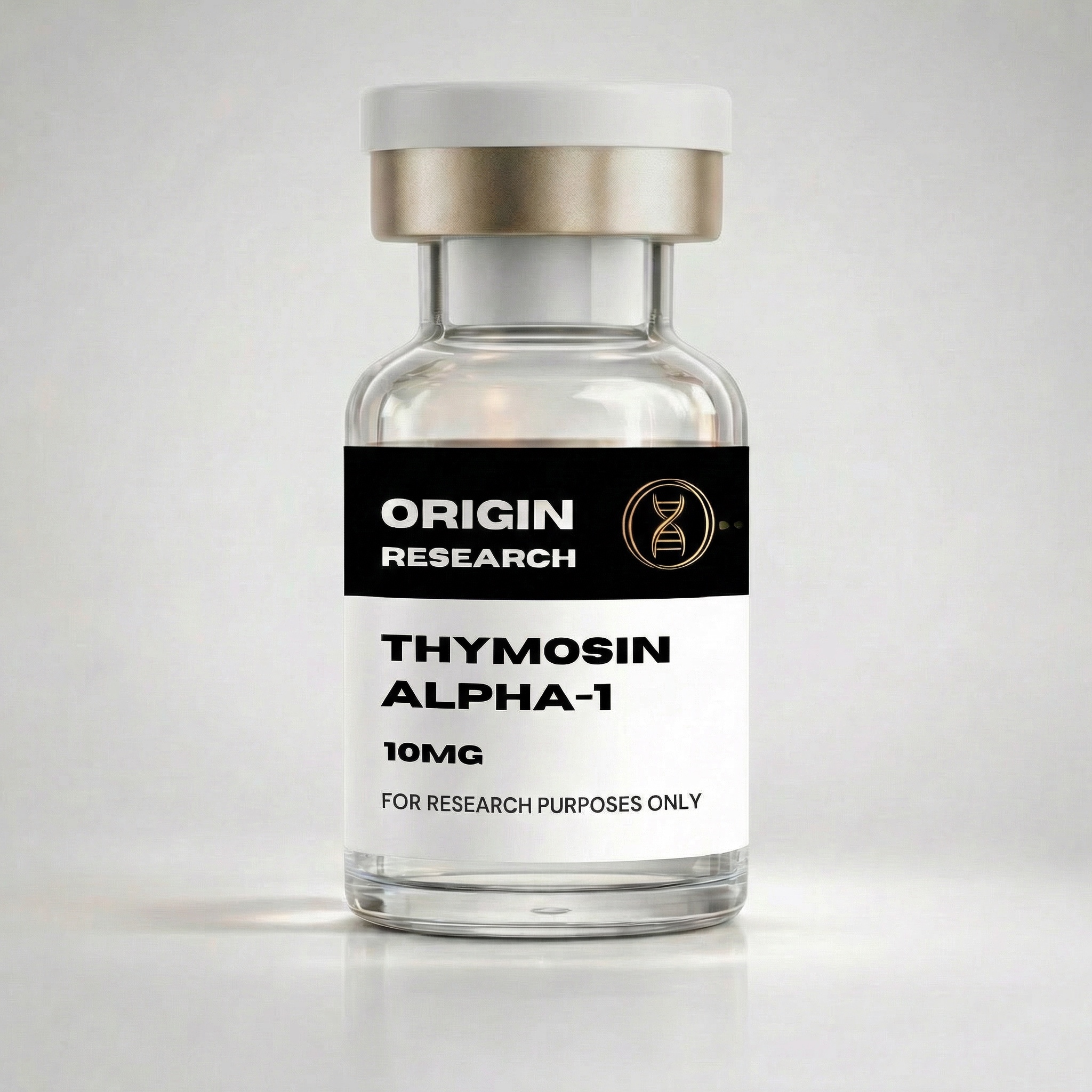
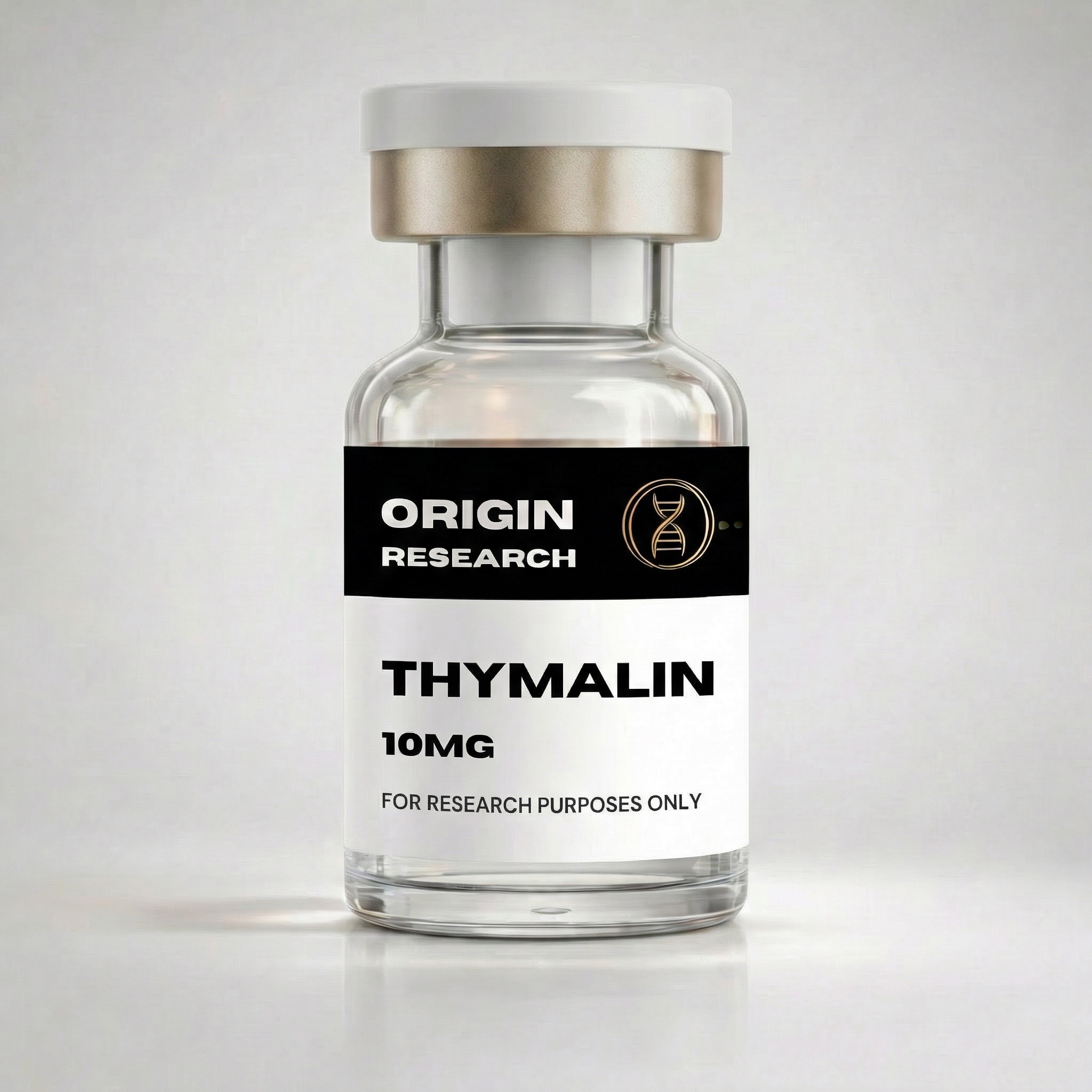
Thymic peptides remain one of the more interesting corners of preclinical immunology research. The compound family is small but the mechanism surface is wide: toll-like receptor (TLR) signaling, T-cell maturation pathways, dendritic cell function, and cytokine network modulation all show up in the recent literature.
This article summarizes what new preclinical work has added on Thymosin Alpha-1 (TA-1, Thymalfasin) and Thymalin, along with related thymic peptides like Thymopentin. The focus is research design and methodology. Everything stays within preclinical and laboratory contexts.
Quick orientation. TA-1 is a 28-amino-acid synthetic peptide with well-characterized TLR9 and TLR2 engagement. Thymalin is a polypeptide preparation studied mostly in Russian and Eastern European immunology labs, with a different research lineage and different methodological context.
TA-1 Receptor Pharmacology: TLR Signaling at the Center
Thymosin Alpha-1 research has converged on toll-like receptor signaling as its main immunomodulatory mechanism in preclinical models. The key receptor engagements:
- TLR9 in plasmacytoid dendritic cell preparations
- TLR2 in myeloid dendritic cell research models
Downstream, both engagements feed into MyD88-dependent signaling cascades. That leads to NF-kB nuclear translocation and cytokine transcription.
What the structural work has clarified
Recent mechanistic studies have probed how the N-terminal acetylation and specific amino acid residues of TA-1 contribute to receptor binding affinity in cell-based assays. The literature is starting to build out an SAR picture for TA-1 binding at TLRs.
Cytokine readouts that matter
TA-1 treated immune cell cultures consistently show:
- Increased IL-12 production in dendritic cells
- Increased IFN-alpha production in plasmacytoid dendritic cells
- Increased IFN-gamma production in NK cells and T cells
- A Th1-polarizing influence overall in preclinical immunology models
Regulatory T-cell modulation
Additional research has examined TA-1 effects on regulatory T-cell (Treg) populations. Some studies in animal model preparations document modulation of Foxp3+ Treg frequency and function. TA-1 has also been investigated in autoimmune disease research models, with literature exploring potential rebalancing of Th17/Treg ratios in preclinical experimental autoimmune encephalomyelitis (EAE) and related models.
Study design takeaway. For TA-1 research, account for cell-type-specific TLR expression context, time-course for cytokine readouts, and parallel measurement of multiple cytokines. Single-cytokine reads miss the breadth of TA-1-driven immune polarization.
T-Cell Maturation and Thymalin Studies
Thymalin is a polypeptide preparation derived from calf thymus. The research literature on it comes predominantly from Russian and Eastern European immunology laboratories. Studies have examined its influence on T-cell maturation pathways, thymic stromal cell function, and lymphocyte phenotype in preclinical models.
What Thymalin research has measured
- CD4+ and CD8+ T-cell differentiation in thymic explant cultures
- Lymphocyte phenotype shifts in aged rodent model preparations
- Thymopoiesis-related gene expression in stromal cell preparations
Thymic involution biology
Recent research has examined thymic involution in animal models. The thymic epithelial cells (TECs) play the central role in T-cell repertoire selection, and the molecular signals that maintain TEC function across the lifespan are an active investigative target. Thymalin has been used as a research tool in aging immunology models, looking at age-related T-cell repertoire contraction and TEC-specific transcription factors like Foxn1.
Thymopentin parallel work
Thymopentin (TP-5) is a synthetic pentapeptide corresponding to residues 32-36 of thymopoietin. Research has characterized its activity in T-cell maturation assays and in receptor-binding studies probing the molecular target of thymopoietin-derived fragments.
Multi-readout design. Thymic peptide studies in immunology benefit from integrating thymic cellularity, TCR repertoire diversity measurements, peripheral T-cell phenotype profiling, and functional immune readouts in age-controlled animal model preparations.
Cytokine Network Modulation and Innate Immune Research
Thymic peptide research has consistently characterized effects on cytokine network dynamics in preclinical immune cell preparations.
Type I interferon and antiviral signaling
TA-1 has been investigated for its influence on type I interferon (IFN-alpha and IFN-beta) production in plasmacytoid dendritic cell research. Downstream effects include:
- STAT1 phosphorylation in target cells
- Interferon-stimulated gene (ISG) expression
- Antiviral signaling cascade activation
NK cell and innate lymphoid cell readouts
Recent research has characterized TA-1 effects on innate lymphoid cell (ILC) populations and NK cell cytotoxicity in preclinical models. The functional measurements include:
- Granzyme B expression
- Perforin expression
- Cytotoxicity assays against target cell lines
The IL-12 / IFN-gamma axis
This axis has been a particular focus. TA-1 research shows dendritic cell production of IL-12p70 and downstream NK and T-cell IFN-gamma production in research models.
Context-dependent IL-10 modulation
Anti-inflammatory cytokines including IL-10 have also been characterized. Some preclinical research suggests context-dependent IL-10 modulation depending on the immune polarization state of treated cells. The behavior is not unidirectional.
Trained immunity as a new thread
Recent investigative work has examined whether TA-1 exposure produces durable epigenetic and metabolic changes in innate immune cell populations. This trained immunity question is active and not yet resolved in the preclinical literature.
Comprehensive characterization. Multiplex cytokine profiling combined with intracellular cytokine staining and functional assays gives the most complete picture of immune polarization effects.
Methodological Considerations: Peptide Stability and Receptor Context
Thymic peptide research presents some methodological considerations that investigators have to account for.
Peptide stability in solution
Thymic peptides can show:
- Oxidation at methionine residues over time in solution
- Aggregation under suboptimal storage conditions
- Variable purity profiles across commercial preparations
Defined buffer conditions for reconstitution are critical. Investigators should also verify peptide integrity by mass spectrometry or HPLC before use in studies expected to publish.
Receptor expression context (species differences matter)
TLR9 expression is largely restricted to plasmacytoid dendritic cells and certain B-cell populations in humans. The same receptor shows broader distribution in some rodent models. Any translational inference has to account for these species differences.
Bell-shaped dose-response curves
Dose-response characterization in cell-based assays often shows bell-shaped curves for thymic peptides. High concentrations can produce diminished or qualitatively different responses compared to lower exposures. Studies should be designed to capture the full dose-response architecture, not just one or two concentrations.
Time-course considerations
Some thymic peptide effects manifest as rapid signaling events. Others require sustained exposure to produce phenotypic changes in immune cell populations. Investigators should design studies that capture the temporal dynamics relevant to the specific research question.
Animal model design
Route of administration, dosing schedule, and integration with appropriate immune challenge or aging contexts are critical design elements that influence interpretability of results in preclinical immunology research.
Comparator selection in thymic peptide studies
Research using Thymosin Alpha-1 and Thymalin as separate compounds often does not include direct head-to-head comparisons. The two compounds come from different research lineages with different methodological traditions, and the published data on each does not always use overlapping endpoints. Investigators designing modern preclinical studies that want to compare thymic peptide effects directly need to define common endpoints in advance and apply identical readouts across compound arms. Without that discipline, cross-compound conclusions are hard to draw from existing literature.
Endotoxin contamination as a hidden variable
Thymic peptide preparations have to be assessed for endotoxin contamination because residual lipopolysaccharide (LPS) can independently activate TLR4 in immune cell preparations and confound any TLR9 or TLR2 readout. The LAL (limulus amebocyte lysate) assay is standard for endotoxin quantification, and any preparation used in immune cell research should be characterized for endotoxin content before functional assays are run. This is a common methodological miss in older thymic peptide papers that newer research designs explicitly address.
Storage and lot-to-lot variation
Storage at recommended temperatures and avoidance of repeated freeze-thaw cycles preserve thymic peptide activity. Investigators running multi-month preclinical studies should plan single-aliquot use rather than repeated thawing from a master stock. Lot-to-lot variation in synthetic peptide preparations also exists, and rigorous studies will note the lot number in methods sections so that any subsequent reproducibility work can verify whether the same preparation was used.
Bottom line. Compound stability verification plus species-aware receptor context plus full dose-response capture plus appropriate time-course design plus endotoxin testing. That checklist covers most of the reproducibility issues that show up in thymic peptide research.
References
- [1] (). . . PMID 14982877
- [2] (). . . PMID 12860172
- [3] (). . . PMID 27913916
- [4] (). . . PMID 19392576
- [5] (). . .
Frequently asked questions
What is the primary receptor target for TA-1 in immunology research?
TA-1 has been characterized as engaging TLR9 in plasmacytoid dendritic cell preparations and TLR2 in myeloid dendritic cell research models. Downstream MyD88-dependent signaling leads to NF-kB activation and cytokine production in preclinical immune cell research.
How does Thymalin differ from TA-1 in research applications?
Thymalin is a polypeptide preparation derived from thymic tissue and studied predominantly in Eastern European research literature. TA-1 is a defined 28-amino-acid synthetic peptide with characterized TLR9/TLR2 engagement. The two compounds have distinct compositions and research contexts.
What cytokine readouts are standard in TA-1 research?
Standard readouts include IL-12 from dendritic cell preparations, IFN-alpha from plasmacytoid dendritic cells, IFN-gamma from NK cells and T cells, and TNF-alpha from myeloid cells. Multiplex cytokine profiling combined with intracellular staining provides comprehensive characterization.
How is thymic involution studied in aging immunology research?
Thymic involution research uses aged rodent model preparations and measures thymic cellularity, TEC subset frequencies, Foxn1 expression, peripheral T-cell repertoire diversity through TCR sequencing, and recent thymic emigrant markers. Thymic peptides including Thymalin have been investigated as research tools in this context.
What does trained immunity research contribute to thymic peptide investigation?
Trained immunity research examines durable epigenetic and metabolic changes in innate immune cells following initial exposures. Recent work has begun characterizing whether thymic peptides including TA-1 produce trained immunity phenotypes in monocyte and NK cell research models.
Why is peptide stability a methodological consideration in thymic peptide research?
Thymic peptides can show oxidation at methionine residues and aggregation in solution. Defined reconstitution buffers, controlled storage conditions, and verification of peptide integrity by mass spectrometry or HPLC before use are recommended methodological controls in preclinical research.