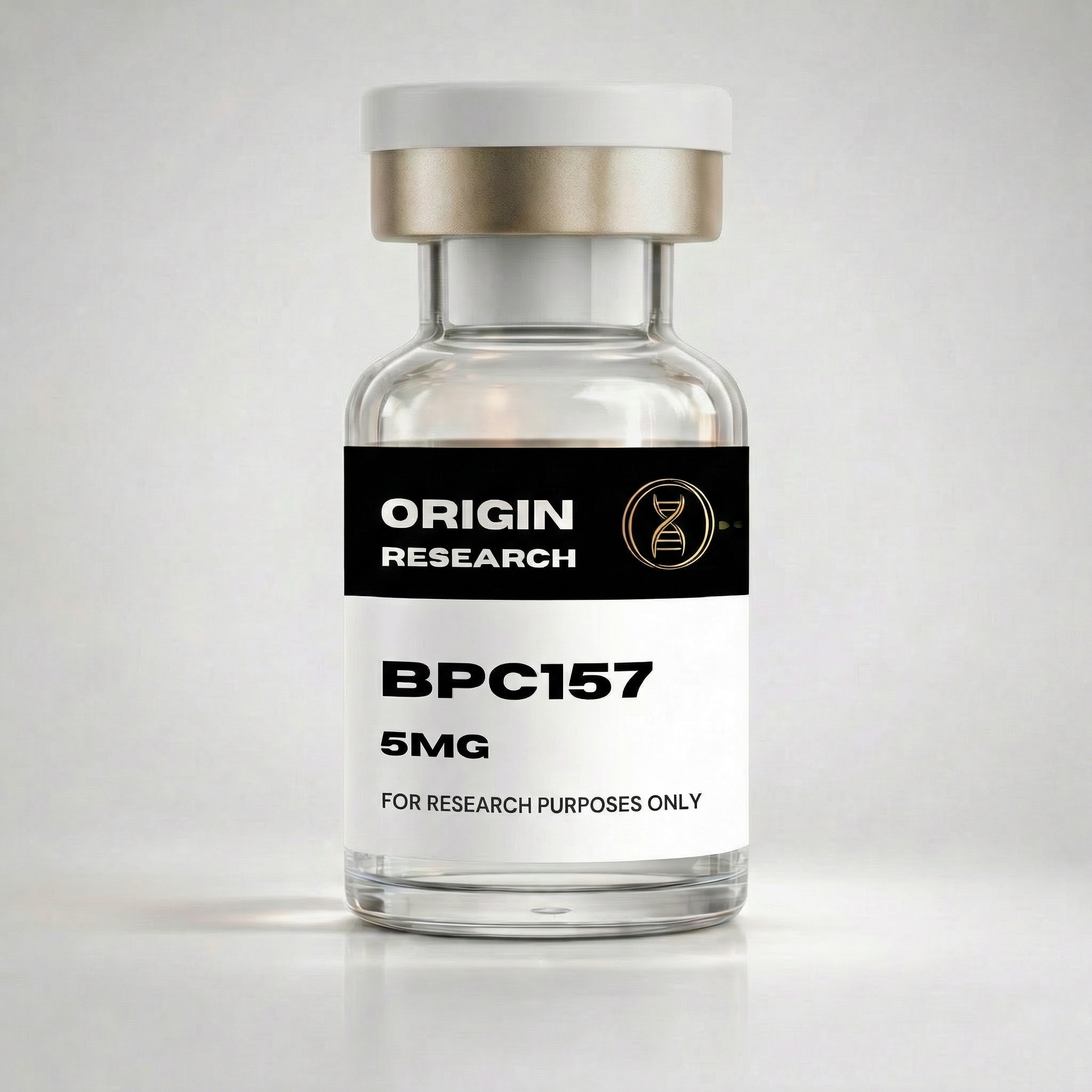
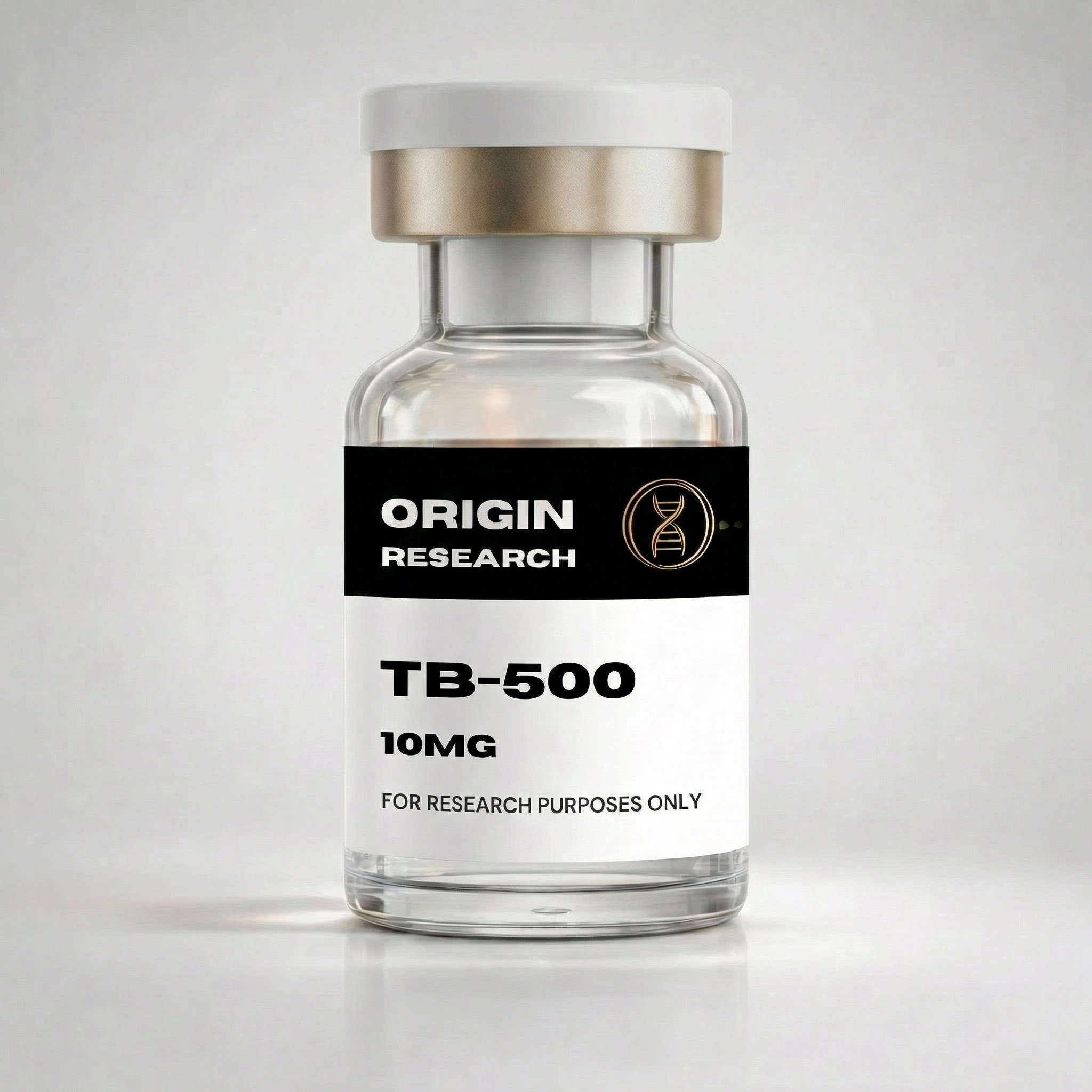
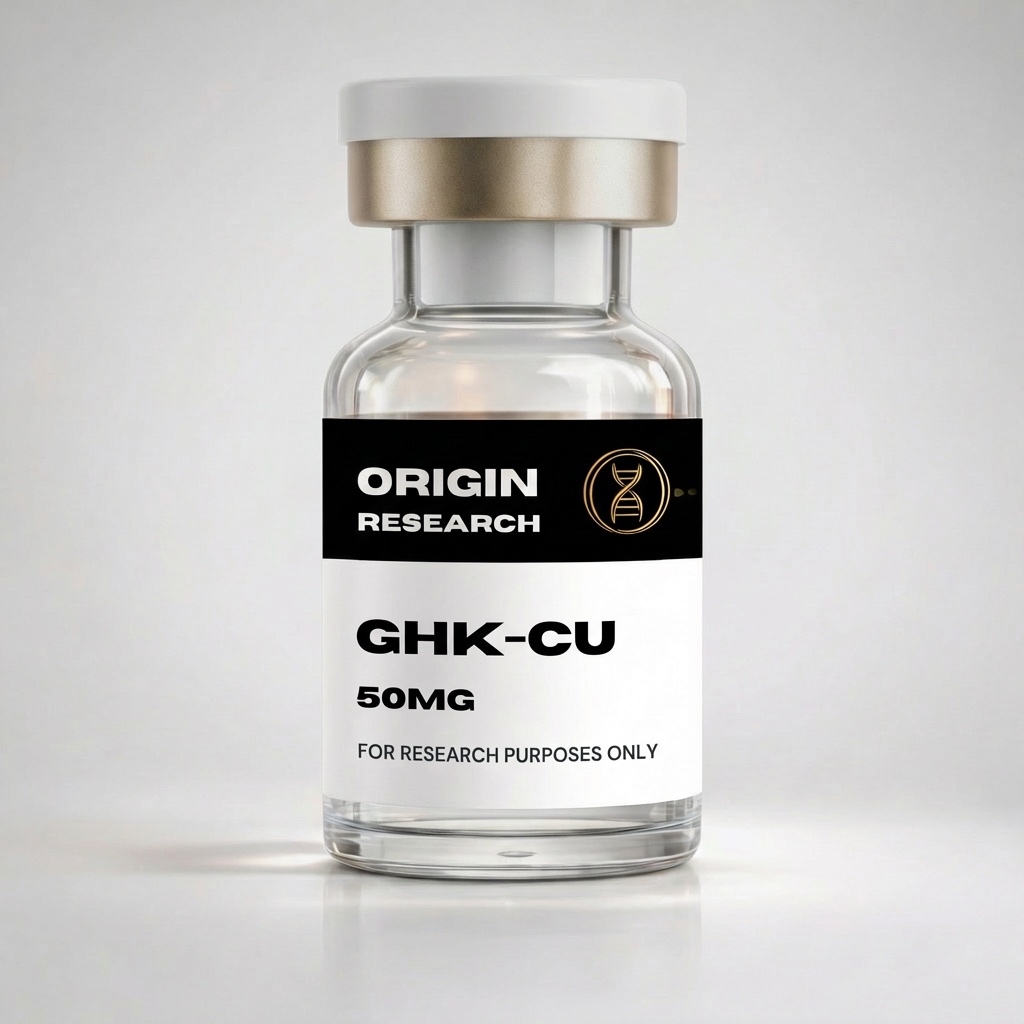
Temperature is one of the most important variables in keeping a research peptide intact between the moment of receipt and the moment of use. The chemistry of peptide degradation is temperature-dependent. The main pathways (deamidation, oxidation, hydrolysis, aggregation) all run faster as temperature goes up. The pharmaceutical stability literature has mapped these pathways in detail for therapeutic proteins and peptides, and the same underlying chemistry applies to research-grade material at the bench.
For a research buyer, that translates into three practical decisions:
- How to receive and store the lyophilised vial after delivery.
- How to store the reconstituted solution between aspirations.
- How to handle the material during interruptions (transport between sites, equipment failure, temporary power loss).
This guide covers the temperature regimes commonly referenced in peptide handling literature, the degradation pathways tied to each, and the practical implications for laboratory storage. The frame is research-material stewardship under a Research Use Only model. The examples reference compounds typical of the [Origin Research](https://originlabsresearch.com) catalog, including BPC-157, TB-500, and GHK-Cu. Nothing here is dosing guidance for any species. The audience is the lab worker managing material integrity.
The basic asymmetry: dry peptide is stable. Wet peptide is reactive. Cold peptide degrades slowly. Warm peptide degrades fast. Every storage decision is some variation of those two facts.
Lyophilised peptide: cold, dry, and patient
Lyophilised peptide is significantly more stable than the same peptide in solution. The reason is simple: no water. Hydrolytic and deamidation reactions both depend on aqueous chemistry, and removing the water suppresses them.
The practical numbers most commonly referenced in the stability literature:
- Minus 20 degrees Celsius: standard long-term storage. Most lyophilised research peptides retain analytical purity for 24 months or longer when sealed and undisturbed.
- 2 to 8 degrees Celsius (refrigeration): acceptable for shorter holds, typically 30 to 90 days for most sequences. Some peptides with documented stability profiles go longer.
- Room temperature: generally discouraged for extended periods, but most peptides tolerate ambient transit conditions for the duration of a typical shipping cycle (up to a week).
The corrective practice for incoming shipments:
- Receive the shipment promptly and log it.
- Move lyophilised vials to minus 20 degrees Celsius for long-term holding.
- Pull individual vials to refrigeration only when reconstitution is planned within the following few weeks.
Suppliers should document the maximum recommended storage temperature and duration for each catalog item on the COA or accompanying technical sheet. Origin Research includes this on the lot-keyed COA so the buyer can verify the storage assumption before any vial is committed to a specific protocol.
Reconstituted peptide and the 28-day refrigeration window
Once reconstituted into bacteriostatic water, the stability profile changes. The peptide is now in aqueous solution. Hydrolytic and deamidation reactions can run at temperature-dependent rates. The benzyl alcohol preservative provides bacteriostatic protection, not chemical stabilisation of the peptide itself.
The widely referenced working life for reconstituted peptide solutions in bacteriostatic water:
- ~28 days under refrigeration at 2 to 8 degrees Celsius.
That 28-day window comes from two anchors:
- The documented bacteriostatic activity of benzyl alcohol against common contaminants introduced through multi-puncture vial use.
- The empirical observation that most research peptides retain acceptable analytical purity over this period.
The window is not universal. Some peptides with documented instability profiles have shorter refrigerated working lives (7 to 14 days in some cases). The protocol is to consult the supplier's stability data for the specific peptide and shorten the working life if the published data warrants it.
A reconstituted vial left at room temperature is not necessarily ruined. It has, however, consumed a disproportionate share of its remaining stability budget. Excursions above refrigeration temperature should be:
- Logged with start time, end time, and approximate temperature reached.
- Considered when evaluating residual quality.
- Documented in the lab log so later questions about that vial have an evidence base.
Working assumption: every hour at room temperature spends more of the stability budget than an hour in the refrigerator. Treat the budget as finite.
Freezing reconstituted peptides and the aliquoting strategy
For protocols that need a working solution to live longer than the 28-day refrigerated window, freezing the reconstituted material is a common move. It works, but it requires sequence-specific care.
Freeze-thaw cycles are documented as a source of peptide degradation and aggregation. The damage is worst for sequences sensitive to ice-crystal formation or to the concentration excursions that happen at the freezing front.
The standard mitigation is aliquoting:
- Reconstitute the vial.
- Immediately divide the solution into single-use portions.
- Freeze each aliquot at minus 20 or minus 80 degrees Celsius, depending on the documented requirement.
- Thaw each aliquot exactly once. Use it. Discard the leftover.
- Never refreeze a thawed aliquot.
The aliquot volume should match the volume needed for a single experimental run, so no aliquot is ever partially used and refrozen. Freeze-thaw cycling of the same aliquot is the failure mode this whole strategy exists to prevent.
A few notes on sequence variation:
- Not all peptides tolerate freeze-thaw equally well. Check the supplier's stability data before assuming.
- Cryoprotectants like trehalose, sucrose, or glycerol are referenced in the literature for sensitive sequences.
- Most research-grade peptides do not require formulation changes for routine aliquoting.
For TB-500 and GHK-Cu, the technical sheet should specify whether aliquot-and-freeze is appropriate and at what temperature.
Transit excursions and equipment failure
Temperature excursions during transit or in storage are a recurring operational issue and deserve a planned response. Most suppliers ship lyophilised material with appropriate cold packs and insulation, but:
- Transit times can extend beyond the cold pack's effective range.
- Customs delays introduce unplanned exposure.
- Last-mile carriers do not always cooperate with temperature requirements.
Receiving-end practice:
- Inspect incoming shipments promptly.
- Note the condition of any temperature indicators in the packaging.
- Photograph any obvious temperature deviation.
- Document the condition in the receipt log.
- Contact the supplier before reconstituting if there is any doubt.
Lyophilised peptides generally tolerate brief excursions of up to several days at ambient temperature without measurable degradation, but the answer is sequence-specific. The supplier's stability data is the source of truth.
For reconstituted solutions held in lab fridges or freezers, equipment failure is the other major excursion source. A power cut, a failing compressor, or a door left ajar can wipe out an entire inventory of BPC-157 and other working solutions overnight.
Worth considering:
- Continuous temperature monitoring with alarming on freezers and refrigerators that hold research peptide stock.
- A written excursion-response protocol that specifies: temperature reached, duration of exposure, and the decision rule for retaining or discarding affected material.
The cumulative replacement cost of a freezer full of research peptide usually exceeds the monitoring equipment cost within a single avoided incident.
A practical storage workflow
Pulling the principles into a routine the lab can execute the same way every time:
- Receipt. Log the lot number and receipt date. Transfer lyophilised vials to minus 20 degrees Celsius long-term storage.
- Near-term pull. Vials needed within a few weeks move to refrigeration at 2 to 8 degrees Celsius.
- Reconstitution. Label with date, diluent type, and final concentration. Record lot number in the lab log.
- Working storage. Reconstituted vial goes to refrigeration. Used within 28 days. Each aspiration with a fresh sterile syringe. Working life tracked against the 28-day budget.
- Long-hold case. If longer storage is needed, aliquot into single-use portions. Freeze at minus 20 or minus 80. Thaw once per use. No recycling.
- Monitoring. Temperature-sensitive equipment monitored. Excursions logged and assessed against the written response protocol.
This workflow is unremarkable. That is the point. The labs that produce reproducible results are usually the ones that execute the unremarkable workflow consistently, rather than the ones that improvise.
What temperature-driven degradation actually looks like
Understanding why temperature matters is easier when the specific chemistry is concrete. The main pathways:
- Deamidation. Conversion of asparagine and glutamine residues to aspartate and glutamate through hydrolysis of the side-chain amide. Rate goes up with temperature and with time in aqueous solution.
- Oxidation. Affects methionine, cysteine, tryptophan, and to a lesser extent tyrosine and histidine. Accelerated by elevated temperature, oxygen exposure, light, and trace metal contaminants.
- Hydrolysis of the peptide backbone. Slow at neutral pH and refrigeration. Faster at elevated temperature, especially at acidic or basic pH.
- Aggregation. Assembly of monomers into oligomeric or higher-order structures through non-covalent or covalent interactions. Driven by both thermal stress and mechanical stress during handling.
All of these produce analytical signatures on a stability-monitoring HPLC chromatogram. Typically new peaks appear next to the main peptide peak, with the new peaks representing the degraded species.
Researchers running long-duration studies on the same reconstituted material can monitor stability by submitting samples for periodic HPLC reanalysis. Origin Research supports this through a sample-back analytical service for buyers who need to verify stability under their specific storage conditions.
For most research buyers, that level of monitoring is overkill. Following the published storage and working-life guidance is enough to keep material integrity within the bounds documented in the supplier's stability data.
Light, oxygen, and the other variables temperature competes with
Temperature is the largest single variable in peptide storage, but it is not the only one. Light, oxygen exposure, and humidity all interact with temperature to drive the degradation rate, and a complete storage strategy considers them together rather than treating temperature in isolation.
A quick rundown:
- Light. Several amino acid residues, particularly tryptophan and tyrosine, are photosensitive. Extended exposure to ambient light, especially UV, can accelerate oxidation. Most research-grade vials ship in amber glass or in opaque secondary packaging that handles this for normal lab conditions. The corrective practice is to keep stored vials out of direct light during retrieval and use, and to avoid leaving reconstituted vials on a brightly lit bench for extended periods.
- Oxygen. Lyophilised vials are typically backfilled with an inert gas (often nitrogen) and sealed under vacuum, which suppresses oxidation while the seal is intact. Once the vial is punctured, oxygen exposure begins. The corrective practice is to keep the puncture count low, to use needle entries that minimise headspace exchange, and to store reconstituted vials with as little headspace as the workflow allows.
- Humidity. Lyophilised material is hygroscopic. A vial whose seal has been compromised can take up atmospheric moisture, which initiates the same hydrolytic chemistry that water-based reconstitution starts deliberately. The corrective practice is to inspect seals at receipt, to store sealed vials in low-humidity environments where possible, and to reconstitute any vial whose seal appears compromised promptly so the material is in a known state.
- pH. Reconstituted solutions sit at a pH determined by the diluent. Some sequences are stable across a wide pH range, others are sharply pH-sensitive. The supplier's stability data should specify the recommended pH for any peptide where this matters.
When all four variables are managed alongside temperature, the documented stability windows hold. When any one of them is mismanaged, the temperature-based stability estimates may overstate the real shelf life. The practical implication is that storage discipline is a system, not a single dial. GHK-Cu, for example, has known sensitivities that argue for careful handling across all of these variables, not just refrigeration.
Storage triage when something has gone wrong
Equipment fails. Power cuts happen. Someone leaves a freezer door ajar overnight. The question on the next morning is not whether the excursion happened. It is which material is still usable and which is not.
A short triage protocol:
- Document first, decide second. Note the temperature the equipment reached (or the maximum possible if no sensor was running), the duration of exposure, and the time of discovery. This is the evidence base for the retain-or-discard decision.
- Sort inventory by sensitivity. Lyophilised vials of stable sequences tolerate a wider excursion than reconstituted vials of sensitive sequences. Frozen aliquots in deep freezers usually fare better than refrigerated working solutions.
- Apply the published stability data. The supplier's stability sheet for each compound is the reference point. If the documented short-term tolerance covers the observed excursion, the material can typically be retained. If it does not, the conservative call is to discard.
- Treat unknowns conservatively. Material with no documented short-term excursion data should be discarded if the excursion exceeded the normal operating envelope.
- Log the decision. Every retain decision and every discard decision goes into the log with the reasoning, so any later question about a particular experiment has a documented basis.
For reconstituted vials of BPC-157 or TB-500 that have spent a few hours warmer than intended, the conservative move is usually to flag the vial as compromised, finish any in-flight runs that depend on it, and reconstitute fresh material for the next sequence of experiments. The cost of a fresh vial is bounded. The cost of running an experiment on degraded material is unbounded, because the result may not be detectably wrong until much later.
References
- [1] Manning MC, Patel K, Borchardt RT (1989). Stability of protein pharmaceuticals. Pharmaceutical Research, 6(11), 903-918.
- [2] Wang W (2000). Lyophilization and development of solid protein pharmaceuticals. International Journal of Pharmaceutics, 203(1-2), 1-60.
- [3] Carpenter JF, Pikal MJ, Chang BS, Randolph TW (1997). Rational design of stable lyophilized protein formulations: some practical advice. Pharmaceutical Research, 14(8), 969-975.
- [4] Hawe A, Kasper JC, Friess W, Jiskoot W (2009). Structural properties of monoclonal antibody aggregates induced by freeze-thawing and thermal stress. European Journal of Pharmaceutical Sciences, 38(2), 79-87.
Frequently asked questions
What is the recommended long-term storage temperature for lyophilised research peptides?
Minus 20 degrees Celsius is the commonly referenced long-term storage temperature for sealed lyophilised vials, with retention of analytical purity documented for 24 months or longer for most sequences.
How long can a reconstituted peptide solution be stored under refrigeration?
About 28 days at 2 to 8 degrees Celsius in bacteriostatic water for most research peptides. The working life is set by both the bacteriostatic activity of benzyl alcohol and the chemical stability of the specific sequence.
Is it acceptable to store a reconstituted peptide at room temperature?
Brief excursions are tolerated by most sequences, but extended room-temperature storage of reconstituted solutions accelerates degradation. The default is refrigeration.
Can reconstituted peptides be frozen for longer storage?
Yes, but only by aliquoting into single-use portions and thawing each aliquot exactly once. Repeated freeze-thaw cycling of the same aliquot is a documented source of peptide degradation.
What should be done if a shipment arrives warm?
Inspect the packaging and any included temperature indicators, document the condition in the receipt log, and consult the supplier's stability data to assess whether the excursion is within tolerance for the specific peptide.
Do all research peptides tolerate freezing equally well?
No. Freeze-thaw sensitivity is sequence-specific. Some peptides require cryoprotectant additives or alternative storage strategies. Check the supplier's stability data before assuming freeze tolerance.
Why is temperature monitoring on laboratory freezers worth the cost?
Continuous monitoring with alarming catches equipment failures before they ruin inventory. The cumulative replacement cost of a research peptide stock usually exceeds the monitoring equipment cost within a single avoided incident.