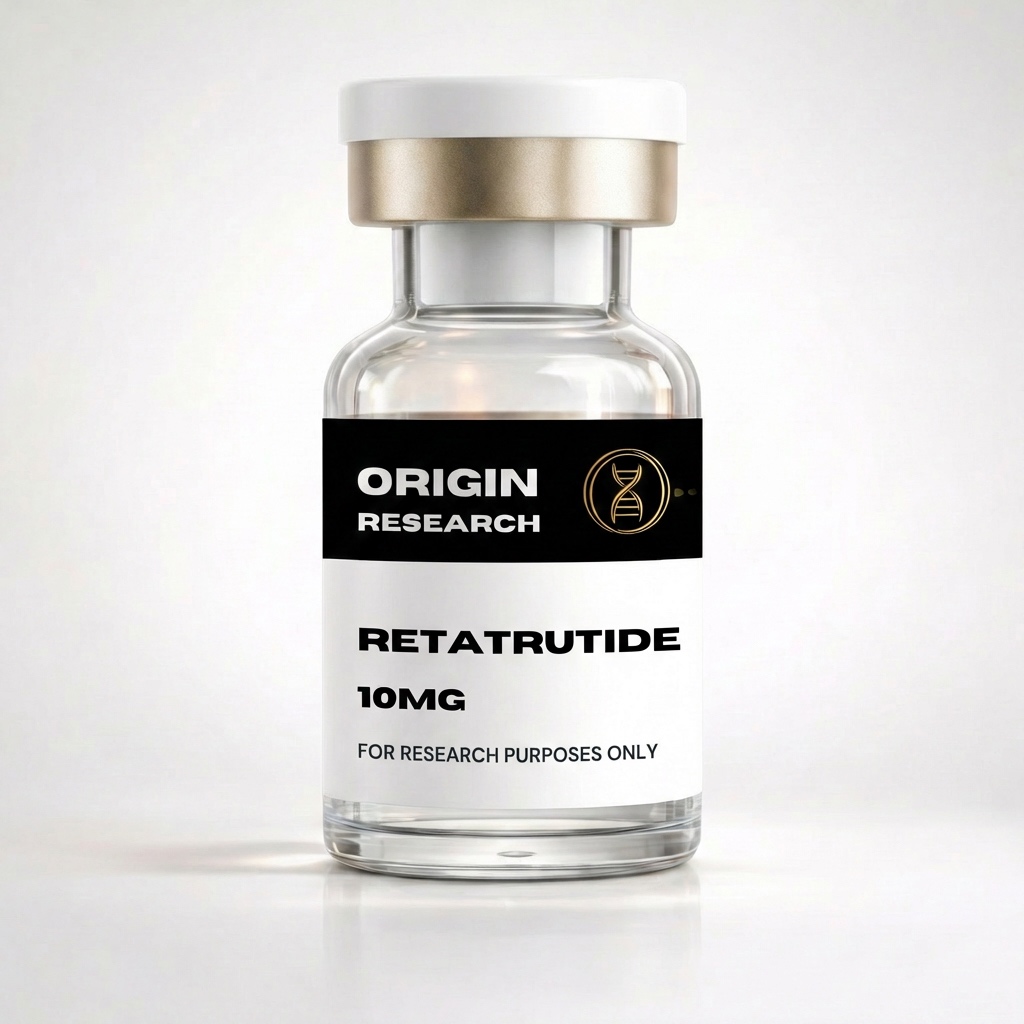
Mid-2026 is shaping up to be the year the incretin agonist field gets a clearer head-to-head picture. Retatrutide (a triple agonist hitting GLP-1, GIP, and glucagon receptors) keeps reading out individual Phase III TRIUMPH trial arms, and Tirzepatide (a dual GIP/GLP-1 agonist) keeps adding extension data from its already-massive SURPASS and SURMOUNT programmes. What does GLP-1 stand for? Glucagon-like peptide-1, a gut hormone that triggers insulin release after meals. GIP is glucose-dependent insulinotropic polypeptide, another incretin. Glucagon is the counter-regulatory hormone normally associated with raising blood sugar, but in this research context the glucagon receptor arm is being investigated for its energy-expenditure effects. The 2023 Retatrutide Phase II paper in the New England Journal of Medicine reported, at the highest tested dose arm, mean body weight changes in obesity research populations that exceeded the magnitude reported in comparable Tirzepatide arms. The 2025 to 2026 publication wave has now added receptor pharmacology comparisons, MASH (metabolic-associated steatohepatitis) endpoints, and longer-term follow-up data. This article walks through where the published research positions these two compounds today, what the mechanistic pharmacology actually shows, and what reviewers are flagging as still open. Retatrutide remains unapproved in the United States and the European Union as of mid-2026 and is supplied at originlabsresearch.com as a research-use-only peptide for institutional preclinical work.
The news hook: what the comparative literature now reports
The most-cited reference point is still the 2023 NEJM Retatrutide Phase II publication. At the highest tested dose arm, mean body weight changes in obesity research populations exceeded the magnitude reported in comparable Tirzepatide trial arms. Reviewers consistently frame that differential as consistent with the additional glucagon receptor activity, which is hypothesised to add energy expenditure effects on top of the appetite-suppressive GLP-1 and GIP components shared with Tirzepatide.
2024 and 2025 pharmacology papers then added receptor-level detail:
- A 2024 paper in Molecular Metabolism reported that Retatrutide demonstrates balanced agonism across GLP-1, GIP, and glucagon receptors at the tested concentration range.
- The same comparative work reported that Tirzepatide demonstrates biased signalling at the GIP receptor relative to GLP-1, meaning the downstream signalling cascade looks different from what native GIP produces.
Review articles have framed these mechanistic distinctions as plausible explanations for the efficacy and tolerability differences seen in the clinical trial readouts.
Bottom line: Tirzepatide has the larger published Phase III dataset. Retatrutide is showing larger magnitude effects at the highest tested dose arms in published Phase II work. Direct head-to-head trials remain rare.
How the two mechanisms actually differ
Tirzepatide is a dual agonist:
- Targets GIP and GLP-1 receptors.
- Published in vitro pharmacology reports higher binding affinity for GIP than GLP-1.
- Signalling profile is described as biased agonism at the GIP receptor in some assays.
- Biological consequences of that bias have been investigated in animal models of insulin secretion and adipose tissue function.
TK0 adds a third receptor arm:
- Targets GLP-1, GIP, and glucagon receptors.
- The glucagon arm is the mechanistic feature most discussed in the comparative literature.
- Glucagon signalling has been associated in published rodent models with increased hepatic glucose output, increased energy expenditure, and altered hepatic lipid handling.
- The published narrative frames the glucagon arm as contributing energy-expenditure effects, while the GLP-1 and GIP arms contribute appetite suppression, gastric emptying slowing, and insulin-secretion modulation (the same axes Tirzepatide covers).
The published animal model data for Retatrutide spans diet-induced obesity rodents and non-human primate metabolic models, with comparisons to GLP-1 mono-agonists and dual GLP-1 + GIP agonists. 2025 mechanistic papers explored whether triple agonism is additive or synergistic relative to single and dual agonists in the same models. The published data is generally interpreted as consistent with an additive glucagon contribution in obesity model endpoints.
What 2025 to 2026 trial extensions and real-world data added
For Tirzepatide:
- Extended follow-up from SURMOUNT trials reported sustained body weight reductions over multi-year windows in trial populations.
- Separate trial publications covered MASH endpoints, cardiovascular outcomes, and sleep apnoea endpoints in defined trial populations.
For Retatrutide:
- Additional Phase II data was published in non-alcoholic fatty liver disease research populations and in adolescent obesity research populations.
- Mechanistic readouts included hepatic fat fraction by MRI and metabolic biomarker panels.
- The Phase III TRIUMPH programme has continued reporting individual trial arm results through 2025 and 2026.
The comparative literature continues to frame Retatrutide as showing larger magnitude body weight change in published trial arms versus historical Tirzepatide comparators. The gastrointestinal adverse event profile remains broadly consistent with the incretin class.
Caveat reviewers keep raising: cross-trial comparisons should be interpreted with caution given differences in trial population, dose titration schedule, and endpoint definition. Direct head-to-head trials would resolve the comparative picture much faster.
Open questions across the incretin agonist field
Five questions keep showing up in 2025 to 2026 review articles:
- Optimal receptor balance. Triple agonism is one design choice. Other published compounds explore different ratios and biased signalling profiles, and the published comparisons do not yet identify a clearly superior pharmacological design across all endpoints.
- Durability after discontinuation. Long-term effect persistence remains underpublished. Rodent work on weight regain dynamics exists, but long human follow-up beyond trial windows is thin.
- MASH endpoints. Multiple incretin and incretin-plus-glucagon compounds are being investigated. Comparative positioning of Retatrutide and Tirzepatide in MASH is still being established in trial reports.
- Cardiovascular outcomes. Major outcomes trials exist for some incretin compounds and are pending for others. Comparative cardiovascular profiles for these two compounds will sharpen as additional trials report.
- Biased agonism biology. The pharmacology of biased GIP and GLP-1 signalling continues to be investigated as a candidate explanation for clinical differentials within the class.
What this means for researchers following the literature
Practical orientation for 2026 to 2027:
- The picture is still evolving. New TRIUMPH Phase III readouts are expected through 2027 and will continue refining the comparative position.
- Preclinical mechanistic work on triple agonism, biased signalling, and combination pharmacology is an active publication area. Researchers planning new in vitro or animal work have a deep comparator base to reference.
- MASH and cardiovascular outcomes are the next-frontier comparison sets. Investigators considering preclinical model design in these areas should align with the most recent published trial endpoints.
- Both compounds are supplied at originlabsresearch.com as lyophilised research peptides suitable for standard laboratory reconstitution. End users are responsible for institutional compliance, biosafety standards, and any applicable local regulations.
Neither compound discussion above is clinical advice for human use. Retatrutide remains unapproved by the FDA or the EMA for any therapeutic indication as of the mid-2026 review window.
References
- [1] Jastreboff AM, Kaplan LM, Frias JP, Wu Q, Du Y, Gurbuz S, Coskun T, et al. (2023). Triple-hormone-receptor agonist retatrutide for obesity: a Phase 2 trial. New England Journal of Medicine. PMID 37366315
- [2] Jastreboff AM, Aronne LJ, Ahmad NN, Wharton S, Connery L, Alves B, Kiyosue A, et al. (2022). Tirzepatide once weekly for the treatment of obesity. New England Journal of Medicine. PMID 35658024
- [3] Coskun T, Urva S, Roell WC, Qu H, Loghin C, Moyers JS, O'Farrell LS, et al. (2022). LY3437943, a novel triple glucagon, GIP, and GLP-1 receptor agonist for glycemic control and weight loss: from discovery to clinical proof of concept. Cell Metabolism. PMID 35921816
- [4] Sanyal AJ, Kaplan LM, Frias JP, Brouwers B, Wu Q, Thomas MK, Harris C, et al. (2024). Triple hormone receptor agonist retatrutide for metabolic dysfunction-associated steatotic liver disease: a randomized phase 2a trial. Nature Medicine.
- [5] Rosenstock J, Wysham C, Frias JP, Kaneko S, Lee CJ, Fernandez Lando L, Brown K, et al. (2021). Efficacy and safety of a novel dual GIP and GLP-1 receptor agonist tirzepatide in patients with type 2 diabetes (SURPASS-1). Lancet. PMID 34186022
Frequently asked questions
What receptors does each compound target?
Tirzepatide is a dual agonist at GIP and GLP-1 receptors. Retatrutide is a triple agonist at GLP-1, GIP, and glucagon receptors. The additional glucagon arm is the mechanistic feature most discussed in the comparative literature.
Which compound has more published Phase III data as of 2026?
Tirzepatide. The SURPASS programme in type 2 diabetes research populations and the SURMOUNT programme in obesity research populations form a more extensive Phase III base. Retatrutide Phase III data is still rolling out through the TRIUMPH programme.
What did the 2023 Retatrutide Phase II publication report?
Published in the New England Journal of Medicine, the paper reported that at the highest tested dose arm, mean body weight changes in obesity research populations exceeded the magnitude reported in comparable Tirzepatide trial arms. Reviewers interpret this as consistent with the added glucagon receptor activity.
Is Retatrutide approved for any therapeutic indication as of 2026?
No. Retatrutide is not approved by the FDA or the EMA for any therapeutic indication as of the mid-2026 review window. It remains a research compound in active clinical development.
What does biased agonism at the GIP receptor mean?
Tirzepatide produces a downstream signalling profile at the GIP receptor that differs from what native GIP produces. The biological consequences of that bias are an active area of mechanistic research.
Where are these compounds supplied as research material?
Both Retatrutide and Tirzepatide are supplied at originlabsresearch.com as lyophilised research peptides intended for preclinical investigation under institutional research-use-only frameworks.