Multi-compound research protocols (sometimes called stacked protocols in laboratory shorthand) are experimental designs where the researcher selects two or more peptides for parallel or sequential study within the same protocol. The motivation is methodological, not consumer-facing. Certain biological pathways are best characterised by simultaneous probing with multiple compounds that act on complementary nodes. Certain regenerative biology questions require coverage of both extracellular matrix remodelling and angiogenic signalling. Certain growth-hormone-axis investigations benefit from studying secretagogue agonism and growth hormone releasing hormone analogue activity at the same time.
The design of such protocols is a question of experimental design. The principles that govern good stack design come from research-methodology literature on multi-factorial design, pathway pharmacology, and pharmacokinetic compatibility. None of what follows is consumption guidance for any species. The audience is the researcher planning the protocol, the laboratory manager approving the experimental design, and the institutional reviewer evaluating its methodological soundness.
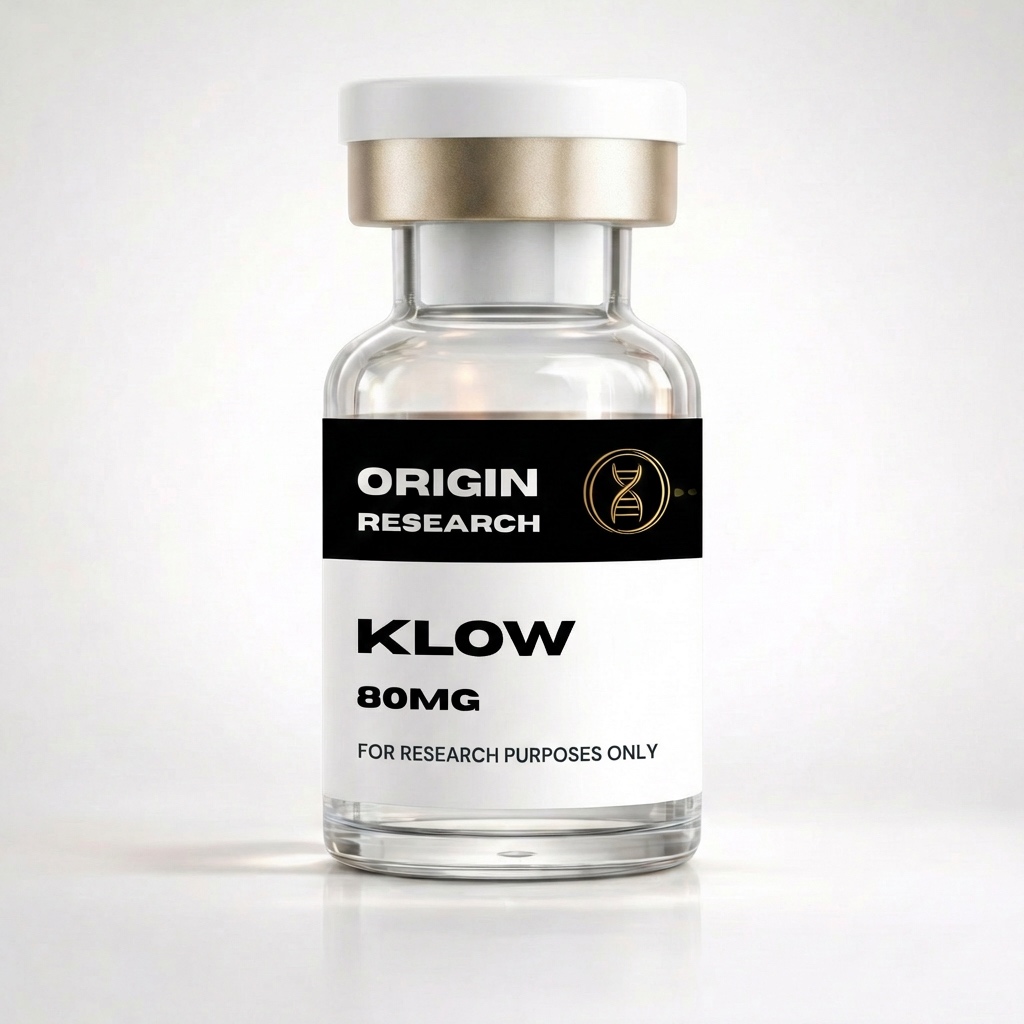
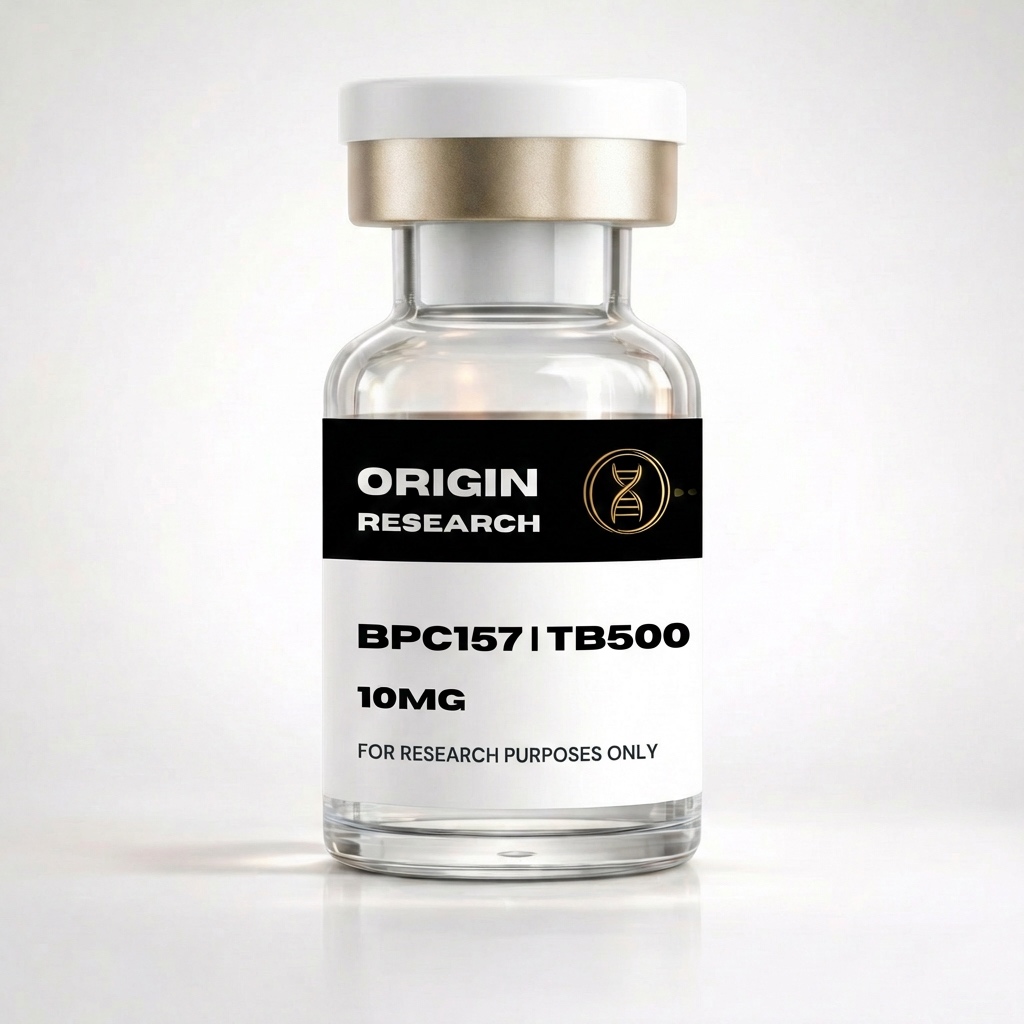
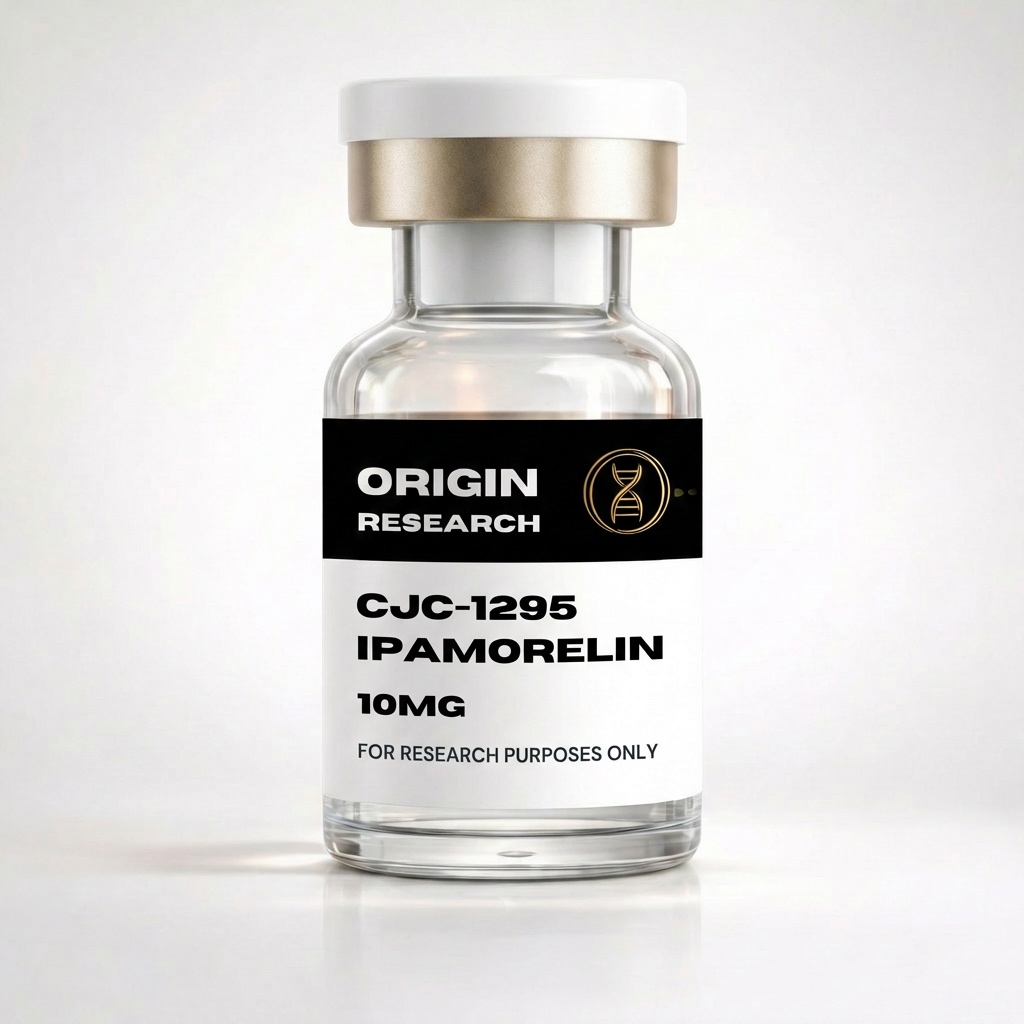
This article walks through the principles researchers apply when assembling a multi-compound protocol for in vitro or in vivo work under appropriate institutional oversight. The examples reference compounds from the [Origin Research](https://originlabsresearch.com) catalog, including pre-formulated blends such as the Glow Stack, the Klow Stack, the BPC-157/TB-500 blend, and the CJC-1295/Ipamorelin blend. These appear in the published research literature as illustrative pairings, and the catalog supplies them as research materials for laboratory study.
The frame: the researcher selects compounds for a study. The protocol is the unit of analysis. The bench worker handles the resulting materials according to standard laboratory practice.
Principle 1: pathway coverage comes first
The first principle of multi-compound protocol design is pathway coverage. The investigator starts by mapping the biological pathway or pathways under study, identifying the nodes where pharmacological intervention is informative, and selecting compounds whose published activity profiles cover those nodes.
Two classic examples from the literature:
- Growth hormone axis investigations. Protocols combining a growth hormone secretagogue receptor agonist such as Ipamorelin with a growth hormone releasing hormone analogue such as CJC-1295 produce a more complete pharmacological characterisation than either compound alone, because the two compounds act on complementary nodes of the somatotropic axis. The CJC-1295/Ipamorelin blend is supplied as a research material to support this kind of protocol.
- Regenerative biology in tissue injury models. Protocols combining BPC-157, which has been studied for activity related to vascular endothelial growth factor expression and angiogenesis, with TB-500, which has been studied for actin-binding activity and cell migration. The BPC-157/TB-500 blend is supplied as a research material to support this kind of protocol.
The pathway-coverage rationale gives the researcher a defensible answer to the methodological question of why two compounds are being studied together rather than separately.
Without that rationale, the multi-compound design becomes hard to justify on experimental design grounds. The analytical complexity of the data goes up. The informativeness does not.
Practical step during protocol design: for each compound included in the protocol, document the pathway node it addresses and the published literature establishing that activity. If a compound does not earn a documented role, it does not belong in the protocol.
Principle 2: half-life matching and temporal pharmacokinetics
The second principle is consideration of the pharmacokinetic profiles of the compounds in the protocol, particularly half-life.
Compounds with very different half-lives produce non-overlapping pharmacological exposure windows when administered on the same schedule. That mismatch complicates interpretation of multi-compound effects.
The pharmacokinetic literature documents wide variation in research peptide half-lives:
- Some compounds show very short circulating half-lives on the order of minutes.
- Others show extended half-lives on the order of hours or days, depending on modifications such as PEGylation or conjugation.
The classic illustration in the growth-hormone-axis literature is the pairing of a short-acting secretagogue with a longer-acting growth hormone releasing hormone analogue. The protocol design has to account for the temporal mismatch by reasoning about when each compound is at its effective concentration. The CJC-1295/Ipamorelin combination is structured around exactly this kind of temporal pairing in the published research.
The half-life-matching principle does not require identical pharmacokinetics. It requires the researcher to:
- Map the time course of exposure for each compound.
- Design the administration schedule with that time course in mind.
- Design the data-collection schedule with that time course in mind.
Without this analysis, the resulting data may reflect temporal artefacts rather than the pharmacological effects of interest.
Principle 3: receptor selectivity and the avoidance of redundancy
The third principle is receptor selectivity. A well-designed multi-compound protocol assigns each compound a distinct pharmacological role. Overlap in receptor or pathway targeting between compounds is minimised unless there is a deliberate methodological reason for the overlap.
Why this matters:
- Two compounds that act on the same receptor with similar affinity and similar downstream signalling provide little additional information when studied together compared to either compound alone.
- The multi-compound design adds analytical complexity without corresponding pharmacological resolution.
The methodological literature on combination pharmacology recommends:
- Select compounds with documented selectivity for distinct receptors or distinct pathway nodes.
- Confirm that the published literature for each compound supports the assigned role.
- Construct a target map for the protocol. List each compound's primary documented activity. Confirm no two compounds duplicate the same node without a deliberate reason.
Deliberate reasons for redundancy do exist (dose-response cross-validation, selectivity confirmation, mechanistic triangulation). When they apply, the redundancy should be documented explicitly in the protocol so the resulting data can be interpreted in light of the intended cross-validation rather than appearing as an unexplained design choice.
Quick check: for every compound in the protocol, the researcher should be able to finish the sentence "this compound is in the protocol because it covers ____." If two compounds finish that sentence the same way without a stated reason, the design needs a second look.
Principle 4: analytical separability
The fourth principle is analytical separability. The question: does the experimental design allow the contribution of each compound to be distinguished from the contribution of every other compound?
Multi-compound protocols generate data that is, by construction, the joint result of all compounds present. Disentangling the contribution of each compound requires either:
- Appropriate control arms within the experimental design (single-compound arms that allow isolation of each compound's effect), or
- Appropriate statistical methods at the analysis stage that can decompose the joint effect.
A protocol with two compounds and no single-compound control arms produces data that, in general, cannot attribute observed effects to one compound or the other. The analysis is then forced to discuss the combined intervention as a single experimental unit.
That is acceptable for some research questions. It is not acceptable for questions where the contribution of individual compounds matters. For those questions, the experimental design must include the relevant single-compound arms.
The corrective practice during protocol design:
- Construct the full factorial of compound-presence arms the research question requires.
- Evaluate the resulting sample-size demands.
- Either commit to the full factorial or revise the research question to match the smaller design.
Multi-compound protocols that skip this analytical-separability check often produce data that cannot answer the original research question, and require costly follow-up studies to resolve.
Principle 5: material handling and protocol logistics
The fifth principle is the practical logistics of handling multiple compounds within a single protocol. Each compound requires its own reconstitution, its own storage regime, its own concentration calculation, and its own aspiration schedule. The error budget grows linearly with the number of compounds, and labs running multi-compound protocols need handling discipline to keep that budget controlled.
For each compound in the protocol, the reconstitution log should record:
- Lot number
- Reconstitution date
- Diluent type
- Diluent volume
- Resulting concentration
- Storage location
- Planned working life of the reconstituted vial
Additional logistical practice:
- Map the administration schedule against the working life of each reconstituted vial so no vial is used past its stability window.
- Plan the aspiration sequence so cross-contamination between compounds is impossible. Fresh sterile syringes for each compound. Clear separation of work surfaces or work events.
- Pre-formulated blends (such as the Glow Stack, the Klow Stack, the BPC-157/TB-500 blend, or the CJC-1295/Ipamorelin blend) collapse some of this complexity into a single vial when the protocol calls for fixed-ratio combined exposure. Single-compound vials remain the right choice when the protocol calls for independent control of each compound's concentration.
The institutional reviewer evaluating a multi-compound protocol will typically ask to see this logistics documentation. Its absence is a methodological weakness that may delay protocol approval.
Origin Research supports multi-compound protocol design by publishing lot-keyed COAs and per-item handling guidance for every catalog item, which gives the researcher the source data needed to construct the reconstitution log for any combination of compounds.
Principle 6: sequential versus simultaneous design
The sixth principle is the choice between sequential and simultaneous multi-compound protocols.
Simultaneous protocol - The experimental system is exposed to all compounds at once. - Data captures the joint pharmacological effect. - Appropriate when the research question concerns combined or synergistic pharmacology. - Appropriate when the experimental system tolerates the combined intervention.
Sequential protocol - The system is exposed to each compound in turn, with washout periods between compounds. - Data captures each compound separately within the same experimental system. - Appropriate when the research question concerns comparative pharmacology across compounds within a controlled system. - Appropriate when washout periods can be designed to clear the pharmacological effect of the prior compound before the next is introduced.
Many published research protocols use hybrid designs that combine sequential and simultaneous elements, with washout periods between phases and combined exposure within phases.
The corrective practice during protocol design:
- Make the sequential-versus-simultaneous choice explicit.
- Document the rationale.
- Design washout periods or control arms accordingly.
Implicit or unexamined choices on this dimension tend to produce protocols whose data is difficult to interpret because the temporal structure of the exposure was not designed deliberately.
The pattern across all six principles: good multi-compound protocol design is a deliberate exercise. Each compound earns its place on documented pharmacological grounds. The temporal structure, the analytical structure, and the handling logistics are designed up front. Protocols that skip these steps produce data that is hard to defend, hard to publish, and hard to build on.
Pre-formulated blends versus single-compound vials
Suppliers in the research-grade segment increasingly offer pre-formulated multi-compound blends alongside single-compound vials. Origin Research stocks several, including the Glow Stack, the Klow Stack, the BPC-157/TB-500 blend, and the CJC-1295/Ipamorelin blend. Choosing between a blend and the equivalent set of single-compound vials is its own design decision.
When a pre-formulated blend is appropriate:
- The research protocol calls for fixed-ratio combined exposure that matches the blend's published ratio.
- The pharmacokinetic profiles of the component compounds are compatible with a single administration schedule.
- The reduction in handling complexity (one reconstitution, one storage location, one aspiration schedule) is genuinely valuable to the lab workflow.
- The protocol does not require independent control of each compound's concentration.
When single-compound vials are appropriate:
- The protocol requires the ability to vary each compound's concentration independently.
- The protocol includes single-compound control arms.
- The pharmacokinetic profiles of the candidate compounds require different administration schedules.
- The research question is exploratory and the final ratio of compounds is not yet fixed.
The handling implications differ. A blend collapses the reconstitution log to a single entry per vial but ties the researcher to the blend's fixed ratio. Single-compound vials multiply the entries in the reconstitution log but give the researcher full ratio control. Neither is universally better. The choice is driven by the experimental design.
A common mistake: picking a blend because it looks simpler, then designing a protocol that requires independent ratio control. The blend cannot deliver that. The protocol design has to lead, and the material format follows from the protocol.
References
- [1] Chou TC (2006). Theoretical basis, experimental design, and computerized simulation of synergism and antagonism in drug combination studies. Pharmacological Reviews, 58(3), 621-681.
- [2] Greco WR, Bravo G, Parsons JC (1995). The search for synergy: a critical review from a response surface perspective. Pharmacological Reviews, 47(2), 331-385.
- [3] Sikiric P, Seiwerth S, Rucman R, Turkovic B, Rokotov DS, Brcic L, Sever M, Klicek R, Radic B, Drmic D et al. (2013). Toxicity by NSAIDs: counteraction by stable gastric pentadecapeptide BPC 157. Current Pharmaceutical Design, 19(1), 76-83.
- [4] Teichman SL, Neale A, Lawrence B, Gagnon C, Castaigne JP, Frohman LA (2006). Prolonged stimulation of growth hormone and insulin-like growth factor I secretion by CJC-1295. Journal of Clinical Endocrinology and Metabolism, 91(3), 799-805.
Frequently asked questions
What is the primary criterion for selecting compounds in a multi-compound research protocol?
Pathway coverage. The investigator maps the biological pathway under study, identifies the nodes where pharmacological intervention is informative, and selects compounds whose published activity profiles cover those nodes.
Why does half-life matter in multi-compound protocol design?
Compounds with significantly different half-lives produce non-overlapping pharmacological exposure windows when administered on the same schedule, which complicates interpretation. Half-life consideration informs the administration and data-collection schedule.
What is redundant pathway coverage and why is it avoided?
Two compounds acting on the same receptor with similar affinity provide little additional information when studied together. A well-designed protocol assigns each compound a distinct pharmacological role unless cross-validation is the explicit methodological goal.
How are individual compound contributions distinguished in multi-compound data?
Through appropriate control arms within the experimental design, including single-compound arms that allow the contribution of each compound to be separated from the joint effect. Without those arms, attribution to individual compounds is generally not possible.
What documentation is required for the logistics of a multi-compound protocol?
A reconstitution log that records, for each compound, the lot number, reconstitution date, diluent type, volume, concentration, storage location, and working life. Institutional reviewers typically request this logistics documentation.
When is a sequential protocol design preferred over a simultaneous design?
Sequential designs are preferred when the research question concerns comparative pharmacology across compounds within a controlled system and when washout periods can clear prior compound effects. Simultaneous designs are preferred for combined or synergistic pharmacology questions.
Does Origin Research provide documentation that supports multi-compound protocol design?
Yes. Lot-keyed certificates of analysis and per-item handling guidance are published for every catalog item, giving researchers the source data needed to construct a reconstitution log for any combination of compounds.