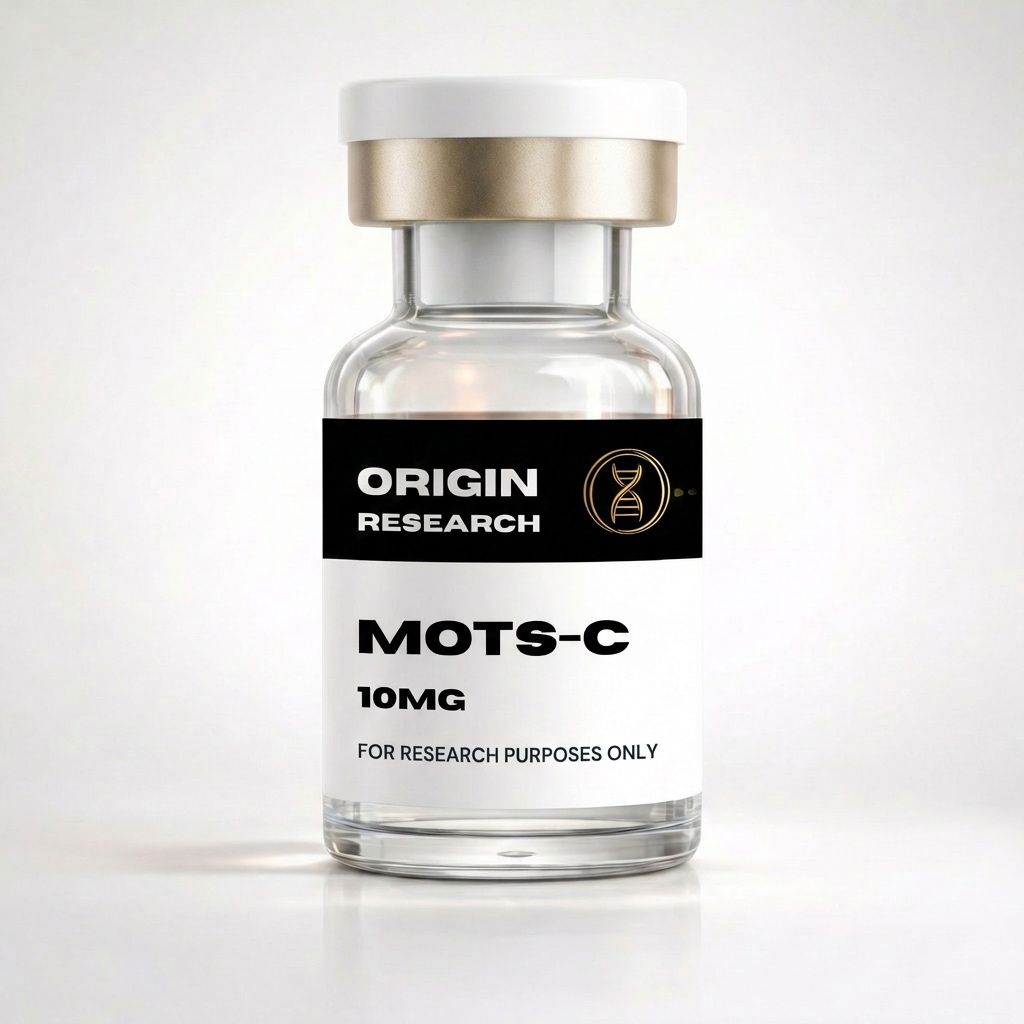
MOTS-c is unusual in a way that matters. Most peptides studied in research are encoded by genes in the cell nucleus, where the vast majority of the genome lives. MOTS-c is not. It is encoded inside the mitochondrion, the small structure inside cells that produces energy. That mitochondrial origin places MOTS-c in a distinct class of research compounds called mitochondrial-derived peptides.
The sequence runs 16 amino acids: Met-Arg-Trp-Gln-Glu-Met-Gly-Tyr-Ile-Phe-Tyr-Pro-Arg-Lys-Leu-Arg. Cohen, Lee, and colleagues identified and characterised the molecule in research published in the early 2010s. Since then, MOTS-c has become a representative example of an emerging field of mitochondrial-derived peptide biology that has produced substantial research output across metabolism, ageing, and cellular bioenergetics.
This article covers the chemistry, what the literature says about mechanism (mostly the AMPK pathway), the major research domains, comparisons with related compounds, and what to verify when sourcing research-grade material.
All content is supplied for laboratory and academic reference only. Origin Labs supplies the compound under a Research Use Only framework for in vitro and preclinical investigation by qualified personnel.
Chemistry and mitochondrial genomic origin
MOTS-c is a linear 16-amino-acid peptide. Molecular weight is approximately 2,174 daltons. That is unremarkable on its own. The interesting part is where it comes from.
Encoded inside the mitochondrion
The open reading frame that encodes MOTS-c is located within the 12S ribosomal RNA gene of the mitochondrial genome. That is an unusual position. Most peptides in research come from genes in the cell nucleus, where the bulk of the genome sits. MOTS-c sits in the small separate genome inside the mitochondrion.
What is a mitochondrion?
Every cell in the body contains hundreds to thousands of mitochondria. They are the cellular structures that produce most of the energy currency (ATP) used in metabolism. Mitochondria have their own small genome, separate from the nuclear genome, which is a remnant of their evolutionary origin as ancient bacteria absorbed into eukaryotic cells.
Conservation across species
The small open reading frame encoding MOTS-c is conserved across mammalian species, with sequence variants documented in different research animals that allow for cross-species comparative studies.
How it gets translated
Unusually, translation of MOTS-c from the mitochondrial transcript involves the cytoplasmic translation machinery rather than the mitochondrial translation system used for the classical mitochondrial-encoded proteins of the electron transport chain. This feature is characterised in the foundational research papers.
Solubility and handling
MOTS-c is hydrophilic and shows good aqueous solubility in neutral buffers and bacteriostatic water, consistent with its polar and basic amino acid composition.
Synthesis for research
For research purposes, synthesis follows standard solid-phase peptide synthesis protocols. The relatively short sequence makes the molecule straightforward to produce at the purity standards required for academic research (typically 98 percent or higher by HPLC).
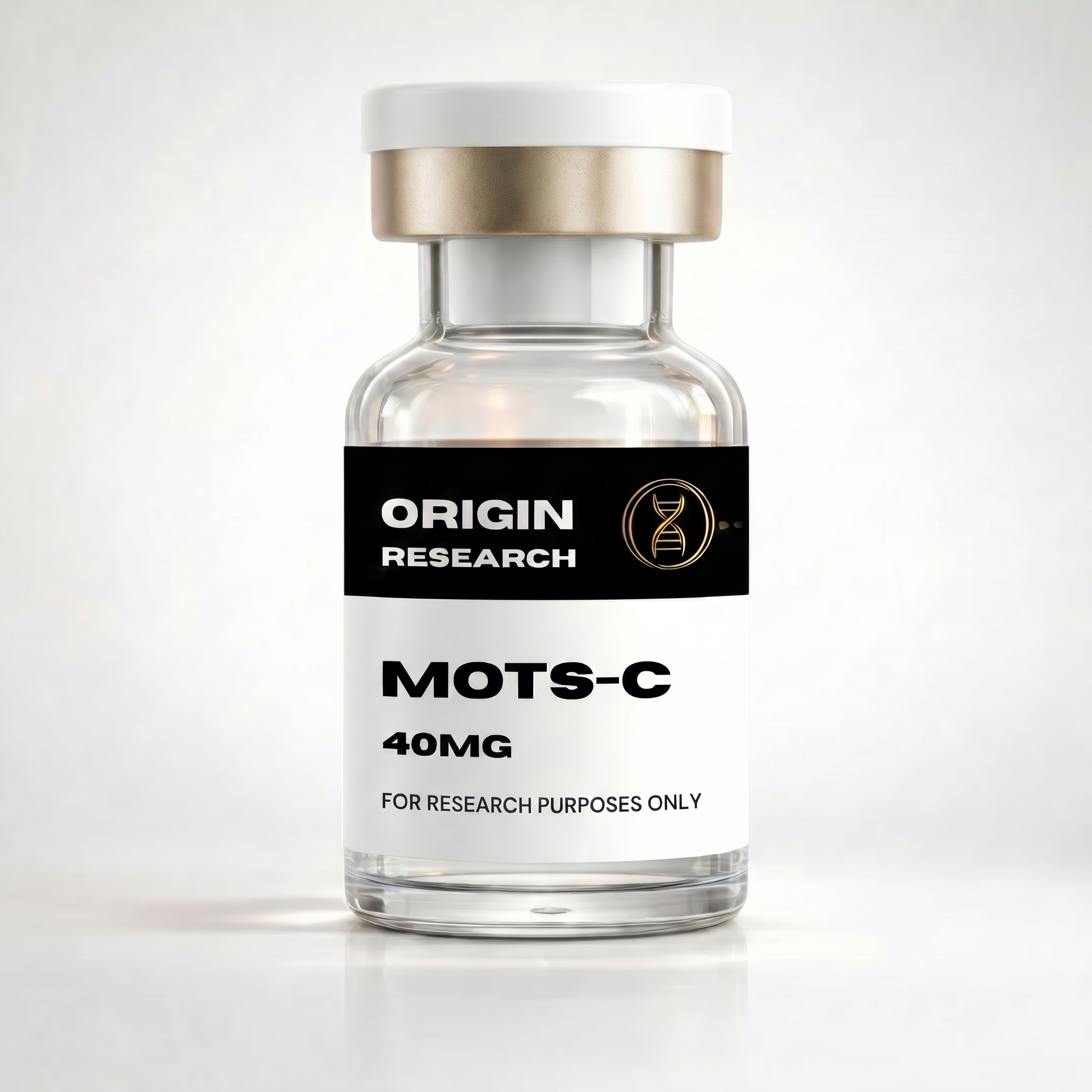
A higher-mass research format is also available as MOTS-c 40mg, which supports preclinical work requiring larger working volumes from a single vial.
Mechanism of action in the research literature
The mechanism of MOTS-c in the published literature is centred on one pathway: the AMP-activated protein kinase axis. The foundational research papers characterise MOTS-c as activating AMPK in cultured cells and in animal tissues.
What is AMPK?
AMPK (AMP-activated protein kinase) is a three-part enzyme that functions as a central cellular energy sensor. It gets activated when cells run low on energy, specifically when the AMP-to-ATP ratio rises.
What AMPK switches on when active
- Glucose uptake from the bloodstream
- Fatty acid oxidation (burning fat for energy)
- Mitochondrial biogenesis (building more mitochondria)
What AMPK switches off
- Protein synthesis (which is energy-expensive)
- Lipid synthesis (also energy-expensive)
Think of AMPK as the cellular equivalent of a low-battery alert that triggers a coordinated set of energy-saving and energy-producing responses.
How MOTS-c reaches AMPK
The published research describes MOTS-c as engaging this energy-sensing system to produce effects on:
- Glucose metabolism in skeletal muscle
- Hepatic glucose handling in the liver
- Adipose tissue biology in rodent models
The folate cycle connection
A separate strand of published research has investigated the folate cycle and one-carbon metabolism. The proposed mechanism: MOTS-c inhibits the folate enzyme AICAR transformylase, which leads to accumulation of a molecule called AICAR, which in turn allosterically activates AMPK as the downstream readout.
Nuclear translocation
There is a further layer. Published research has characterised effects on nuclear gene expression. Under cellular stress conditions, MOTS-c translocates to the cell nucleus and binds to specific stress-response elements to modulate transcription of metabolic genes.
The composite mechanism in the literature: a peptide that bridges mitochondrial origin and nuclear gene regulation through the central AMPK axis, providing a representative example of what researchers call mitonuclear communication.
Pathway and energy metabolism connections
The pathway biology of MOTS-c is anchored on AMPK and extends through the broad downstream effects of AMPK activation across multiple tissues.
Skeletal muscle
AMPK activation enhances GLUT4 translocation to the plasma membrane, which increases glucose uptake independently of insulin signalling. MOTS-c research has investigated this as a contributor to the metabolic effects reported in rodent models.
Liver
AMPK activation suppresses gluconeogenic gene expression (the genes that drive new glucose production) and reduces hepatic glucose output. This provides a parallel mechanism for the glycaemic effects observed in animal studies.
Adipose tissue
AMPK activation has been investigated in relation to:
- Lipolysis (breakdown of stored fat)
- Fatty acid oxidation
- Brown adipose tissue activation
MOTS-c research has contributed to this pathway literature.
Mitochondrial biogenesis
Downstream of AMPK activation through the PGC-1 alpha coactivator pathway. MOTS-c has been investigated as a contributor to mitochondrial network expansion in muscle and other tissues in preclinical models.
The folate cycle layer
The AICAR transformylase inhibition mechanism provides an additional pathway layer distinctive to MOTS-c among published AMPK-activating compounds. It is one of the features that distinguishes the peptide from small-molecule AMPK activators like metformin.
Nuclear translocation under stress
Direct transcriptional regulation under cellular stress conditions provides a parallel mechanism characterised in cell culture studies.
Adjacent metabolic research compounds
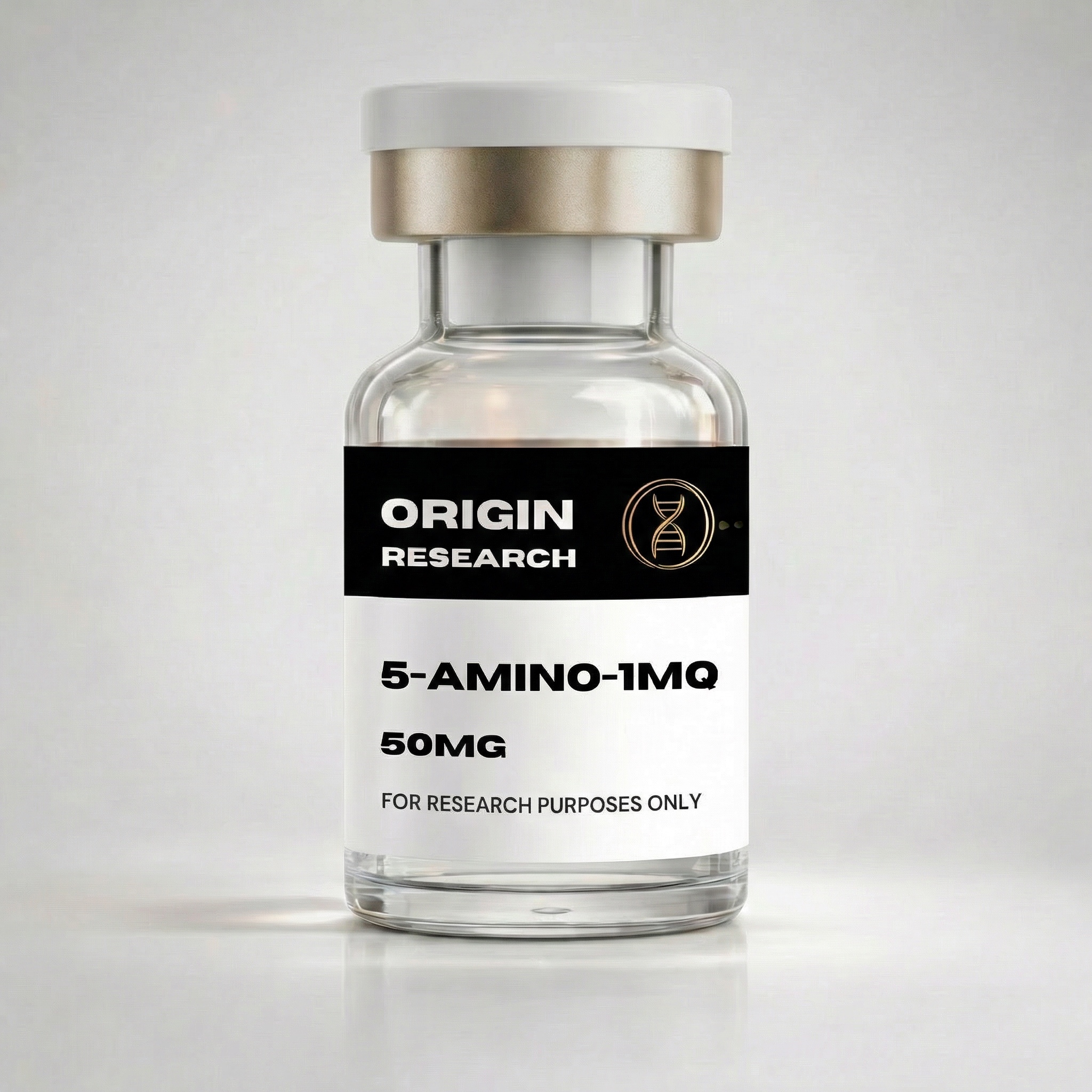
Researchers investigating MOTS-c often work alongside other metabolic research peptides. 5-Amino-1MQ, a small-molecule NNMT inhibitor, appears in adipose biology research and provides a different mechanism for investigating overlapping metabolic models.
The composite pathway picture reflects the broad reach of mitochondrial bioenergetics into multiple downstream signalling networks. MOTS-c serves as a research tool for investigating this mitonuclear axis.
Major research domains and published evidence base
The published evidence base for MOTS-c spans several research areas.
Glucose and insulin metabolism
The most heavily represented area. Published studies investigate MOTS-c administration in rodent models of:
- Obesity
- Insulin resistance
- Type 2 diabetes
Research characterises effects on glucose tolerance, insulin sensitivity, and the response to high-fat dietary challenge.
Skeletal muscle
- Muscle bioenergetics
- Exercise performance in rodent treadmill and swimming protocols
- Mitochondrial network within muscle fibres
Adipose biology
- White and brown adipose tissue
- Adipocyte differentiation
- Metabolic activity of fat depots
Ageing research
MOTS-c has been studied in the context of age-related metabolic decline. Published reports characterise:
- Changes in circulating MOTS-c levels with age in animal and human observational data
- Effects of administered MOTS-c on age-related phenotypes in rodent studies
Exercise physiology
- Response of endogenous MOTS-c to acute and chronic exercise in animal and human observational studies
- Exogenous MOTS-c administration in rodent exercise capacity models
Research format options
MOTS-c 40mg is available for research protocols requiring larger working volumes from a single vial, in addition to the standard 10 mg presentation.
As with other research peptides, translation of these preclinical findings into approved clinical therapeutics is limited. MOTS-c has not received approval as a therapeutic agent in any major regulatory jurisdiction. Origin Labs material is supplied strictly for research use by qualified research personnel.
Comparative literature against related mitochondrial-derived peptides
MOTS-c is the most extensively studied member of the broader mitochondrial-derived peptide family. Several related compounds have been characterised and provide comparative reference points.
Humanin
A 24-amino-acid peptide encoded within the 16S ribosomal RNA gene of the mitochondrial genome. Identified and characterised earlier than MOTS-c, in research published in the early 2000s.
Humanin has been investigated extensively in:
- Neuroprotection research
- Models of Alzheimer disease pathology
- Apoptosis (programmed cell death) regulation
It provides a comparator with related mitochondrial genomic origin but a distinct biological focus.
SHLP family
A series of small humanin-like peptides, SHLP-1 through SHLP-6. Characterised in the published literature as additional mitochondrial-derived peptides with varying tissue distributions and activities in cell culture and animal models.
The smORF field
MOTS-c is positioned in the literature as a representative example of the broader emerging field of small open-reading-frame-encoded peptides (smORFs). Substantial published research has identified bioactive peptides previously hidden in genomic regions assumed to be non-coding.
Small-molecule AMPK activators
Not peptides at all, but useful reference compounds for the AMPK mechanism:
- Metformin (the diabetes medication)
- AICAR (a research tool that directly activates AMPK)
The AMPK activation mechanism overlaps despite the very different chemical natures of these comparator compounds. MOTS-c research often references these small molecules in pathway studies.
Adjacent metabolic peptides
5-Amino-1MQ is an adjacent metabolic research compound with a different mechanism (NNMT inhibition) but overlapping research applications in adipose and metabolic models.
The comparative literature is useful for researchers selecting reference tools for new investigations into mitochondrial-derived peptide biology and AMPK pathway research.
Procurement, certificate of analysis, and verification
Research-grade MOTS-c is supplied as a lyophilised powder in sealed vials. Common formats are 5 mg, 10 mg, or 40 mg per vial, with the MOTS-c 40mg presentation supporting protocols that need larger working volumes from a single vial. Shipping is temperature-controlled.
What the COA should report
- The peptide sequence
- Analytical purity by HPLC
- Mass confirmation by mass spectrometry
- Appearance of the lyophilised cake
- Residual solvent content
- Endotoxin level where relevant
- Batch number matching the vial label
Purity benchmarks
- Below 98 percent: marginal for academic work
- 98 percent or higher: standard
- 99 percent or higher: preferred for in vivo rodent studies, where impurities could confound the metabolic readout
Storage
- 4 degrees Celsius for short-term holding of lyophilised material
- Minus 20 degrees Celsius for longer-term storage of unopened vials
A handling note specific to MOTS-c
The MOTS-c sequence carries methionine residues at positions 1 and 6. Methionine is referenced in peptide handling literature as potentially susceptible to oxidation.
What this means in practice
Avoid prolonged exposure to atmospheric oxygen in reconstituted solutions. This is standard handling practice for methionine-containing peptides as a class. Tightly capped vials and short working windows after reconstitution are the practical implementation.
Reconstituted solutions
In bacteriostatic water, typically referenced as stable under refrigeration for working periods consistent with general peptide stability literature. The methionine oxidation consideration is an additional factor to monitor.
Always cross-check the batch number printed on the COA against the physical vial label at the moment of receipt. The COA is only valid for the batch number it references.
Origin Labs supplies MOTS-c with a documented certificate of analysis per batch. The compound is supplied under a Research Use Only framework for qualified research personnel and is not intended or authorised for human or veterinary clinical use.
References
- [1] Lee C, Zeng J, Drew BG, Sallam T, Martin-Montalvo A, Wan J, et al. (2015). The mitochondrial-derived peptide MOTS-c promotes metabolic homeostasis and reduces obesity and insulin resistance. Cell Metabolism. PMID 25738459
- [2] Reynolds JC, Lai RW, Woodhead JST, Joly JH, Mitchell CJ, Cameron-Smith D, et al. (2021). MOTS-c is an exercise-induced mitochondrial-encoded regulator of age-dependent physical decline and muscle homeostasis. Nature Communications. PMID 33446664
- [3] Kim SJ, Xiao J, Wan J, Cohen P, Yen K (2017). Mitochondrially derived peptides as novel regulators of metabolism. Journal of Physiology. PMID 28675268
- [4] Kim KH, Son JM, Benayoun BA, Lee C (2018). The mitochondrial-encoded peptide MOTS-c translocates to the nucleus to regulate nuclear gene expression in response to metabolic stress. Cell Metabolism. PMID 29983246
- [5] Lee C, Yen K, Cohen P (2013). Humanin: a harbinger of mitochondrial-derived peptides?. Trends in Endocrinology and Metabolism. PMID 23375520
Frequently asked questions
Where can verified research-grade MOTS-c be sourced?
Origin Labs supplies research-grade MOTS-c at originlabsresearch.com with a batch-specific certificate of analysis for each vial. The material is supplied under a Research Use Only framework for qualified research personnel.
Why is MOTS-c described as a mitochondrial-derived peptide?
The open reading frame encoding MOTS-c is located within the 12S ribosomal RNA gene of the mitochondrial genome, an unusual genomic position that places the peptide outside the conventional nuclear-encoded protein landscape. This mitochondrial origin is the defining feature characterised in the foundational research papers.
What should the certificate of analysis for MOTS-c include?
The COA should report the peptide sequence, analytical purity by HPLC at 98 percent or higher, mass confirmation by mass spectrometry, appearance of the lyophilised cake, batch number matching the vial label, and where relevant the residual solvent and endotoxin values.
What is the primary signalling pathway characterised for MOTS-c?
The primary signalling pathway in the published research literature is the AMP-activated protein kinase axis, with the foundational papers characterising MOTS-c as engaging AMPK to produce downstream effects on glucose metabolism, mitochondrial biogenesis, and other AMPK-regulated processes in cultured cells and animal tissues.
What research models has MOTS-c been most studied in?
Published preclinical research has investigated MOTS-c in rodent models of obesity, insulin resistance, and type 2 diabetes, in skeletal muscle bioenergetics studies, in adipose biology preparations, in exercise physiology models, and in ageing-related metabolic decline studies.
What other research peptides are in the same comparative family?
The closest comparator is Humanin, a 24-amino-acid mitochondrial-derived peptide encoded in the 16S ribosomal RNA gene. The SHLP family of small humanin-like peptides provides additional comparators. Small-molecule AMPK activators such as metformin and AICAR provide reference points for the pathway mechanism.
Are there handling considerations specific to MOTS-c?
The methionine residues at positions 1 and 6 of the MOTS-c sequence are referenced in peptide handling literature as potentially susceptible to oxidation, and avoidance of prolonged exposure to atmospheric oxygen in reconstituted solutions is part of standard handling practice for methionine-containing peptides.