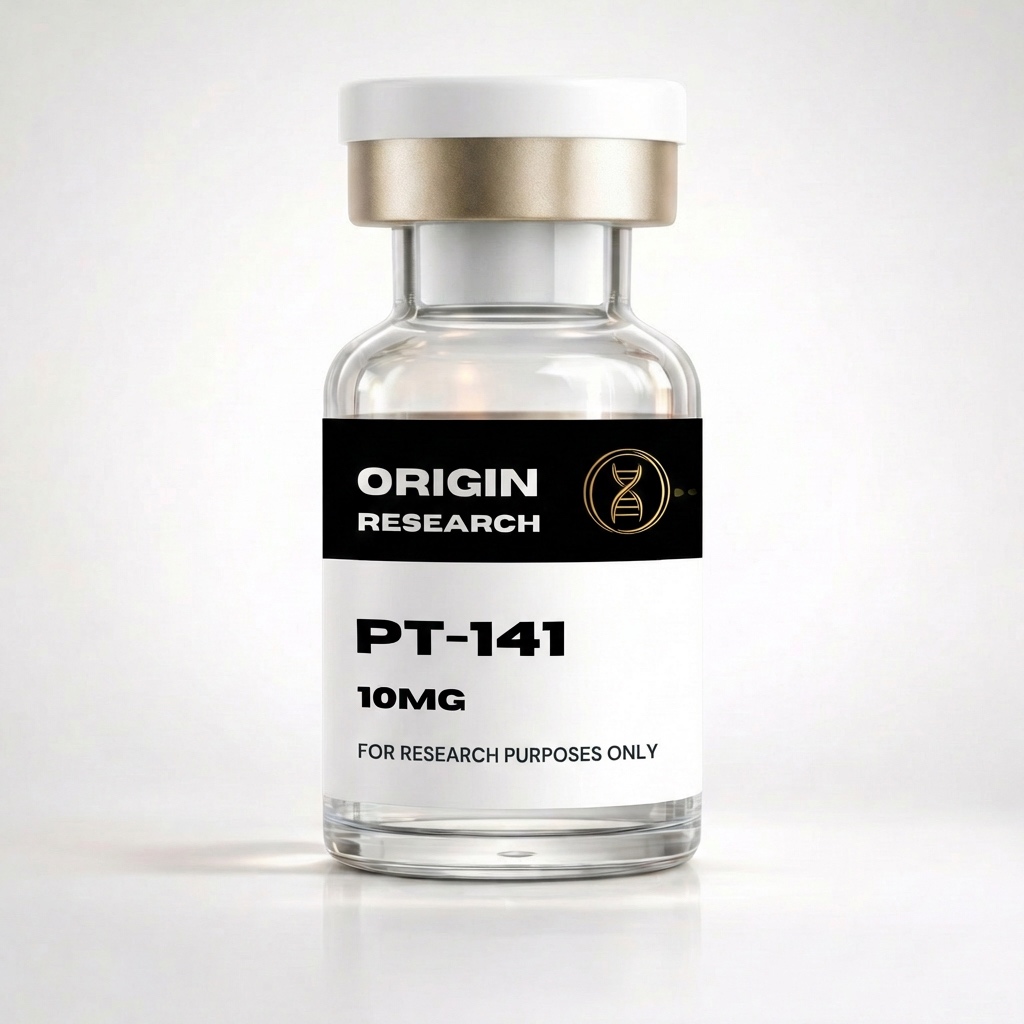
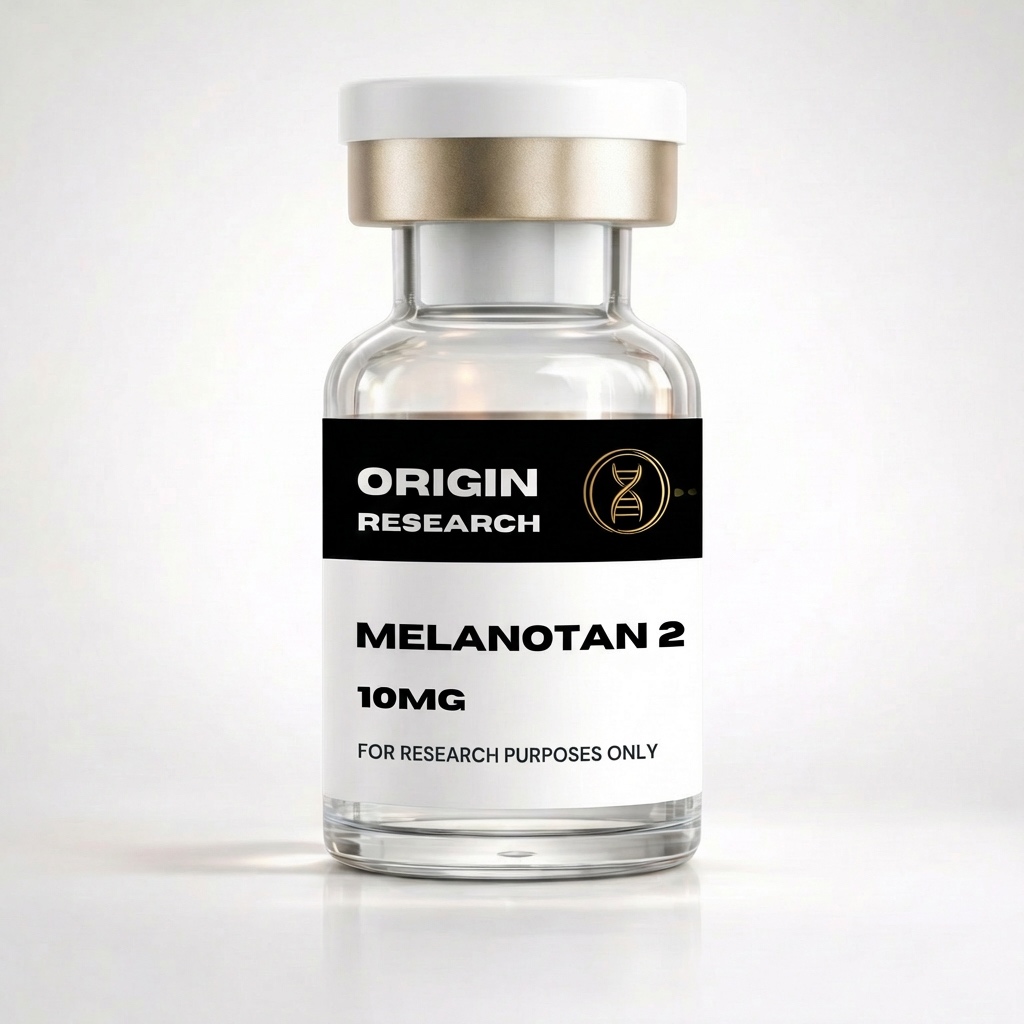
The melanocortin system is one of the cleaner examples in receptor pharmacology of how five related GPCRs can produce wildly different downstream effects depending on tissue and ligand. The five melanocortin receptors (MC1R through MC5R) all bind peptides derived from proopiomelanocortin (POMC), but each one sits in a different anatomical neighborhood and signals differently. In 2026, the literature keeps pushing on three fronts: receptor subtype selectivity, biased agonism, and structural biology contributions from cryo-EM.
This article summarizes what recent preclinical work has added to the understanding of synthetic melanocortin analogs as research tools, including PT-141 and Melanotan II. Everything below is framed strictly within preclinical receptor pharmacology. No human-use language, no behavioral claims. The focus is the receptor science itself.
Setup. MC1R sits mostly in cutaneous melanocyte research models. MC2R is the ACTH receptor in adrenal cortex. MC3R and MC4R are CNS-enriched. MC5R lives in exocrine tissues. That tissue map drives most compound-selection decisions in preclinical work.
Receptor Subtype Pharmacology: Why Tissue Map Drives Compound Choice
The five melanocortin receptors differ in tissue distribution, ligand selectivity, and downstream signaling architecture. Recent receptor pharmacology research has continued tightening those distinctions, which matters for investigators picking a compound for a specific research question.
The five receptors at a glance
- MC1R - cutaneous melanocyte research models and immune cell preparations
- MC2R - adrenal cortex, the ACTH receptor, requires accessory protein MRAP for functional expression
- MC3R - CNS-enriched, energy balance research models
- MC4R - CNS-enriched, most extensively studied receptor in hypothalamic preparations
- MC5R - exocrine gland tissues, investigated in sebaceous research models
What recent cryo-EM work resolved
Structural biology has been a productive thread. Cryo-EM structures of MC4R in complex with various agonists and antagonists have given atomic-level detail on the binding pocket architecture that distinguishes subtype selectivity. That data feeds directly into structure-activity relationship (SAR) work for next-generation selective ligands.
Compound selectivity profiles in research assays
- Melanotan I (afamelanotide) - preferential MC1R agonism in receptor binding assays
- TK0 - broader agonism across MC1R, MC3R, MC4R, and MC5R in preclinical models
- TK0 (Bremelanotide) - relatively MC4R/MC3R-preferring agonist in functional receptor assays
Methodological note. For receptor selectivity studies, the literature increasingly supports parallel HEK293 or CHO cell lines expressing individual MC receptor subtypes. That setup lets you deconvolve compound selectivity at the molecular level before interpreting any downstream effects.
MC1R Melanogenesis Research in Cutaneous Cell Models
MC1R activation in cutaneous melanocyte research models drives melanogenesis through a well-mapped cascade. The pathway runs cAMP, then microphthalmia-associated transcription factor (MITF), then downstream melanin synthesis enzymes including tyrosinase, TRP-1, and TRP-2.
Recent investigative literature has continued characterizing the molecular details in primary melanocyte cultures and B16 melanoma cell research models. Specific threads:
- The eumelanin-versus-pheomelanin balance regulated by MC1R signaling
- Agouti signaling protein (ASIP) acting as an inverse agonist at MC1R
- Variant-specific MC1R behavior at red-hair-color (RHC) alleles like R151C, R160W, and D294H
Why MC1R variant background matters
RHC variants alter coupling to Gs versus other G-proteins in receptor assays. They also show biased signaling phenotypes. Any research using cell lines with defined MC1R variant backgrounds has to account for these differences when interpreting compound activity.
MC1R beyond melanocytes
Recent research has expanded into non-melanocyte tissues. MC1R signaling has been characterized in macrophage cultures for anti-inflammatory pathway research, which adds an immunology dimension to a receptor traditionally studied only for pigmentation pharmacology.
Standard readout pairing. Parallel cAMP measurement plus downstream transcriptional readouts (MITF, tyrosinase mRNA, melanin content) give the cleanest characterization of compound activity at MC1R in preclinical models.
MC4R CNS Pathway Research: PT-141 as a Research Tool
MC4R is the most extensively characterized melanocortin receptor in CNS pathway research. Preclinical literature documents its expression across hypothalamic nuclei including the paraventricular nucleus (PVN), and characterizes its role in energy balance and autonomic outflow pathways in animal models.
PT-141 (Bremelanotide) has been used as a research tool for probing MC4R-mediated CNS signaling. Common preclinical study designs include:
- c-Fos immunohistochemistry to map activated brain regions after central administration
- cAMP, calcium mobilization, and beta-arrestin recruitment in cell-based assays
- Parallel measurement of receptor coupling to Gs, Gq, and beta-arrestin pathways
MC4R signals through multiple G-proteins
Recent research has shown MC4R can signal through Gs, Gq, and beta-arrestin pathways. That coupling repertoire opens biased agonism research as an active investigative thread (more on that in the next section).
What the MC4R structural biology added
MC4R cryo-EM structures have resolved binding pocket geometry and identified key residues involved in agonist engagement. The SAR research for next-generation MC4R ligands has been moving fast since those structures came out.
MC4R beyond the hypothalamus
Recent papers have characterized MC4R expression in peripheral tissues including sympathetic ganglia and gut. The anatomical scope of melanocortin signaling research keeps expanding beyond classical hypothalamic models.
Compound profiling standard. For investigators using PT-141 as a research tool, parallel measurement of cAMP, calcium mobilization, and beta-arrestin recruitment in cell-based assays is becoming standard for characterizing pathway-biased activity profiles.
Biased Agonism, Receptor Crosstalk, and Methodological Reality Checks
The melanocortin receptor field has fully embraced biased agonism as a research framework. Different agonists at the same receptor can preferentially activate certain downstream signaling cascades over others. That changes how you interpret functional assays.
How biased agonism is characterized in 2026
Recent investigative literature has used operational models of agonism and pathway-specific assays to characterize compounds including Melanotan II, PT-141, and various selective small-molecule ligands. The bias profiles get measured across:
- cAMP signaling
- ERK pathway activation
- Calcium mobilization
- Beta-arrestin recruitment
The work is methodologically demanding. It needs careful pharmacological controls and statistical handling of bias factor estimates. But it has begun to clarify why structurally distinct agonists produce divergent functional profiles in preclinical models.
Receptor crosstalk and trafficking
MC4R interactions with other GPCRs in heterologous expression systems have been characterized, including potential heterodimerization with other class A GPCRs. Recent studies have also tracked melanocortin receptor desensitization and internalization dynamics, with beta-arrestin-mediated trafficking and receptor recycling kinetics as core readouts.
Why single-pathway readouts can mislead
The literature keeps emphasizing that single-pathway measurement can give a misleading picture of compound activity. Comprehensive characterization needs:
- Multi-pathway profiling
- Attention to receptor expression context
- Accessory protein availability checks
- Species-difference awareness for both receptor sequence and downstream cascade architecture
Practical implications for compound selection
For researchers picking between PT-141 and Melanotan II as research tools, the selectivity differences matter for which subtype you want to interrogate. PT-141's MC4R/MC3R preference makes it a cleaner tool for CNS pathway research where MC4R is the target of interest. Melanotan II's broader profile across MC1R, MC3R, MC4R, and MC5R makes it useful for studies where pan-melanocortin engagement is the question being asked, but it is a poor choice if subtype-specific signaling is the experimental endpoint.
Receptor expression context in cell line selection is another decision point. HEK293 cells overexpressing a single melanocortin receptor subtype give clean pharmacology readouts but can show coupling profiles that differ from native tissue. CHO cells provide a similar overexpression context with different baseline signaling. Native cell preparations (primary melanocytes for MC1R, hypothalamic neuron cultures for MC4R) sit closer to physiologically relevant signaling but introduce more variability across experiments.
Species differences worth flagging
MC4R sequence is well-conserved across mammals, but coupling profiles can differ. Some published work has shown rodent MC4R coupling to Gq more readily than human MC4R in some expression contexts. Investigators translating from rodent preclinical findings to other species should verify whether the signaling architecture relevant to their research question is conserved across the species being modeled.
The big design takeaway. A single cAMP curve is no longer enough to characterize a melanocortin ligand. Modern receptor pharmacology research uses parallel signaling readouts as the baseline, not the optional add-on.
References
- [1] (). . . PMID 17077189
- [2] (). . . PMID 28433713
- [3] (). . . PMID 33990150
- [4] (). . . PMID 16280005
- [5] (). . . PMID 19741606
Frequently asked questions
How do MC1R, MC3R, MC4R, and MC5R differ in research relevance?
MC1R is the focus of melanogenesis research in cutaneous melanocyte models. MC3R and MC4R are CNS-enriched and central to energy balance pathway research in preclinical models. MC5R has been investigated in exocrine gland research. Each receptor has distinct ligand selectivity profiles characterized in functional receptor assays.
What is biased agonism at melanocortin receptors?
Biased agonism is when structurally distinct agonists at the same receptor preferentially activate certain downstream signaling pathways such as cAMP, ERK, calcium, or beta-arrestin over others. Recent receptor pharmacology research uses pathway-specific assays to characterize bias profiles for melanocortin ligands.
How is PT-141 characterized in receptor selectivity studies?
PT-141 (Bremelanotide) has been characterized in functional receptor assays as a relatively MC4R/MC3R-preferring agonist. The literature uses it as a research tool for probing MC4R-mediated CNS pathway research in preclinical animal models.
What has cryo-EM contributed to melanocortin receptor research?
Recent cryo-EM structures have resolved MC4R and related melanocortin receptors in complex with agonists and antagonists. The atomic-level detail of binding pocket architecture is informing structure-activity relationship research for next-generation receptor-selective compounds.
Why does MC1R variant background matter in melanogenesis research?
Red-hair-color (RHC) variants of MC1R such as R151C, R160W, and D294H show altered coupling to downstream G-proteins in receptor assays. Research using cell lines with defined MC1R variant backgrounds has to account for these differences when interpreting compound activity in melanogenesis pathway research.
What role does accessory protein MRAP play in MC2R research?
MC2R (the ACTH receptor) requires accessory protein MRAP for functional cell surface expression and ligand binding in receptor assays. This is a unique feature among melanocortin receptors and must be considered in any MC2R expression system used for receptor pharmacology research.