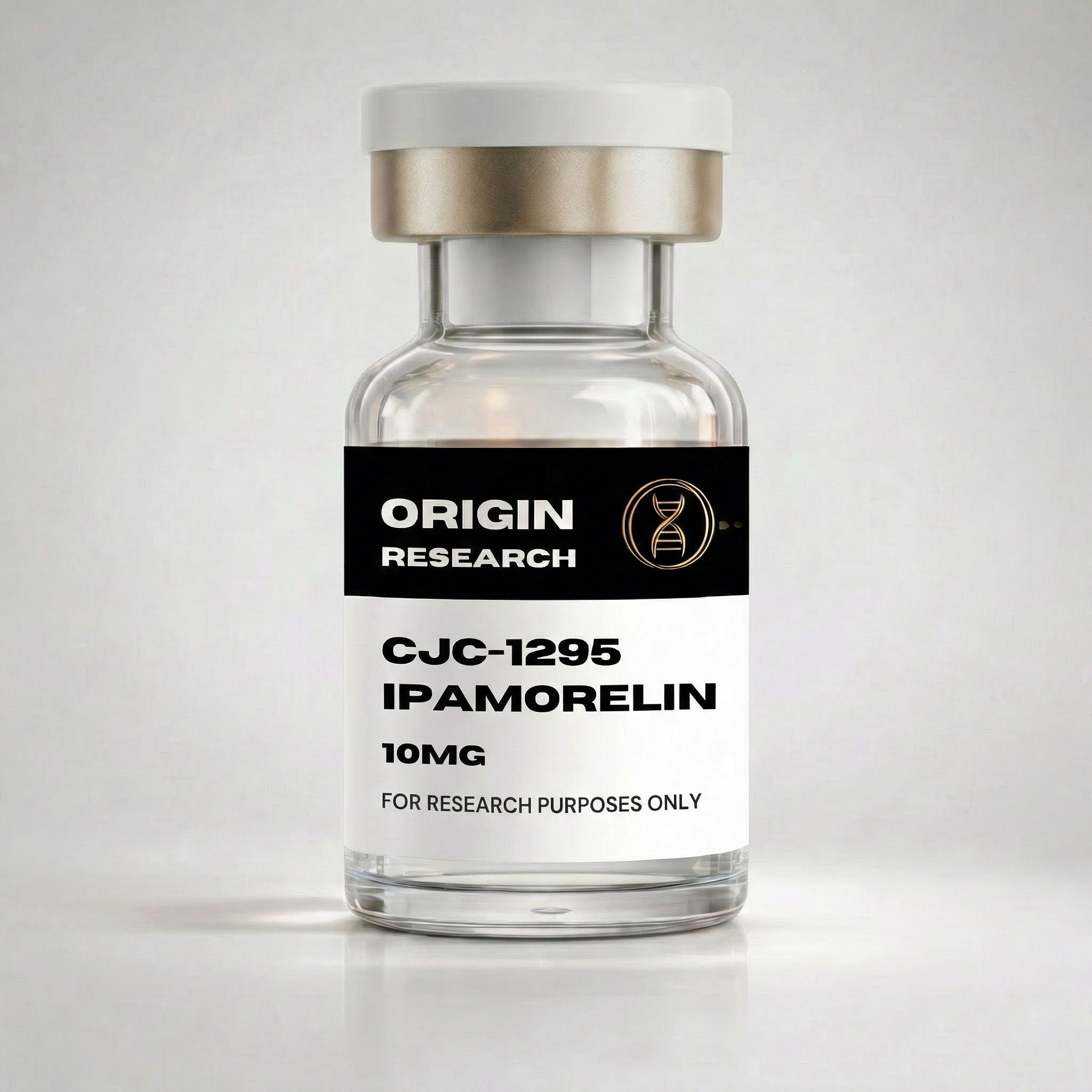
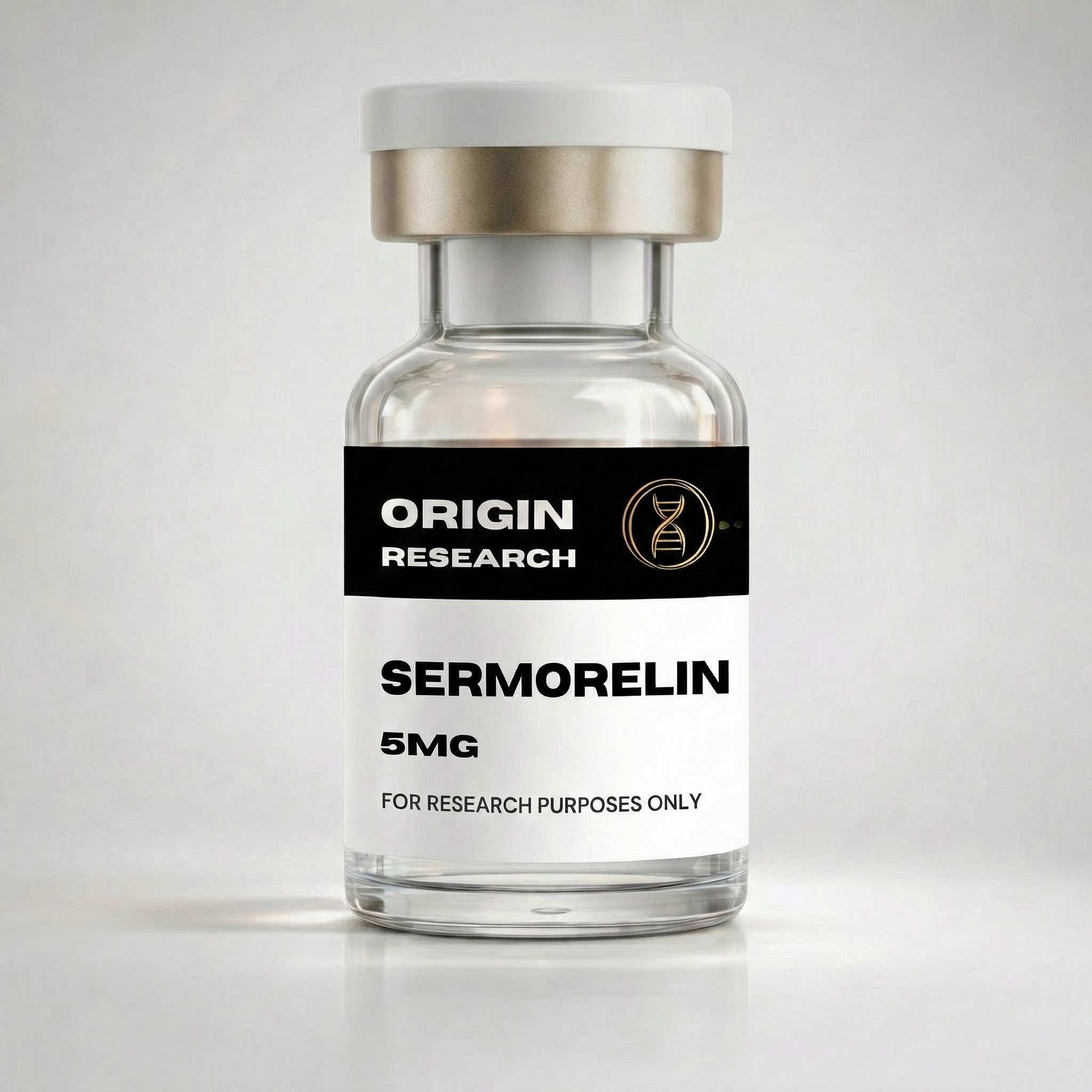
Growth hormone secretagogues are a chemically diverse family of research peptides. Different structures. Different receptors. Same endpoint: stimulating endogenous growth hormone release from the somatotroph cells of the anterior pituitary.
The family splits cleanly in two.
- GHRH analogues mimic the native 44-amino-acid hypothalamic peptide GHRH (growth hormone-releasing hormone). Sermorelin, tesamorelin, and CJC-1295 live here
- Ghrelin receptor agonists mimic the hormone ghrelin at its receptor (called GHSR-1a). Ipamorelin is the most extensively characterised peptide in this class
The two classes use different signalling pathways. That is why researchers often run them together. CJC-1295 + Ipamorelin blend and Tesamorelin + Ipamorelin blend appear in published preclinical work for exactly this reason.
This article walks through the chemistry, the receptor pharmacology, the downstream signalling, and the comparative research literature.
All discussion is research-use-only, third-person framing, laboratory contexts only.
Structural chemistry of GHRH analogues
Native GHRH is a 44-residue peptide. Made in the arcuate nucleus and the ventromedial hypothalamus. The biologically active part is concentrated in the N-terminal 29 residues, called GHRH(1-29).
Sermorelin
Sermorelin is the synthetic peptide corresponding to that minimal active fragment. It retains the N-terminal tyrosine residue critical for receptor engagement and the alpha-helical secondary structure characterised in published NMR studies.
Problem: it gets chewed up by DPP-4 (dipeptidyl peptidase-4) at the position-two alanine. Half-life is on the order of minutes in research models.
Tesamorelin
Tesamorelin fixes that with N-terminal acylation. A trans-3-hexenoyl group attached to the tyrosine residue. That modification has been characterised as DPP-4 resistant while preserving GHRHR binding affinity.
CJC-1295
CJC-1295 exists in two structural variants.
Without DAC Four amino acid substitutions on the GHRH(1-29) backbone:
- D-Ala at position 2
- Gln at position 8
- Ala at position 15
- Leu at position 27
These enhance DPP-4 resistance and overall stability.
With DAC DAC stands for drug affinity complex. A maleimidopropionyl linker at the C-terminus forms a covalent bond with circulating albumin in research models. This produces a substantially extended half-life.
The maleimide-thiol conjugation with albumin cysteine 34 is a Michael addition reaction, producing a stable thioether bond.
The kinetics depend on pH, peptide concentration, and the accessibility of the target thiol in circulating albumin. Published research has measured these using radiolabelled peptide preparations.
Structural chemistry of ghrelin receptor agonists
Ipamorelin is a synthetic pentapeptide. The sequence is Aib-His-D-2-Nal-D-Phe-Lys-NH2.
What makes ipamorelin stable
The non-natural residues do the work.
- D-2-naphthylalanine
- D-phenylalanine
- Aib at the N-terminus
- C-terminal amidation
These protect against endopeptidase cleavage in research models. The C-terminal amidation is standard for the ghrelin mimetic class.
How it binds
Ipamorelin is structurally unrelated to ghrelin itself, which is a 28-residue acylated peptide. Instead, ipamorelin occupies a small-molecule-like binding pocket within the transmembrane bundle of the ghrelin receptor. Published mutagenesis and structural modelling have characterised this binding mode.
This binding mode is fundamentally different from GHRHR engagement by the GHRH analogues. That structural distinction has direct functional consequences.
Related compounds
The published medicinal chemistry literature on ghrelin receptor agonists also includes:
- Growth hormone releasing peptide-2 (GHRP-2)
- Hexarelin
- Other related compounds sharing elements of the ipamorelin pharmacophore
Mechanism and pituitary signalling biology
Pituitary somatotroph cells express both receptors at the same time. GHRHR and GHSR-1a. The two receptors work synergistically.
GHRHR pathway
GHRHR is a class-B G-protein-coupled receptor that couples to G-alpha-s.
- cAMP goes up
- Protein kinase A activates
- Voltage-gated calcium channels open
- Growth hormone vesicles release
GHSR-1a pathway
GHSR-1a is a class-A G-protein-coupled receptor that couples principally to G-alpha-q.
- Phospholipase C activates
- Inositol trisphosphate and diacylglycerol second messengers go up
- Calcium mobilises from intracellular stores
- Protein kinase C activates
The two pathways are complementary, not duplicative. That is the mechanistic basis for combining a GHRH analogue with a ghrelin agonist.
The somatostatin brake
Pituitary somatotrophs also express the somatostatin receptor family (SSTR1 through SSTR5). Somatostatin from the periventricular hypothalamic nucleus engages these receptors via Gi-coupled signalling. That reduces intracellular cAMP and inhibits growth hormone secretion.
The pulsatile release of GHRH and somatostatin from the hypothalamus generates the pulsatile architecture of growth hormone secretion. Peak release happens during low-somatostatin, high-GHRH windows.
Two-pool model
Published research describes pituitary growth hormone storage as having two pools.
- A readily releasable pool
- A reserve pool
Acute exposure to either agonist class releases from the first pool. Prolonged stimulation engages the reserve pool through transcriptional upregulation of the growth hormone gene.
Pathway biology beyond the pituitary
Growth hormone released from the somatotrophs acts on the growth hormone receptor (GHR), a class-I cytokine receptor expressed broadly across tissues.
The signalling chain
- Receptor dimerisation triggers JAK2 autophosphorylation
- STAT5 gets recruited and phosphorylated
- STAT5 translocates to the nucleus
- Growth hormone-responsive genes get transcribed
The most extensively characterised downstream gene is insulin-like growth factor 1 (IGF-1), produced mainly by the liver.
IGF-1 downstream
IGF-1 signals through the IGF-1 receptor. That activates:
- Phosphoinositide 3-kinase
- AKT serine/threonine kinase
- mTORC1 (mechanistic target of rapamycin complex 1)
- S6 kinase and 4E-BP family translation regulators
The integrated GH-IGF-1-mTORC1 axis has been characterised as a central regulator of growth and metabolism in research model tissues.
IGF-binding proteins
Six principal IGF-binding proteins modulate the bioavailability of IGF-1 in research models. They form part of the regulatory framework examined in published growth axis literature.
Ghrelin receptor beyond the pituitary
GHSR-1a is also expressed in:
- Hypothalamic arcuate nucleus neurons
- Vagal afferent nerve terminals
- Pancreatic islet cells
These peripheral receptor populations participate in food intake and energy homeostasis pathways in rodent models.
Tesamorelin has been characterised in published research focused on visceral adipose tissue biology, with effects on lipid handling distinct from those attributable solely to growth hormone elevation.
Research domains and comparative literature
Published preclinical research spans neuroendocrine pulse architecture, body composition, hepatic IGF-1 production, glucose homeostasis, and ageing biology.
What each compound has been used for
Sermorelin Research tool for examining GHRHR pharmacology. Sermorelin stimulation testing has been used to assess pituitary somatotroph reserve in animal models, characterising changes in pituitary responsiveness across the lifespan.
Tesamorelin Extensively characterised in research on visceral adipose tissue biology. Effects on lipid storage and IGF-1 elevation.
CJC-1295 (especially with DAC) Produces sustained elevation of growth hormone and IGF-1 over multi-day intervals after a single administration. Kinetically distinct from short-acting GHRH analogues.
Ipamorelin Releases growth hormone with selectivity for the GH axis. Distinct from earlier non-selective ghrelin mimetics that also stimulated cortisol and prolactin.
Why combine them?
Direct comparative studies have characterised the combination of a GHRH analogue with ipamorelin as producing additive or synergistic growth hormone release relative to either compound alone. That is why combinations like CJC-1295 + Ipamorelin and Tesamorelin + Ipamorelin appear in published preclinical literature.
The effect is attributed to complementary Gs and Gq signalling. Two different second messenger pathways converging on the same secretory output.
Body composition endpoints
Published research has examined effects on lean and fat mass in research models using:
- Dual-energy X-ray absorptiometry
- Magnetic resonance imaging
- Chemical carcass analysis
Hepatic IGF-1 production serves as a downstream biomarker of integrated somatotropic axis activation. Measurable elevation follows sustained agonist exposure.
Procurement and reference material considerations
Each member of this family has its own analytical fingerprint.
Sermorelin and modified GHRH(1-29) analogues
- Reversed-phase HPLC purity assessment
- Mass spectrometry for intact peptide mass
- Karl Fischer water content
Tesamorelin
The N-terminal hexenoyl modification adds a wrinkle. Mass spectrometry confirms the acyl modification. Chromatographic comparison against reference standards described in published method literature also helps.
CJC-1295 with DAC
The maleimidopropionyl linker must be intact before albumin conjugation. Hydrolysis of that group destroys the extended pharmacokinetic profile.
Storage condition optimisation matters most here. Temperature and lyophilisate moisture content influence the stability of the maleimide group.
Ipamorelin
Small pentapeptide with C-terminal amidation. Standard reversed-phase HPLC-UV purity and electrospray mass spectrometry handle it easily.
Standard panel for all
- Purity by HPLC-UV
- Identity by MS
- Water content
- Residual solvents
- Endotoxin levels
- Counter-ion content
Research-grade material should be accompanied by batch-specific certificates of analysis. Documentation of the synthetic route and protective group strategy should be available on request.
Historical development and field context
Two parallel research lineages converged here.
The GHRH analogue line
Started with the isolation and structural characterisation of native GHRH from pancreatic tumour tissue by Guillemin and Vale in 1982. Built on decades of published research on hypothalamic releasing factors.
Chronology
- Sermorelin developed as a research probe based on the bioactive N-terminal 29 residues of GHRH
- Systematic structure-activity research produced DPP-4-resistant analogues
- Tesamorelin and the CJC-1295 series emerged from that programme
The ghrelin receptor agonist line
This has a different history. GHSR-1a was characterised by orphan receptor cloning in the 1990s. The growth hormone-releasing activity of synthetic small-molecule ligands at this receptor was reported in published research before the endogenous ligand ghrelin was identified by Kojima and colleagues in 1999.
Ipamorelin emerged from systematic medicinal chemistry research on pentapeptide ghrelin mimetic structures in the late 1990s. Published characterisation emphasised its selectivity for growth hormone release without the cortisol and prolactin co-stimulation seen with earlier ghrelin mimetics like GHRP-6 and hexarelin.
The two lineages converged in modern peptide research, with combined GHRH-analogue plus ghrelin-agonist designs reflecting the complementary intracellular signalling characterised in published pituitary research.
References
- [1] Raun K, Hansen BS, Johansen NL, et al. (1998). Ipamorelin, the first selective growth hormone secretagogue. European Journal of Endocrinology. PMID 9849822
- [2] Falutz J, Allas S, Blot K, et al. (2007). Metabolic effects of a growth hormone-releasing factor in patients with HIV. New England Journal of Medicine. PMID 18077809
- [3] Teichman SL, Neale A, Lawrence B, et al. (2006). Prolonged stimulation of growth hormone (GH) and insulin-like growth factor I secretion by CJC-1295, a long-acting analog of GH-releasing hormone, in healthy adults. Journal of Clinical Endocrinology and Metabolism. PMID 16352683
- [4] Sinha DK, Balasubramanian A, Tatem AJ, et al. (2020). Beyond the androgen receptor: the role of growth hormone secretagogues in the modern management of body composition in hypogonadal males. Translational Andrology and Urology. PMID 32257863
- [5] Howard AD, Feighner SD, Cully DF, et al. (1996). A receptor in pituitary and hypothalamus that functions in growth hormone release. Science. PMID 8688086
- [6] Frohman LA, Kineman RD (2002). Growth hormone-releasing hormone and pituitary somatotrope proliferation. Minerva Endocrinologica. PMID 12091805
Frequently asked questions
What is the fundamental mechanistic difference between GHRH analogues and ghrelin receptor agonists?
GHRH analogues like sermorelin, tesamorelin, and CJC-1295 bind the class-B GHRH receptor on pituitary somatotrophs, coupling through G-alpha-s to raise cAMP and activate protein kinase A. Ghrelin receptor agonists like ipamorelin bind the class-A growth hormone secretagogue receptor (GHSR-1a), coupling through G-alpha-q to activate phospholipase C. Published research characterises the two pathways as complementary in driving growth hormone secretion.
What structural modification differentiates tesamorelin from sermorelin?
Tesamorelin is GHRH(1-29) with N-terminal acylation by a trans-3-hexenoyl moiety on the tyrosine residue. Published medicinal chemistry literature characterises this modification as conferring resistance to DPP-4 cleavage in research models, extending circulating half-life relative to unmodified sermorelin.
What does the DAC designation mean in CJC-1295?
DAC stands for drug affinity complex. The DAC variant of CJC-1295 incorporates a C-terminal maleimidopropionyl linker that forms a covalent bond with cysteine 34 of circulating albumin in research models. That covalent attachment produces a substantially extended pharmacokinetic profile relative to the non-DAC variant.
Why do published preclinical studies often combine a GHRH analogue with ipamorelin?
Comparative research characterises the combination as producing additive or synergistic growth hormone release relative to either compound alone. The mechanism is complementary signalling: Gs-coupled cAMP from GHRHR activation and Gq-coupled calcium mobilisation from GHSR-1a activation, both contributing to somatotroph vesicle exocytosis through distinct intracellular pathways.
How does ipamorelin differ from earlier ghrelin mimetic compounds in published research?
Published characterisation describes ipamorelin as selective for growth hormone release in research models, without the cortisol and prolactin stimulation observed with earlier non-selective ghrelin receptor agonists like GHRP-6 and hexarelin. That selectivity profile has been examined in published preclinical endocrine studies comparing effects on multiple pituitary axes.
What analytical methods confirm the identity of acylated GHRH analogues?
Reversed-phase HPLC with ultraviolet detection for purity. Electrospray or MALDI mass spectrometry for intact-mass confirmation including the acyl modification. Amino acid analysis where required. Karl Fischer water content and counter-ion quantification complete the standard analytical panel for research-grade reference material.