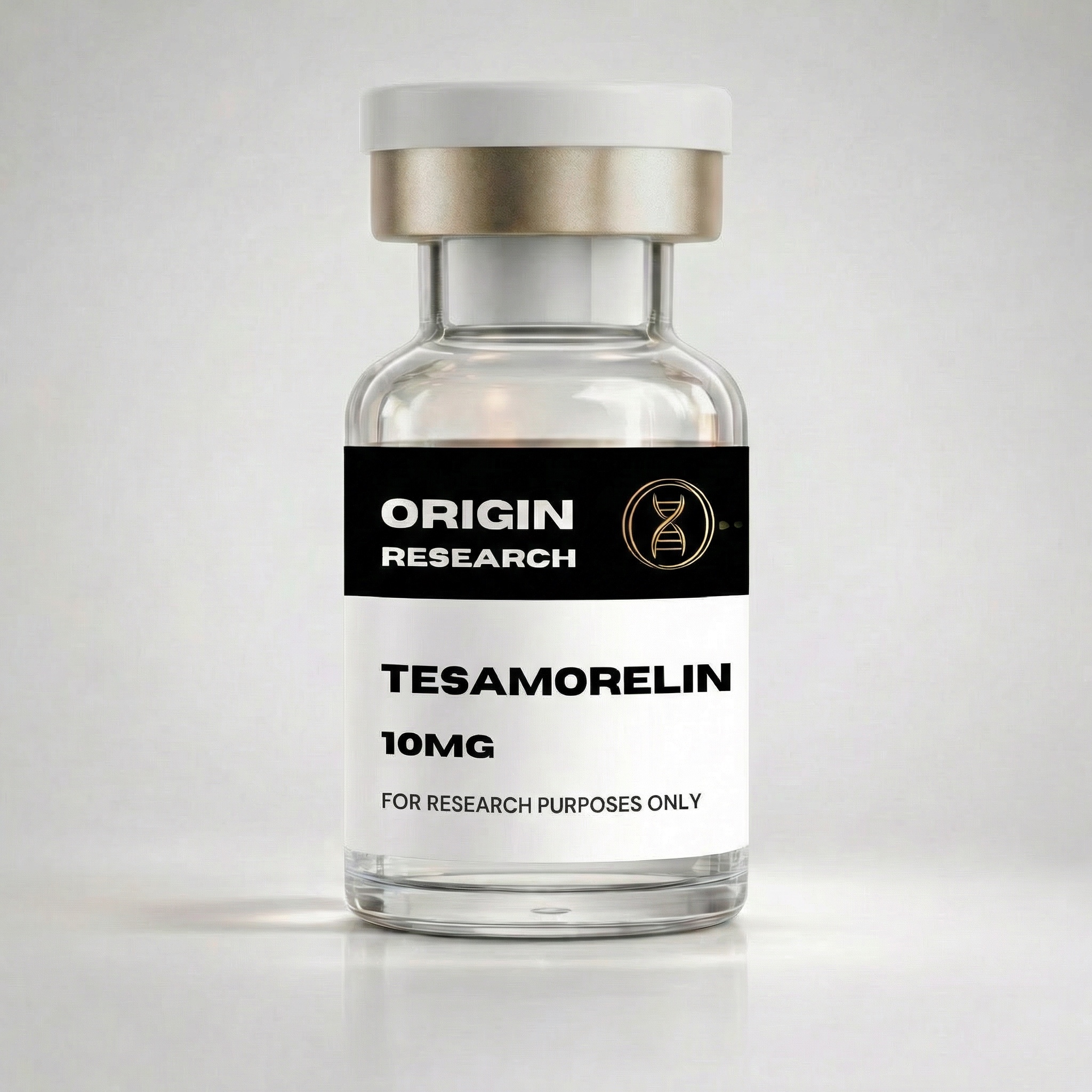
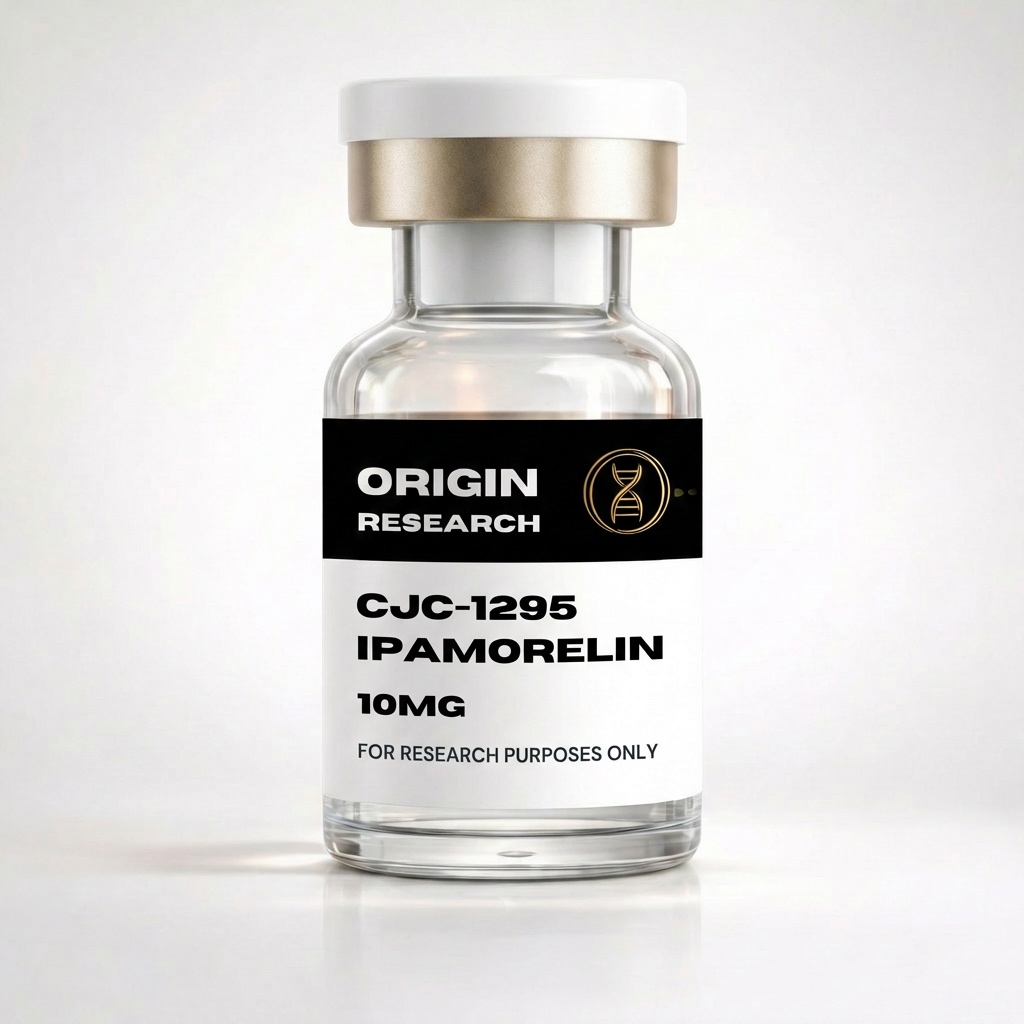
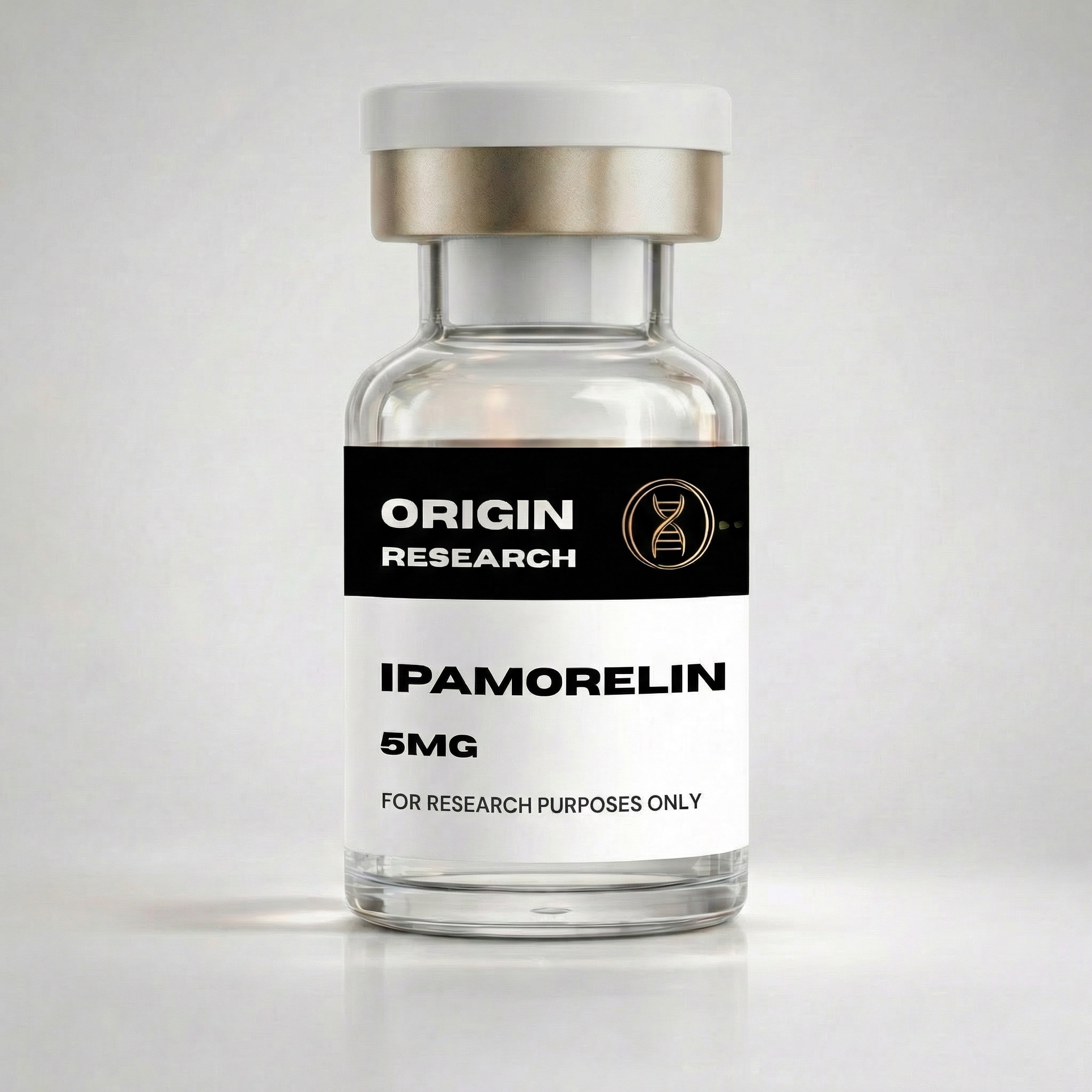
The growth hormone (GH) axis is having another busy year in the lab. New preclinical papers in 2026 keep refining what GHRH analogs and ghrelin mimetics actually do at the receptor level, how they shape downstream IGF-1, and how they behave across rodent models. This article walks through the recent literature on compounds like Tesamorelin, the CJC-1295/Ipamorelin Blend, and Ipamorelin in plain English. Everything below is framed for research use only. No human dosing, no clinical claims. Just what the recent preclinical literature suggests about mechanism, model choice, and study design.
Quick context. GH-axis compounds fall into two main families. GHRH analogs (Sermorelin, CJC-1295, Tesamorelin) push the GHRH receptor. Ghrelin mimetics (Ipamorelin, GHRP-2, GHRP-6, MK-677, Hexarelin) push a different receptor called GHS-R1a. Both end up triggering pituitary GH release in animal models, but they get there through different pathways.
GHRH Analogs in 2026: Short Pulses vs Sustained Exposure
The pulsatile-vs-sustained question keeps driving new GHRH analog work. Sermorelin is a 29-amino-acid truncated GHRH(1-29) peptide. In rodent pituitary cell studies it acts as a short-acting GHRHR agonist with a quick plasma half-life, producing sharp GH pulses in research models.
CJC-1295/Ipamorelin Blend is different. The CJC-1295 component uses drug affinity complex (DAC) technology, which binds albumin and stretches the plasma half-life out by days in rodent pharmacokinetic studies. Investigators describe the resulting GH profile as a sustained bleed rather than discrete pulses.
Why does this matter? Recent preclinical work suggests pulsatile GH may drive hepatic IGF-1 transcription differently than tonic elevation. That has direct implications for how you design a study:
- Short-acting GHRH analogs map onto pulse-mimicking research questions
- Long-acting DAC versions sit better for sustained-exposure pharmacology
- IGF-1 readouts can diverge between the two approaches
Tesamorelin in adipose research models
Tesamorelin is a stabilized GHRH(1-44) analog. Most of the recent investigative literature on it sits in adipose tissue research, where mechanistic studies have looked at visceral adipocyte lipolysis pathways in preclinical assays. Radioligand displacement assays have characterized its GHRHR binding affinity, and rodent metabolic studies have tracked hepatic IGF-1 mRNA expression after dosing.
Design tip. The literature keeps reminding researchers that GHRHR signaling is species-specific in important ways. Inferring from rodent data to other animal models requires checking receptor homology and downstream cascade conservation.
Ghrelin Mimetics: GHS-R1a Selectivity and Structural Biology
The growth hormone secretagogue receptor (GHS-R1a) is the other on-ramp to GH release. Ghrelin-mimetic peptides have been research tools at this receptor for over twenty years.
Ipamorelin is a pentapeptide GHS-R1a agonist. In preclinical receptor studies it shows minimal cross-activation of cortisol and prolactin pathways in rodent models. That selectivity is the main reason it gets compared favorably to older GHRP compounds:
- Ipamorelin - cleanest selectivity profile in published receptor assays
- GHRP-6 - broader endocrine effects in some research models
- GHRP-2 - sits between the two on selectivity rankings
What cryo-EM added
Recent structural biology papers have resolved GHS-R1a in complex with various ligands. The atomic-level binding pocket maps inform structure-activity relationship (SAR) work for the whole ghrelin-mimetic family. Researchers building new selective ligands now have actual coordinates to work from instead of homology models.
MK-677 and Hexarelin notes
MK-677 (Ibutamoren) is a non-peptide orally bioavailable GHS-R1a agonist. Preclinical pharmacokinetic work has measured sustained receptor occupancy over extended dosing intervals, with downstream GH and IGF-1 dynamics tracked across multiple time points.
Hexarelin is a hexapeptide GHS-R1a agonist with a quirk: investigators have characterized binding to CD36 in cardiovascular tissue research, suggesting receptor pharmacology beyond GHS-R1a alone.
Combination designs. Studies that pair a GHRH analog with a ghrelin mimetic in preclinical models keep showing additive or synergistic GH release. The CJC-1295/Ipamorelin Blend is the canonical research example of this dual-pathway approach.
IGF-1 Downstream: What Pituitary Output Actually Does
GH release is upstream. The downstream story runs through insulin-like growth factor 1 (IGF-1) and its binding proteins. Recent preclinical research has continued mapping hepatic vs extrahepatic IGF-1 production, IGFBP dynamics, and tissue-specific IGF-1 receptor (IGF-1R) signaling.
Key readouts that show up across modern GH-axis studies:
- JAK2/STAT5 phosphorylation in hepatocyte cultures (the canonical GH signaling cascade)
- Local IGF-1 isoform expression in skeletal muscle, including the mechano-growth factor (MGF) splice variant
- IGFBP-3 and ALS ternary complex measured alongside total IGF-1 to estimate bioavailable hormone
- Hepatic IGF-1 mRNA as a transcriptional readout in rodent liver tissue
Why IGF-1 plus IGFBP-3 is now standard
For researchers using GH-axis compounds in animal model studies, IGF-1 has become the workhorse pharmacodynamic readout. Most current papers also measure IGFBP-3 to estimate bioavailable IGF-1. Tissue-distribution studies layer on hepatic gluconeogenesis markers, lipolytic signaling in adipocytes, and protein synthesis pathways in muscle preparations.
Timing of IGF-1 sampling matters
GH-induced IGF-1 elevation in rodent models follows a delayed time course. Hepatic IGF-1 mRNA can rise within hours of a single GH stimulus, but circulating IGF-1 protein typically peaks 8-24 hours after the GH pulse and stays elevated longer than GH itself. Studies that only sample IGF-1 at a single early timepoint may miss the peak response and underestimate compound activity. Multi-timepoint sampling across 24-48 hours after dosing gives a more accurate picture of integrated GH-axis activation in animal model contexts.
Free IGF-1 versus total IGF-1
Most research assays measure total IGF-1, but free (bioavailable) IGF-1 is the fraction that engages IGF-1R signaling. Acid-ethanol extraction methods or ultrafiltration approaches can separate free from bound IGF-1 in research samples, and some recent studies have begun reporting both metrics in parallel for more complete characterization of bioavailable hormone dynamics. The IGFBP-3 measurement is the more common substitute for direct free IGF-1 quantification.
Watch the exposure profile. Chronic versus pulsatile GH exposure can produce different IGF-1 and IGFBP profiles. Investigators are also probing how species differences in IGF-1 promoter regulation affect translation from rodent studies to larger animal models.
Sleep Architecture and Metabolic Substrate Research
GH-axis research is not just an endocrine story. Sleep architecture and metabolic substrate work form an active second front.
Slow-wave sleep in EEG-instrumented rodent models
Slow-wave sleep (SWS) is associated with the largest physiological GH pulses in many species. Recent EEG-instrumented rodent studies have measured how GHRH and ghrelin-mimetic compounds shift SWS duration and intensity. Some investigative work suggests GHRH signaling at hypothalamic sites contributes to SWS promotion independent of pituitary GH release. The hypothalamic SWS question remains an active investigative thread, with research models examining GHRH neuron populations in the anterior hypothalamus and their projections to sleep-active nuclei.
Substrate utilization shifts
Preclinical literature has characterized GH-axis effects on metabolic fuel use:
- Increased lipolysis under sustained GH exposure
- Reduced carbohydrate oxidation
- Hormone-sensitive lipase (HSL) phosphorylation in adipose tissue
- Perilipin dynamics during free fatty acid mobilization
- Shifts in respiratory exchange ratio (RER) measured by indirect calorimetry in rodent metabolic chambers
Recent work has also probed crosstalk with insulin signaling. Rodent studies have documented GH-induced insulin resistance markers at supraphysiological exposures, which is a real consideration for any chronic dosing schedule in a research model. The insulin signaling story involves SOCS (suppressor of cytokine signaling) protein induction, which feeds back on insulin receptor substrate phosphorylation in liver and skeletal muscle preparations.
What pairs well with what in preclinical study design
For researchers comparing GHRH analogs across substrate utilization endpoints, the time-of-day variable matters more than most published studies acknowledge. GH axis output follows circadian patterns in rodent models, so dosing at the same clock time across study arms is a basic but often-skipped control. Similarly, fed-versus-fasted state at the time of sampling can shift lipolytic and carbohydrate oxidation readouts substantially in animal model preparations.
Compound stability in study planning
GHRH analogs and ghrelin mimetics differ markedly in solution stability, which affects how studies should handle reconstitution and storage between dosing days. Investigators planning multi-week studies in animal model contexts often verify peptide integrity by HPLC at study start and study end to confirm the compound being administered late in the study matches the compound at the start.
Design checklist for metabolic studies. Control for nutritional state, circadian timing, and chronic-versus-acute exposure. All three change substrate utilization readouts more than most investigators expect. Add peptide integrity verification at study endpoints for any multi-week design using shorter-acting GHRH analogs or Ipamorelin and related ghrelin mimetics.
References
- [1] (). . . PMID 10221989
- [2] (). . . PMID 28526632
- [3] (). . . PMID 18057338
- [4] (). . .
- [5] (). . . PMID 9849822
Frequently asked questions
What is the practical difference between GHRH analogs and ghrelin mimetics in research?
GHRH analogs like Sermorelin, CJC-1295, and Tesamorelin act at GHRHR through Gs-coupled cAMP signaling to stimulate pituitary GH release. Ghrelin mimetics like Ipamorelin, GHRP-2, GHRP-6, MK-677, and Hexarelin act at GHS-R1a through Gq-coupled signaling. Combination research designs in preclinical models often show additive or synergistic GH release.
Why does pulsatile versus sustained exposure matter in study design?
Preclinical literature suggests pulsatile GH may drive hepatic IGF-1 transcription, IGFBP dynamics, and metabolic readouts differently than sustained tonic elevation. CJC-1295 with DAC produces sustained exposure profiles, while shorter-acting GHRH analogs and most GHRP peptides produce more discrete pulses in research models.
What pharmacodynamic readouts are standard for GH-axis preclinical work?
Serum GH measured at multiple time points to capture pulsatile dynamics, IGF-1 and IGFBP-3 as integrated downstream markers, and tissue-specific measures such as hepatic IGF-1 mRNA, JAK2/STAT5 phosphorylation, and substrate utilization endpoints depending on the research question.
How selective is Ipamorelin compared with older GHRP compounds?
Preclinical receptor pharmacology studies have characterized Ipamorelin as a relatively selective GHS-R1a agonist with minimal cross-activation of cortisol and prolactin axes in rodent models. GHRP-6 shows broader endocrine effects, and GHRP-2 falls between the two in published selectivity profiles.
What has cryo-EM added to GHS-R1a research?
Recent structural biology work has resolved GHS-R1a in complex with ghrelin and synthetic ligands, mapping binding pocket residues critical for agonist engagement. The data informs SAR understanding and helps explain selectivity differences observed across the GHRP family in functional receptor assays.