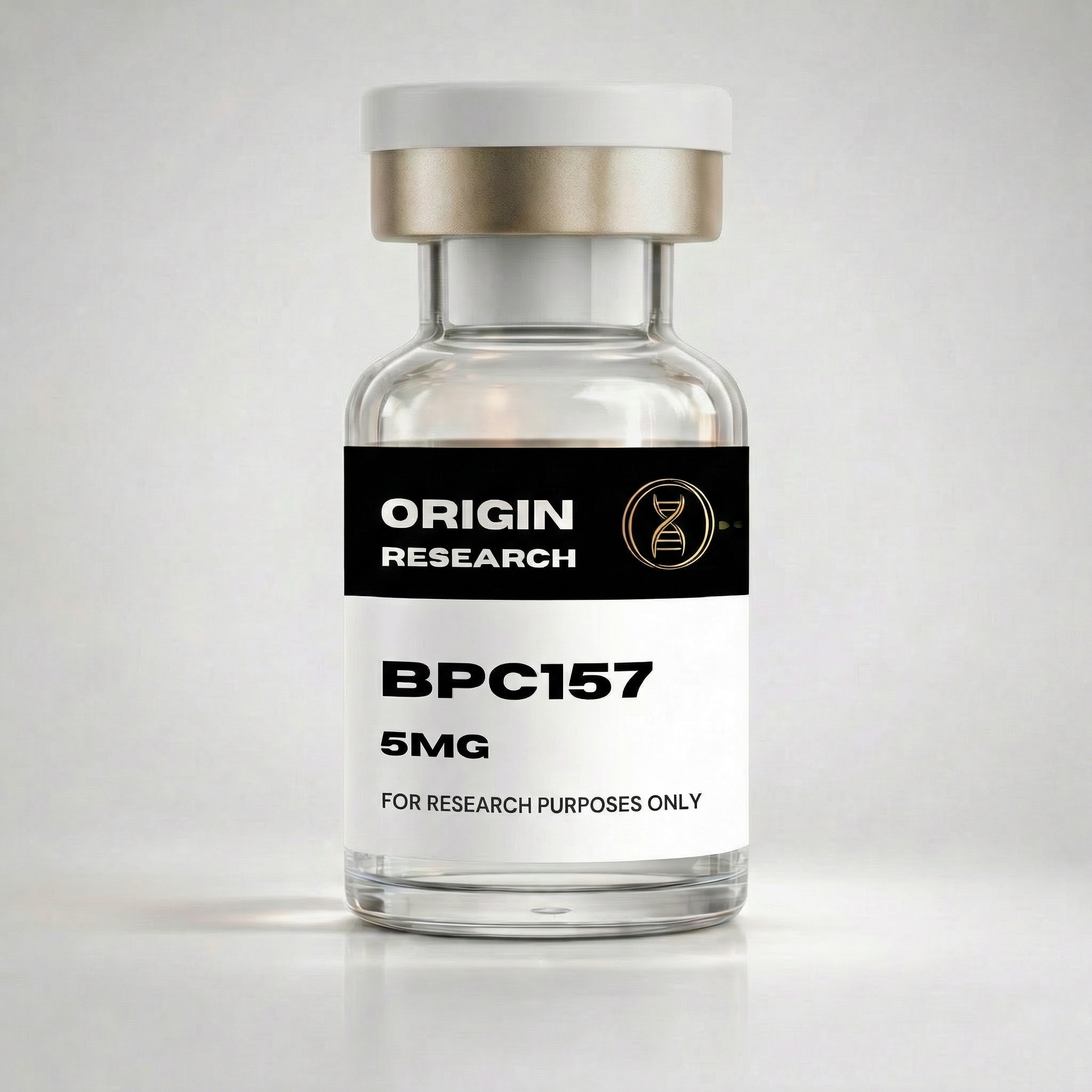
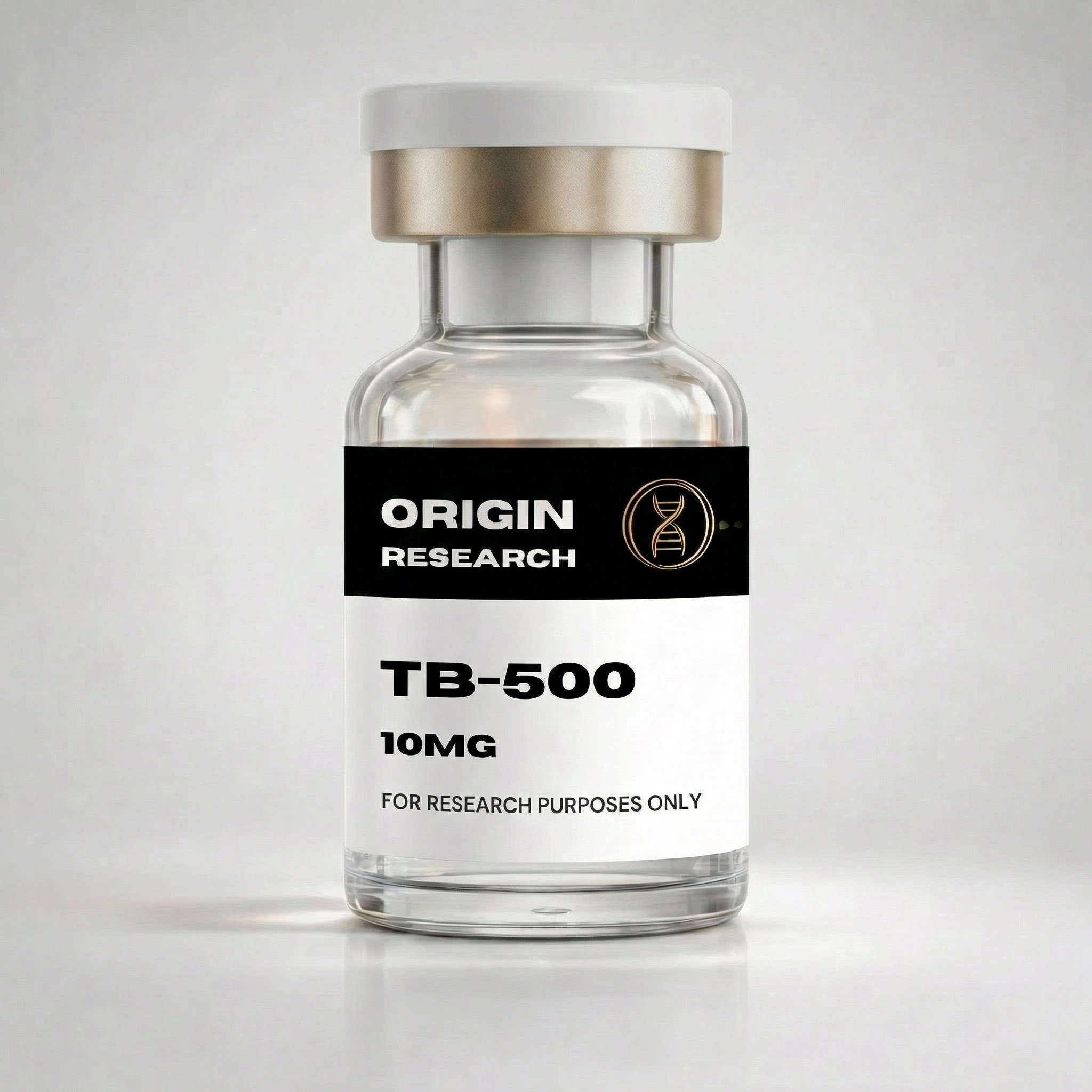
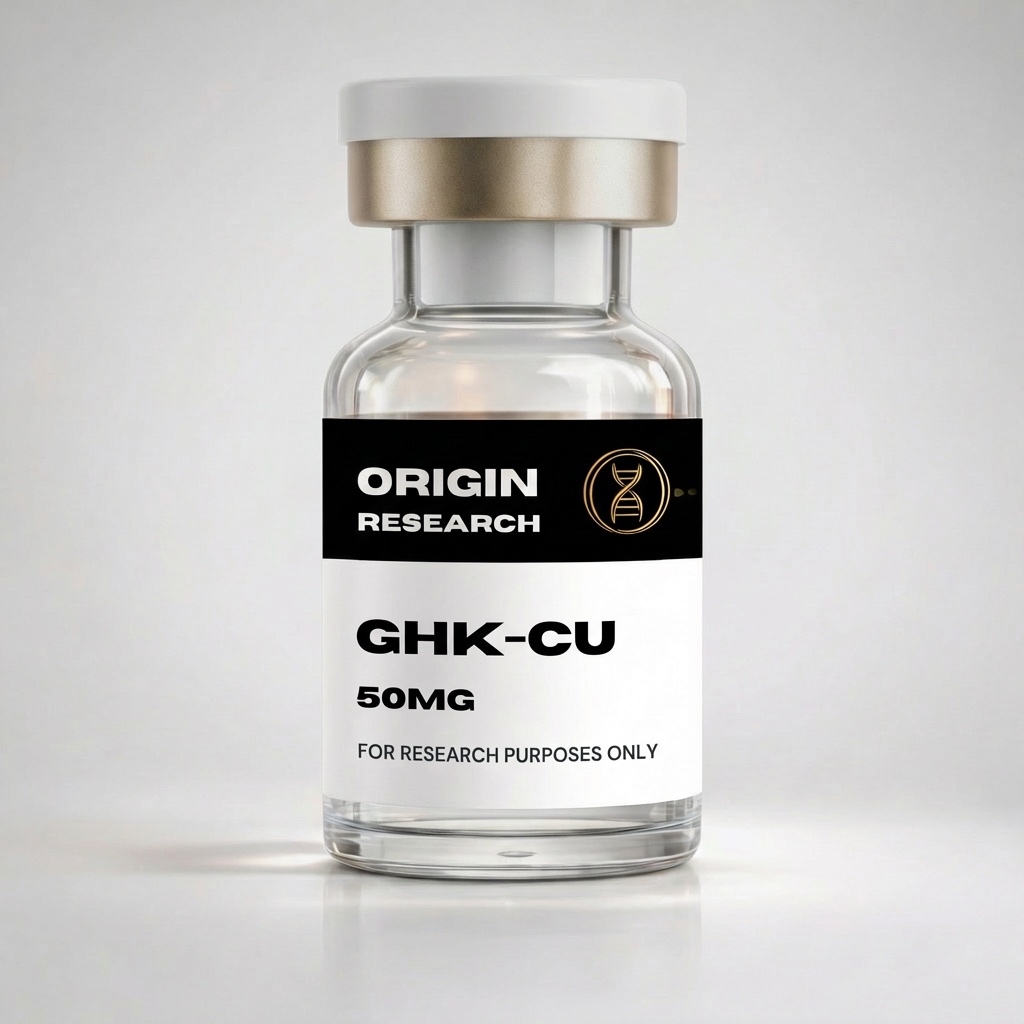
Cold-chain shipping means keeping a product at low temperature continuously, from the point of manufacture all the way to the point where the buyer signs for it. For research peptides shipped as dried (lyophilised) powder, cold chain is one of the biggest variables affecting what actually shows up in the vial.
Here is the short version of why this matters. Peptides are not infinitely stable at room temperature. The chemistry literature on protein and peptide stability is well established: heat accelerates several specific degradation reactions, and a peptide that spent four days at 30 degrees Celsius during a shipping delay can arrive with measurably lower purity than the same peptide kept cold.
This guide explains the relevant chemistry in plain English, what reputable suppliers actually do for cold-chain shipping, and what the buyer can verify on receipt. The framing is procurement and verification. It is not about compound use. The audience is the research buyer, the laboratory receiving manager, and the QC analyst responsible for accepting shipments of compounds like BPC-157, TB-500, and GHK-Cu.
The basic principle: the cold chain is not a courier feature. It is part of the product quality system. A shipment that arrives warm is partially degraded before you even open the box.
What heat actually does to peptides
The pharmaceutical stability literature has characterised peptide degradation pathways for decades. Lyophilised (dried) peptides are much more stable than peptides in solution, but they are not indefinitely stable, especially above 25 degrees Celsius.
The main degradation pathways
- Deamidation: asparagine and glutamine residues convert to aspartate or isoaspartate. The rate roughly triples for every 10 degrees Celsius rise in temperature in the relevant range.
- Oxidation: methionine and cysteine residues react with atmospheric oxygen. Rates rise with temperature and with trace metal or peroxide impurities.
- Disulfide bond scrambling: in cysteine-containing peptides, disulfide bonds rearrange more easily at elevated temperature.
- Hydrolysis: susceptible amide bonds break, especially in the presence of moisture.
- Aggregation: intact peptide molecules clump together into dimers, trimers, or larger aggregates. These are especially problematic because they resist normal reconstitution procedures.
What this means in practice
The cumulative effect of these reactions is that a peptide exposed to 30 or 35 degrees Celsius during a multi-day shipping transit arrives with lower purity than the same peptide shipped under refrigeration. The exact loss depends on the specific sequence, the moisture content of the lyophilised cake, and the duration of exposure. The direction is consistent: heat hurts purity.
Why this matters for the buyer: the COA documents the purity at the time of testing. If the shipment was cooked in transit, the COA no longer describes what is in the vial when it arrives at your bench.
What reputable suppliers actually do
Reputable peptide suppliers implement cold-chain shipping through three coordinated choices: packaging, refrigerant, and shipping route.
Packaging
- Insulated container, typically expanded polystyrene foam or vacuum-insulated panels
- Sized to maintain internal temperature for the planned transit duration
- Sealed against moisture intrusion
Refrigerant choices
- Frozen gel packs: the standard for short transits (one to three days domestic). Simpler logistically. Require careful sizing.
- Dry ice: sublimes at minus 78 degrees Celsius. Maintains a deeply cold environment for longer transits. Adds regulatory complexity because it is classified as a dangerous good for air transport.
Shipping route selection
- Choose overnight or express services over standard ground for any sensitive shipment
- Avoid weekend handoffs where shipments sit in warehouses
- For international, prefer services with priority customs clearance
Temperature monitoring
Some suppliers include one of these in each shipment:
- Indicator strip: shows whether the shipment exceeded a critical threshold during transit
- Single-use data logger: records a continuous time-temperature trace that can be downloaded and reviewed
What to look for: a supplier who can explain their cold-chain protocol in concrete terms (refrigerant type, insulation specification, target transit time) is giving you the information you need to evaluate whether the practice fits your location and conditions. Vague answers signal vague practice.
Cold-chain verification on receipt: the buyer's checklist
The supplier's responsibility ends at the carrier handoff. The buyer's verification responsibility begins at delivery. Both halves need to work.
Receipt inspection checklist
1. Outer container: check for punctures, crushed corners, moisture penetration, broken seals 2. Insulation: open the container and check the insulation is intact, with no gaps or compression damage 3. Refrigerant condition: - Gel packs should still be at least partially frozen for short transits, at least cool for longer ones - Dry ice should still be present in some quantity if the shipment was packed with it 4. Vials: inspect each one for cracks, broken crimp seals, label damage 5. Lyophilised cake: check appearance through the vial glass - Intact, dry, compact = good - Collapsed, partially liquefied, discoloured = problem 6. Temperature indicator or data logger: review the reading - Indicator strip showing exceeded threshold: photograph and report immediately - Data logger: download and review the temperature trace
What to do if anything fails
- Set the material aside, do not put it into inventory
- Photograph the evidence: indicator strip, refrigerant condition, vial appearance
- Notify the supplier with the photographs and shipment tracking information
- Decide disposition (replacement, retest, accept with documentation) before the material enters routine inventory
- Record the entire incident in the laboratory log with shipment date, refrigerant condition, vial condition, and indicator status
The documentation point: writing down receipt inspections, including the ones where everything was fine, is the practice that separates a defensible quality system from an ad hoc one. If a problem arises three months later, the contemporaneous record is what lets you trace it.
How customs and region affect cold-chain risk
Cold-chain shipping interacts with customs and regional logistics in ways the buyer needs to plan for. The same packaging that works fine for a domestic shipment can fail badly on an international one.
Shipping into the EU
- Shipments may experience customs delays at the port of entry
- A package sized for a three-day transit can blow through its refrigerant if customs holds it for an additional two days
- Reputable suppliers shipping into the EU oversize refrigerant loads, use express services with priority clearance, or work with brokers who can expedite release
Shipping into the US
- Fewer cold-chain delays at customs typically
- Last-mile delivery times vary by destination state and season
- Summer shipping to hot southern states is its own problem
Shipping into other regions
- Hot-climate destinations or extended last-mile networks require additional consideration
- Discuss the route with the supplier in advance and confirm packaging is appropriate for the conditions
Regional fulfilment hubs reduce risk
Some suppliers maintain regional hubs to shorten transit distance and reduce cold-chain risk. A supplier shipping into the EU from a hub within the EU has a fundamentally easier cold-chain problem than a supplier shipping the same material across an ocean and through customs.
Practical consequence: if you are sourcing into the EU and a supplier offers EU-based fulfilment, that is a real operational advantage independent of the underlying compound.
When cold-chain failure happens: what to do
Best practices reduce failures. They do not eliminate them. Shipments get delayed, refrigerant gets undersized for unexpected conditions, insulation gets compromised, summer heat exceeds forecasts. When a failure happens, having a process makes the difference.
The five-step failure response
1. Set the material aside immediately. Do not put it into inventory or working stock. 2. Photograph the evidence. Indicator strip reading, refrigerant condition, vial appearance, outer carton damage, tracking documentation showing the delay. 3. Notify the supplier. Send the photographs along with the shipment tracking information and the receipt date. 4. Discuss the options. Typical responses include: - Immediate free replacement - Partial credit - Buyer commissions independent test to assess whether the material is still within acceptance criteria 5. Document in the batch record. Even if the material is ultimately accepted, the cold-chain incident is part of the batch's permanent record.
The independent retest option
If the supplier and buyer agree to test the affected material:
- Commission an independent HPLC purity analysis on the affected batch
- Compare the result to the original COA
- Purity drop above 1-2 percentage points: material is rejected
- Purity within acceptance: material may still be used, but the incident is documented
When to drop a supplier
One failure can be bad luck. Recurring failures from a single supplier are grounds for moving to a different supplier or a different shipping route. Your documentation of incidents is what makes that decision defensible later.
Cold-chain storage after receipt
Cold-chain responsibility does not end when the shipment is signed for. The buyer's storage practice continues the chain through the entire working life of the material.
Storage temperatures by purpose
- Short-term working inventory: minus 20 degrees Celsius
- Long-term archive: minus 80 degrees Celsius
- Reconstituted solutions: 2-8 degrees Celsius typically (refrigerator), with much shorter working life than the dried form
Freezer selection
Use a dedicated laboratory freezer with documented temperature monitoring. Domestic appliances are not designed for stable cycling and frost-free operation that does not subject the contents to repeated warming.
Freezer practices that protect material
- Continuous temperature logger inside the freezer with reviewable records
- Document temperature excursions during power events, door openings, maintenance cycles
- Organise vials with frequently accessed material near the front
- Long-term archive at the back, minimising door-open time during retrieval
- Log every vial in inventory with batch number, receipt date, freezer location, and subsequent transfers
Why this matters operationally
A buyer who treats the freezer and receipt log as continuations of the supplier's cold chain has a defensible quality system. A buyer who treats receipt as the end of the chain may discover degradation later that cannot be cleanly attributed to a supplier or transit failure. That ambiguity makes both troubleshooting and commercial disputes harder.
Bottom line: the cold chain is a continuous system from synthesis to use. The supplier owns the transit portion. The buyer owns everything after the signature. Treating them as the same chain is what makes the whole system actually work.
References
- [1] Manning MC, Chou DK, Murphy BM, Payne RW, Katayama DS (2010). Stability of protein pharmaceuticals: an update. Pharmaceutical Research. PMID 20143256
- [2] Wang W (1999). Instability, stabilization, and formulation of liquid protein pharmaceuticals. International Journal of Pharmaceutics. PMID 10456425
- [3] Robinson NE, Robinson AB (2001). Molecular clocks: deamidation of asparaginyl and glutaminyl residues in peptides and proteins. Proceedings of the National Academy of Sciences. PMID 11248093
- [4] Carpenter JF, Pikal MJ, Chang BS, Randolph TW (1997). Rational design of stable lyophilized protein formulations: some practical advice. Pharmaceutical Research. PMID 9220402
- [5] Bommana R, Chai Q, Schoneich C, Weiss WF, Majumdar R (2018). Temperature-dependent degradation of therapeutic monoclonal antibodies. Journal of Pharmaceutical Sciences. PMID 29329869
Frequently asked questions
What degradation pathways are accelerated by elevated temperature?
Deamidation of asparagine and glutamine residues, oxidation of methionine and cysteine, disulfide bond scrambling, hydrolysis of susceptible amide bonds, and physical aggregation. Rates typically increase several-fold per ten-degree Celsius rise in the relevant range.
Are lyophilised peptides more stable than peptides in solution?
Substantially more stable. Removing water dramatically slows hydrolysis and most other degradation reactions. However, lyophilised peptides are not indefinitely stable, particularly at temperatures above twenty-five degrees Celsius for extended periods.
What refrigerants do reputable suppliers use?
Frozen gel packs are the standard for short transits. Dry ice is used for longer transits or when sustained freezing temperatures are required. Dry ice adds regulatory complexity because it is classified as a dangerous good for air transport but maintains a deeply cold environment.
What should the buyer check on receipt?
Exterior of the shipping container for damage, integrity of the insulation, condition of the refrigerant, condition of the vials and lyophilised cake, and any included temperature indicator or data logger reading. Findings should be recorded in the laboratory log.
What does a melted or liquefied lyophilised cake indicate?
Exposure to moisture, often as a consequence of broken vial seals or temperature excursions causing condensation. A vial in this condition should be set aside and investigated before use. The supplier should be notified with photographs.
How do customs delays affect cold-chain shipments?
Customs holds can extend transit time beyond the refrigerant capacity. Reputable suppliers oversize refrigerant for known customs-prone routes or use express services with priority clearance. Buyers ordering into jurisdictions with long customs queues should discuss this with the supplier in advance.
What should the buyer do after a documented cold-chain failure?
Set the material aside, photograph the evidence, notify the supplier with shipment tracking information, and discuss replacement or independent retest. Document the incident in the batch record. Recurring failures from one supplier are grounds for moving to a different supplier or route.