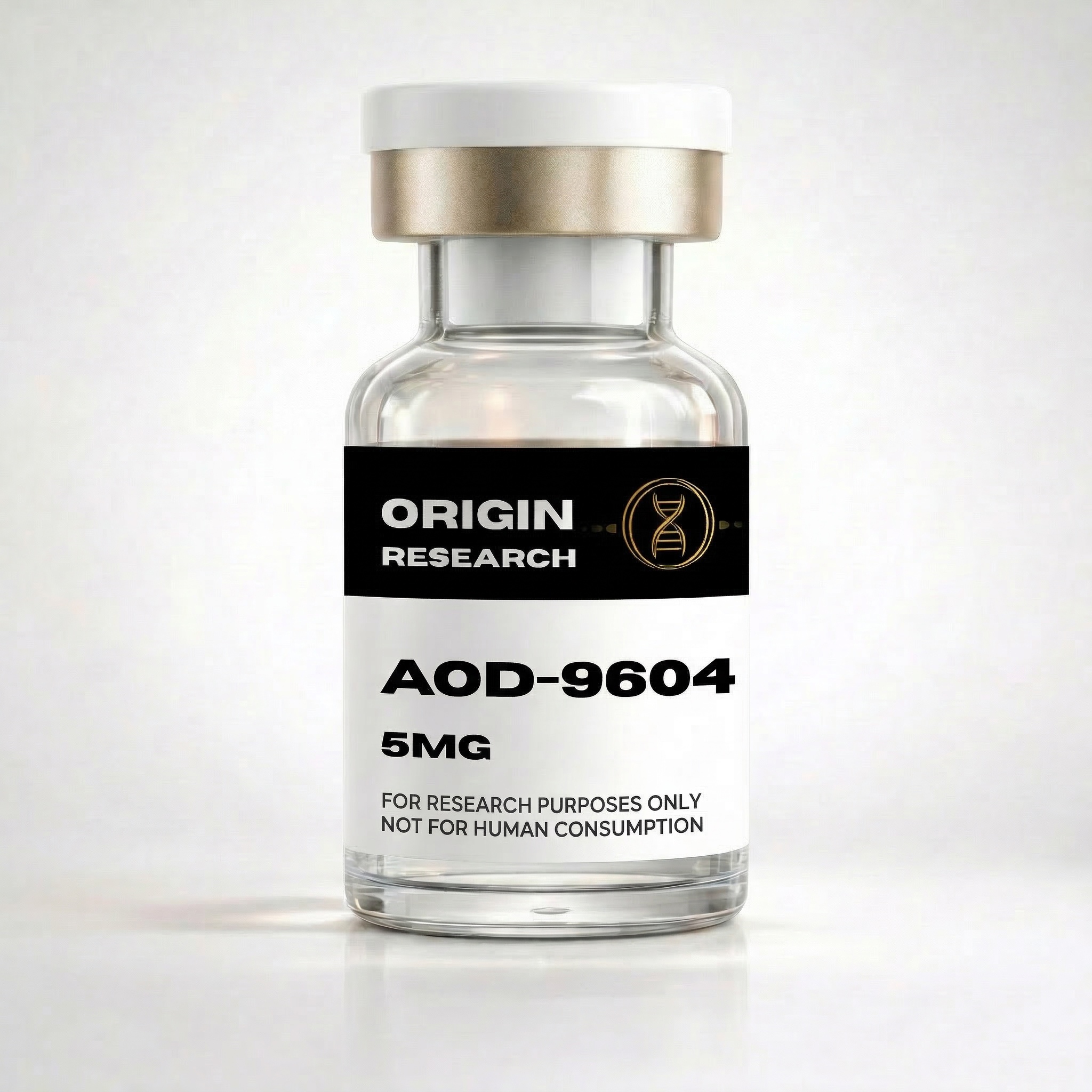
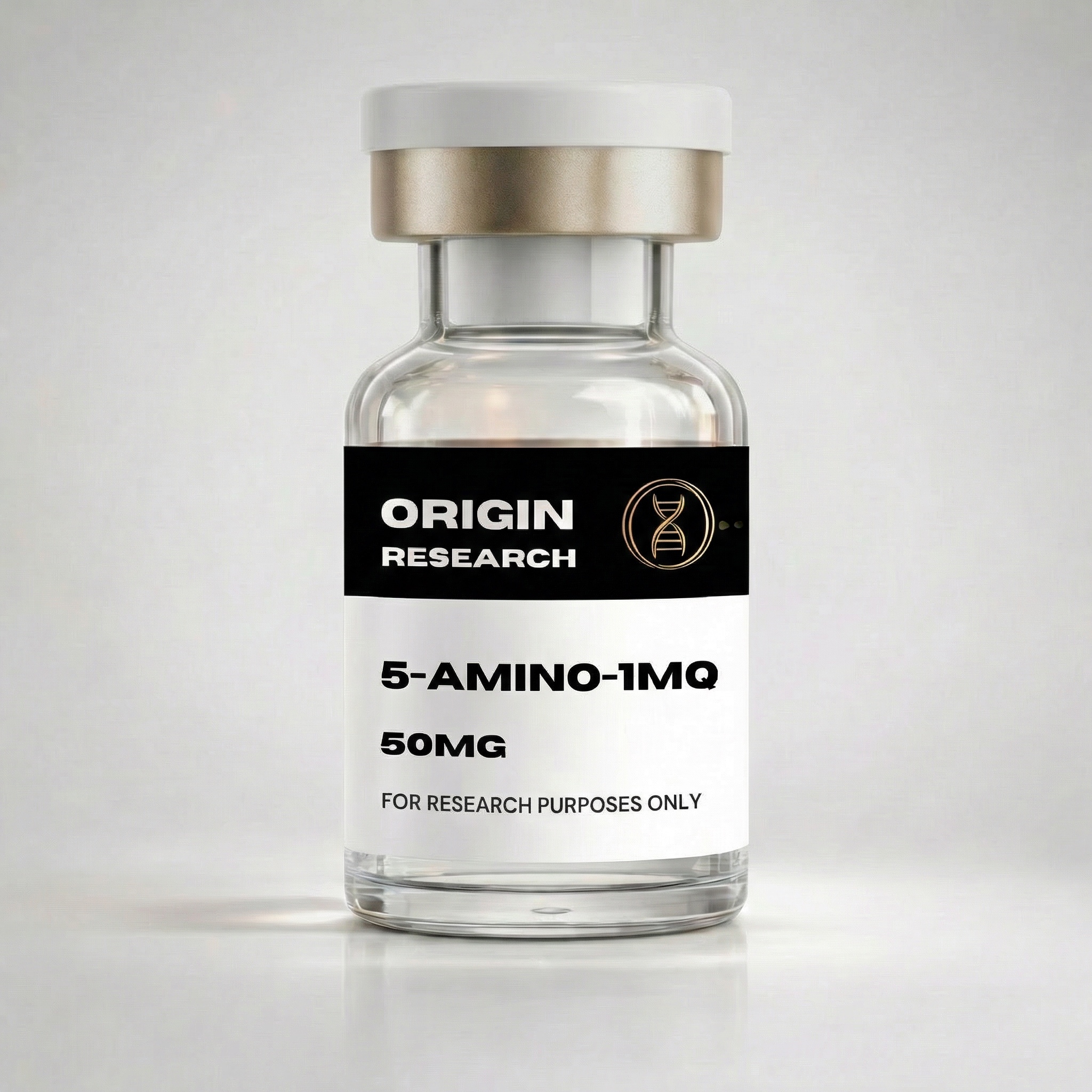
AOD-9604 and 5-Amino-1MQ are two chemically unrelated research compounds that often appear next to each other in metabolic research catalogs. They share almost nothing structurally. They share almost nothing mechanistically. What they share is a general application: both get used as research probes in adipose and metabolic pathway studies in preclinical models.
AOD-9604 is a synthetic peptide. It corresponds to the C-terminal 15 amino acid fragment of human growth hormone (residues 177 to 191) with an added N-terminal tyrosine for stability. Total length: 16 amino acids. The fragment was characterized in structure-function research as carrying lipolytic activity in adipocyte preparations, separable from the somatogenic activity of intact growth hormone.
5-Amino-1MQ is a small molecule. It is a selective inhibitor of nicotinamide N-methyltransferase (NNMT), an enzyme that consumes both S-adenosyl methionine (the cellular methyl donor) and nicotinamide (a NAD+ pathway precursor) to generate 1-methylnicotinamide.
This article covers each compound separately, then explains why the conceptual grouping makes catalog sense even though the underlying biochemistry is completely different.
Key framing: peptide hGH fragment versus small molecule enzyme inhibitor. Same general research area, totally different molecular tools.
AOD-9604: structure and origin
Human growth hormone is a 191 amino acid single-chain polypeptide produced by the anterior pituitary. Decades of structure-function research have mapped its biological activities to distinct structural domains.
Where lipolytic activity sits
Early structure-function work used overlapping peptide fragments tested in various bioassays. The C-terminal region (residues 177 to 191) was characterized as carrying lipolytic activity in adipocyte preparations. This was separable from the somatogenic and lactogenic activities that map to other regions of the molecule.
This matters: the lipolytic effect of the C-terminal fragment does not require receptor dimerization or somatogenic signaling. It is a different mechanism using a different part of the molecule.
Building the analog
The AOD-9604 analog was developed as a synthetic version of this 15 amino acid sequence with an added N-terminal tyrosine. The tyrosine:
- Provides enhanced stability
- Gives a defined synthetic starting point
- Yields a 16 amino acid peptide total
What the name means
- AOD = Anti-Obesity Drug (reflects the original therapeutic concept that motivated development)
- 9604 = internal compound designation during early-phase research
What the molecule does NOT do
AOD-9604 retains no significant affinity for the growth hormone receptor. It does not produce somatogenic effects associated with intact growth hormone in research models. This is the key distinction from intact hGH studies.
Proposed lipolytic mechanism
Research in adipocyte cell culture and rodent adipose tissue models has investigated several candidate pathways:
- Effects on beta-3 adrenergic receptor signaling
- Modulation of lipoprotein lipase activity
- Direct effects on adipocyte lipid mobilization
The precise receptor or molecular target mediating these effects remains incompletely characterized in published literature.
Synthesis and QC
Production uses solid-phase peptide synthesis with standard Fmoc chemistry, allowing scalable manufacture for research applications. Quality control includes:
- HPLC for purity assessment
- Mass spectrometry for molecular mass confirmation
- Amino acid analysis to verify composition
Research-grade AOD-9604 is supplied as a research compound for laboratory investigation of the hGH C-terminal fragment lipolytic axis in preclinical models.
Preclinical research on AOD-9604
Published preclinical research on AOD-9604 spans cultured adipocytes, rodent obesity models, and tissue explant preparations.
Cell culture findings
In 3T3-L1 adipocyte cultures, AOD-9604 has been reported to:
- Increase glycerol release (marker of lipolysis)
- Alter expression of lipid metabolism genes including hormone-sensitive lipase and adipose triglyceride lipase
Glycerol release is the standard lipolysis readout because it is a stoichiometric marker of triglyceride hydrolysis. Free fatty acids are also measured but they get re-esterified or oxidized within the cell, making them less direct.
Rodent obesity research
In diet-induced obesity models, AOD-9604 administration has been investigated against body composition endpoints:
- Fat mass
- Lean mass
- Adipose depot weights
Measurement methods include dual-energy X-ray absorptiometry and carcass analysis.
Variable findings across studies
Reported research findings have varied across studies and species. Some models show significant effects on adipose mass. Others show minimal effects. This heterogeneity is typical of obesity research literature.
Beta-3 adrenergic dependence
Differential effects of AOD-9604 in wild-type versus beta-3 adrenergic receptor knockout mice have been interpreted as evidence for partial dependence of the lipolytic response on beta-3 adrenergic signaling. The directness of this dependence and the possibility of additional receptor systems contributing remains under active investigation.
Cartilage and joint tissue research
Unrelated effects on chondrocyte metabolism have been characterized in cell culture and rodent osteoarthritis preparations. This is a separate research line from the adipose work, exploring different tissue biology.
Transcriptional profiling
Adipocyte responses to AOD-9604 have been characterized using targeted qPCR panels and broader RNA sequencing approaches. Reported changes include:
- Lipid mobilization gene expression
- Fatty acid oxidation pathway expression
- Mitochondrial biogenesis markers
What researchers do: integrate biochemical (glycerol release), functional (body composition), and transcriptional (RNA-seq) readouts. This multidimensional approach gives a richer picture than any single endpoint.
NNMT enzyme biology
Before diving into 5-Amino-1MQ as an inhibitor, it helps to understand its target enzyme.
What NNMT does
Nicotinamide N-methyltransferase (NNMT) is a cytoplasmic enzyme. It catalyzes a specific methyl transfer:
- Substrate 1: S-adenosyl methionine (SAM), the principal cellular methyl donor
- Substrate 2: nicotinamide, a NAD+ pathway precursor
- Product 1: 1-methylnicotinamide
- Product 2: S-adenosyl homocysteine
The enzyme transfers a methyl group from SAM to the pyridine nitrogen of nicotinamide.
Why this matters metabolically
NNMT activity consumes two metabolically important substrates simultaneously:
- SAM depletion: affects methylation-dependent biochemistry (histone methylation, DNA methylation, protein methylation)
- Nicotinamide depletion: removes precursor from the NAD+ salvage pathway
The methylated product (1-methylnicotinamide) cannot rejoin the NAD+ salvage cycle. So NNMT quietly drains both methylation and NAD+ pools.
Tissue expression
NNMT is highly expressed in:
- Liver
- Adipose tissue
In obese and metabolically stressed rodent models, NNMT expression runs higher than in lean controls. This observation made the enzyme a research target.
Genetic knockdown studies
Genetic knockdown of NNMT in mouse adipose tissue has been reported to produce phenotypes including:
- Reduced adipose mass
- Increased energy expenditure
- Altered metabolic gene panel expression
These genetic findings established NNMT as a target of interest and motivated pharmacological inhibitor development as research probes.
The 1-methylnicotinamide question
There is a mechanistic ambiguity. The 1-methylnicotinamide product itself has been the subject of independent research interest, with reports of effects on lipid metabolism and inflammation. So the metabolic phenotypes attributed to elevated NNMT activity could reflect:
- Substrate depletion of SAM and nicotinamide, OR
- Accumulation of the 1-methylnicotinamide product, OR
- Some combination
Pharmacological inhibition of NNMT activity is one approach to test the substrate-depletion hypothesis while leaving 1-methylnicotinamide unchanged or reduced.
Structural basis for inhibitor design
The crystal structure of NNMT in complex with substrates and inhibitors has been determined. This provides the structural basis for inhibitor design and for understanding substrate specificity that distinguishes NNMT from related methyltransferases like glycine N-methyltransferase or phenylethanolamine N-methyltransferase.
The active site accommodates the nicotinamide substrate in an orientation positioning the pyridine nitrogen for nucleophilic attack on the methyl group of SAM. The structural understanding has supported development of multiple chemical scaffolds with varying selectivity profiles.
NNMT pathway work often runs in parallel with NAD+ salvage pathway research using compounds like NAD+ 500mg as adjacent research probes.
5-Amino-1MQ as a research probe
5-Amino-1MQ (5-amino-1-methylquinolinium) is a small molecule inhibitor of NNMT.
Design rationale
The compound mimics the structure of the 1-methylnicotinamide product and acts as a competitive inhibitor of NNMT activity in research bioassays.
Key properties:
- Small molecule (not a peptide)
- Selective for NNMT over related methyltransferases
- Oral bioavailability in rodent research models
- Membrane-permeable at concentrations used in cellular research
Cellular research applications
5-Amino-1MQ has been investigated in:
- 3T3-L1 adipocytes
- Primary adipocyte preparations
- Hepatocyte models
Reported effects include:
- Cellular SAM concentration changes
- Methylation status of substrate proteins
- NAD+ pool changes
- Gene expression panels related to lipid metabolism
Rodent in vivo research
5-Amino-1MQ administration in diet-induced obesity models has produced published reports of effects on:
- Body composition
- Adipose tissue mass
- Metabolic gene expression in adipose depots and liver
Mechanistic interpretation
Research literature emphasizes conservation of cellular SAM and nicotinamide pools as the proximate biochemical consequence of NNMT inhibition. Downstream effects include:
- Histone methylation changes
- DNA methylation changes
- NAD+ pathway flux alterations
These downstream effects are proposed mediators of the observed metabolic phenotypes.
Selectivity characterization
Selectivity has been tested against panels of recombinant methyltransferases. Reported selectivity for NNMT over related enzymes supports use as a research probe for NNMT-specific effects.
Pharmacokinetics
Following oral administration in rodent research:
- Plasma concentrations support target engagement at administered doses
- Hepatic distribution provides direct exposure to one principal NNMT-expressing tissue
- Adipose distribution provides exposure to the other principal NNMT-expressing tissue
This distribution profile supports investigation of methylation metabolism and NAD+ pool effects in both target tissues.
Research-grade 5-Amino-1MQ is supplied as a research compound for Research Use Only laboratory investigation of NNMT pathway biology in cellular and animal preclinical models.
The combination that makes it useful: selective enzymatic inhibition, adequate cell permeability, and acceptable rodent pharmacokinetics. This trio establishes 5-Amino-1MQ as a workhorse research probe complementary to genetic NNMT knockout or knockdown approaches.
Comparative framing: peptide vs. small molecule
AOD-9604 and 5-Amino-1MQ get grouped in research catalogs. The grouping is functional, not mechanistic.
Side-by-side comparison
| Feature | AOD-9604 | 5-Amino-1MQ | |---|---|---| | Molecular class | Peptide (16 amino acids) | Small molecule | | Molecular weight | ~1817 daltons | ~159 daltons | | Origin | hGH C-terminal fragment | Synthetic NNMT inhibitor | | Mechanism | Direct adipocyte lipid mobilization | Competitive enzyme inhibition | | Receptor/target | Incompletely characterized | NNMT enzyme | | Storage form | Lyophilized powder | Solid powder | | Solvent | Aqueous diluent | DMSO or aqueous buffer | | Cellular concentration | Nanomolar to low micromolar | Low to high micromolar | | Storage temperature | Refrigerated/frozen | Room temperature dry |
Why the grouping makes sense
Both compounds get used in adipose and metabolic research questions. Both have been characterized in published preclinical literature for effects relevant to lipid metabolism and energy balance. Both can be reasonable research probes in metabolic phenotyping studies.
Why the grouping is misleading
They share essentially no molecular or mechanistic features.
- AOD-9604 research interrogates the lipolytic activity of the hGH C-terminal domain through proposed receptor-mediated effects on adipocyte lipid handling.
- 5-Amino-1MQ research interrogates the metabolic consequences of pharmacological NNMT inhibition through altered cellular methyl donor and nicotinamide pools.
These address fundamentally different research questions. A researcher cannot substitute one for the other in an experiment.
Practical handling differences
AOD-9604 (peptide handling):
- Reconstitute in sterile aqueous diluent or bacteriostatic water
- Aliquot and freeze stock solutions
- Add 0.1 percent BSA to working dilutions to reduce non-specific plastic adsorption
- Avoid repeated freeze-thaw
5-Amino-1MQ (small molecule handling):
- Dissolve in DMSO as concentrated stock for in vitro and ex vivo work
- Dilute into aqueous buffer or culture medium right before use
- Match DMSO vehicle in experimental controls
- Keep DMSO concentration below 0.1 percent in final culture medium
- For in vivo rodent work, use aqueous formulations compatible with the administration route
Practical rule: protocols developed for one compound do not translate to the other. Treat them as the distinct research tools they are.
Analytical characterization for both compounds
Quality control differs because the molecular classes differ.
AOD-9604 analytics
Standard peptide characterization:
- HPLC for purity assessment
- Mass spectrometry for molecular mass confirmation
- Amino acid analysis for composition verification
These analytical certificates accompany research-grade material.
AOD-9604 bioassay validation
Functional readout in published literature: adipocyte glycerol release assays for lipolytic activity.
Limitation: the absence of a single well-characterized receptor target complicates development of standardized receptor binding assays. So functional validation through downstream readouts is the practical approach.
5-Amino-1MQ analytics
Small molecule characterization:
- Nuclear magnetic resonance (NMR) spectroscopy
- High-resolution mass spectrometry
- HPLC for purity
5-Amino-1MQ functional validation
Two levels of validation:
- In vitro NNMT enzyme inhibition assays. Measure formation of 1-methylnicotinamide product from SAM and nicotinamide substrates in the presence of recombinant NNMT enzyme and graded concentrations of inhibitor. Generates IC50 values.
- Cellular bioassays of NNMT inhibition. Measure intracellular SAM accumulation or nicotinamide rise following inhibitor treatment in cell culture.
Storage and stability
AOD-9604:
- Lyophilized powder stored at -20 degrees Celsius or below
- Reconstituted aliquots at -80 degrees Celsius
- Avoid freeze-thaw cycles
5-Amino-1MQ:
- Solid powder stable at room temperature in dry form
- DMSO stocks at -20 degrees Celsius
- Avoid moisture exposure
Integration with broader metabolic research
Both compounds get studied in the context of broader metabolic research questions that involve parallel measurement of multiple biological readouts.
Body composition phenotyping
- Dual-energy X-ray absorptiometry (DEXA): fat mass, lean mass, regional distribution
- Magnetic resonance imaging: specific depot distribution
- Carcass analysis: most direct but terminal
Indirect calorimetry
Metabolic cage systems quantify:
- Oxygen consumption
- Carbon dioxide production
- Respiratory exchange ratio (calculated from the above)
Real-time measurement of energy expenditure and substrate utilization across animal cohorts treated with research compounds.
Glucose handling
- Glucose tolerance tests
- Insulin tolerance tests
- Hyperinsulinaemic-euglycaemic clamps
Core readouts in metabolic research. Quantify glucose handling and insulin sensitivity.
Tissue-level analysis
Adipose tissue biopsy and histology:
- Adipocyte size distribution
- Immune cell infiltration
- Tissue remodeling
Liver tissue analysis:
- Histological assessment of steatosis
- Biochemical measurement of triglyceride content
- Transcriptional profiling of hepatic gene panels
Adjacent mitochondrial probe research
Mitochondrial function is often measured in parallel with metabolic phenotyping. Adjacent research compounds studied in mitochondrial pathway work include MOTS-c, a mitochondrial-derived peptide investigated in cellular and animal energy metabolism models, often used in parallel research arms to dissect mitochondrial versus extramitochondrial mechanisms.
Multi-modal integration
The integration of these readouts allows comprehensive characterization of the metabolic phenotype produced by compound treatment. A richer interpretation than any single endpoint could support.
Published research on AOD-9604 and 5-Amino-1MQ has employed varying subsets of these readouts depending on the specific research question and available resources.
Standardization improves things. Metabolic phenotyping protocols across rodent research consortia have become more standardized in recent years. This improves comparability of results across publications, supporting robust mechanistic understanding of how each compound affects the integrated metabolic system in preclinical models.
Interpretation of any single experiment should be considered in the context of the broader published literature, with attention to consistency of findings across multiple research groups and experimental systems.
References
- [1] Heffernan M, Summers RJ, Thorburn A, Ogru E, Gianello R, Jiang WJ, Ng FM (2001). The effects of human GH and its lipolytic fragment (AOD9604) on lipid metabolism following chronic treatment in obese mice and beta(3)-AR knock-out mice. Endocrinology. PMID 11606462
- [2] Ng FM, Sun J, Sharma L, Libinaka R, Jiang WJ, Gianello R (2000). Metabolic studies of a synthetic lipolytic domain (AOD9604) of human growth hormone. Hormone Research. PMID 10681645
- [3] Kraus D, Yang Q, Kong D, Banks AS, Zhang L, Rodgers JT, et al. (2014). Nicotinamide N-methyltransferase knockdown protects against diet-induced obesity. Nature. PMID 24717514
- [4] Neelakantan H, Vance V, Wetzel MD, Wang HL, McHardy SF, Finnerty CC, Hommel JD, Watowich SJ (2018). Selective and membrane-permeable small molecule inhibitors of nicotinamide N-methyltransferase reverse high fat diet-induced obesity in mice. Biochemical Pharmacology. PMID 29944870
- [5] Pissios P (2017). Nicotinamide N-methyltransferase: more than a vitamin B3 clearance enzyme. Trends in Endocrinology and Metabolism. PMID 28291578
- [6] Komatsu M, Kanda T, Urai H, Kurokochi A, Kitahama R, Shigaki S, et al. (2018). NNMT activation can contribute to the development of fatty liver disease by modulating the NAD+ metabolism. Scientific Reports. PMID 29976935
Frequently asked questions
What is AOD-9604?
A synthetic peptide corresponding to the C-terminal 15 amino acid fragment of human growth hormone with an added N-terminal tyrosine. Investigated in preclinical research literature for lipolytic activity in adipocyte and rodent models.
Does AOD-9604 produce growth hormone receptor signaling?
No. The C-terminal fragment retains no significant affinity for the growth hormone receptor and does not produce the somatogenic effects associated with intact growth hormone in research models, according to published structure-function literature.
What is 5-Amino-1MQ?
A small molecule selective inhibitor of nicotinamide N-methyltransferase (NNMT). Developed as a research probe for investigating metabolic consequences of NNMT inhibition in cellular and rodent preclinical models.
Why is NNMT a research target?
NNMT consumes S-adenosyl methionine and nicotinamide. Genetic knockdown in rodent adipose tissue has been reported to alter body composition and energy expenditure in published preclinical research, motivating pharmacological inhibitor research.
Are AOD-9604 and 5-Amino-1MQ mechanistically related?
No. They are grouped as adjacent metabolic research compounds but share no molecular or mechanistic features. AOD-9604 is a peptide hGH fragment. 5-Amino-1MQ is a small molecule enzyme inhibitor with distinct biochemistry.
How are these compounds analytically characterized?
AOD-9604: HPLC for purity, mass spectrometry for molecular mass, amino acid analysis. 5-Amino-1MQ: NMR, high-resolution mass spectrometry, HPLC, with functional validation through in vitro NNMT inhibition assays.
Are these compounds supplied for human or clinical use?
No. Origin Labs supplies both compounds as research compounds for Research Use Only laboratory investigation of metabolic pathway biology. Neither is supplied for human, veterinary, nutritional, or clinical use.